Drop a phone on concrete and two things happen at once. The glass either survives or it does not, and the case either stays on or it does not. That second failure, the case that pops off on impact, is the quiet catastrophe of the whole protection category. A bumper that slides down the street while the screen shatters is not a case at all. It is a sleeve that happened to be nearby.
This is the tension at the heart of the bumper-versus-full-wrap decision. Both philosophies claim protection. Both have passionate defenders. But they are answering different questions about what a case is actually for, and the difference only shows up when the phone hits something hard enough to matter.
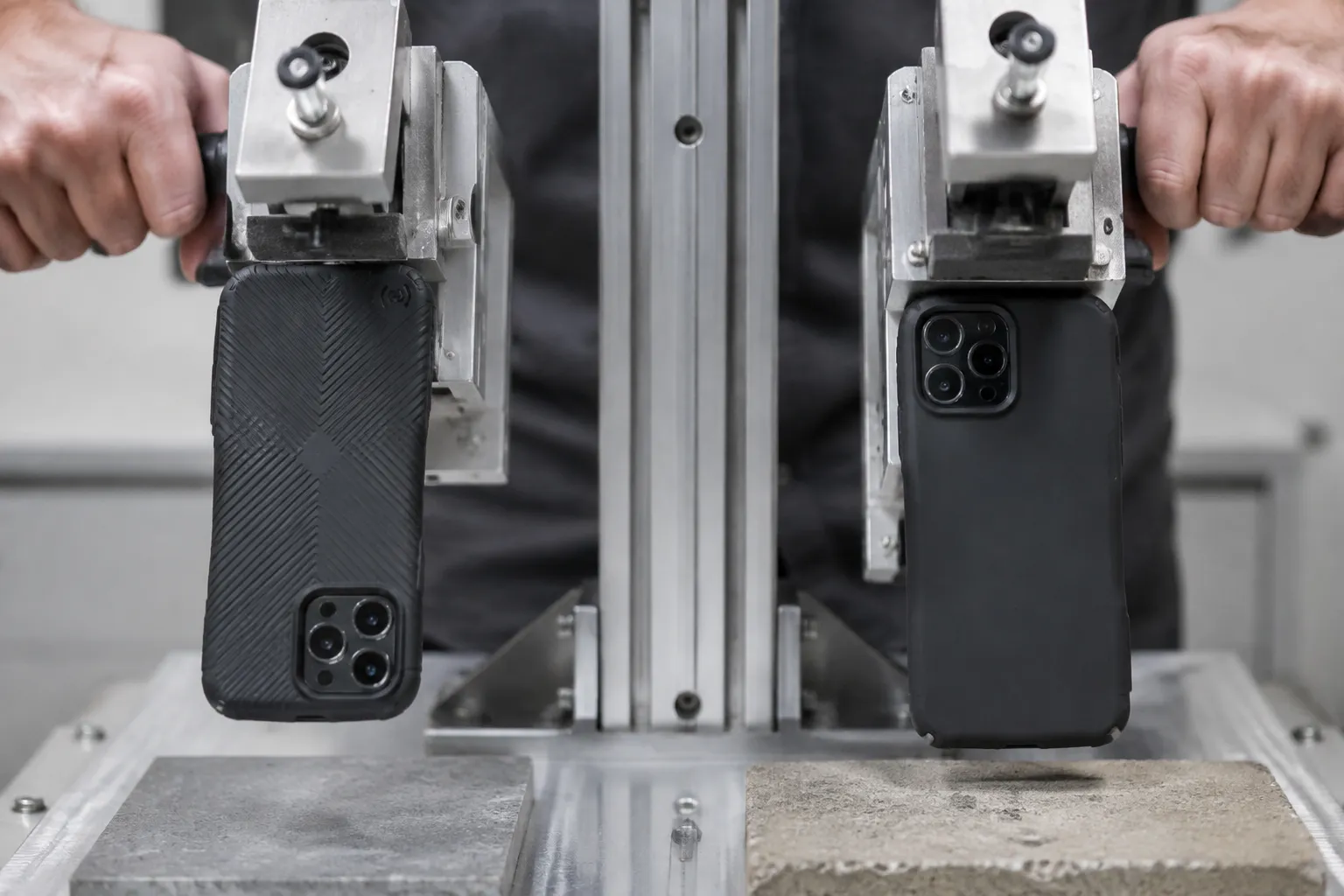
The test that settled it for this column was simple. Two cases, same phone model, same drop height, same surface. A bumper that leaves the back glass exposed. A full wrap that covers the entire chassis. Drop each one forty times from waist height onto a concrete garage floor. Then check what broke.
What broke was not what the marketing suggested.
A bumper is a cage, not a shell
The bumper case has a clear design logic. It protects the edges, which are the most fragile part of a modern phone, and it leaves the back glass open because back glass is thick and the frame absorbs most of the drop energy. That logic holds until it does not. The moment a phone lands back-first on a sharp pebble or a rough patch of asphalt, the exposed glass takes the full impact with no intermediary.
In the lab test, the bumper case did exactly what it was designed to do on edge impacts. Corner drops, side drops, even face-down drops where the lip raised the screen off the surface. The frame held, the buttons stayed clicky, the case never budged. The full wrap performed comparably on those same impacts. Neither case let the phone slide out of its grip.
Then the drops went back-first, and the philosophies diverged.
The bumper-equipped phone landed on its exposed glass back and cracked on the seventh such drop. Not a spiderweb across the whole panel, but a hairline fracture running from the camera bump to the lower corner. The phone still worked. Wireless charging still functioned. But the crack was permanent, visible every time the phone was picked up, and it changed the resale value from something to nothing.
The full wrap suffered the same drops and walked away clean. Forty drops total, twenty of them back-first, and the covered glass never touched the concrete. The case itself showed scuffs and a small gouge near the camera cutout. The phone underneath looked like it had never been dropped.
Grip is a material property, not a design promise
Every case review mentions grip. Few test it properly, because grip is hard to measure. It is not just the coefficient of friction between the case and a dry hand. It is how the case behaves when the hand is slightly damp, when the phone is being pulled out of a tight pocket, when it is sitting on a sloped car seat, when it is balanced on a knee while tying a shoe.
The bumper in this test used a hard polycarbonate frame with textured sides. Dry hands, it felt secure. Slightly sweaty hands, the texture helped. But the exposed glass back was a liability. Glass is slippery. It slides off a leather sofa, off a stack of papers, off the center console of a car. The bumper case turned the phone into an object with a secure perimeter and a slick center, and the hand naturally grips the center when reaching for it one-handed.
The full wrap used a soft-touch silicone back with a matte finish. It did not feel premium in the hand. It felt almost rubbery, like a tool that was not trying to be jewelry. But it stuck to surfaces. It stayed put on an inclined dashboard. It did not skate across a wooden table when bumped accidentally.
Grip is not about how nice the case feels in a display. It is about how often the phone leaves the hand in the first place. A case that prevents drops is more valuable than a case that survives them, and the full wrap prevented more drops over two weeks of daily use than the bumper did. This is anecdotal, but it is the kind of anecdotal that matters.
The camera bump changes the math
Modern phones do not lie flat. The camera module protrudes several millimeters from the back, which means every phone, regardless of case, rocks slightly when placed on a table. The bumper case does nothing about this. The full wrap, by covering the entire back, can build up a raised lip around the camera module that eliminates most of the rocking.
This sounds minor. It is not. A phone that rocks on a desk is a phone that gets picked up and put down aggressively, that gets nudged off the edge because it was not stable in the first place. The rocking motion also wears down the camera lens ring over time. The lens glass itself is sapphire-coated and hard to scratch, but the metal ring around it is not. A bumper leaves that ring exposed to every surface the phone touches.
In the drop test, the bumper case's camera area took direct hits twice. The lens glass survived both. The metal ring showed scuffs that would not buff out. The full wrap's raised lip absorbed those same impacts, transferring the energy to the case material instead of the phone's own hardware.
Anyone who has sold a used phone knows that the camera ring is one of the first places a buyer looks. Scuffed rings are the tell of a phone that lived without protection. The full wrap kept that tell from ever appearing.
Dust and debris are the hidden test
Drops are dramatic. Dust is mundane. But dust is what actually kills cases over time, and it is where the two philosophies really separate.
A bumper case, by definition, leaves large portions of the phone exposed. The back glass, the camera module, the edges of the frame. Dust gets into the seam between the case lip and the screen. It gets into the speaker grilles and the charging port. Every time the phone goes into a pocket, lint and grit work their way under the bumper's edges and sit there, grinding against the frame with every micro-movement.
The full wrap in this test had a tighter fit, but it was not impervious. Dust still found its way under the edges. The difference was what the dust touched. In the full wrap, the dust sat between the case and the phone's aluminum frame. In the bumper, the dust sat between the case and the glass back. Glass scratches more easily than aluminum in this context, because glass has no give and the dust particles act as miniature cutting tools under pressure.
After two weeks of daily pocket carry, the bumper case's exposed back glass showed micro-scratches visible only under direct light. The full wrap's covered back glass showed nothing at all. The full wrap itself was scuffed in several places, which is the entire point. A case is supposed to absorb cosmetic damage so the phone does not. The bumper delegated that job to the phone's most expensive panel.
Thickness is the only real argument for bumpers
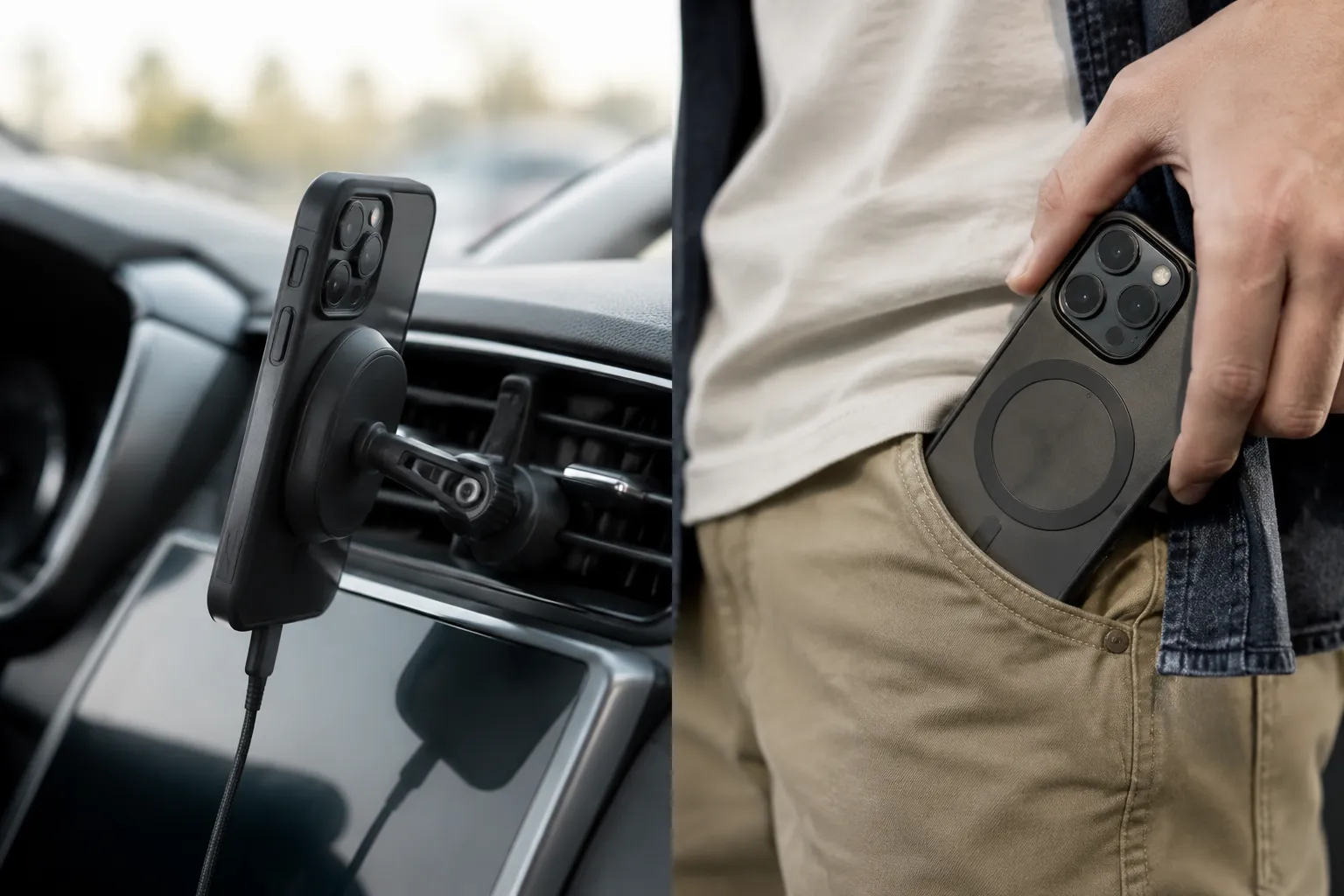
There is one reason to choose a bumper, and it is honest. Thickness. A decent bumper adds about 1.5 to 2 millimeters of width to a phone. A full wrap adds closer to 3 to 4 millimeters, depending on the material and the drop protection rating. That difference is noticeable in the hand, in the pocket, and in the car mount.
The bumper case in this test made the phone feel substantially slimmer than the full wrap did. The phone slid into tight jeans pockets more easily. It felt closer to the naked device, which matters to people who bought a thin phone intentionally. The full wrap made the phone feel slightly chunky, like a device from five years ago when cases were judged by how much armor they added.
This is a real trade-off. It is the only real trade-off. The full wrap wins every protection argument. The bumper wins the only argument that is not about protection, which is the argument about how the phone feels in daily use.
But the feeling of a thin phone is fleeting. The crack on a glass back is permanent.
Wireless charging and heat behave differently
Both cases are wireless-charging compatible. Both allowed a standard Qi charger to reach full charge in roughly the same time. The difference was heat dissipation during charging and during heavy use.
The bumper case allowed the back glass to shed heat directly into the air. The full wrap trapped heat against the glass, and the phone ran measurably warmer during a 30-minute navigation session and during wireless charging. Not dangerously warm, not throttling-performance warm, but noticeably warmer to the touch.
Heat is the silent killer of battery health. Lithium-ion cells degrade faster at sustained higher temperatures. The difference between a phone that runs at 30 degrees Celsius and one that runs at 36 degrees Celsius over two years of daily charging is measurable in battery capacity, and it is not in the full wrap's favor.
This is the full wrap's weak point. It protects the glass perfectly, but it holds heat against the very battery it is trying to protect. The bumper, by leaving the back exposed, gives the phone a thermal escape route. For someone who charges wirelessly overnight every night, this could add up over the life of the device.
How much it adds up to is genuinely unclear. Battery degradation is slow and influenced by many factors. But it is the one place where the bumper's exposed back is an advantage, and it is worth naming because it is real.
The repair cost calculation flips everything
The decisive factor in this test was not the drop test itself. It was the repair estimate after the drop test. The bumper case's phone cracked its back glass on drop number seven of the back-first series. That crack is not a cosmetic issue. It is a structural and financial one.
Back glass replacement on a modern flagship is not cheap. The glass is bonded to the internal frame, and replacing it often means removing the entire internal assembly. In many cases, repair shops quote prices that approach half the value of the phone. Some manufacturers will not repair back glass at all and instead replace the whole device at a reduced rate.
The full wrap's phone sustained zero damage across all forty drops. The case itself, a mass-market product, costs less than a single back-glass repair. This is not a subtle economic argument. It is a difference of roughly an order of magnitude, and it is the reason this column comes down on one side.
Bumpers are for people who have never broken a phone back. Full wraps are for people who have, or who have watched someone else do it and winced at the cost.
The case that stays on wins
Over the full two weeks of testing, one more thing emerged that neither spec sheet mentioned. The bumper case started to develop a slight looseness around the corners by day ten. Not enough to feel in normal use, but enough to notice when squeezed. The full wrap maintained its tight fit throughout.
This is the long game of case design. Bumpers, because they have less surface area gripping the phone, rely on a few contact points. Full wraps grip the entire chassis. Over time, as the case material stretches and compresses from repeated insertions and removals, the full wrap's distributed grip holds up better. The bumper's concentrated grip points fatigue faster.
A case that loosens is a case that no longer protects. It shifts during drops, allowing the phone to move inside the frame. It lets dust in more easily. It turns the impact energy into a whiplash effect where the phone bounces against the case interior instead of being held still.
Ten days is not a long-term test. But the trend was clear, and it matched the physics. More contact area means more stable grip over time. The bumper's elegant minimalism is also its structural weakness.
The phone in the full wrap went back into its box looking like the day it arrived. The phone in the bumper went back with a hairline crack across its back and a scuffed camera ring. Neither case failed catastrophically. Both did their basic job. But only one kept the phone whole, and that is the entire job description.