The iPhone 15 Pro Max is a terrible phone to shop for when it comes to battery life. Not because the battery is bad, but because the phone is so good at everything else. A person buys it for the titanium frame, the action button, the 5x telephoto lens that makes a distant mountain look close enough to touch. Then the phone asks for 20 percent more power by 2 p.m. because the screen has been fighting the sun all morning and the camera app has been chewing through the neural engine. That is the moment a traveler realizes the phone is the centerpiece of the kit, and the kit needs help.
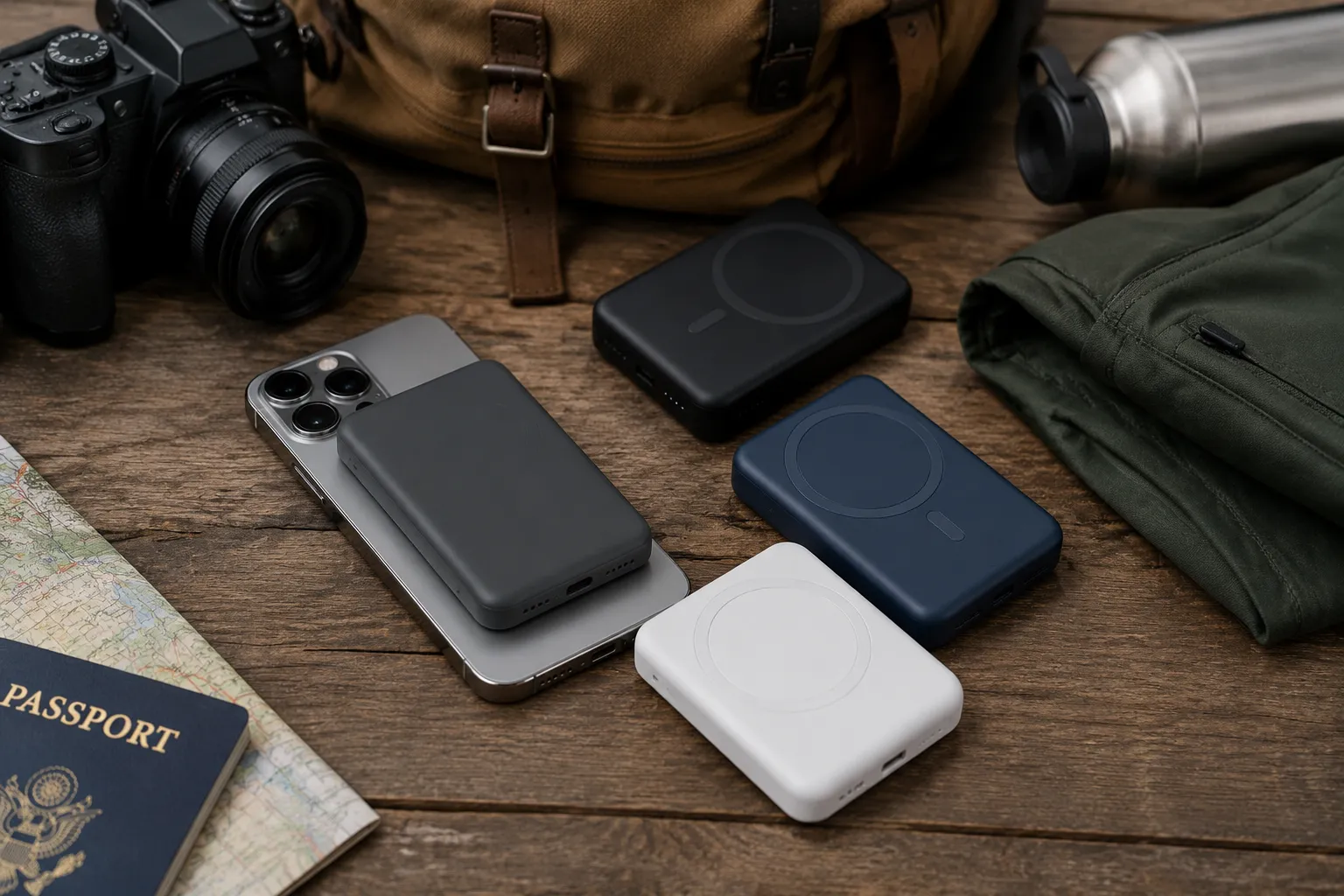
MagSafe battery packs solved the physical part of that problem years ago. They snap on, they charge, they peel off when a person needs to use the phone one-handed. The remaining problem is selection. The market is crowded with slim bricks that all look identical in a product photo and all behave very differently on an airplane tray table. Some of them trickle charge so slowly that the phone loses ground while plugged in. Some of them run hot enough to make the screen dim under the strain. Some of them simply fall off in a backpack because the magnet array is weak.
What follows is a short list of the packs that actually work for the specific burden of carrying a Pro Max through airports, train stations, and foreign cities. The criteria are simple: the pack must deliver enough power to matter, it must attach with confidence to the larger Pro Max chassis, and it must not turn into a hand warmer under load. A few honorable mentions get cut for missing one of those three.
Why the Pro Max changes the math
The standard iPhone 15 can get away with a 5,000 mAh pack that tops it off once. The Pro Max has a bigger battery, which sounds like it should be easier to supplement, but the reverse is true. The phone draws more power under load. Its screen is bigger, its camera system is hungrier, and its cellular modem works harder to keep up with the same tasks. A small pack that delivers 7.5 watts of wireless charging will not keep pace with a Pro Max that is navigating, streaming audio, and logging GPS tracks simultaneously. The phone will drain anyway, just slower.
That is the core distinction a traveler has to understand before buying anything. A MagSafe pack is not a spare battery in the traditional sense. It is a life-support system. It buys hours, not days. The best packs for the Pro Max are the ones that push enough wattage to actually reverse the drain while the phone is in active use, not just when it is sitting in a pocket with the screen off.
There is also the physical dimension. The Pro Max is a wide phone. A pack designed for the regular iPhone 15 will sit flush on the back but leave a noticeable overhang on the camera bump side, or worse, it will sit slightly off-center because the magnet array was tuned for a smaller device. That wobble matters when the pack is riding in a bag or being used as a grip during a long video call.
Anker 633: the heavyweight that earns its bulk
Anker's 633 Magnetic Battery is a chunky slab of a device, and it does not apologize for it. The 10,000 mAh capacity is double what most magnetic packs offer, and the physical presence reflects that. It is thick, it is heavy, and it makes the Pro Max feel like a brick with a screen. For a person who spends all day on their feet in a foreign city, that is a real cost.
The trade-off is that this pack actually charges the phone. It pushes up to 15 watts wirelessly, and it has a USB-C port that can deliver 20 watts over a cable. That second option is the killer feature for travelers. A person can snap the pack to the back for wireless top-ups during a long museum queue, then pull it off at a cafe and run a cable to the phone while the pack itself is plugged into the wall. It becomes a pass-through charging station that fills the phone and itself at the same time.
The magnet strength is excellent. The Pro Max stays attached through jostling and pocket transfers. The folded kickstand on the back is useful for propping the phone up on a train tray table, though it is flimsier than the rest of the unit. The fabric finish picks up lint and crumbs.
This is the pick for a traveler who knows they will be away from wall outlets for long stretches and wants a single device that can serve as both a battery and a charging hub. It is not the pick for someone who wants to forget the pack is there.
Anker MagGo 6.6K: the everyday traveler's balance
The MagGo 6.6K exists in the sweet spot that most travelers actually need. It has 6,600 mAh of capacity, which is enough to take the Pro Max from 20 percent to somewhere around 80 percent in a single charge, and it does so without the bulk of the 633. The pack is slim enough that the phone still slides into a loose pocket, though a person will feel the added weight at the top of the device.
Its 15-watt wireless output is the standard ceiling for MagSafe charging, and the pack hits it consistently. The passive cooling design means it runs warm, but not alarmingly so, and the screen does not dim from thermal throttling in normal use. That is a meaningful distinction. Some cheaper packs push the phone's thermal limits and the phone responds by cutting the display brightness, which defeats the purpose of having a bright OLED screen in daylight.
The kickstand folds flush into the back and is solid enough to hold the phone at a comfortable viewing angle on a nightstand. The USB-C port supports pass-through charging, so a person can plug the pack into a hotel outlet overnight and wake up with both the pack and the phone full.
This is the default recommendation for most travelers. It charges fast enough to matter, it attaches cleanly to the Pro Max, and it does not add so much weight that a person regrets bringing it on a long walk.
Apple's own MagSafe pack: overpriced but perfectly shaped
Apple's official MagSafe Battery Pack is the weirdest entry on this list because it does not look like a travel product at all. It is small, pill-shaped, and it only holds 1,460 mAh of internal capacity. On paper, that is laughable for a Pro Max. The phone's own battery is more than three times that size. A single top-up from Apple's pack will not even get a dead Pro Max to 50 percent.
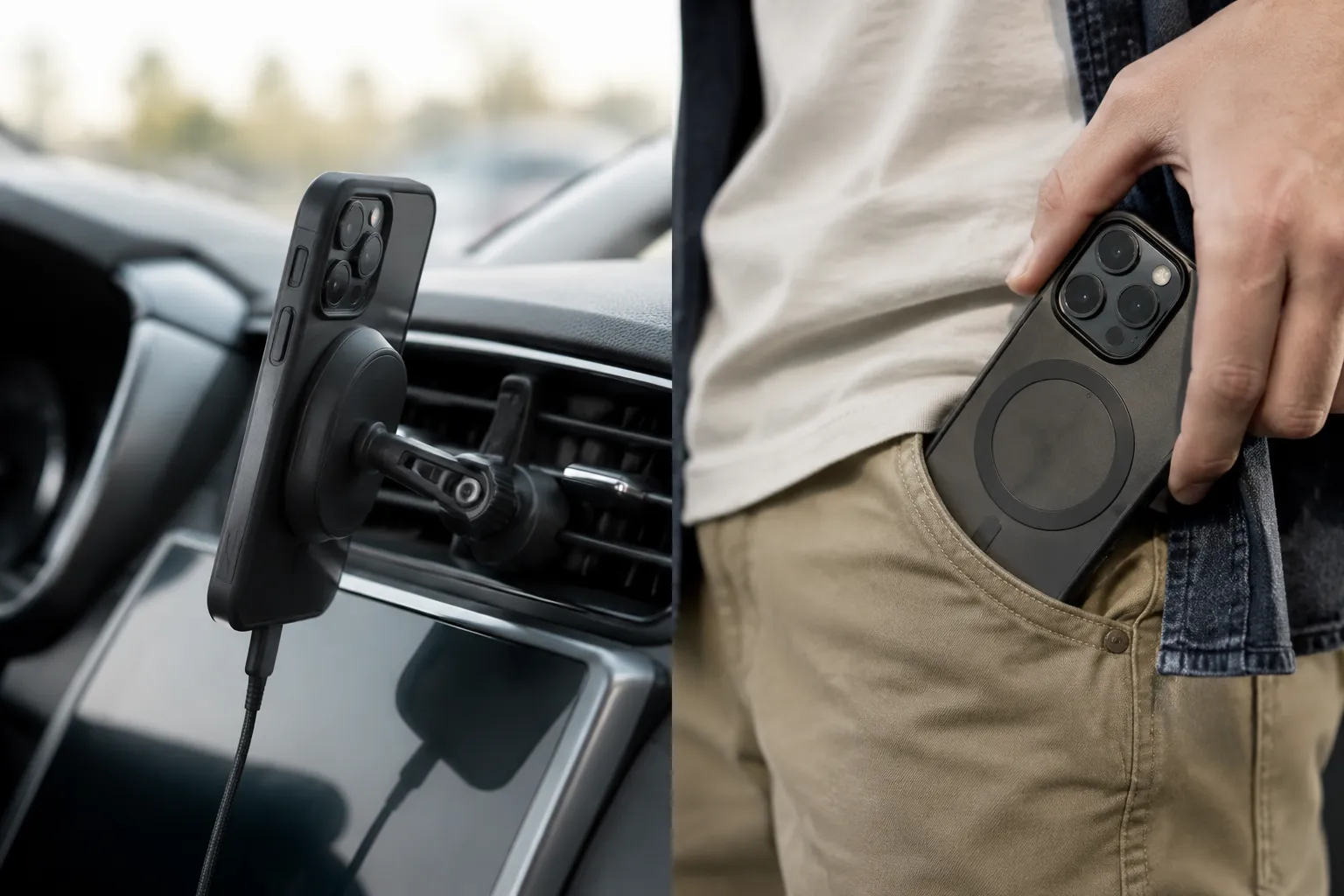
What the pack does offer is the best physical integration of anything on the market. The magnet array is perfectly aligned, the soft-touch finish matches the phone's aesthetic, and the whole unit is so light that a person genuinely forgets it is attached. It is the only pack that does not make the Pro Max feel like a burden in a front pocket.
It also does something clever with software. When the pack is attached and the phone is locked, the phone drains the pack first. When the pack is low, the phone stops drawing from it and falls back to its own battery. That seems obvious, but many third-party packs do not handle this handoff gracefully, and the phone ends up at 1 percent with the pack still showing a full charge that it will not release.
The charging speed is capped at 7.5 watts, which is the older Qi standard rather than full MagSafe speed. That means it barely keeps pace with an active Pro Max. It will slow the drain, sometimes to a crawl, but it will not reverse it during heavy navigation use.
This pack is for the traveler who wants a slim emergency top-up, not a full day of extended battery. It is also for the traveler who values the ability to snap the pack on, use the phone for an hour of light browsing, and snap it off without ever noticing the added weight. At its price, it is a luxury item, but it is the only luxury item on this list that does not get in the way.
Zendure SuperMini 10K: the wired option for power users
The Zendure SuperMini 10K is not a magnetic pack in the traditional sense. It is a slim 10,000 mAh brick with a USB-C cable that happens to be small enough to live next to the phone in a pocket. It loses the convenience of snap-on attachment, but it gains something more important for heavy users: efficiency.
Wireless charging wastes energy as heat. The phone gets warmer, the pack gets warmer, and some percentage of the power never makes it into the battery. A direct wired connection avoids most of that loss. The SuperMini can push 20 watts over its USB-C cable, which is faster than any wireless option and keeps the phone cool enough that the screen stays at full brightness even during a simultaneous charge and navigation session.
The pack itself is about the size of a deck of cards but thinner. It slides into a passport pocket or a small sling without complaint. The fabric finish is durable, and the display on the side shows the exact remaining percentage, which is a small detail that becomes essential when a person is trying to budget power for a long layover.
This is the pick for a traveler who is already carrying a USB-C cable, which should be every traveler, and who wants the maximum amount of usable power in the minimum amount of space. The trade-off is that it requires two hands to use while walking, which makes it a poor choice for someone snapping photos one-handed on the street.
The capacity trap: when bigger is worse
A person might look at the Anker 633 at 10,000 mAh and the Apple pack at 1,460 mAh and assume the answer is simply to buy the bigger one. That logic breaks down in the field. Capacity is not the only variable. Weight is a tax that gets paid every single moment the pack is in a bag, and charge speed determines whether the pack is actually useful during active phone use.
A 20,000 mAh magnetic pack exists, and it is a brick. It doubles the weight of the phone when attached, it is too thick to fit in a pocket, and it charges at the same 15 watts as a pack a third of its size. A traveler who buys that pack for a day of sightseeing will leave it in the hotel room by the second afternoon because it is simply not worth carrying.
The better strategy is to match the pack to the trip. A weekend city break with wall outlets at every cafe calls for a slim 5,000 mAh pack that disappears in a jacket. A full day of hiking in a national park with no power in sight calls for the Anker 633 or a wired 10,000 mAh option. A long-haul flight with seatback USB ports calls for nothing at all, because the phone can charge from the port overnight.
That last point is worth sitting with. Most travelers overestimate how much battery they need because they underestimate how often they pass a wall outlet, a USB port on a train, or a rental car with a charging cable. The phone itself is also better at managing power than it was a few years ago. A Pro Max on a full charge can handle a day of moderate use without breaking a sweat. The pack is insurance, not a primary power source, and it should be sized accordingly.
How to test a pack before committing
No amount of spec reading substitutes for a quick field test. A traveler should buy a pack a few days before a trip and run it through a simple routine. Attach it to the phone, start a GPS navigation session, and turn the screen brightness up to full. If the phone's battery percentage goes up while the pack is attached and the screen is on, the pack is doing its job. If the percentage holds steady or dips slowly, the pack is only slowing the drain, which is acceptable for a light emergency but not for a full day of use.
Then comes the heat test. Leave the pack attached while the phone is streaming video for thirty minutes. Pick the phone up and feel the back. A pack that runs hot enough to be uncomfortable against bare skin will quickly become a pack that gets left in a bag. The phone's own thermal management will also kick in, dimming the display and slowing the charging, which defeats the purpose.
The final test is the magnet test. Shake the phone gently while holding the pack. It should stay firmly attached. Then slide the phone into a tight pocket and pull it out. The pack should still be there. Many cheaper packs have weak magnets that work on a desk but fail in the friction of a jeans pocket, and the result is a $50 battery pack sliding silently onto a subway floor.
The comfort of a full charge at the airport gate
Travel is full of moments where a phone battery at 10 percent becomes a genuine crisis. The boarding pass is digital, the hotel reservation is in an email, the map to the rental car lot is on the screen. A dead phone turns a smooth journey into a scavenger hunt for a charger and an outlet, usually in a crowded terminal where every seat near a wall is taken.
A good MagSafe pack removes that fear. It does not have to be the biggest or the fastest or the most expensive. It has to be the one that a traveler actually carries, that attaches without fuss, and that delivers enough power to make a difference. The Anker MagGo 6.6K does that for most people. The Apple pack does it for people who value lightness above all else. The Anker 633 does it for people who need to charge everything, not just the phone.
The Pro Max is a tool for capturing and navigating the world. A pack that rides along on the back, quietly replenishing the battery, turns that tool into something a traveler can trust for a full day. That trust is worth the extra weight in a bag, and it is worth the careful selection of the right pack for the right kind of trip. Choose well, and the phone will outlast the journey. Choose poorly, and it will die at the worst possible moment, usually in the middle of a foreign street with the correct train platform still a mystery.