The moment a case refuses to come off a phone is almost never the moment anyone planned for. People watch tutorial videos about adhesive removal, buy specialized tools, and still find themselves holding a device with a cracked back glass and a bent frame. The stubborn case is not a puzzle to be solved with more force. It is a materials problem, and treating it like one changes the entire approach.
Cases stick for a few specific reasons. Dirt and dead skin cells work their way between the case and the device, then combine with moisture from a pocket or a sweaty hand. The mixture dries into something that acts like a weak cement. Heat from the phone itself can soften certain plastics over time, allowing the case to deform slightly and grip the device's edges more tightly. And some cases, especially the soft TPU ones that feel nice in the hand, are manufactured with a tacky surface that was always going to grab onto whatever it touched.
None of that means the case is stuck forever. It means the removal strategy should target the bond, not the phone.
Why prying is the wrong first move
The natural instinct is to find a gap and lever the case away from the device. A fingernail works for the first few millimeters. Then the gap narrows, the case resists, and the person reaches for a butter knife, a flathead screwdriver, or the spudger from a repair kit. This is where damage happens.
A phone frame is not a solid block of metal. The edges house antenna lines, button mechanisms, and thin plastic dividers. The glass panels on the front and back are glued to the frame with adhesive that is strong enough to hold for years but not strong enough to survive a twisting metal tool shoved into the seam. When the case finally gives way under prying force, the tool often does not stop at the case. It keeps going into the frame or under the glass.
Prying also fails because it addresses the wrong layer. The case is stuck to the exterior of the phone, but the tool works between the case and the phone at a single point. That point becomes a fulcrum, and the force concentrates there. The rest of the case stays bonded, so the person applies more leverage, and the frame bends or the glass cracks at that one spot.
There is a better approach, and it starts with understanding that the case is not one piece. Most cases have some flex, even the rigid ones. Working with that flex, rather than against it, is the foundation of a safe removal.
The corner-peel method that actually works
Every case has a weakest corner, usually the one opposite the camera bump or the one with the most cutout area. That corner is the starting point. Instead of trying to lift the entire case edge at once, the technique is to roll the case away from the phone, corner by corner, like peeling a tight glove off a hand rather than pulling it straight off.
The motion is slow and deliberate. One corner gets lifted just enough to expose a small section of the phone's frame. Then the grip shifts to the next corner, and that one gets the same treatment. The case begins to walk off the device, each corner releasing a little more of the perimeter. This works because it distributes the force across the entire case instead of concentrating it at one edge.
For cases with a separate inner shell and outer layer, the two parts need to be separated first. Trying to pull a two-piece case off as one unit creates tension between the layers, and that tension makes the whole thing feel locked in place. The outer layer slides off first. The inner shell then peels away from the back of the phone with far less resistance.
This method sounds too simple, which is why most people skip it. They go straight for the tool. But the corner-peel method works precisely because it does not fight the case's natural stiffness. It uses the case's own structure to break the bond gradually.
Heat: the right way to soften a grip
Heat is the single most effective tool for loosening a stubborn case, but it has to be applied with judgment. The goal is to warm the case itself, not the phone. Most cases soften at temperatures well below what would damage the internal components of a modern smartphone. The risk is not the phone overheating. The risk is the person getting impatient and applying too much heat too quickly.
A hair dryer on medium heat, held about six inches away, works well. The case should feel warm to the touch but not hot. The person should be able to hold it comfortably. That warmth takes about 30 to 60 seconds to penetrate a typical TPU case. Rigid polycarbonate cases need a bit more time because the material conducts heat poorly.
Once the case is warm, the corner-peel method becomes noticeably easier. The material gives more readily, and the bond between case and phone breaks with less force. If the case starts to cool and resist again, the heat gets reapplied. This is not a race. Several short heating sessions beat one aggressive blast.
One caution applies here. Some phones have adhesive holding the back glass in place. Extreme heat can soften that adhesive too. The goal is to warm the case, not to heat the entire phone to the point where the back panel shifts. Keeping the hair dryer moving and focusing on the edges rather than the center of the back minimizes this risk.
Lubrication as a last resort before tools
When heat and peeling are not enough, the bond between case and phone is likely a combination of dried residue and suction. A small amount of lubrication can break that seal. The right lubricant matters more than the amount.
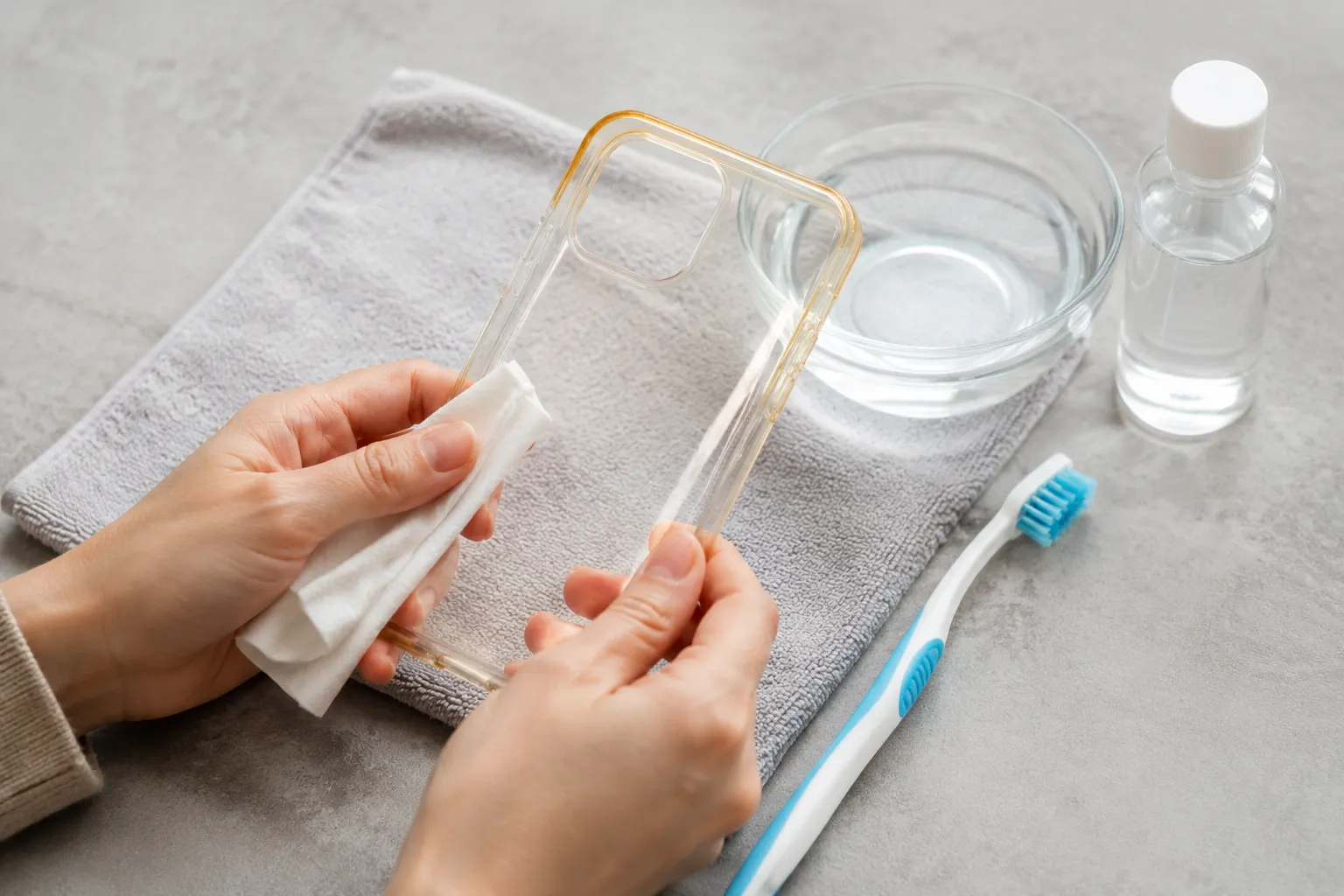
Isopropyl alcohol at 90 percent or higher is the standard choice. It evaporates quickly, does not leave a conductive residue, and is safe for the exterior surfaces of a phone. The application method is precise: a drop or two on a cotton swab, then the swab is run along the seam between case and phone. The alcohol wicks into the gap by capillary action and breaks down the dried residue holding the case in place.
Water is a poor substitute. It does not break down the residue effectively, and it lingers in the gap, which can cause issues if it seeps into ports or under the glass. Soapy water works slightly better but leaves a film that needs cleaning afterward. The alcohol evaporates, which makes it the cleanest option.
After the alcohol has had a few seconds to work, the corner-peel method gets another attempt. The case should release with noticeably less resistance. If it does not, the alcohol has not reached the bonded area, and the swab should be run along a different section of the seam.
The lubrication step is not a replacement for heat. It works best after the case has been warmed, because warmth makes the material more pliable and opens micro-gaps that the alcohol can penetrate.
The tools that earn their place
Some cases genuinely cannot be removed by hand. The corner-peel method fails, heat does not help, and the case feels welded to the device. At that point, a tool becomes necessary. The right tool is the one that can slide into the gap without concentrating force at a single point.
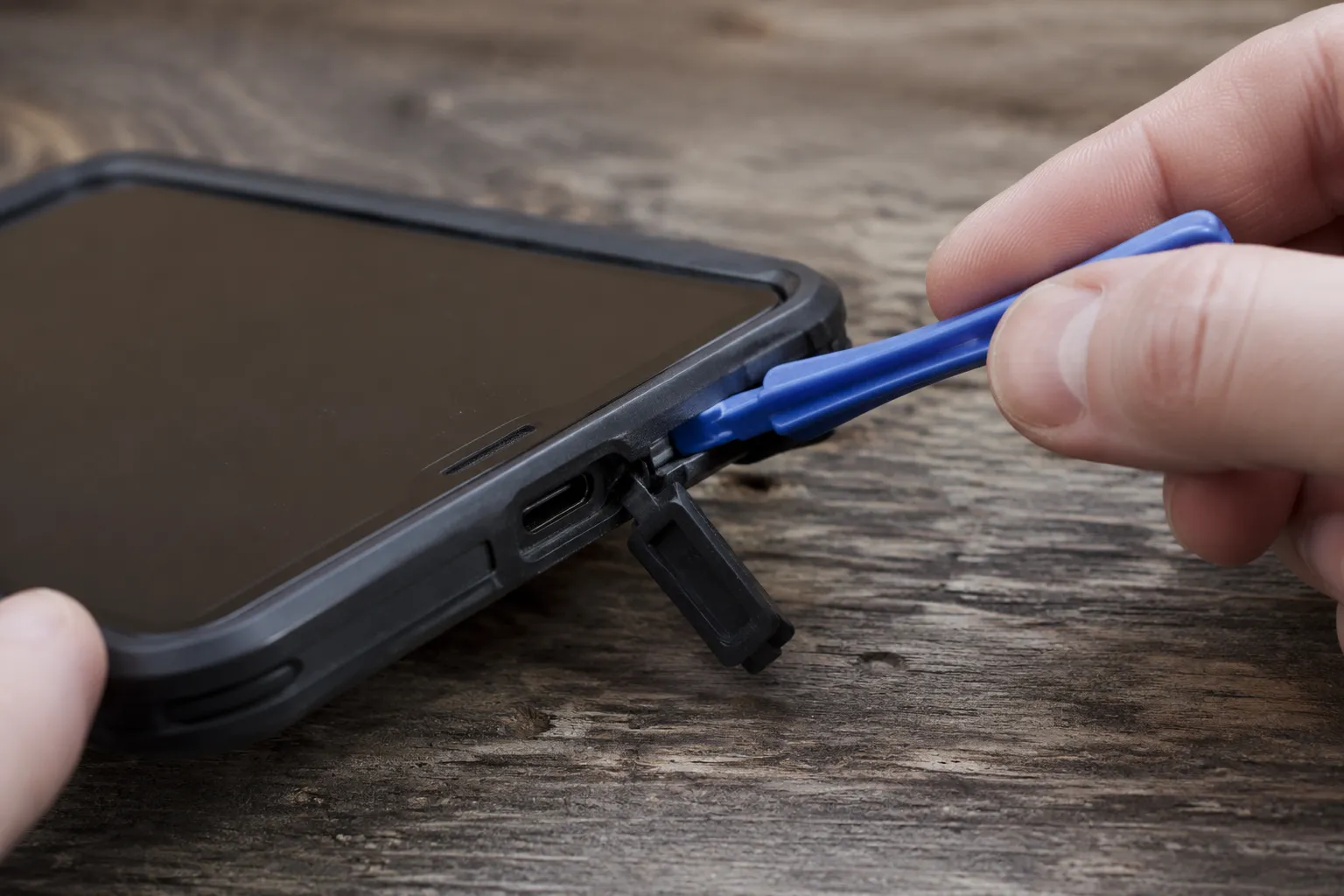
A plastic spudger with a thin, flat edge is the best option. It is soft enough to flex rather than gouge, and its shape matches the seam between case and phone. The spudger gets inserted at a shallow angle, almost parallel to the phone's surface, and then slid along the seam rather than levered against it. This sliding motion breaks the bond incrementally without prying up on the glass.
A guitar pick or a thin plastic card also works. The flexibility of these materials means they conform to the gap rather than digging into it. The technique is the same: insert, slide, move to the next section.
Metal tools belong in a drawer. Even a precision flathead screwdriver has a sharp edge that can scratch the frame or slip under the glass. The few seconds saved by using a metal tool are not worth the risk of a cracked back panel that costs more than the case did.
The suction cup is an underrated addition. A small suction cup placed on the back of the phone, right at the edge where the case is stuck, creates a lifting force that pulls the glass away from the case rather than pushing a tool into the seam. This is especially helpful for cases that have formed a tight vacuum seal against the back of the device.
When the case is genuinely fused to the phone
A rare category of failure deserves its own mention: the case that has chemically bonded to the phone's finish. This happens most often with cheap cases made from low-grade TPU that breaks down over time. The material degrades, becomes sticky or gummy, and literally adheres to the phone's coating at a molecular level. No amount of heat or peeling will separate this case cleanly.
The approach here is to remove the case in small sections rather than as a whole. A pair of scissors can cut through the softened, degraded TPU, allowing the person to peel away one strip at a time. This sacrifices the case, which was already ruined, but protects the phone. Each strip gets peeled away from the device, and the remaining adhesive residue gets cleaned off with alcohol or a dedicated adhesive remover.
This scenario is why checking a case periodically matters. A case that has become tacky, sticky, or discolored is signaling that its material is breaking down. Removing it early takes seconds. Removing it after it has bonded can take an hour and a bottle of adhesive remover.
What to do before the case goes back on
Once the case is off, the phone needs attention before a new case goes on. The residue left behind by the old case is not just cosmetic. It can hold grit against the phone's surface, and that grit scratches the frame and back glass over time.
A soft microfiber cloth and isopropyl alcohol remove most residue. Stubborn spots benefit from a gentle circular motion with a cotton swab dipped in alcohol. The phone should be inspected for any debris that might have been trapped between case and device, especially around the camera lens and the charging port.
The replacement case deserves a quick check before installation. A new case should fit snugly but not require force to slide onto the phone. If the case has to be stretched aggressively over the corners, it is either the wrong size or the wrong shape for that specific phone model. Forcing it on creates the exact conditions for a future stuck case.
A thin layer of dust or lint on the inside of a new case acts as an abrasive over time. Wiping the interior with a dry cloth before installation removes that risk. Some people apply a very light dusting of talcum powder to the inside of a tight case to ease future removal, though this is a matter of preference and should be tested on a small area first.
The whole process takes longer to describe than to execute. A warm case, a patient corner peel, and a few drops of alcohol resolve the vast majority of stuck cases in under five minutes. The cases that resist those steps are the ones where the material has failed, and the answer there is not more force but a different strategy entirely: cut it off and clean up afterward.