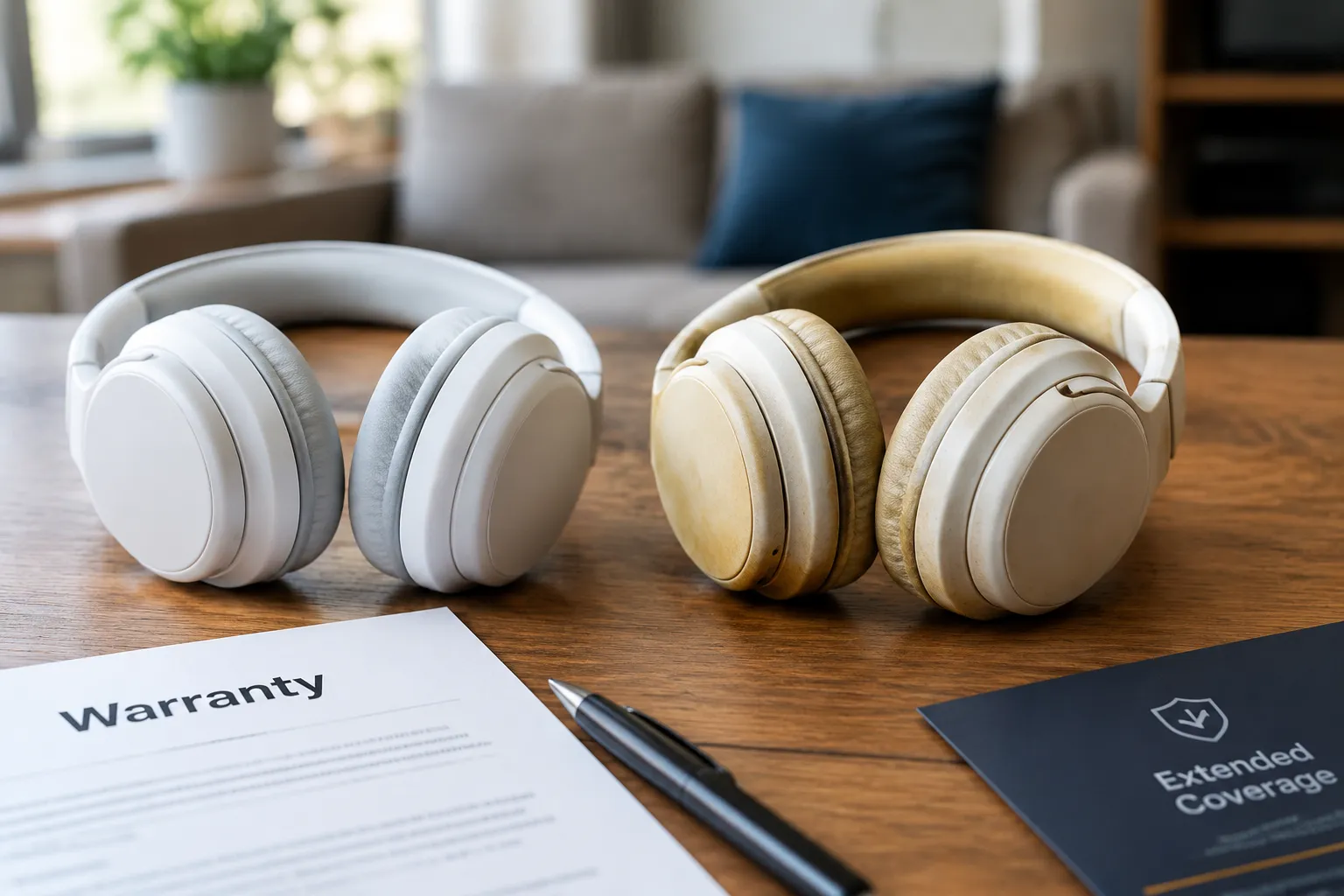
Polycarbonate turns yellow. It is a chemical inevitability, a slow ambering that starts at the edges and works inward, until a case that once looked like fresh ice looks like a cup stain on a diner counter. Every company that builds a case from this material knows it will happen. The only question is who is willing to say so in writing.
The warranty pages of most phone case brands read like a hostage note. "Limited lifetime," they say, and then the asterisk arrives with the speed of a closing door. The fine print excludes discoloration, scratches, normal wear, and anything that happens after the first three months of gravity doing its job. Yellowing is the great unspoken defect of transparent cases, and most warranty language is engineered specifically to make sure the customer swallows the cost of it alone.
Some brands have decided that this is bad business. A handful of case makers now put actual money behind the promise that their clear cases will stay clear, with warranty terms that treat yellowing as what it is: a material failure, not an act of God.
The Chemistry Nobody Wants to Talk About
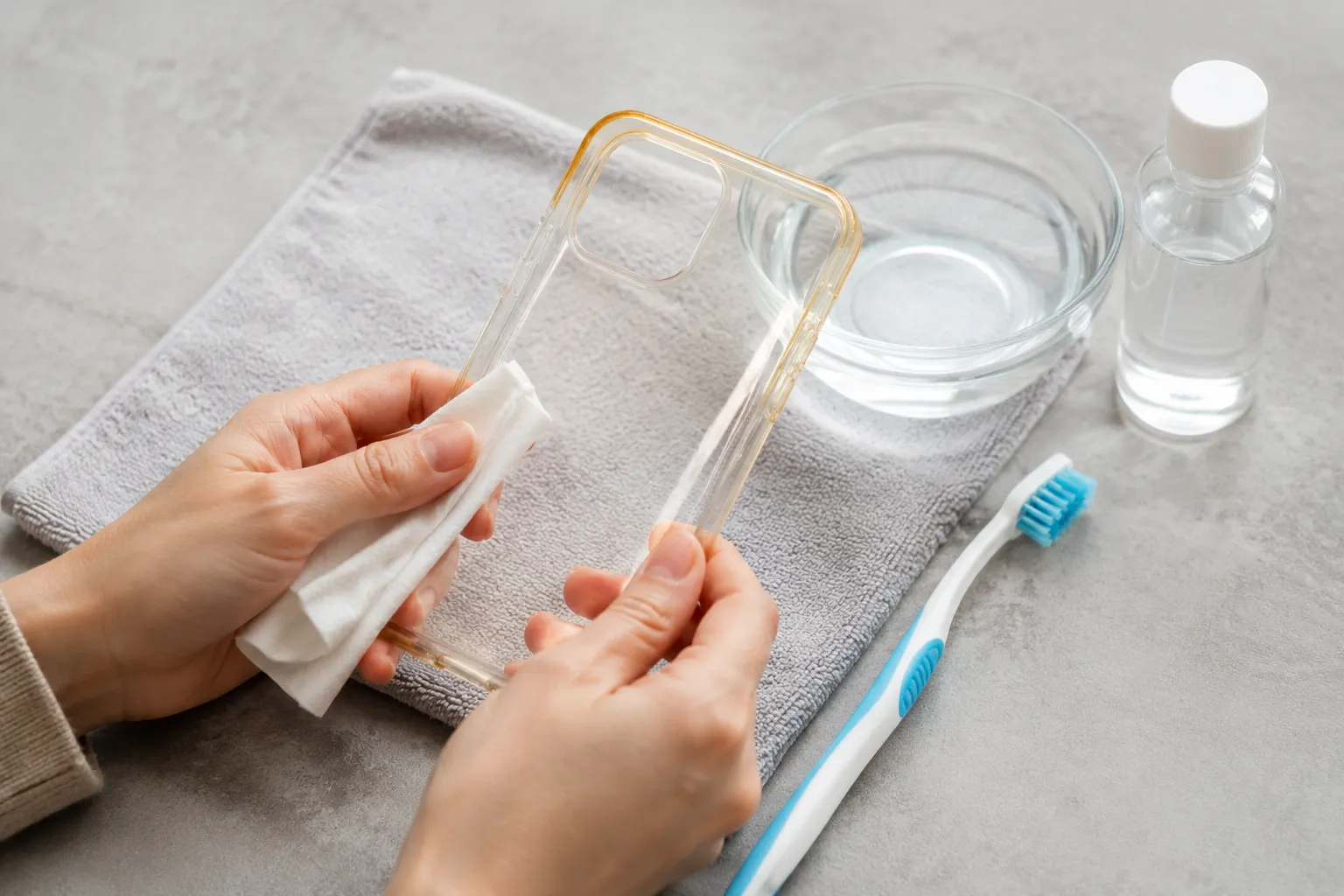
Yellowing happens because polycarbonate and thermoplastic polyurethane (TPU) break down under ultraviolet light. The polymer chains oxidize, and the byproducts of that oxidation are chromophores, molecules that absorb blue light and reflect yellow. It is the same reaction that turns old computer cases beige and vintage game consoles the color of weak tea. Heat accelerates it. So does the oil from a human hand, which is why the edges of a phone case, where fingers grip constantly, yellow before the center of the back panel.
Manufacturers have two ways to fight this. They can add UV inhibitors to the resin, which slow the oxidation but do not stop it. Or they can use a material that does not oxidize in the first place, like a hard acrylic or a specially formulated polycarbonate blend. The first option is cheap and common. The second is expensive and rare. A case that costs eight dollars to make and sells for thirty does not have room for a resin that costs twice as much per pellet.
The result is a market flooded with clear cases that all promise the same thing and all fail at the same rate. The warranty is the only place where a brand can prove it believes in its own material choices. A company that knows its case will stay clear for two years can afford to guarantee that. A company that knows its case will look jaundiced in six months cannot.
Who Actually Covers Yellowing
The short list of brands with explicit anti-yellowing warranties is short enough to count on one hand. OtterBox, the giant of the category, offers a limited lifetime warranty on most of its cases, but the language is careful: the warranty covers defects in materials and workmanship, and discoloration from normal use is conspicuously absent from the list of covered failures. In practice, OtterBox has been known to replace yellowed cases if a customer pushes, but the policy does not say so. The customer has to guess.
Spigen, the Korean brand that dominates Amazon search results, offers a similar structure. Their clear cases, like the Ultra Hybrid, yellow at a moderate pace, and their warranty page is a study in evasion. It covers manufacturing defects, which is a category that apparently does not include the chemical reaction that every materials engineer knows will occur. A customer who files a claim about yellowing gets a polite email about normal wear and a coupon code.
Then there is the outlier. Smartish, a small Texas-based brand, publishes an anti-yellowing guarantee on its clear cases with unusual specificity. The warranty promises that if the case yellows within the warranty period, the company will replace it. Not "at our discretion." Not "subject to inspection." The policy is stated in plain English on the product page, and the company has a reputation for honoring it without a fight.
The price difference between these brands is not the story. Spigen cases retail for around fifteen dollars. Smartish cases sit at a similar price point. The difference is not what the customer pays, but what the company is willing to lose when the chemistry does what chemistry does.
The Economics of a Replacement
A case replacement costs the manufacturer roughly four dollars in materials and shipping. For a brand selling tens of thousands of clear cases a year, a generous anti-yellowing policy might trigger a few hundred replacements annually. That is a rounding error against the marketing budget, less than the cost of a single sponsored post from a mid-tier tech influencer.
Yet the industry behaves as if every replacement is a mortal wound. The reason is not cost. It is the admission. A warranty that covers yellowing is a public statement that the product will yellow, and the marketing department of every case brand has spent a decade insisting that their product will not. The legal department writes warranties to protect the brand, not the customer. The clause about "normal wear and tear" exists so the company can deny claims without looking unreasonable, and yellowing is the perfect thing to classify as normal wear because, technically, it is.
The brands that write anti-yellowing warranties have made a different calculation. They have decided that the cost of a few replacements is lower than the cost of the reputation damage from a thousand one-star reviews that all say the same thing: "Turned yellow in two months." Amazon reviews are the real warranty document. A customer who gets a yellowed case replaced for free becomes a person who recommends the brand. A customer who gets denied becomes a person who posts a photo.
The Material Shortcut That Changes the Math
A handful of brands avoid the warranty question entirely by building clear cases from materials that do not yellow. The most notable is a new generation of cases made from a hybrid acrylic blend, often marketed under names like "optical clear" or "crystal clear." These cases cost more to produce, and they feel different in the hand, harder and less grippy than TPU. But they do not yellow. The chemistry simply does not happen.
Mous, the British brand known for its magnetic accessories, has moved its clear cases toward this material. The Mous Clarity case uses a hybrid that the company claims will stay clear for the life of the phone. The warranty backs that claim. Casetify, another brand with a strong presence in the clear-case market, has done similar work on its Impact Clear case, and its warranty language reflects the material change.
These cases cost more. A Mous Clarity case runs around sixty dollars, roughly double the price of a standard clear case from a mainstream brand. The warranty is the justification for the premium. A customer who pays sixty dollars for a clear case is not paying for the case. The customer is paying for the guarantee that the case will not become an embarrassment by Thanksgiving.
What the Fine Print Actually Says
Reading warranty language is an exercise in learning what words mean when lawyers are done with them. "Lifetime" means the lifetime of the product, which the company defines as however long it feels like. "Manufacturing defects" means anything the company cannot blame on you. "Normal wear and tear" means everything the company wants to blame on you.
Yellowing falls into a legal gray zone that brands exploit with precision. A case that yellows has not cracked, shattered, or separated at a seam. Its structural integrity is intact. The defect is purely cosmetic, and the warranty language almost always specifies that cosmetic issues are excluded. The argument goes that a yellowed case still functions as a case, which is true in the same way that a stained shirt still functions as clothing.
Smartish is the notable exception because its warranty language names the enemy. The anti-yellowing guarantee covers "any discoloration caused by UV exposure" and instructs customers to file a claim with a photo. No return shipping. No interrogation. The company has published its claim rate in interviews, and the number is small enough that the policy reads as a genuine bet on the material, not a marketing gimmick.
The Claims Process as a Mirror
The way a brand handles a warranty claim reveals more than the warranty text ever will. A customer with a yellowed OtterBox case faces a support ticket, a photo submission, and a wait of several business days. Sometimes the replacement arrives. Sometimes it does not. The inconsistency is the policy.
Spigen routes claims through a form that asks for a proof of purchase, a batch code from inside the case, and a return shipping address. The company has a reputation for replacing yellowed cases within the first six months, but the process requires the customer to know that the option exists. The warranty page does not advertise it.
Smartish asks for a single photo and ships a replacement within a week. No proof of purchase. No serial number. The company has said that the cost of verifying claims exceeds the cost of honoring them, which is a rare moment of honesty in an industry that treats customer service as a loss to be minimized.
Why Some Brands Write the Check
The brands that put real money behind clear-case warranties share one trait: they sell their cases as long-term purchases rather than disposable accessories. A person who buys a sixty-dollar case expects it to last. A person who buys a fifteen-dollar case knows, on some level, that they are buying a temporary object. The warranty is a signal that tells the customer which category they are in.
This is why the warranty question matters more than the material question. A case can be built from a blend that resists yellowing beautifully, but if the company denies claims when yellowing occurs anyway, the material advantage is meaningless. Conversely, a case built from ordinary TPU with a generous replacement policy is a better purchase than a premium case with a warranty that hides behind weasel words.
The customer who reads warranty language before buying a clear case is rare. Most people see the word "lifetime" and stop reading. But the customer who has already been burned by a yellowed case reads the fine print the way a sailor reads a forecast. A brand that writes "we cover yellowing" in plain language is not just offering a service. That brand is saying the product will not fail in the way that all its competitors fail.
A Replacement Is a Cheap Marketing Campaign
Consider what happens when a customer files a successful anti-yellowing claim. The customer receives a new case in the mail, free of charge. The customer posts about it, either directly or in response to a question on Reddit about which clear case does not yellow. The brand is mentioned by name in a context of trust. That single replacement has a marketing value that exceeds the four dollars it cost to ship.
The brands that deny claims are not saving money. They are spending customer goodwill to save four dollars, and the exchange rate is terrible. A denied claim produces a permanent detractor. A long-term detractor tells an average of eleven other people about the experience, and in the case review economy of phone accessories, that is eleven potential sales lost to a competing brand that wrote a better warranty.
The clear-case market is unusual because the failure mode is visible and inevitable. A scratched case is the customer's fault. A cracked case is gravity's fault. But a yellowed case is the manufacturer's fault, written into the polymer structure of the product, and everyone with a background in materials science knows exactly when it will happen. The warranty is the only document where a company can be honest about that timeline, and most of them choose to lie.
The Cost of Honesty
Smartish has published its anti-yellowing claim rate in a handful of interviews, and the figure sits around 2 percent of clear-case sales. OtterBox, by contrast, has never published a claim rate for anything, because its warranty is a black box that operates case by case. The difference is not in the quality of the cases. It is in the quality of the promise.
A 2 percent replacement rate is a rounding error. Even at 10 percent, the cost of honoring anti-yellowing claims would be a fraction of a dollar per unit sold. The industry's refusal to offer this warranty is not an economic decision. It is a cultural one, a refusal to admit that a product category built on a fundamentally unstable material has a predictable failure mode.
The brands that write anti-yellowing warranties have figured out what the rest of the industry has not: the customer already knows the case will yellow. Every phone forum, every Reddit thread, every YouTube review says so. The brand that acknowledges this publicly and offers to make it right is not admitting weakness. The brand is building trust on the only foundation that matters, a promise the company is willing to keep in writing.
The clear case that does not yellow is a technical problem with a known solution. The warranty that covers yellowing is a business problem with an equally known solution. Only a few brands have solved both, and they are the ones worth buying from, because a warranty is just a promise, and a promise is only worth what the issuer loses when it breaks.