The magnetic array in an iPhone or a wallet puck is a small miracle of industrial design until the day it starts collecting pocket lint like a tiny woolly mammoth trapped in amber. Then it becomes a cleaning problem with real stakes. The same magnets that make accessories snap into place with that satisfying click also attract the exact metal filings, grit, and abrasive dust that can scratch a phone back or, worse, score the surface of a fine leather MagSafe wallet. The task is to clean this gear without turning a $150 leather folio into a streaky, chalky mess or demagnetizing something that relies on precise field alignment to hold a phone to a car mount at 70 miles per hour.
Most people reach for the wrong tools first. Isopropyl alcohol wipes seem logical until the solvent strips the factory oleophobic coating off a phone's glass back, leaving a patch of surface that smudges within minutes. Water alone is safe enough on glass but does little against the greasy film that builds up on leather edges from repeated hand contact. And the ubiquitous can of compressed air, while satisfying, does not remove the embedded grime that has been pressed into the crevices around the magnet ring by weeks of pocket pressure.
What the Magnets Actually Pick Up
A neodymium magnet array strong enough to hold a phone against a dashboard is also strong enough to pull ferrous particles out of the air from a surprising distance. The dust in a typical pocket is not just dead skin and cotton fibers. It contains microscopic flecks of steel from zippers, iron oxide from urban air pollution, and the fine metallic residue that rubs off coins and keys. These particles are exactly what the magnet grabs and holds against the surface with considerable force.
The problem is mechanical. Each particle is a tiny abrasive. When the phone slides into a pocket or the wallet gets handled, those particles grind against the leather or the glass, creating micro-scratches that accumulate into visible wear. This is why a MagSafe leather wallet often shows a dirty ring around the magnet area long before the rest of the leather ages gracefully. The magnets are not just attracting grime, they are actively grinding it into the surface.
Leather adds another layer of difficulty. It is porous, it absorbs oils, and it reacts badly to most solvents. The chrome-tanned leather used by Apple and most accessory makers has a thin topcoat that can be dissolved by alcohol, leaving a dull, blotchy patch that cannot be restored. The same cleaning move that works fine on a plastic case can permanently ruin a good leather wallet.
The Dry Removal Phase Goes First
The single most effective cleaning tool for MagSafe gear is a piece of ordinary cellophane tape. Not painter's tape, not duct tape, not the blue low-adhesion stuff. A strip of transparent household tape, pressed gently over the magnet area and lifted straight off, pulls away loose metallic dust and lint without introducing any liquid into the equation. This is the first move for any cleaning session, and it solves perhaps 60 percent of the problem before anything wet ever touches the surface.
The tape method works because it physically lifts particles out of the shallow crevices between the magnet ring and the case edge. Those crevices are too narrow for a cloth fiber to enter, and compressed air just pushes particles deeper into the gap. The adhesive grabs them and pulls them free. For the leather wallet, this is the single safest intervention available, since no moisture or solvent is involved.
A soft natural-bristle brush, the kind sold for camera sensors or dry-cleaning suede, comes second. A gentle circular motion over the magnet area dislodges particles that have been pressed flat against the surface. The brush should be kept exclusively for electronics and leather, because a brush that has touched a kitchen counter will carry grease and food particles that defeat the purpose. The tape and the brush together handle most routine maintenance if performed weekly.
Wet Cleaning the Phone Back Without Stripping Coatings
When the adhesive and brush routine is not enough, and there is a visible film of skin oils or a smudge that refuses to lift, the phone back needs a wet pass. The safe solvent is a dilute solution of distilled water and a single drop of mild dish soap, mixed in a clean cup. Not window cleaner, not alcohol, not vinegar, and certainly not the "electronics cleaning spray" that is mostly ammonia. Dish soap breaks down oils without attacking glass coatings, provided it is thoroughly rinsed afterward.
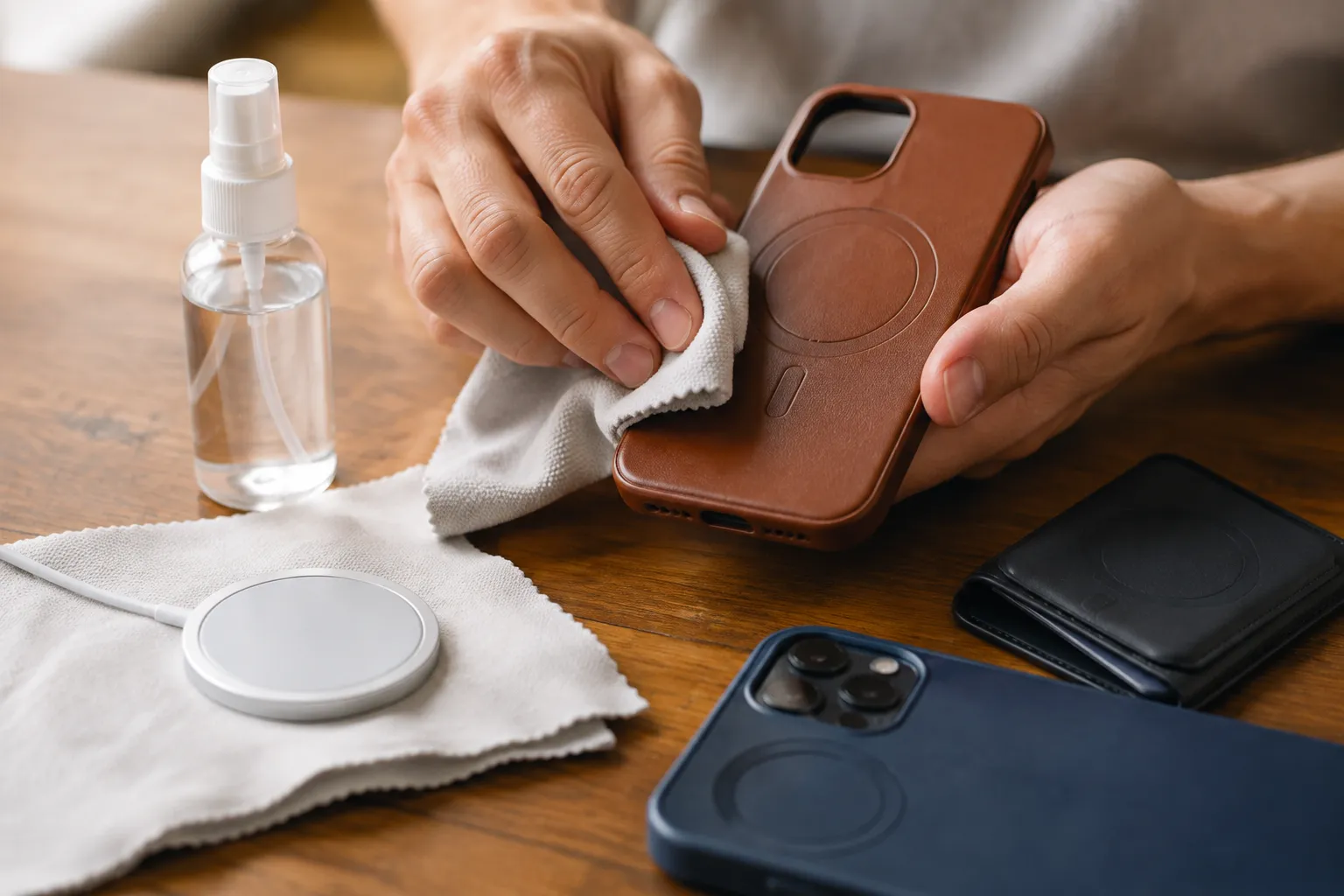
The application matters more than the solution. A microfiber cloth dampened with the soap solution, not dripping, is wiped in one direction across the magnet area. Then a second, dry microfiber cloth removes the residue. The motion should avoid circling, because circular wiping pushes particles back into the crevices. Straight passes from the center of the magnet ring outward carry debris away from the critical zone.
For stubborn buildup inside the tiny gap between the magnet ring and the camera bump, a wooden toothpick wrapped in a thin layer of microfiber can reach where cloth alone cannot. The wood is soft enough not to scratch glass, and the microfiber traps the grime. This is slow, meticulous work, and it should only be attempted after the tape and brush phases have done their job. No amount of scrubbing compensates for skipping the dry removal steps.
Leather Is a Different Species Entirely
The leather MagSafe wallet demands a separate protocol because the failure modes are not scratches but stains, discoloration, and the irreversible breakdown of the surface finish. Alcohol and ammonia-based cleaners pull the dye out of the leather and leave a pale, chalky bloom that looks like a chemical burn. Even the soap solution that works on glass is risky, because soap residue can darken leather unevenly and attract more dirt over time.
The correct approach for leather is a purpose-made leather cleaner, preferably one formulated for the delicate aniline and semi-aniline finishes used in premium phone accessories. These cleaners are pH-balanced and contain conditioning agents that replace the oils the cleaning process removes. A few drops on a soft cloth, applied with light pressure, lifts the grime while the conditioner keeps the leather supple.
After cleaning, leather needs a rest period. The wallet should sit open, flat, in a dry place for at least an hour so any moisture evaporates fully before the wallet goes back against a phone or into a pocket. Trapped moisture under the magnetic plate can cause the leather to warp or the adhesive holding the magnet array to the leather to weaken. Patience here prevents the exact damage that rushed cleaning causes.
The Magnet Strength Question
A persistent fear is that cleaning will demagnetize the array. The physics does not support this worry. Neodymium magnets lose their strength through exposure to heat above roughly 176 degrees Fahrenheit, through physical impact that cracks the brittle material, or through exposure to opposing magnetic fields. None of these occur during normal cleaning. Soap, water, tape, and brushes have no effect on magnetic field strength.
What cleaning can do is dislodge the magnet array itself. The magnets in a MagSafe wallet are glued into a recess in the leather or plastic. Aggressive scrubbing, especially with a stiff brush or a sharp tool, can shear that adhesive bond. The first sign of trouble is a wallet that no longer sits flush against the phone, rocking slightly on the magnet ring. If the array has shifted, no amount of cleaning fixes it, and the accessory needs replacement.
The practical rule is to clean with the lightest touch that removes the grime. If a surface needs significant pressure to get clean, that pressure is doing damage somewhere. The right answer is more frequent cleaning sessions, not harder ones. A weekly two-minute tape-and-brush routine prevents the quarterly deep clean that invites trouble.
Drying and Reassembly Order Matters
After any wet cleaning, the order of reassembly matters in ways that surprise people. The phone back should be completely dry before the wallet snaps on. If moisture is trapped between the wallet and the phone back, it creates a humid microclimate that accelerates leather degradation and can leave a watermark on the glass that is nearly impossible to remove. A dry microfiber pass over the phone back, followed by a few minutes of air drying, prevents this entirely.
The wallet itself needs the same attention on its interior surfaces. The card slots accumulate skin oils and the microscopic debris that falls off credit cards. A dry brush inside the slots, followed by a barely damp cloth if necessary, keeps the interior from becoming a breeding ground for the same grime that plagues the exterior. The interior is often ignored, and the result is a wallet that looks fine on the outside but smells musty and stains the cards after a few months.
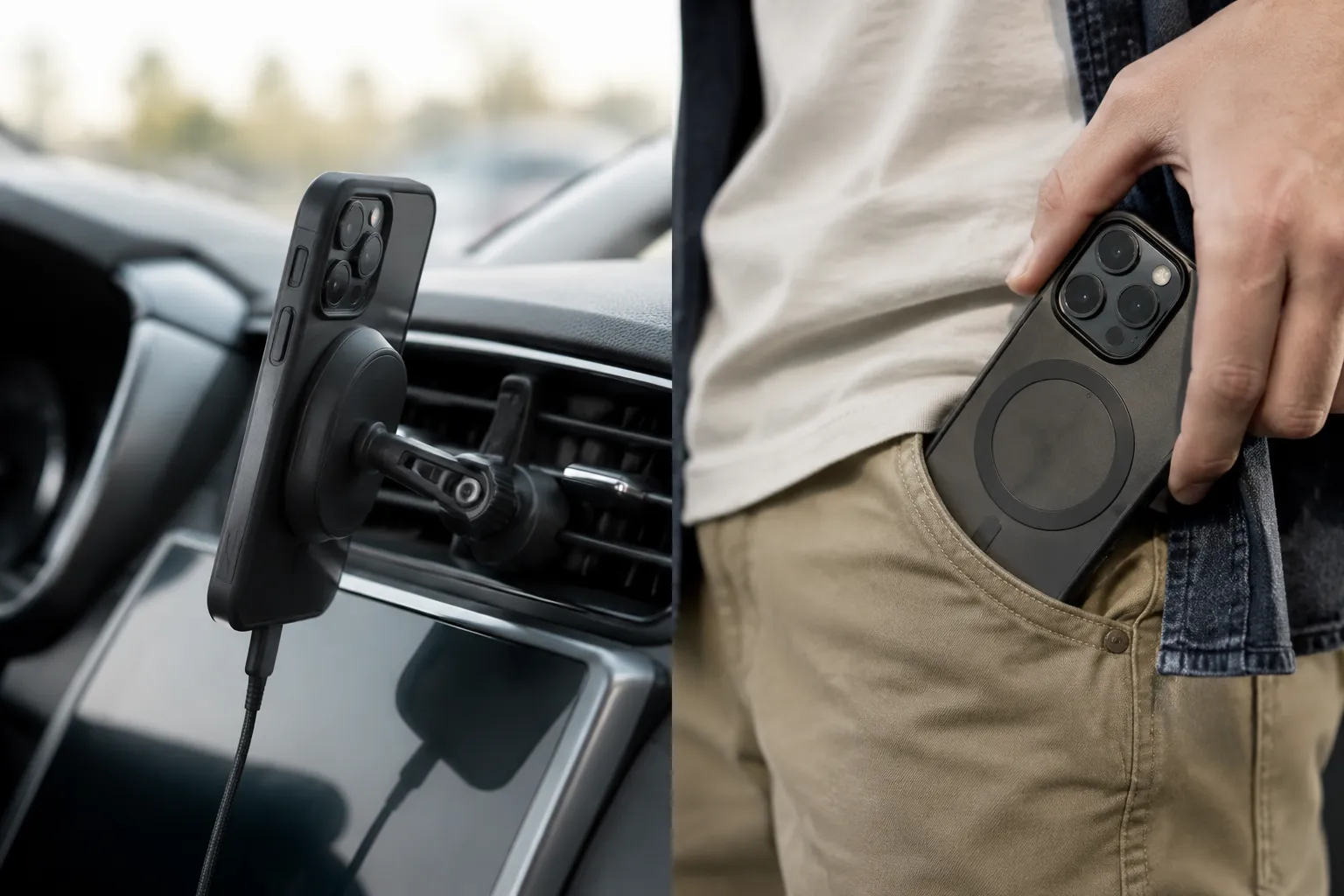
For the car mount, the cleaning frequency should double. A phone mount on a dashboard vent or windshield sits in direct sunlight, where the heat accelerates the breakdown of any residue left on the phone back. The combination of heat and the vibration of the car loosens particles that then grind against the mount's rubber pad. A monthly tape-and-brush session for the mount pad itself, plus a wipe-down of the phone back before each long drive, keeps the grip strong and the surfaces clean.
What Not to Buy for This Job
The market is full of cleaning products that should never touch MagSafe gear. Electronic screen cleaner sprays, sold specifically for phones, often contain alcohol or ammonia and will strip a phone's oleophobic coating and dull leather finishes. Magic erasers, which are fine abrasive melamine foam, will remove grime and the surface finish in equal measure. Compressed air cans, as mentioned, just relocate debris. And the UV sanitizer boxes that promise to clean phone gear are a gimmick in this context, since UV light does nothing to remove physical debris or oils.
A person needs exactly three items for the entire job. A roll of household tape, a soft microfiber cloth, and a bottle of pH-balanced leather cleaner for the wallet. Everything else is either unnecessary or actively harmful. This minimalist kit covers the phone back, the wallet, the car mount, and the wireless charger pad, and the total cost is under twenty dollars. The discipline is not in buying the right tools but in using them regularly enough that the deep cleaning never becomes necessary.
The final consideration is knowing when a piece of MagSafe gear is beyond saving. A leather wallet that has developed a permanent dark ring around the magnet area, or a phone back with a scratched patch that cleaning cannot improve, needs replacement. The wear is a sign of years of use, not a cleaning failure. The replacement will need the same routine, and this time, the tape-and-brush habit starts on day one, not after the damage appears. The gear lasts longer, the magnets hold strong, and the leather ages into the patina that was promised, not the grime ring that was delivered.