Canvas laptop backpacks occupy a strange place in the gear world. They look better than technical nylon packs, with a texture that suggests a lifetime of use and a color palette that does not include hi-vis orange. But the material is essentially heavy fabric, and heavy fabric soaked through with rain becomes a wet sponge pressed against a laptop. The first time a person watches a downpour darken the top of a new canvas pack, the dread is immediate. The fix, however, is not a mystery. Waterproofing a canvas backpack is a straightforward weekend project that requires one good cleaner, one can of wax or spray, and a reasonable expectation about what the word "waterproof" actually means.
The single most important fact about canvas is that it is not waterproof on its own. The weave is tight, but the fibers absorb moisture eagerly. Cotton canvas can soak up water until it becomes heavy, and that water will migrate through the fabric to whatever sits against the inside wall of the bag. A laptop pressed against an untreated canvas wall during a heavy rain is in direct contact with a damp surface. Most people discover this the hard way during a sudden spring storm, when the outside of the bag darkens visibly and the inside becomes clammy.
Before any treatment goes on, the bag needs to be clean. This step gets skipped constantly, and the results are patchy and disappointing. Dirt, body oils, and old stains create a barrier that repel the waterproofing agent, leaving the fabric unevenly protected. A dirty bag treated with wax ends up with clean spots that absorb water while the rest beads it off. The process is basic: empty every pocket, shake out the crumbs, and brush off the loose dust. A stiff nylon brush works well on the exterior.
For the deeper cleaning, a bucket of lukewarm water with a small amount of gentle detergent does the job. A person should avoid hot water, which can shrink canvas, and should never toss a canvas pack into a washing machine. The agitation and spin cycle distort the shape, crush the bottom panel, and sometimes destroy the internal laptop sleeve. Hand washing is slower, but it preserves the structure. A soft brush or cloth dipped in the soapy water can scrub the surface gently, paying attention to the bottom of the bag and the areas around the zippers where grime builds up. Rinsing thoroughly matters; soap residue left in the fabric attracts moisture and can interfere with the waterproofing later.
Drying takes patience. The bag should air dry completely, ideally for a full 24 hours in a warm, ventilated space, away from direct heat. A radiator or a hairdryer will shrink the canvas and potentially warp the zippers. The fabric must be bone dry before any wax or spray is applied. If there is any lingering dampness in the weave, the treatment will not penetrate properly, and the water resistance will fail at exactly the spot that was not dried well.
Wax versus spray, a real trade-off
There are two main routes for waterproofing canvas: wax-based treatments and spray-on silicone or fluoropolymer treatments. Each has distinct behavior, and the choice depends on how the bag gets used.
Wax is the traditional approach, the one used by the heritage outdoor brands. A block or tin of wax, often a blend of paraffin and beeswax, is rubbed into the fabric and then melted in with a hairdryer or heat gun. The result is a deep, rich finish that darkens the canvas considerably and gives it a waxy hand feel. Wax offers excellent water resistance and lasts a long time before needing a reapplication. It also creates a fabric that looks broken-in almost immediately.
The downsides of wax are real. It darkens the fabric, sometimes significantly, which matters for lighter colored bags. It can rub off on clothing during the first few days after application, especially in warm weather. Wax also makes the canvas stiffer, and while that stiffness softens with use, the bag will not feel exactly the same as before. And wax is not ideal for very hot climates; in extreme heat, the wax can soften and feel slightly tacky, though it rarely becomes a real problem.
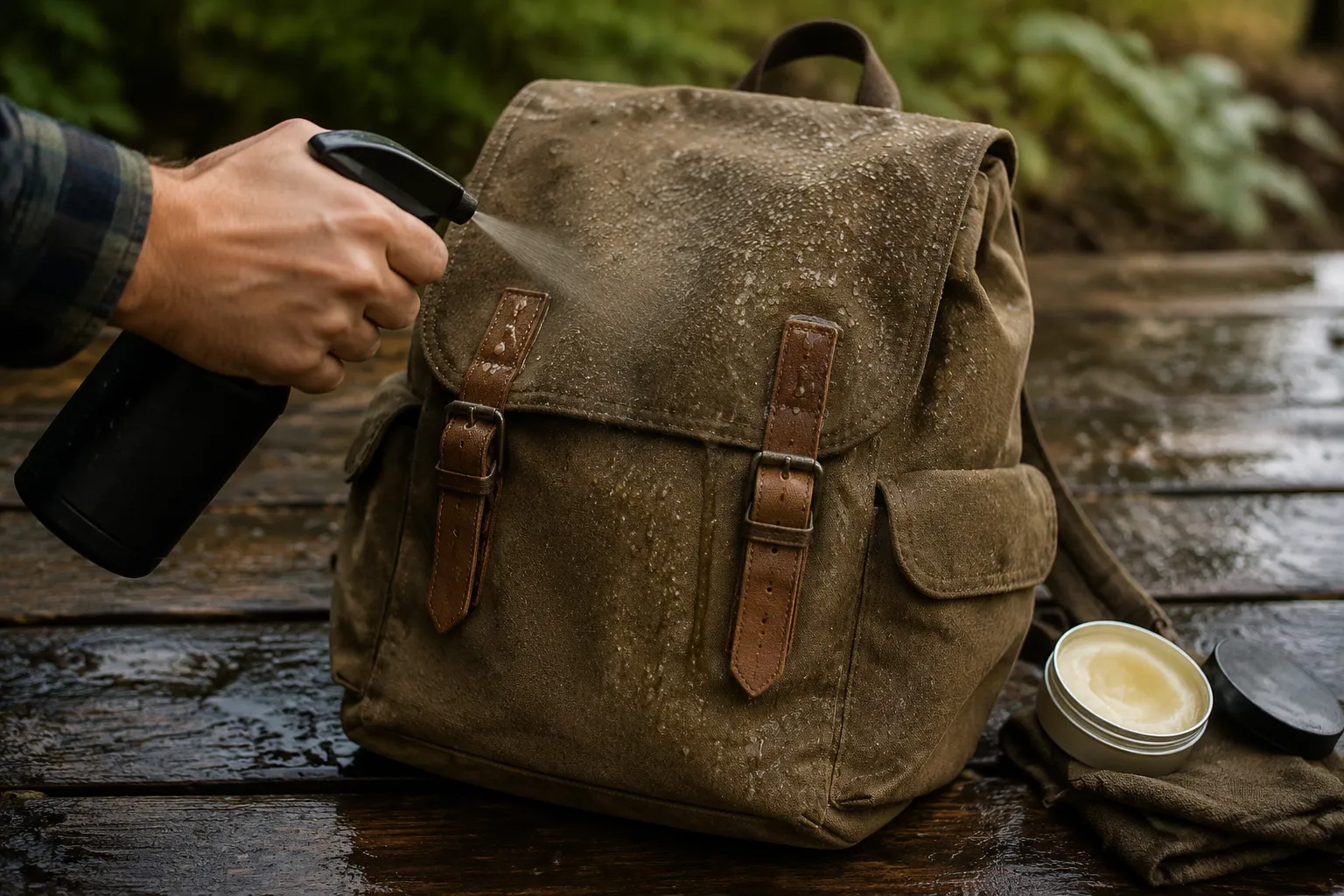
Spray treatments, usually containing silicone or a fluoropolymer, offer a lighter touch. The spray goes on as a mist, the canvas dries with minimal color change, and the fabric retains most of its original flexibility. Application is faster, and hitting the seams and zipper areas is easier with a spray than with a wax block. For a person who wants to keep the natural look of the canvas and who lives in a climate with occasional showers rather than monsoon seasons, a spray is often the smarter choice.
The trade-off appears in durability. Sprays wear off faster than wax, especially on high-contact areas like the bottom of the bag and the edges that rub against a person's back or hip. A spray-treated pack may need a reapplication every few months, while a waxed bag can often last a full season or more before needing another coat. The spray also provides a lesser degree of protection; it makes the canvas highly water-resistant, but under prolonged heavy rain, it will eventually wet out more quickly than a waxed surface.
The seams and zippers fail first
Even with a perfect application over the main panels, water finds a way in through the stitching. Every seam on a canvas backpack is a line of tiny holes punched through the fabric by a needle, and those holes are not sealed by the fabric itself. Thread wicks moisture along its length, drawing water into the interior of the seam where it can reach the lining of the bag.
The wax approach handles this naturally because the melted wax penetrates the stitch holes and coats the thread. Spray treatments are less effective at this, which is why the seams and the zipper tape are the first spots to show dampness after a treated bag sits in the rain.
A separate seam sealer, often sold in small applicator bottles for tents and outdoor gear, can be run along the interior seams of the backpack after the exterior treatment has dried. This step adds a modest amount of protection and is worth doing on any bag that carries expensive electronics. A thin bead of sealer applied to the inside of the seams, then left to cure, blocks the capillary action that pulls water through the stitch holes.
Zippers present a different problem. The fabric tape attached to the zipper teeth is absorbent, and the gap where the zipper pulls together is a natural entry point for water. No canvas treatment will make a standard zipper waterproof. The solution is a zipper sealant or a simple layer of wax applied directly to the zipper tape, which helps shed water before it pools in the teeth. For truly heavy downpours, nothing beats a rain cover pulled over the entire pack, but a well-waxed zipper tape at least keeps the dampness from creeping into the edges.
Doing it right the first time
The application process rewards patience. For a spray treatment, the work happens in a well-ventilated area, preferably outdoors or near an open window. The bag should be hung or placed on a drop cloth, and the spray applied in even, sweeping strokes from about 15 to 20 centimeters away. Two thin coats beat one heavy coat; the first coat bonds to the fabric, and the second fills the gaps. Between coats, the bag needs an hour or more of drying time.
The critical mistake is over-spraying until the fabric looks wet or soaked. A layer of liquid sitting on the surface of the canvas dries unevenly and can leave white residue or stiff patches. Mist on, let it absorb, and repeat.
Wax application takes longer. The wax block is rubbed directly onto the canvas in a circular motion, covering the fabric in a thin, even layer. The goal is not a thick coating but a thorough one, where the surface looks waxy but not gloppy. After the wax covers the exterior, a hairdryer on medium heat melts the wax into the fibers. A person can watch the wax turn from a smeared solid into a liquid sheen that soaks into the canvas. The hairdryer must keep moving; lingering too long in one spot can scorch the fabric.
After the wax melts in, the bag should hang for at least a few hours, ideally overnight, so the wax cools and sets completely. The first time the bag goes out into the world after waxing, it may feel slightly stiff, and it might transfer a faint trace of wax to clothing in areas of heavy friction. This fades quickly.
What a treated bag can and cannot do
The honest expectation is that a treated canvas backpack sheds light rain, drizzle, and brief showers with no problem. Water beads on the surface and rolls off, and the contents stay dry. A treated bag also resists the dampness that comes from setting it down on a wet bench or a grassy lawn after a storm.
What a treated bag cannot do is survive a sustained downpour or full submersion. Under heavy rain that lasts more than 20 or 30 minutes, even a well-waxed canvas bag eventually wets through. The treatment buys time, but it does not create a rubber barrier. Water pressure from a heavy rain, combined with the weight of the bag pulling the fabric taut, will eventually find a path through the weave.
This makes the internal laptop sleeve more important than the waterproofing itself. A quality canvas backpack designed for laptop use has a padded sleeve that sits slightly away from the exterior walls of the bag. That gap acts as a buffer. Even if the outer canvas gets damp, the laptop compartment remains dry for a longer period. A person carrying a laptop in a pack without an elevated sleeve system should consider a separate waterproof laptop sleeve inside the bag as a second line of defense.
Canvas packs also need a different kind of care in humid conditions. A treated bag in high humidity can still feel damp on the inside because of condensation, not water penetration. The fabric breathes, and that breathability means moist air from the environment can condense on the cooler surface of the laptop. This is not a failure of the treatment, but it surprises people who assume a waterproofed bag is also a vapor-proof one.
Reapplication based on wear, not the calendar
The longevity of any treatment depends on how the bag gets used, not on a fixed schedule. A bag that rides in a car and sees only brief walks between buildings will keep its treatment for months. A bag carried on a bicycle every day, or one that rubs against the back of a person's jacket constantly, will lose its waterproofing faster.
The test is simple. A few drops of water flicked onto the top panel of the bag reveal the condition of the treatment. If the water beads up and rolls off, the protection holds. If the water spreads and darkens the canvas within a few seconds, the treatment has worn thin and needs a new coat. This test works best on a clean surface, and it should happen before a forecast calls for rain, not during it.
The areas that wear fastest are predictable: the bottom panel, where the bag meets the ground; the back panel, which rubs against clothing; and the top handle, which gets gripped in wet weather. In many cases, a person can spot-treat these areas with a quick spray or a light wax rub rather than treating the entire bag. This saves time and keeps the bag from layering on unnecessary coating across the whole surface.
Canvas ages, and the treatment should let it
A canvas backpack develops character through use, and a waterproofing routine should not erase that character. Wax darkens the bag and gives it a patina that many owners find attractive. Spray treatments keep the original color and texture, allowing the natural fading and wear of the canvas to show through. The choice between wax and spray often comes down to whether a person wants the bag to look like a heritage piece from day one or wants it to age naturally over several years of rain and sun.
There is also the matter of the leather accents, which many canvas packs include. Leather handles, trim, and bottom panels require their own care, and the waterproofing spray for canvas should not be used on leather. The solvents can dry out the leather and cause it to crack over time. A leather conditioner applied separately, sparingly, keeps the trim supple without darkening it excessively. The two materials need different treatments, and mixing them up is a common and avoidable mistake.
One more detail: the hardware. Brass and nickel zippers, buckles, and clips survive rain without much trouble, but the treatment should not be sprayed directly onto them. The overspray can leave a film that attracts dust and makes zippers feel sticky. Masking the hardware with painter's tape before spraying takes an extra two minutes and keeps the metal clean.
A canvas laptop backpack is a purchase made for the way it looks and feels, not for its technical performance in a deluge. But with one afternoon of care, the gap between that aesthetic appeal and practical protection narrows considerably. The treated bag holds up to the commute, the walk between buildings, the sudden squall on the way to a meeting. And when a truly biblical storm arrives, the smart owner puts the laptop in a waterproof sleeve and lets the canvas get wet, knowing the treatment bought enough time to get indoors before anything important suffered.