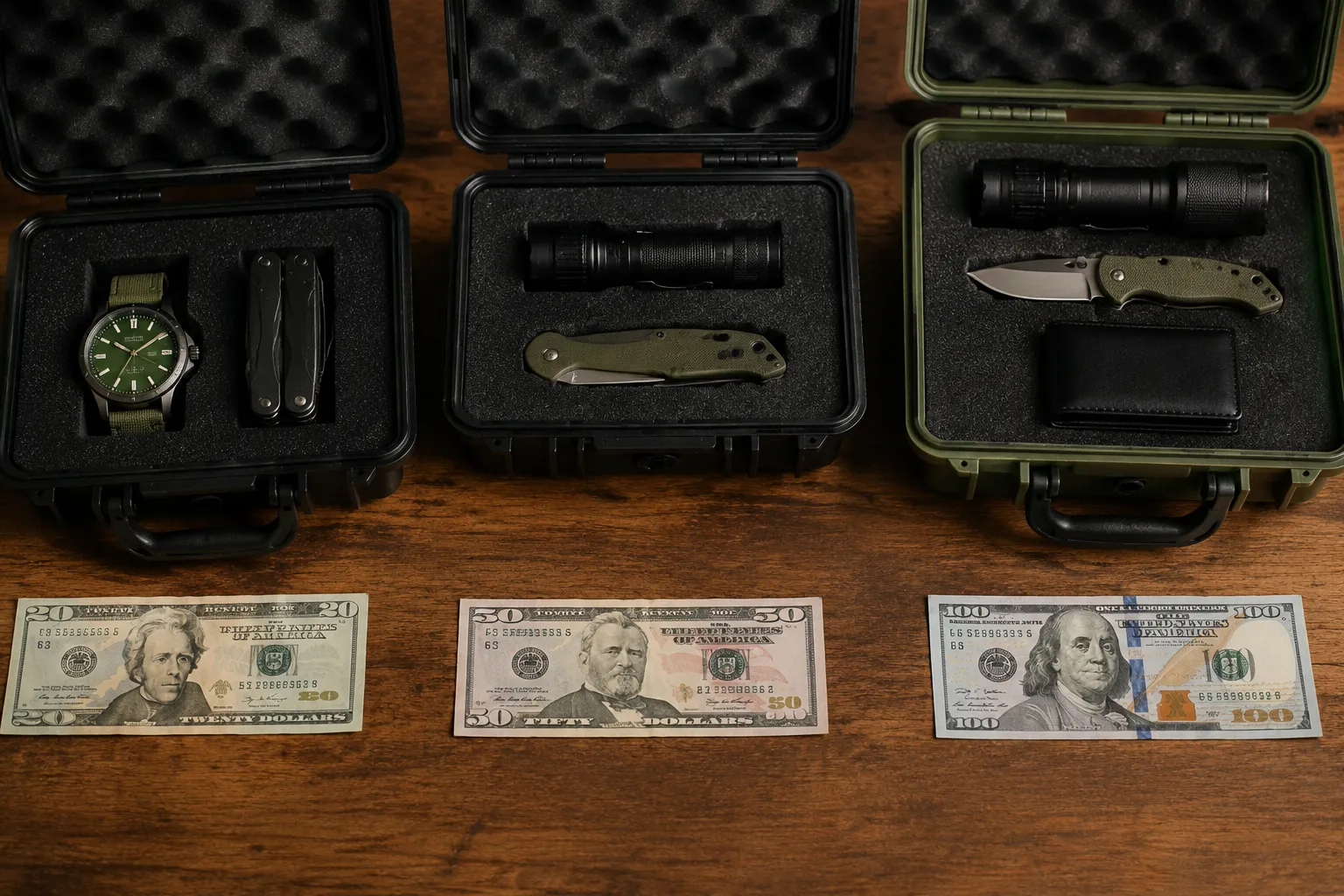
The strange thing about budgeting for a case is that the spend tiers have almost nothing to do with each other. A $20 case is not a worse version of a $50 case, and a $50 case is not a budget version of a $100 case. They are different products for different people, and the only reason they share shelf space is that they all wrap around the same phone. Once that distinction lands, choosing becomes far easier.
What $20 Buys: Protection as an Afterthought
At $20, the case market splits into two camps. The first is the thin clear shell, often sold in a gas station or a checkout display. It is roughly one millimeter of thermoplastic polyurethane, and it exists to stop scratches, not drops. The second is the silicone or basic rubber sleeve, which offers slightly more grip but still treats a fall from pocket height as an acceptable risk.
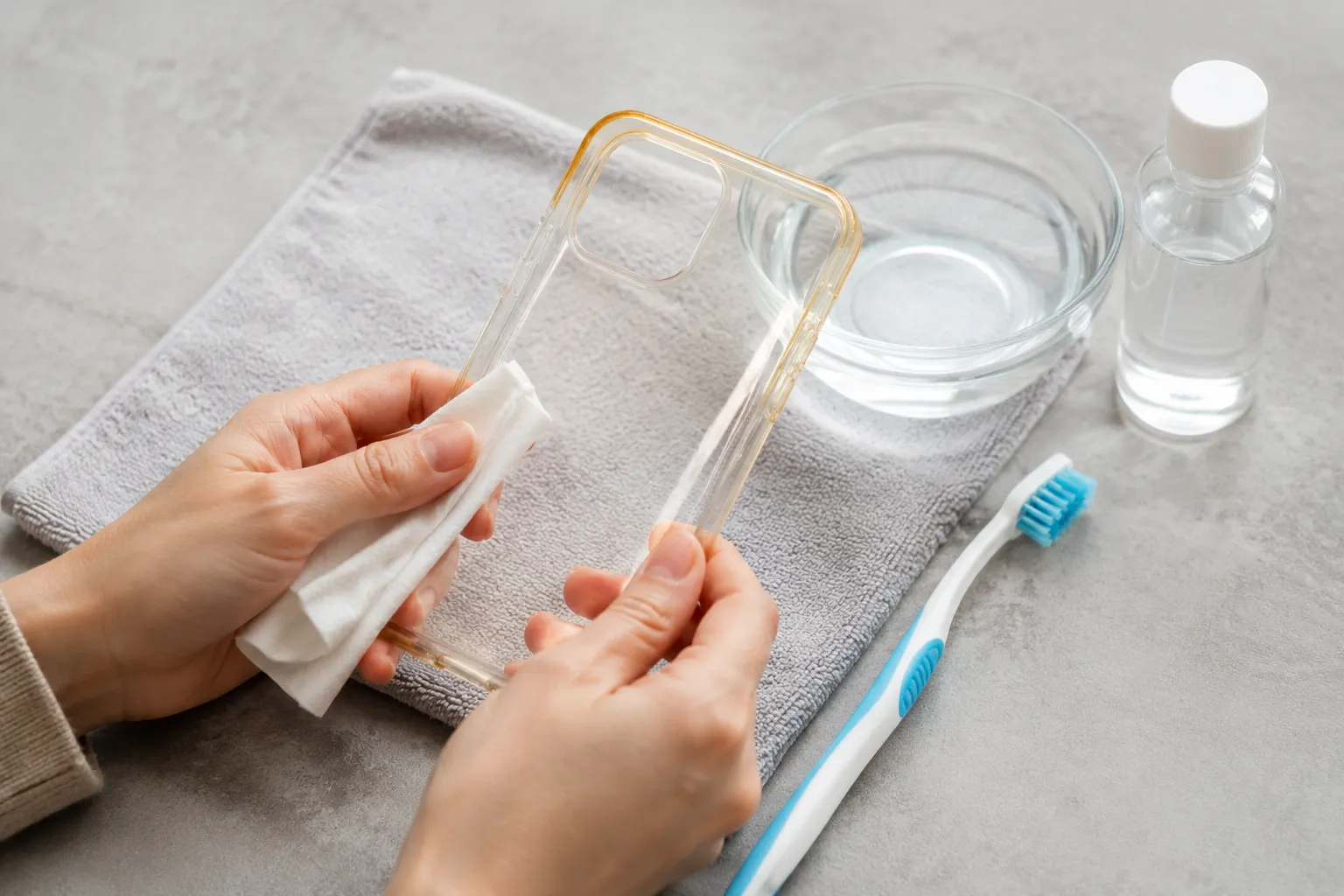
The honest way to think about a $20 case is as disposable armor. It is meant to be replaced. The clear TPU will yellow within eight to twelve weeks, not because the manufacturer cut corners but because that is what clear TPU does when exposed to UV light and hand oils. Anyone who has bought a clear case twice already knows this. The $20 case also tends to collect pocket lint around the camera cutout, and the buttons will feel mushy by month three.
None of this is a reason to avoid them. A person who upgrades phones every year, or who simply does not care about resale value, has no business spending $60 on a slab of polycarbonate. The $20 case is the rational choice for someone who treats the phone as a tool with a limited lifespan. It protects against the scratches that make a phone feel old, and it does so for less than the price of a meal.
But there is a real limit here that buyers should respect. Drop protection at this price is mostly luck. The thin TPU shell absorbs almost no impact energy; it simply spreads the force across the back glass. A corner drop onto concrete will often crack a screen even with a $20 case fitted, because the case has no raised lip substantial enough to keep the glass from contacting the pavement. The $20 case is not a lie, but it is a limited promise.
The $50 Middle Ground Is Where the Value Lives
At $50, the case market changes character. This is the price point where real engineering shows up. The case now has an air-cushioned corner, a raised bezel that sits two millimeters above the screen, and a back panel made from something harder than jelly. Brands at this level have actually dropped phones onto concrete in a lab, and they publish the results with some confidence.
The defining feature of the $50 case is the two-piece construction. A soft inner layer, usually TPU or silicone, wraps the phone and absorbs shock. A hard outer shell, polycarbonate or a glass-fiber composite, distributes the remaining force. The two layers work together in a way that a single material cannot replicate. This is also why the $50 case feels heavier in the hand; the weight is the cost of real protection.
The $50 tier also solves the yellowing problem. Instead of a clear back panel, these cases often use a frosted or smoked finish, or they put the clear material only around the edges. The back is a solid color, usually black or a matte gray, and it will look the same in month fourteen as it did on day one. A person who hates the look of a dirty case should start here and skip the budget tier entirely.
For most people, the $50 case is the correct answer. It offers drop protection that survives the average Tuesday, where the phone slides off the armrest of a car and hits the parking lot. It has enough grip to stay in a hand during a crowded commute. The buttons click with a proper tactile response, and the cutouts align cleanly. The difference between a $50 case and a $100 case is real, but it is a difference that most users will never actually need.
What $100 Actually Adds: Materials and Certifications
Above $80, the case market stops being about drop protection and starts being about materials science and standards. A $100 case is not necessarily stronger than a $50 case in a flat drop from waist height. Both will survive that test. The $100 case earns its price in three specific ways.
The first is the material. Kevlar fiber, aramid fiber, and real carbon fiber all appear in this tier. These materials are lighter and stiffer than polycarbonate, which means the case can be dramatically thinner while holding its shape. A $100 aramid-fiber case can be less than a millimeter thick, adding almost no bulk to the phone, while still offering a hard surface that resists scratches and abrasion. The trade is that these cases have almost no shock absorption, so they protect the phone from wear, not from impact.
The second is the drop rating. Some $100 cases carry an actual military-standard certification, MIL-STD-810G or similar, which means they survived a specific drop test from 1.2 meters onto plywood in a controlled environment. That certification is not a marketing gimmick, but it is also not a promise about every conceivable drop. It is a benchmark, and paying for it matters to people who work around concrete floors or who are simply clumsy with expensive hardware.
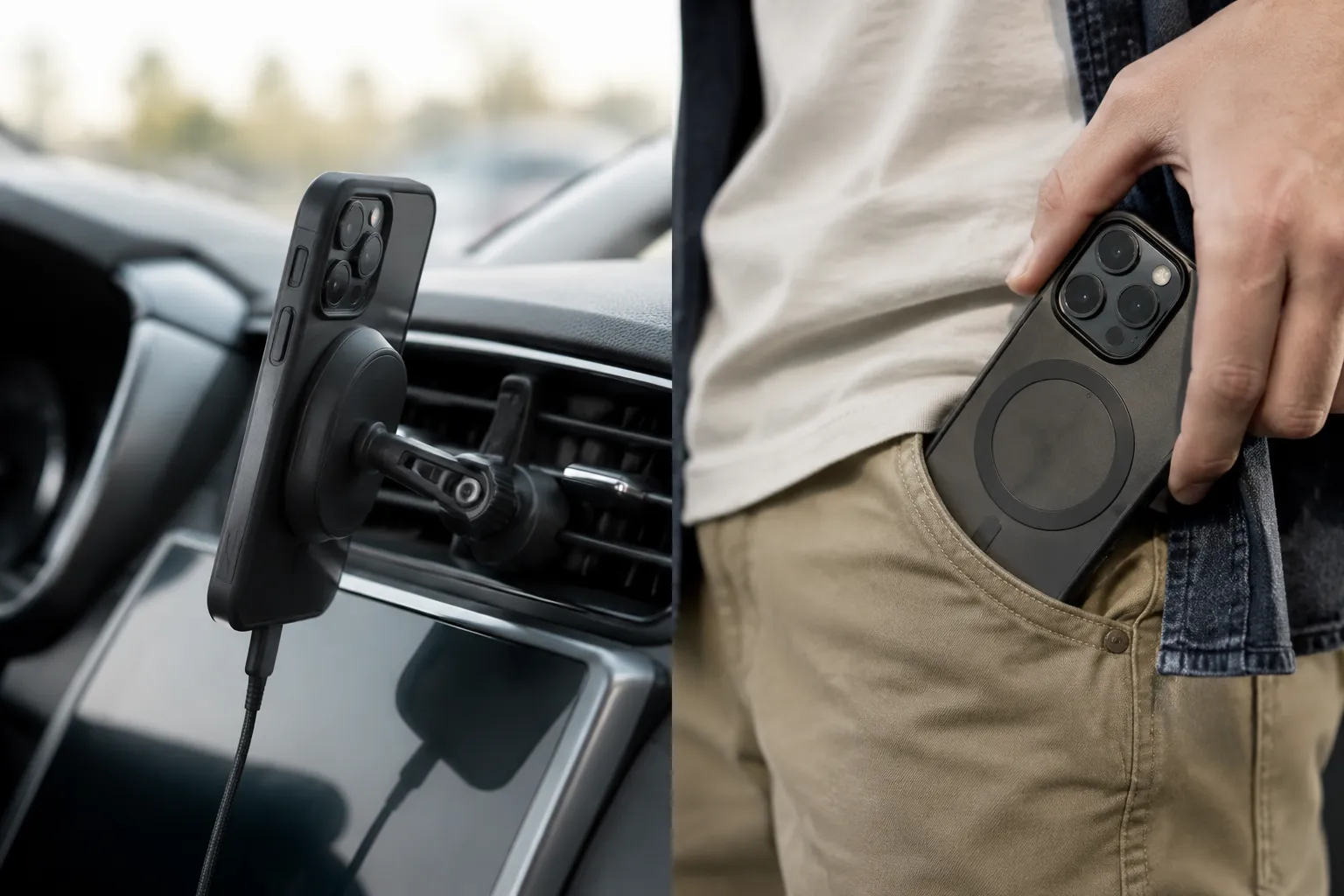
The third is MagSafe and the accessory ecosystem. High-end case makers invest in stronger magnets, precisely aligned rings, and compatible surfaces for docks, mounts, and wallets. A cheap case with a MagSafe sticker slapped on the back will hold a charger inconsistently, and it will slip on a car mount. A $100 case from a serious brand holds a magnetic accessory with the same confidence as the bare phone. For anyone who lives off wireless charging and magnetic mounts, this alone can justify the jump.
The fair criticism of the $100 tier is that aramid fiber and carbon fiber cases offer poor drop protection at high speed. The material is hard and brittle by nature. A heavy fall onto sharp gravel can crack the case itself, and the phone underneath may still take damage. The $100 case is not the best choice for a construction site or a hiking trail; that role belongs to a thick, rubberized $50 case with a built-in screen protector.
Where the Extra Money Goes Wrong
The mistake people make at the $100 tier is buying a designer case that offers no engineering benefit. Leather cases with fancy stitching, aluminum frames, or wood veneer inlays all sit in this price range, and they all provide drop protection comparable to a $20 shell. The material looks premium, the buttons feel nice, but the impact energy travels straight through the decorative layer into the glass. Someone who buys a $120 leather case for the aesthetic should understand they are paying for style alone.
There is also a sub-trend of "minimalist" cases that cost over $100 and cover only the corners and the back plate, leaving the phone's aluminum frame exposed. These look sleek, but they offer coverage that is functionally weaker than a full shell. A corner drop still hits the case, but a flat drop on the back will contact bare metal on the phone's edges. The exposed frame is the first thing to get scratched, and scratches on the frame reduce resale value far more than a scuffed case ever would.
The Resale Math Nobody Runs
Few people factor trade-in value into the case budget, but it is the single biggest financial argument for spending more. A phone that comes out of its case with a flawless glass back and clean frame can be worth $80 to $150 more on the used market than the same phone with scratches or a hairline crack. The full $100 case, with its hard shell and precise fit, is the best insurance policy for that future sale.
Consider a two-year ownership cycle. Buying a $20 case and needing to replace it three times due to yellowing and cracking amounts to $60. Buying a $50 case once at the start, and having it hold up for the entire period, costs $50. The $50 case is cheaper over the lifetime of the phone, and it protects better. The $100 case is the only one that reliably keeps the phone's frame and back in mint condition, preserving resale value that often exceeds the case price difference.
Screen Protectors Change the Equation
A tempered-glass screen protector shifts the risk profile of every tier. With a $10 glass screen protector properly installed, the $20 case becomes a viable option for a person who is generally careful but wants some scratch protection. The screen protector absorbs the impact that would otherwise crack the display, and the case handles the minor scrapes. Many people running this combination never break a phone, because the screen is the most fragile part and it now has its own armor.
The catch is that a screen protector does nothing for the back glass or the camera lens. A $20 case with no raised lip around the camera module leaves the lenses vulnerable to scratches when the phone rests face-up on a rough surface. The $50 case typically adds a small lip around the camera bump, which means the lenses never touch the table. For anyone who uses the camera daily, that small lip is worth the price jump alone.
Some high-end cases also include a built-in screen protector, usually a thin plastic film rather than glass. These feel worse to the touch and reduce clarity. The better approach is to buy a case without a screen protector and add a separate glass one. The combination of a $50 case and a $10 glass screen protector is the strongest practical setup for the money.
Thickness and Grip Are the Real Trade-Offs
The measurements that matter are not listed on the box. A thin $100 aramid case adds about 0.6 millimeters to the phone's profile, preserving the feel of the bare device. A rugged $50 case adds 3 to 4 millimeters, making the phone noticeably bulkier in a pocket and harder to reach into tight car mounts. The thin case feels great for the first week, but a person who drops phones often will pay for that elegance with a cracked display, because a thin case offers minimal shock absorption.
Grip is similarly personal. Silicone cases offer the highest friction against dry hands, but they grip fabric pocket linings too, making the phone hard to pull out. Hard polycarbonate cases slide in and out of pockets easily, but they are slippery when held with one hand on a crowded train. The TPU cases at the $50 tier, with a textured or matte finish, split the difference. A person who has ever fumbled a phone should prioritize grip over thinness.
The right test happens in a store, not on a spec sheet. Put the case on the phone, hold it for a minute, and try to slide it into a front pocket. If the case makes the phone feel unwieldy or hard to grip, no drop rating will save the phone from the moment it slips out of a hand at the wrong angle. Fit and feel are not subjective luxuries. They are the actual interface between the phone and the world.
The Case That Outlives the Phone
A $100 case from a reputable brand often outlives the phone it was built for. The materials do not degrade significantly, the buttons do not wear out, and the design does not yellow. Many people who buy a high-end case for one phone find themselves searching for a compatible model when they upgrade, simply because the case has held up so well. In that sense, the $100 case spreads its cost over multiple devices, assuming the brand makes a version for each new phone generation.
The $20 case does not outlive anything. It is a consumable, designed to yellow, soften, and crack within a year. The $50 case usually dies of boredom, not of failure. It simply keeps working until the phone is replaced, and then it goes into a drawer alongside old chargers and earbuds, still functional but obsolete. The $100 case, with its premium materials and timeless color palette, is the only one a person might genuinely regret leaving in that drawer. Its price is not just protection. It is the cost of not having to think about cases again for years.