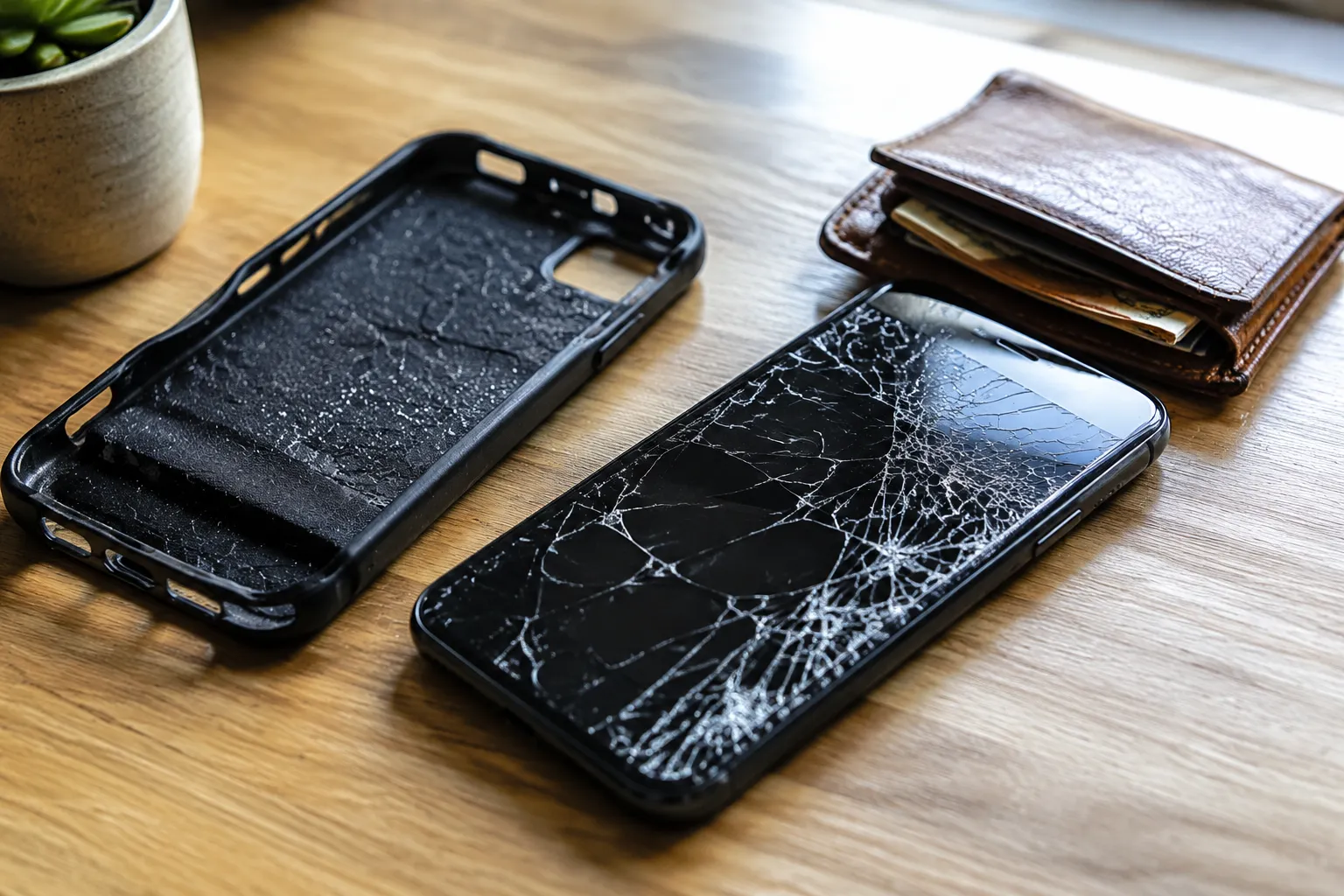
Phone repair shops keep a mental list of customers they recognize by the damage they bring in. The woman with the cracked rear glass who insists she used a "military-grade" case. The man whose screen died after a drop from pocket height, baffled because the case cost more than some phones. The teenager whose phone bent inside a supposedly rugged shell. These people did not buy bad cases. They bought good cases for the wrong reasons, and the repair bill is the tuition for that lesson.
Screen repairs are the most common and most profitable job in the industry. A typical flagship display replacement runs between $200 and $400 through official channels, more for folders or curved panels. That price is the real cost of a case mistake, not the $40 or $60 spent on the accessory itself. Seven recurring blunders explain most of that traffic. Each one is avoidable, and each one comes from a specific misunderstanding about what a case actually does.
The raised lip that was never raised enough
The most common injury in a repair shop is not a shattered back glass. It is a cracked display from a phone landing face-down on a flat surface. The case did its job. The corners absorbed the impact. But the screen still met the pavement because the case's front edge sat lower than the glass.
Manufacturers list "lip protection" or "screen protection" in marketing copy without ever printing the critical number: how many millimeters the lip rises above the display. A lip of 1.5 mm or more creates an air gap when the phone lands flat. The glass never touches the ground. A lip of 0.5 mm or less means the case touches first, compresses, and then the glass hits anyway. Phone makers keep shrinking bezels, and case makers keep shrinking lips to match the aesthetic. The result is a case that looks seamless and protects nothing.
The fix is not complicated. Before buying, place the case face-down on a flat table and slide a credit card under the front edge. If the card slides easily between the table and the case's rim, the lip is tall enough. If the card catches or scrapes along the glass, the protection is cosmetic only. Shops see this failure constantly on slim cases from brands that charge premium prices for thinness.
The drop test that only tested the back
Marketing videos for rugged cases share a predictable format. A phone in a chunky black shell gets thrown from a ladder, kicked across concrete, or dropped from a drone. The camera zooms in on the back panel. No scratches. The implication is that the phone survived, but the test only proved the case back can take a scuff.
Real-world drops are not controlled lab events. A phone falls out of a pocket while the person sits down, and it lands edge-first on the corner of a table leg. It slips from a hand reaching for a door handle and strikes the pavement at an angle that drives the top corner directly into the ground. The corner is where impact energy concentrates, and the corner is where most displays crack. A case that wraps fully around the corners with thick, shock-absorbing material handles this. A case with open cutouts for buttons, or with thin corners to keep the profile slim, transfers that energy straight to the frame and the glass edge.
Buyers should check the corner geometry, not the marketing claims. Press the corner of the case between thumb and forefinger. If it compresses noticeably, it will absorb a drop. If it feels rigid, the case will transmit the impact. This single check predicts survival better than any advertised drop rating.
The camera bump that needs its own case
Modern phones have camera modules that protrude several millimeters from the back. A case with a lip around the camera protects the lenses during flat placement. Many cases skip this lip entirely or make it so shallow that the camera ring still makes contact with surfaces.
The repair bill for a cracked camera lens is often higher than a screen replacement because the lens sits inside a module that is glued to the chassis. Shops frequently quote the full back-panel replacement plus the camera assembly. That cost, easily $150 or more, comes from a case that protected the screen but left the most fragile glass on the phone exposed. The mistake is treating the camera bump as an afterthought. Check the case's back around the camera cutout. The lip should rise at least 1 mm above the glass ring.
The "military grade" that never met a soldier
The phrase "military-grade" appears on countless case packages. It means essentially nothing. The MIL-STD-810 standard referenced by case makers covers environmental testing for equipment used by the armed forces, and it includes dozens of tests for humidity, sand, vibration, and temperature. Drop testing is only one small part of the standard, and passing it does not guarantee a screen survives a fall onto a sharp rock.
Some case brands perform their own drop tests and publish the results. Others just print the letters on the box. A buyer cannot verify the claim without destroying the product, so the practical approach is to read the fine print. If the listing says "MIL-STD-810G compliant," find the specific test procedure listed, usually 516.6 for transit drop. If the listing says "military-grade design" or "built to military standards" without a test number, the claim is marketing decoration.
The deeper issue is that the drop test passes at a specific height, usually 4 feet, onto a specific surface, usually plywood or concrete. Real drops happen from hands at ear level while taking a photo, from car seats to gravel parking lots, from bicycle mounts at speed. A case that passes the laboratory test fails the parking lot test because gravel concentrates force on a tiny point. No standard covers that, and no case maker advertises it.
The snug fit that suffocated the glass
Repair technicians see a distinct failure pattern from cases that fit too tightly. The phone is pristine, never dropped, and the screen cracks spontaneously while sitting on a desk. The cause is frame stress. A case that requires significant force to install, or that squeezes the phone from all sides, puts constant tension on the display assembly. Over weeks and months, temperature changes make the frame expand and contract. The case does not flex with it. Eventually the glass gives way along a hairline crack that appears to have no impact point.
This happens most with the ultra-thin hard polycarbonate cases that snap on with a satisfying click. The click is the sound of the case biting into the phone's frame. A properly designed case should install with moderate pressure and should twist slightly when removed. If it feels like it is glued in place, it is putting the same pressure on the screen every minute of every day.
The same problem appears with cases that claim compatibility with the wrong phone generation. A case made for the previous model might fit the new one with a slight gap, and the buyer decides it is acceptable. The gap allows dust and grit to work between the case and the frame. That debris acts as sandpaper against the glass edge, and a single sharp grain can create a stress fracture that spreads across the display.
The case that never got replaced
Cases wear out. The silicone or TPU material that absorbs impacts degrades with UV exposure, heat, and the natural oils from hands. A two-year-old case that has lived in a car cupholder during summer months becomes stiff and brittle. The drop that the same case would have absorbed when new now transfers full force to the phone.
Most people replace their phone every two to three years and their case never once in that cycle. The case looks fine from the outside. The corner material has lost its elasticity and the thin layer between the frame and the ground no longer compresses. Repair shops can often tell the age of a case by the phone's injury. A fresh case that fails means a design flaw. An old, discolored, glossy case that fails means the material gave up long before the drop happened.
A simple squeeze test reveals the condition. Pinch the corner of the case. If the material springs back quickly, it is still protective. If it holds the pinch mark or feels hard, the case has aged out. The same applies to cases that have yellowed. The yellowing is not just cosmetic. It is the visual sign of UV damage to the polymer structure, and it correlates with reduced shock absorption.
The screen protector that broke the screen
One of the quieter causes of screen damage is not the case at all but the interaction between the case and a poorly installed screen protector. A glass screen protector that is slightly too large, or a case whose front lip presses against the protector's edge, creates a lever point. When the phone flexes in a pocket or during a mild drop, the protector transfers force to a single spot on the display below.
Shops see the evidence as a clean crack that follows the edge of the protector exactly. The protector itself might show a small chip or no damage at all. The display underneath is split along the boundary where the protector stopped. The case's lip, designed to protect the screen, was pressing down on the protector's edge and concentrating every impact into that line.
The correct combination is a case with enough clearance to accommodate both the phone and a protector, or a protector that sits entirely inside the case's lip without touching it. Many case listings now state whether they are compatible with common screen protectors. That compatibility note is not a courtesy. It is a warning that the wrong pairing will convert a protection layer into a damage multiplier.
The wallet case that flexed the frame
Wallet and folio cases deserve their own category of blame. A phone inside a folio case takes impacts with the screen covered, which is genuinely protective. The problem appears when the folio is open. The front flap folds backward and the phone is held in one hand while the other hand taps the screen. The spine of the case, where the flap attaches, applies uneven pressure to one side of the phone. A sudden flex, like catching the phone when it slips, twists the frame.
OLED displays are particularly sensitive to frame torsion. A twist that would leave an LCD panel with a few dead pixels can crack an OLED substrate along the edge. The crack appears as a line of black, not a shatter pattern, and it is not covered under warranty because physical stress damage is excluded. The repair cost equals a full display replacement.
Folio cases with a rigid back plate distribute the flex more evenly. Cheap folios with a thin cardboard or plastic insert offer no torsional rigidity. A simple test: hold the case by its spine and twist. If the phone inside rotates even slightly, the case is transferring that rotation to the frame. A well-built folio keeps the phone rigid in the hand.
The recurring theme across all seven mistakes is that a case is a mechanical component, not a fashion accessory. Its job is to absorb energy, spread impact, and keep the glass away from hard surfaces. Every case that fails at that job fails for a measurable reason: insufficient lip height, weak corner geometry, worn-out material, or a design conflict with the thing it is supposed to protect. The next phone that comes into a repair shop with a cracked screen is wearing one of those reasons. The one that does not is wearing a case that someone actually thought about before buying.