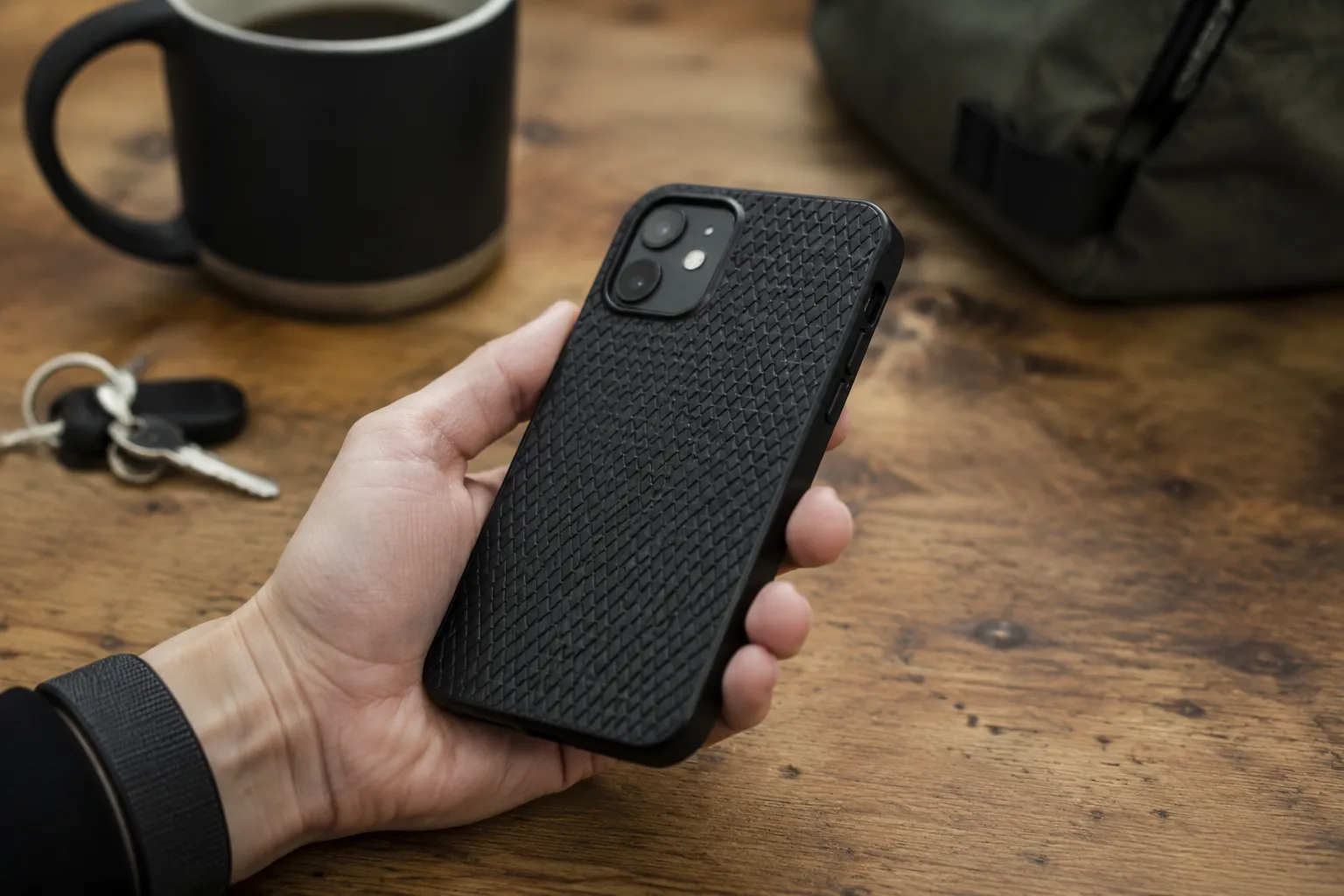
The sound a phone makes when it leaves a hand and meets a sidewalk is distinct. It is a sharp, thin crack, often followed by a pause while the owner assesses the damage. For people with clammy palms, this sound is a recurring part of life, a small tragedy that plays out in parking lots and on train platform edges. The issue is rarely the phone itself. It is the case, specifically the smooth, glossy plastic or slick aluminum that was designed to look premium but behaves like a bar of wet soap under pressure.
Sweaty hands are a physiological reality for a large portion of the population. Stress, heat, and genetics all play a role, and the result is a constant, light film of moisture on the skin. Touching a smooth surface with that film creates a dramatic reduction in friction. The grip that felt secure when the hands were dry becomes a tenuous hold. The phone, weighing around 200 grams, becomes a projectile waiting for a slight jostle or a misjudged reach. The answer is not to grip harder, but to change the surface interface entirely.
Textured cases are the pragmatic solution, but the category is broader and more varied than most people realize. It is not a single material or pattern. It is a spectrum of finishes, each with distinct characteristics for tackiness, durability, and pocket feel. A person needs to understand the difference between a case that feels rough and one that feels sticky, because they perform very differently against moist skin.
The Physics of a Slippery Surface
Understanding why a case fails requires a quick look at how friction works. When two surfaces slide against each other, the resistance is determined by the interlocking of microscopic irregularities and the adhesion between the materials. In a dry hand, the skin is relatively elastic and can deform slightly to grip those microscopic peaks and valleys of a case. With a smooth case, there are few valleys for the skin to catch, so the grip relies almost entirely on adhesion.
Add moisture. The sweat acts as a lubricant film. It fills the tiny gaps between the skin and the case, breaking the direct contact. Now the skin is sliding against a layer of water, which offers very little resistance. The same principle makes a wet tile floor dangerous. The human hand, despite its remarkable dexterity, is not evolved to securely grip a perfectly flat, wet pane of glass or plastic. The grip strength might be there, but the coefficient of friction has plummeted.
A textured surface solves this by creating channels and high points that displace the moisture. The sweat gets pushed into the recesses of the texture, allowing the high points of the skin to contact the high points of the case material. This restores a degree of dry contact, generating the friction needed to hold the device securely. The texture also provides a mechanical anchor for the skin, giving the fingertips something to catch against when the phone shifts in the hand. This is why a fine, aggressive texture often feels grippy even when completely soaked.
Soft-Touch Silicone and Its Limits
The most common response to the slipperiness problem is a silicone case. The material has a natural tackiness that feels reassuring in a dry hand. It bends and conforms to the fingers, offering a soft, almost rubbery grip. For a person with mildly sweaty palms, a matte silicone finish can be a significant upgrade over hard plastic. The surface has enough give to create contact even when a thin layer of moisture is present.
The problem with standard silicone arises when the palms are really going. The sweat does not just sit on the surface; it interacts with the material. After a few minutes of firm holding, a slick film can develop between the hand and the case, turning the soft-touch surface into a greasy mess. Furthermore, silicone is a notorious lint and dust magnet. It comes out of a pocket looking dusty, and that dusty layer further reduces the tackiness. It is a decent first step, but far from a definitive solution for heavy sweaters.
Another issue with many silicone cases is the interior. They are often lined with a microfiber or a soft plastic that grips the phone's edges too well. Removing the phone from the case requires a clumsy, forceful push that can be a drop risk in itself. The owner is wrestling with a slippery device while trying to dislodge it from a grippy shell, a combination that often ends with the phone launching across the room. The exterior grip is irrelevant if the removal process is a hazard.
Engineering the Grip Pattern
Moving beyond basic materials, the most effective cases use geometry to their advantage. These designs feature physical ridges, grooves, or a coarse crosshatch pattern molded directly into the back panel or sides. The texture is not a coating that can wear off; it is the shape of the case itself. This approach creates a highly durable grip that remains constant over years of use.
Consider the difference between a smooth tire and a treaded tire on a wet road. The treads channel water away, maintaining contact with the asphalt. Similarly, deep grooves on a case allow sweat to pool in the channels while the raised ribs press into the skin. Brands like RhinoShield and Caseology use this principle, though many generic manufacturers also offer aggressive geometric patterns. The specific pattern matters less than the depth and sharpness. A shallow, decorative texture might look nice, but it does not provide enough channeling to help a genuinely sweaty hand.
The placement of the texture is as important as its presence. The back of the case is where the fingers rest, but the sides are where the grip is critical. Slippery side rails are a common failure point. A case needs a pronounced texture on the edges, where the thumb and fingers apply opposing pressure to hold the device. Many cases have smooth, chamfered sides for aesthetic reasons or to make them easier to slide into tight pockets, and this is where they fail. The palm might be dry, but the side rail pressure is what keeps the phone from rotating out of the hand.
The Tactile Compromise of Hard Plastics
Hard polycarbonate cases with a matte finish walk a fine line. A matte texture on plastic is often achieved by a sandblasting process that creates a fine, papery roughness. This feels dry and pleasant in the hand, and it resists fingerprints well. It also does not attract lint like silicone. For a person with slightly clammy hands, this can feel like a significant improvement over a glossy surface.
However, a hard case does not deform to the hand. The contact area is limited to the rigid high points of the texture. With significant moisture, the sweat can overwhelm the shallow roughness of a matte finish, creating a slippery layer. Hard cases rely on the user maintaining a consistent, firm grip. They do not forgive movement. If the phone shifts a few millimeters in the hand, the hard plastic loses its purchase and slides. In contrast, a softer material with a texture will "stick" to the skin even as the hand adjusts its position.
Some manufacturers attempt to solve this by adding rubberized strips along the edges of a hard back. This hybrid approach offers the structural rigidity and pocketability of plastic with the high-friction grip of a rubber material where it matters most. It is a sensible design. The hard back slides easily into a pocket, while the rubber sides keep the phone locked in the hand. The downside is that these rubber strips can wear down or peel off over time, and they share some of the lint-attracting properties of full silicone cases.
Texture as a Wearable Accessory
The aesthetic argument against textured cases is weak but persistent. The assumption is that texture equals bulk or a rugged, industrial look that clashes with a sleek phone. That assumption is outdated. Consumer electronics brands have developed patterns that are both functional and visually subtle. A fine diagonal weave or a micro-dot pattern adds grip without making the device look like it belongs on a construction site. The texture can be felt but barely seen, adding a tactile quality that is absent from a standard flat panel.
This matters because a case is not just a protective shell; it is the primary physical interface between a person and a daily-use tool. The way a device feels in the hand influences how it is used. A phone that feels precarious is held more tightly, causing hand fatigue. A phone that feels secure is handled with casual confidence, which actually reduces the likelihood of drops from over-correcting a slip. The texture provides psychological reassurance as much as physical grip, and that reassurance translates into a more relaxed hold.
There is also the matter of the phone's weight. Modern phones are heavy, often exceeding 220 grams. A heavy, smooth object is harder to hold than a light, smooth object because more force is required to keep it stationary. The added weight amplifies the consequences of a slippery surface. A textured case mitigates this by providing the extra friction needed to manage the mass. For larger phones, the texture is essential for maintaining a secure hold without needing to wrap fingers entirely around the device.
A Simple Field Test for Grip
Evaluating a case for clammy palms requires more than pressing a thumb against the back in a store. The real test is contextual. A person should simulate the conditions of actual use: holding the phone for an extended period in a warm room, walking with it at the side, and attempting to use it with one hand while the others are occupied. The case should be tested with slightly damp hands, not just dry ones.
The grip should feel secure, but not so aggressive that it abrades the skin. Some of the coarsest textures, often marketed for outdoor use, can feel like sandpaper after a few minutes of holding. The sensation of holding a phone should be neutral, not distracting. The ideal texture is one that a person forgets about after a minute, because it is not causing discomfort, but it is silently preventing the phone from moving.
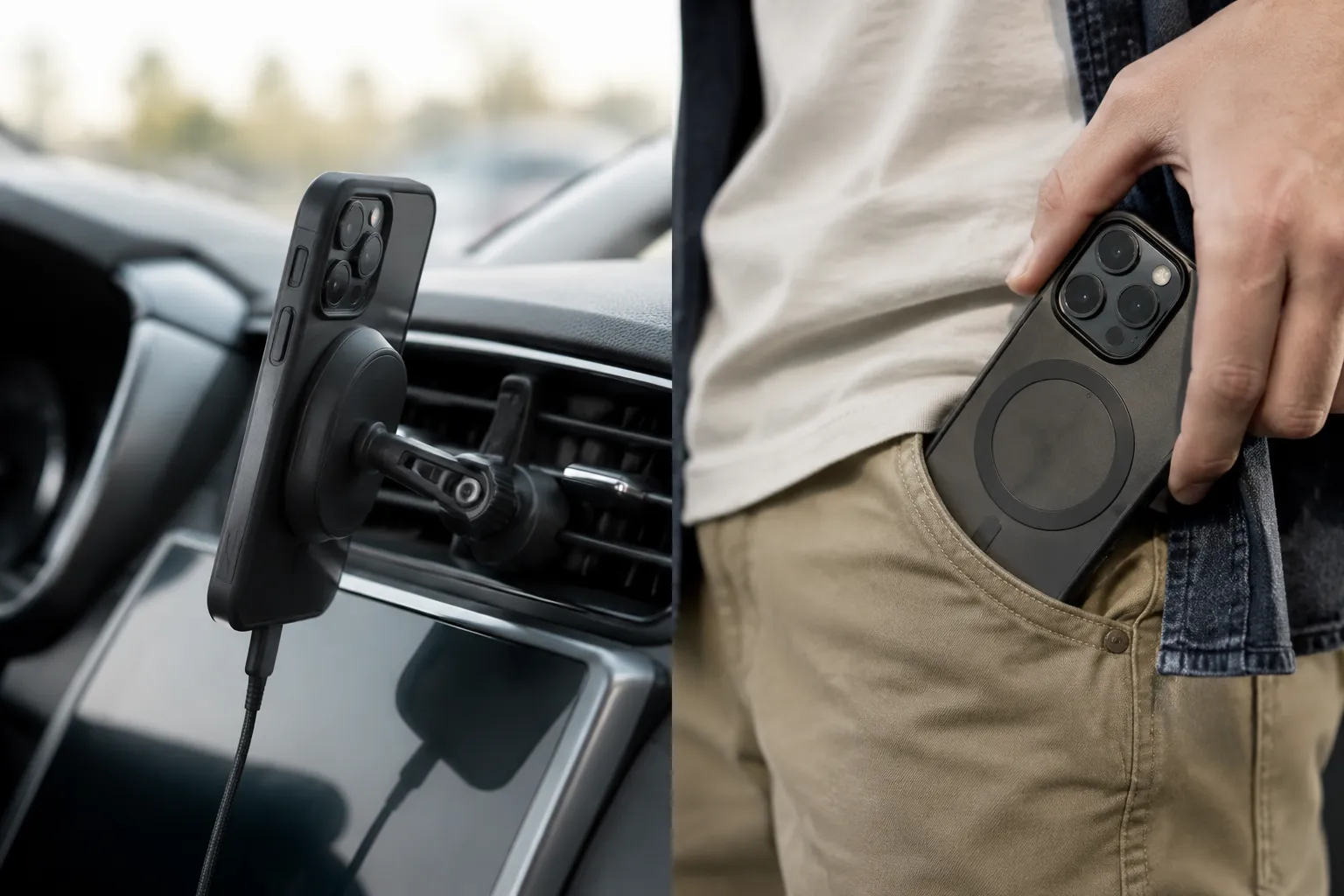
A quick check involves holding the phone by the lower corners between the thumb and middle finger, the standard one-handed texting grip. If the case allows the phone to slide downward even a millimeter when the hand is slightly moist, it fails the test. Another check is sliding the phone into a tight jeans pocket and pulling it out. A case with a high-friction coating will resist removal, sticking to the pocket fabric. A hard case with a defined texture will come out smoothly without stripping the texture. The pocket test reveals whether the grip is a surface coating or an integral part of the shell.
Beware the Disposable Grip Add-Ons
The market is full of stick-on accessories designed to solve the slipping problem: adhesive rings, pop-out handles, and silicone straps that attach to the back of a case. These can be effective, but they change the ergonomics of the phone. A ring forces the fingers into a specific position; a strap adds bulk that interferes with wireless charging. They are also a single point of failure. The adhesive can loosen with heat and moisture, turning the accessory itself into a hazard when it separates from the case at the wrong moment.
Integrated texture does not fail in that way. It cannot be lost or detached. While a well-designed strap might offer a more secure hold than any texture, it is a permanent attachment. A textured case allows the same freedom of movement as a bare phone, just with a higher coefficient of friction. It serves the function of a grip aid without imposing a new, rigid way of holding the device. For people who use their phones in varied positions, from balancing them on a knee to reaching across a desk, the case is the more flexible solution.
The Pocket Lint Factor
One overlooked detail is how a case interacts with the environment. A case that is perpetually covered in pocket lint or dust creates its own problems. The fine fibers get caught in the texture and, over time, can make the surface feel slippery again. This is a specific problem for cases with a very fine, velvety texture. The microscopic fibers fill the tiny recesses, creating a smooth, matted surface that does not grip well.
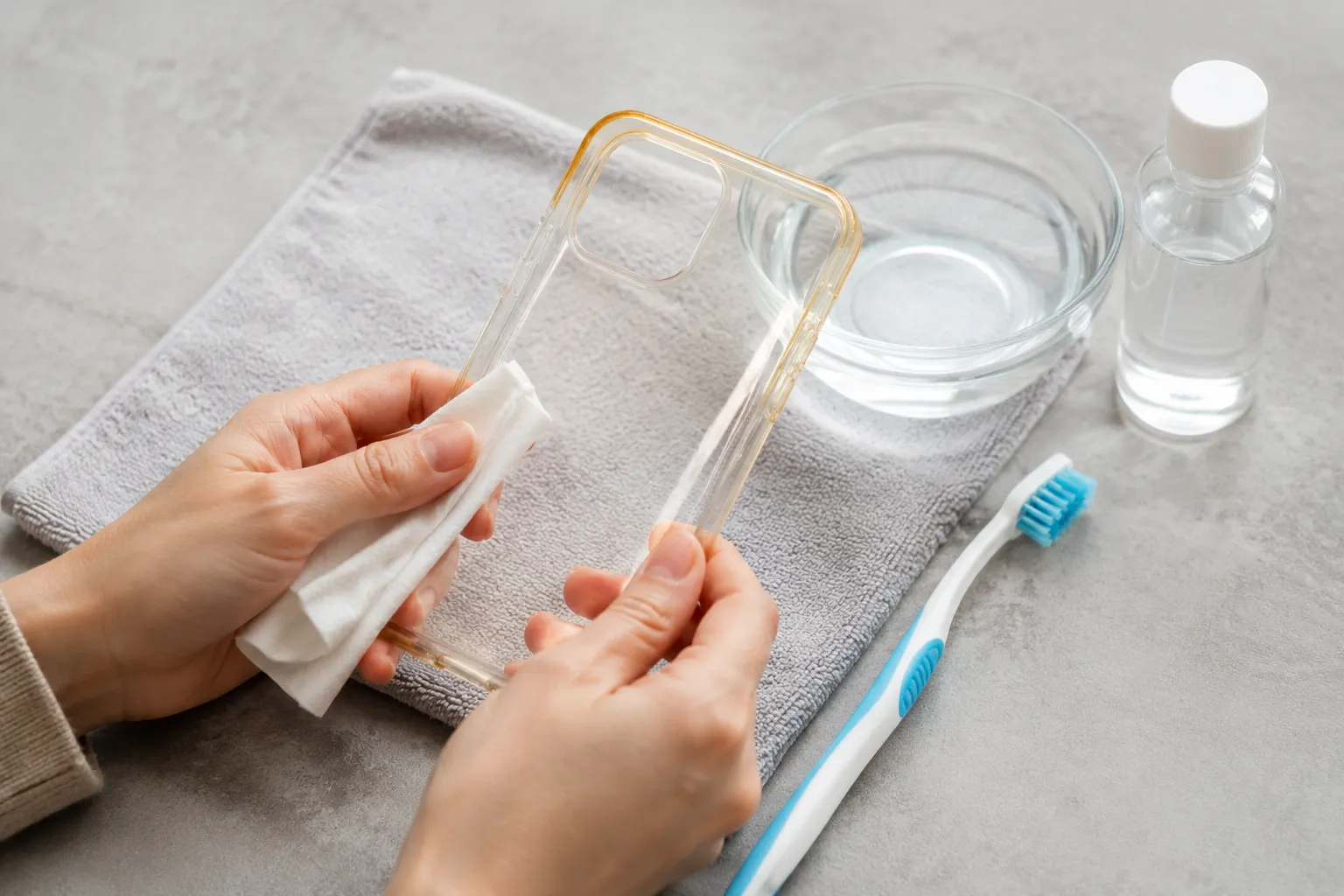
A coarser texture avoids this because the recesses are large enough that lint does not get trapped permanently. A quick wipe on a shirt removes the dust and restores the grip. Cases with large, open channels are self-cleaning in this regard. The pattern should be visible from a foot away; if the texture is only visible under bright light, it is too fine to offer lasting grip performance in the real world. This is the dividing line between a decorative texture and a functional one.
People with clammy palms often develop a habit of wiping their hands on their pants before picking up their phone. A textured case does not eliminate that habit, but it makes it unnecessary. The case provides a consistent surface regardless of the ambient humidity or the anxiety level of the moment. That reliability is the core value proposition. A case is not just protecting the phone from a drop; it is removing the constant low-grade stress of holding an object that feels like it might escape at any second. The quiet confidence of a secure grip is reason enough to make the switch.