The MagSafe wallet on the back of an iPhone has a quiet failure mode that is more annoying than a cracked screen and far less dramatic. The phone still charges. The wallet still holds cards. But the magnets have gone soft, and every time the hand slides into a pocket, the whole assembly shifts a few millimeters. Then the grip fails entirely, and the wallet falls off somewhere between the car door and the office elevator, scattering debit cards across a parking lot. Nobody photographs that moment. Everybody lives it eventually.
Apple did not invent magnetic attachment, but the company did condition an entire generation to expect a certain clack-and-seat feel when two objects join. That feeling has a name in the engineering world: pull force, the peak resistance before separation. A new MagSafe accessory has a pull force somewhere north of one kilogram. A tired one might hold half that. The decline is rarely a single catastrophic event. It is a slow creep, like a belt that needs one more notch every few months, until the phone flops off a wireless charging stand at 3 a.m. and the owner blames the stand.
The diagnostic part is straightforward. The fix is where people make expensive mistakes, usually by buying another accessory that costs the same as the one that failed and expecting different results.
How Strong the Grip Should Actually Feel
A healthy MagSafe connection, tested by hand, does not feel fragile. When a person picks up an iPhone by the attached wallet, the phone and wallet should move as one rigid object. Shaking it gently should produce no rattle, no shift, no sense of independent motion. The pull-off force to separate a wallet from a bare iPhone 15 or 16 back is roughly 1.2 to 1.5 kilograms of force, which translates to a deliberate tug, not a casual flick.
The test that matters happens with one hand holding the phone and the other pinching the wallet between thumb and forefinger. A person should have to pull hard enough that the wrist straightens and the forearm engages. If the wallet peels away with a light pinch, the magnetic circuit is compromised. The same logic applies to charging pucks, car mounts, and battery packs. Each uses the same 18-magnet ring array inside the phone, and each will feel similar when new.
There is a useful comparison available in every drawer: a new MagSafe charger still in its box. Set the weak accessory next to a fresh one and feel the difference side by side. The contrast is immediate and unambiguous. If the old one feels like it needs a second attempt to seat properly, or if the phone slides down the face of a vertical car mount over a few minutes of driving, the magnets are not doing their job.
The Three Usual Suspects Behind a Weak Grip
Weak alignment rarely comes from the phone itself. The iPhone's internal magnet array is sealed behind the back glass and does not lose strength through normal use. Barring physical damage, a cracked back, or a swollen battery pushing against the chassis, the phone side of the equation stays constant. The failure lives in the accessory, the case, or the environment.
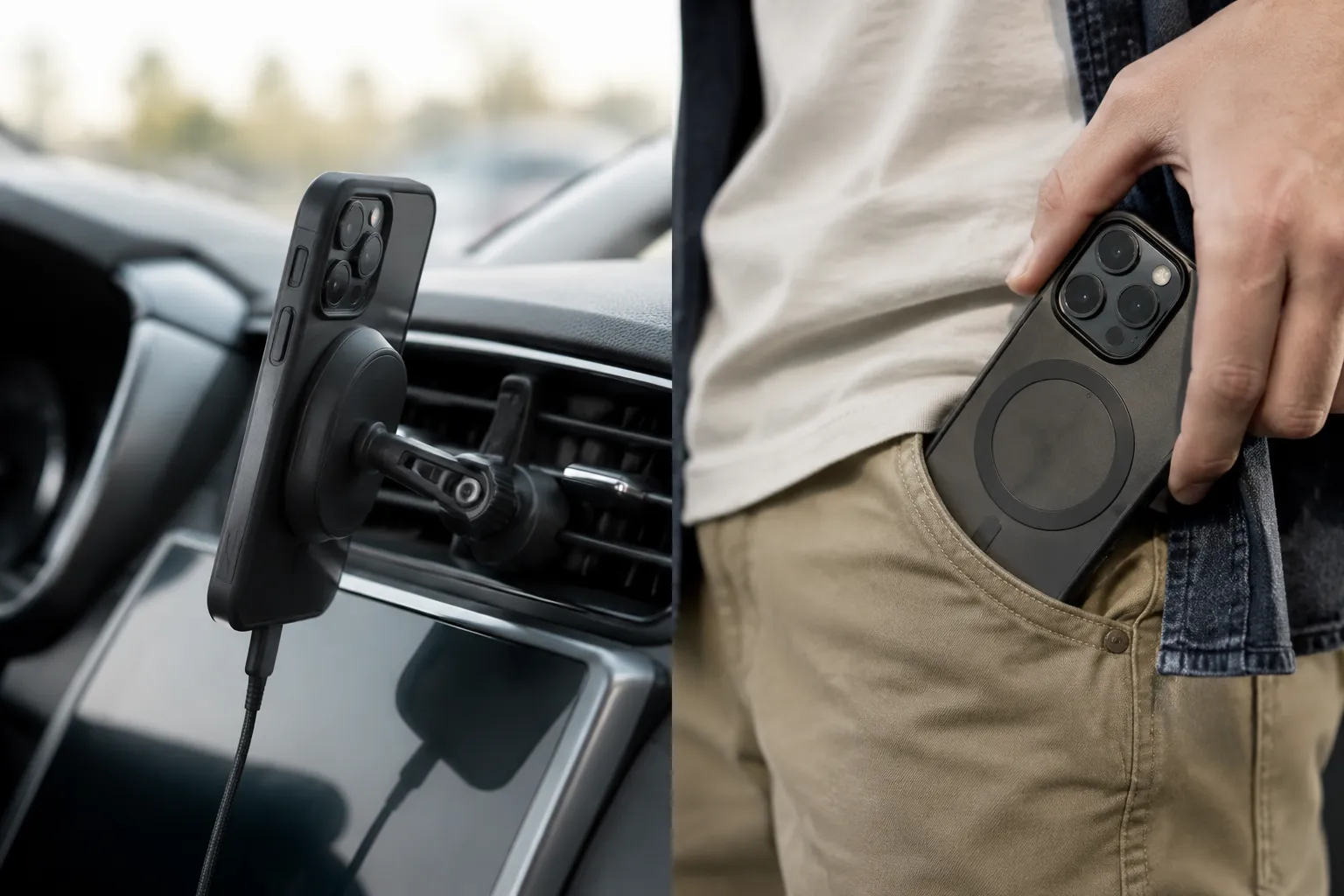
The first suspect is a case that is too thick or contains a metal plate. Many rugged cases, battery cases, and even some slim "grip" cases add a layer of material between the phone's magnets and the accessory. Every millimeter of distance weakens the hold, and the drop-off is not linear. A case that is 2 millimeters thick can cut pull force by 40 percent or more. Metal plates, often added for magnetic car mounts, can also create a magnetic short circuit, redirecting the field away from the accessory.
The second suspect is the accessory itself. MagSafe wallets and pucks contain their own magnet rings, and those rings are glued inside the accessory housing. Heat, age, and repeated stress can weaken the adhesive, allowing the ring to shift or separate internally even when the outer shell looks fine. A wallet that has been through a hot summer in a car can have a magnet ring that has migrated a fraction of a millimeter, enough to break the alignment with the phone's ring.
The third suspect is contamination. A thin layer of dirt, grease, or skin oil on either surface changes the gap between the two magnetic rings. The effect is smaller than a thick case, but it compounds with every micro-scratch on the plastic or leather backing. Pocket lint is a notorious culprit because it builds up invisibly along the outer edge of the magnet ring, right where the seating force is highest.
Quick Field Tests That Separate Magnet Problems From Case Problems
Strip the phone down to bare glass and test again. This is the first move in any diagnosis. Remove the case, wipe the back clean with a dry microfiber cloth, and attach the accessory directly to the phone. If the grip returns to a healthy, rigid clack, the case is the problem. This test takes fifteen seconds and saves a person from buying a new accessory that would fail the same way on the same case.
For a case that tests as the culprit, check whether it has an explicit MagSafe certification. Apple's licensing program requires cases to meet a minimum magnet strength threshold, but the certification only applies when the case is worn. Many third-party cases claim MagSafe compatibility without any licensing. A case that markets itself as "magnetic" but lacks the certification can still hold an accessory when new, then lose tolerance as the case material stretches and wears.
A second test isolates accessory health. Take the same accessory and attach it to a bare iPhone in an Apple store, or to a friend's uncased phone. If the accessory feels weak on both phones, the accessory's internal magnets have degraded or shifted. If it feels strong on the other phone but weak on the original, the original phone has internal damage or the case is the issue.
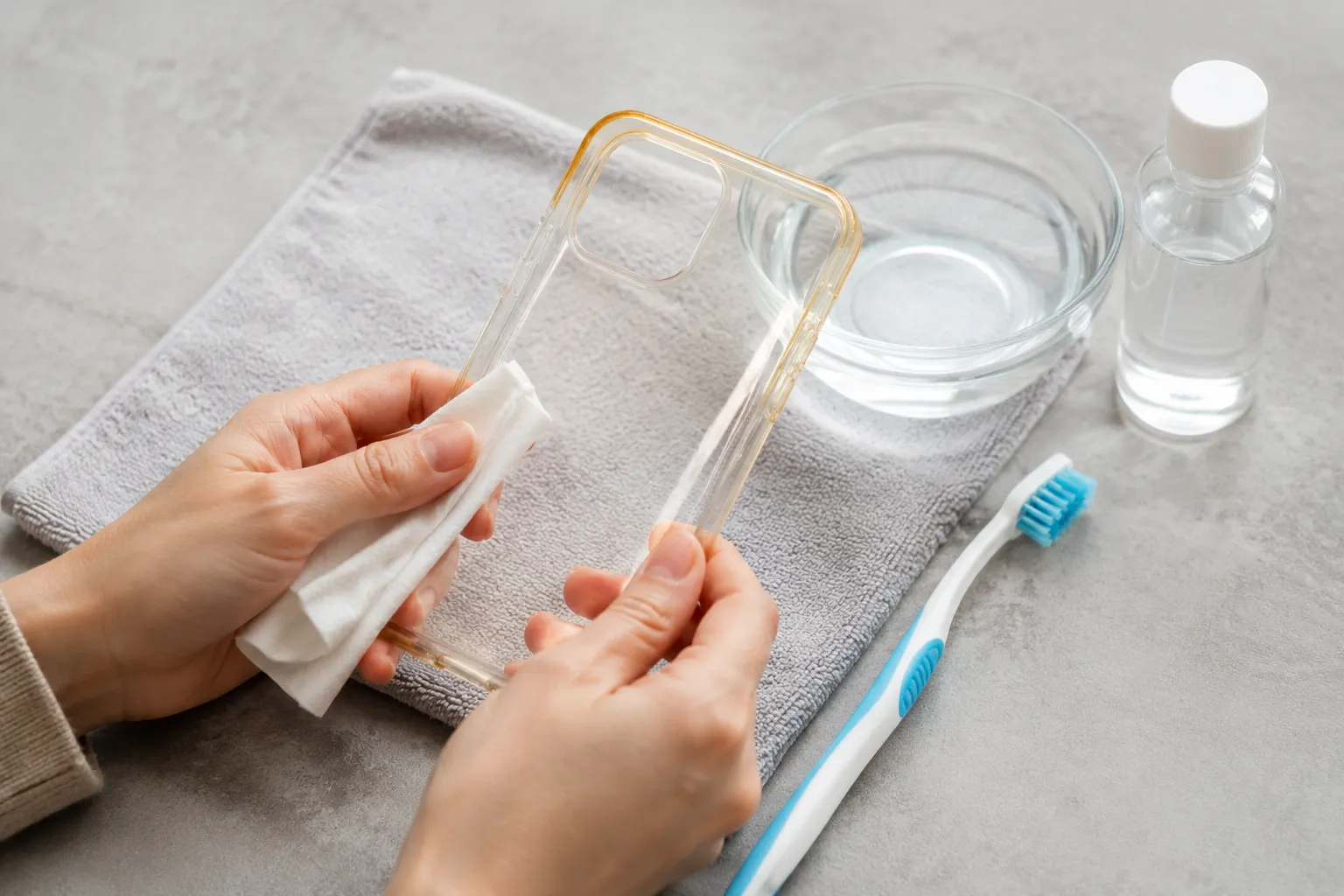
The lint test is less scientific but often decisive. Run a fingernail around the inner edge of the accessory's magnet ring. If a ridge of gray or brown material collects under the nail, that is compressed pocket debris. A soft toothbrush, dry, can clear the groove in under a minute. This single cleaning step restores full pull force on a surprising number of accessories that seemed destined for the trash.
Cleaning That Actually Restores Grip
Cleaning is not a universal fix, but it is the cheapest one, and it should happen before any purchase. Use a dry, soft-bristled brush to clear the magnet ring groove on both the accessory and the phone back. A clean dry microfiber cloth removes skin oil. Dampen the cloth with a drop of isopropyl alcohol if needed, but keep it away from leather, which the alcohol will stain and dry out.
For a MagSafe wallet made of leather, do not submerge it. Wipe the exterior with a barely damp cloth and let it air dry fully before reattaching. Moisture trapped between the wallet and the phone can cause the leather to delaminate from the magnetic core, which permanently weakens the bond. The wallet may still hold cards, but it will never hold the phone again with the same force.
After cleaning, reattach and test the pull force again. If the grip is restored, the fix cost nothing and took two minutes. If the grip remains weak, proceed to the more invasive options.
When Adhesive Strips Are the Real Fix
For accessories with a removable back panel, the internal magnet ring can sometimes be re-seated. This applies mostly to third-party car mounts and desk stands that use a flat magnetic puck glued to a plastic housing. A puck that has rotated or shifted inside its housing will throw off the alignment with the phone's ring by a few degrees. The result is a hold that feels strong when centered but fails the moment the phone vibrates or hits a bump.
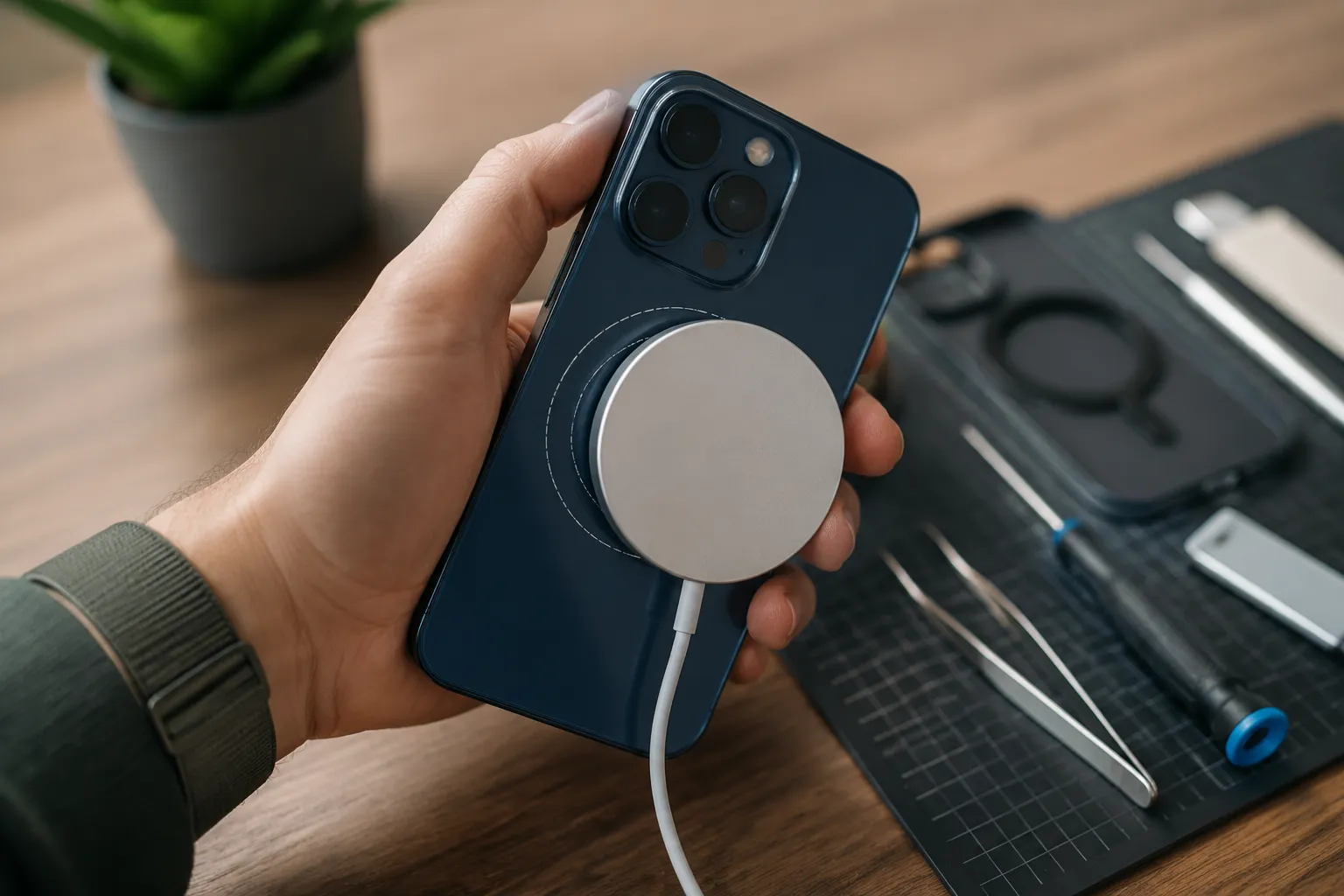
Open the housing with a plastic spudger, locate the magnet ring, and check whether it sits flush against the outer surface. If the ring has lifted on one side, clean both surfaces with isopropyl alcohol, then reapply a thin layer of cyanoacrylate adhesive or a 3M adhesive ring. Press the ring back into place and let it cure for 24 hours before reattaching a phone. This repair is not for the faint of heart, but it works on accessories that cost more than 30 dollars and are otherwise destined for a drawer.
Cheaper accessories, the kind that sell for under 15 dollars, rarely justify this effort. The internal magnet grade is often lower, and the housing is ultrasonically welded shut. Attempting to open one usually cracks the plastic. For these, replacement is the honest answer.
Choosing a Replacement That Will Not Fail the Same Way
When replacement is the answer, the selection criteria should not be price or color. The criterion is magnet grade. Accessories that hold up over a year of daily use tend to use N52 neodymium magnets, the strongest commonly available grade. Budget accessories often use N35 or N42, which are cheaper and noticeably weaker. The grade is rarely printed on the packaging, but a simple test at the point of sale helps: a new N52 accessory should feel noticeably harder to pull off a bare iPhone than a typical accessory from a gas station or a generic online listing.
Another criterion is the ring geometry. Apple's own accessories use a ring of 18 small magnets arranged in a circle. Some third-party options use fewer magnets, sometimes 12 or 14, which reduces the total contact area and creates weak spots at certain rotation angles. A wallet that spins freely on the back of the phone while attached is a sign of a coarse magnet arrangement. A quality accessory seats with a firm click and resists rotation until deliberately twisted.
For people who insist on using a case with the accessory, the case should be tested at the store before purchase. Bring the phone, the case, and the accessory. Assemble all three in the store and check the pull force. If the case is more than 1.5 millimeters thick at the back, skip it unless it carries the official MagSafe certification logo. Most thin cases, the kind under 1 millimeter, do not meaningfully weaken the grip. The trouble starts at 2 millimeters and gets worse from there.
The Alignment Check That Prevents the Next Failure
Magnet degradation is often a symptom of repeated off-center attachment. When an accessory is placed slightly off the phone's magnet ring, the attraction pulls it into alignment with a snap. That snap is fine. The problem happens when the accessory is placed off-center and the user does not let it seat, instead shifting it while under partial magnetic load. This scraping motion wears the thin coating on the magnets and can eventually chip the nickel plating, which accelerates corrosion and strength loss.
The habit to build is simple: drop the accessory near the center and let the magnets pull it the rest of the way. Do not slide a wallet sideways across the back glass to adjust its position. Lift it off and place it again. This single behavioral change extends the useful life of any MagSafe accessory by months.
For car mounts, the same logic applies at a larger scale. The phone should be presented to the mount face-on, not at an angle. Angled attachment puts uneven stress on the mount's magnet ring and can bend the thin metal backing plate over time. A bent plate will never hold a phone squarely again, no matter how strong the magnets are.
The Thermal Angle Nobody Considers
Heat is the silent killer of magnetic grip. Neodymium magnets begin to lose strength irreversibly when they exceed their maximum operating temperature, which for standard grades is around 80 degrees Celsius. A phone sitting on a dashboard in direct summer sun can easily reach 60 to 70 degrees on its surface. A wireless charger adds another 10 to 15 degrees on top of that. Repeated exposure to these temperatures does not just weaken a magnet temporarily. It permanently demagnetizes it, and no cleaning will bring it back.
This explains why a MagSafe wallet that worked all winter starts failing in July. The wallet itself might not have gotten hot, but the car mount or the wireless charging pad next to the window pushed the phone's internal magnets past their comfort zone. The phone's own magnets are better shielded and more resilient, but the accessory magnets are exposed directly to the heat source. A person who notices grip loss during hot months should store the phone out of direct sunlight and avoid leaving it on a wireless charger in a hot car.
There is a simple test for heat damage. Cool the accessory in a refrigerator for 30 minutes, then attach it to the phone. If the grip improves noticeably when cold but degrades again as it warms to room temperature, the magnets have been partially demagnetized by heat. The accessory is done. Cold makes any magnet slightly stronger, but a healthy magnet shows only a marginal improvement when chilled. A dramatic swing indicates permanent loss.
A Repair Strategy for the Wallet That Falls Off Mid-Conversation
For the specific case of a MagSafe wallet that keeps detaching in a pocket or during a call, there is one last intervention before replacement. Adhesive magnet sheets, sold as thin flexible strips with adhesive on both sides, can be attached to the inside back of a leather wallet that already has a magnet ring. This does not restore the original ring, but it adds surface area and increases pull force by spreading the load. A sheet cut to match the wallet's back panel and pressed firmly for 24 hours can add 30 to 50 percent more holding strength.
This repair works best on Apple's own leather MagSafe wallets, which have a removable card slot liner that exposes the internal magnet ring. The adhesive sheet goes between the ring and the outer leather, not over the ring. A person who opens the wallet and sees the ring exposed can apply the sheet directly to the ring's back side, then reassemble. The result is a wallet that still has a visible ring on the attachment surface but now has more magnetic material working to keep it on the phone.
The limitation is that adhesive sheets add thickness. A wallet that was already a tight fit in a pocket becomes slightly bulkier. For most people, the trade-off is acceptable because a wallet that stays attached is more useful than a slim wallet that falls off at the wrong moment.
The real answer to MagSafe grip loss is not a secret trick or a magic accessory. It is the unglamorous discipline of keeping surfaces clean, avoiding thick cases, keeping magnets out of prolonged heat, and replacing cheap magnets with grade-appropriate ones when they fail. A person who follows those four rules will rarely be surprised by a wallet clattering onto a sidewalk. The magnets are the quietest component in the whole system, and they deserve a little more attention than they get.