The glass panel on a modern smartphone is a carefully engineered piece of laminated material, often treated with chemically strengthened layers and designed to survive a drop onto a flat surface from waist height. It does not survive that drop when the impact lands on the unprotected corner. This is the fundamental problem of phone protection, and it is why the raised edge on a phone case has become a standard feature, a small plastic or rubber lip that rises above the screen plane. The question is whether that lip, which is usually advertised as providing screen protection, actually does anything meaningful once a glass screen protector is already in place.
Screen protectors and cases serve overlapping but distinct jobs. A tempered glass protector is there to absorb a hit and crack instead of the display underneath. A case is there to absorb the shock of a drop and keep the frame from deforming. The raised edge, sometimes called a lip, sits above the glass to create a shadow gap. When the phone lands face down, the physics of the drop changes. The case touches the ground first, and the screen protector hovers above the surface by a fraction of a millimeter. That gap is the entire point of the lip.
The gap exists because the protector adds thickness to the screen, and the lip has to clear that thickness. A case designed for a phone without a protector will have a lip that sits flush with the glass, or slightly below it. Install a 0.3 millimeter glass protector on that phone and the protector becomes the highest point on the front face. The lip is now useless, as the protector touches any flat surface before the case does. A case that properly accommodates a protector has a lip that rises above the combined height of the screen and the protector. This seems straightforward, but the marketing rarely distinguishes between the two scenarios.
The Height Calculation Nobody Publishes
Every case manufacturer knows the thickness of the screen protectors they are designing around, but most do not state the actual lip height in millimeters. A typical glass protector is between 0.2 and 0.4 millimeters thick, depending on whether it includes an adhesive layer and an oleophobic coating. The lip on a decent case is usually advertised in vague terms, described as "raised edges" or "screen protection," without giving the measurement. The difference between a lip that clears the protector and one that does not can be less than half a millimeter, a gap smaller than the thickness of a business card.
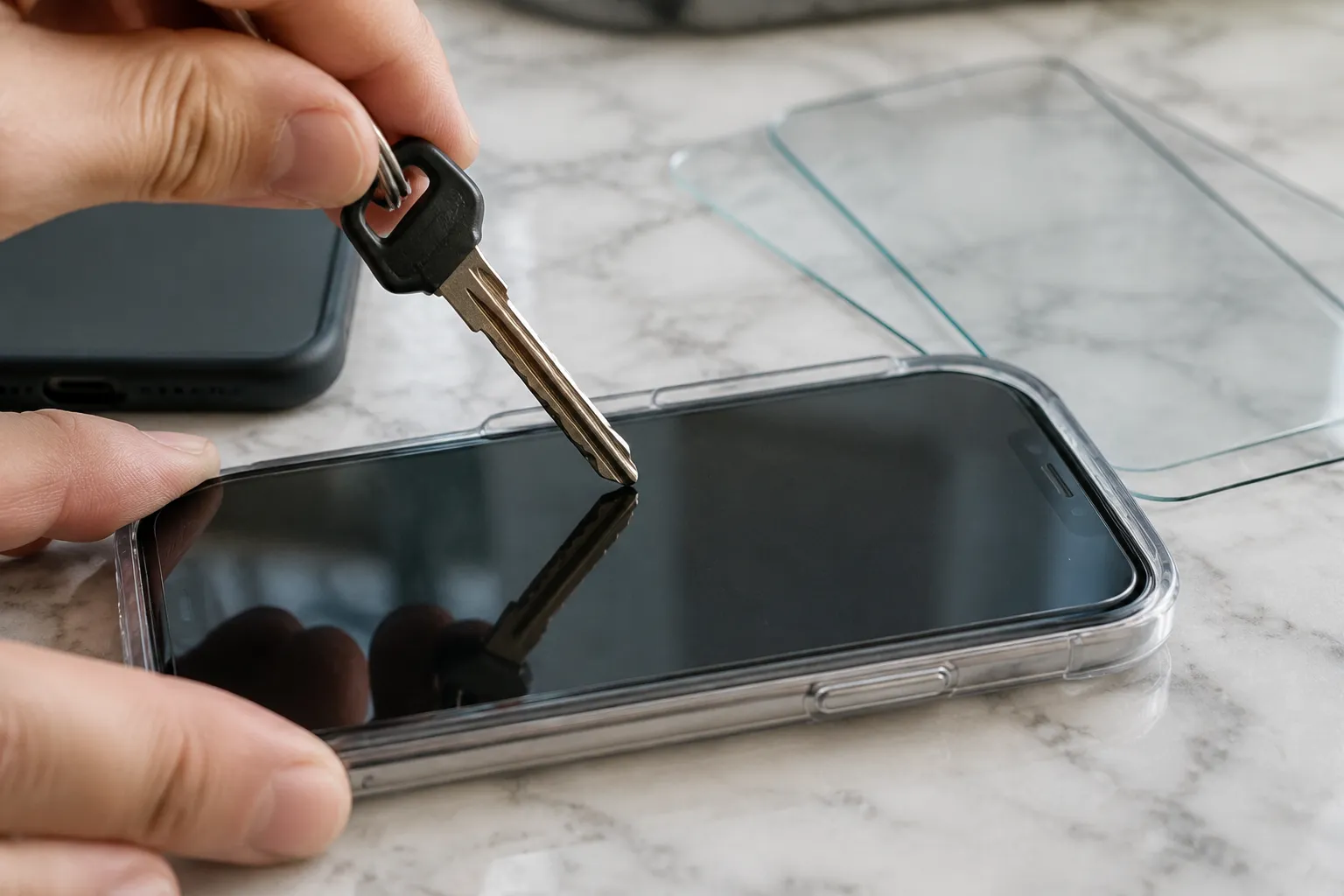
A person can test this at home in a second, with the phone facedown on a flat table. If the phone rocks or the screen protector visibly touches the surface, the lip is purely decorative. If the phone rests with the case edges bearing the weight and a sliver of light visible between the protector and the table, the lip is doing its job. Most people never run this test, and the result is a false sense of security that gets sold with every case purchase.
The situation gets worse with curved displays. A phone with a rounded glass edge has a protector that wraps around the curve, which makes the total thickness harder to predict. The lip on a case for a curved screen has to clear not just the flat part of the protector but also the curved transition, which often sits higher than the center of the display. Many cases for curved phones simply give up on the lip entirely, using a slightly taller frame that wraps around the sides without providing any meaningful front protection.
Drop Angles and the Point of Impact
A face-down drop onto a perfectly flat surface is the best case scenario for the raised lip. The phone lands flat, the case edges hit simultaneously, and the screen protector never touches the ground. Real drops rarely work this way. A phone usually falls from a pocket or a hand, which means it tumbles, and the impact often happens at an angle. The phone hits one corner first, then the frame, then the front face. The lip might protect the screen on that angled impact, or the phone might bounce and land differently.
When a phone hits at an angle, the raised edge has to do two things at once. It has to absorb the initial shock, and it has to prevent the glass from flexing inward as the frame deforms. A flexible case with a soft lip will compress on impact, which lets the protector touch the ground anyway. A rigid case with a harder lip will transfer more force to the frame but will hold the protector off the surface. There is no perfect answer, only tradeoffs between shock absorption and clearance.
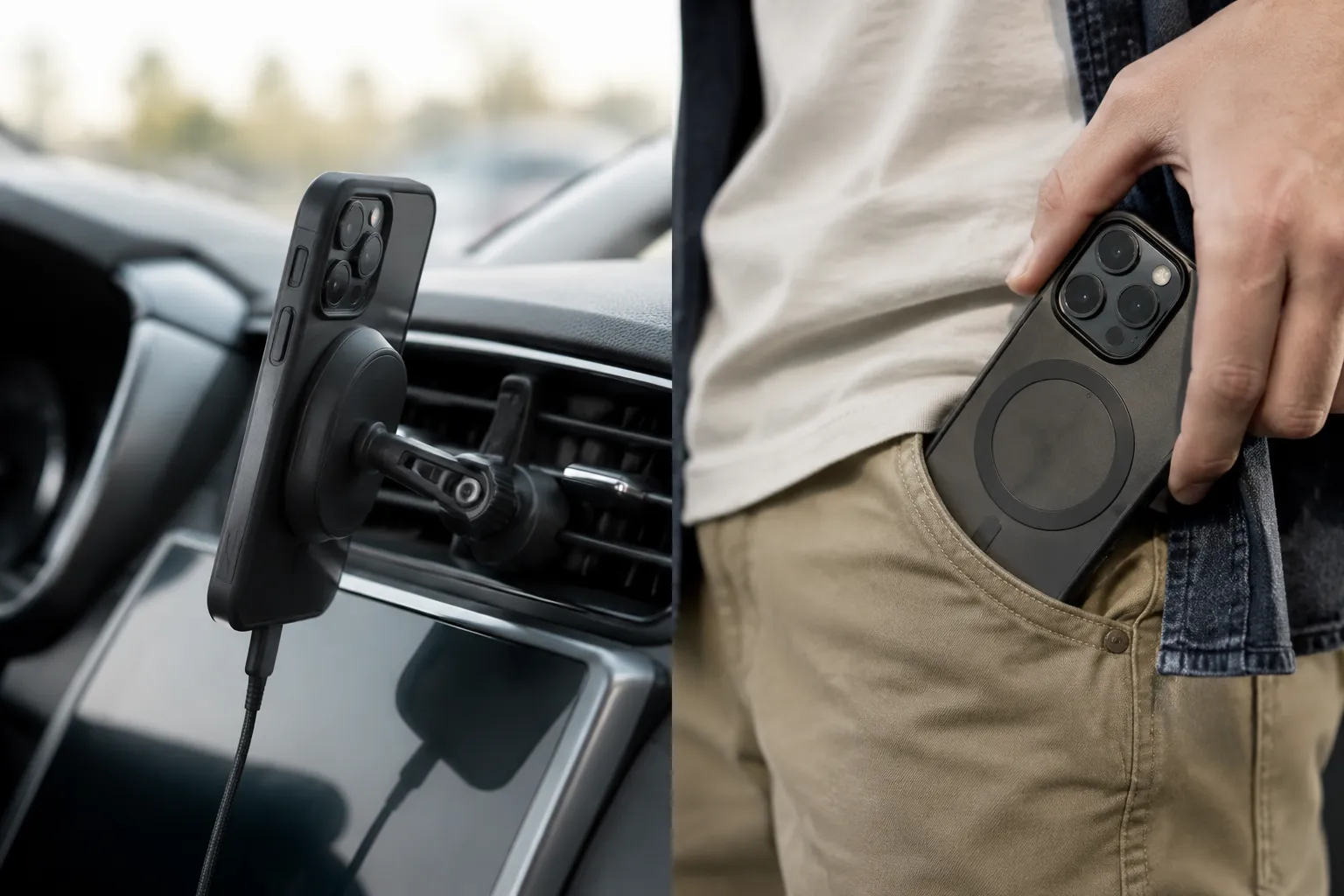
The pocket test is just as important as the drop test. A phone sits in a pocket with the screen facing the leg, and the fabric presses against the case. Sand and dust accumulate in the pocket, and those small particles grind against the protector. The raised edge creates a recessed area that keeps the dust from pressing directly on the glass, which reduces micro-scratches over time. This is one area where even a lip that does not fully clear a flat table surface still offers real value. The lip does not need to lift the protector above a rigid table to protect against dust in a pocket.
Why the Protector Changes the Drop Math
A tempered glass protector changes the way a phone absorbs impact. The protector is a brittle layer bonded to the display with a thin adhesive. On a drop, the protector takes the initial hit and cracks, which dissipates some of the energy. The display underneath stays intact in most cases. This is a well understood mechanism. The raised edge on the case is supposed to make sure the protector is the thing that takes that hit, not the frame or the display edges.
When the lip does not clear the protector, the protector becomes the impact point. The drop force concentrates on a small area of glass, which is more likely to shatter the protector and transfer the shock to the display. A protector that cracks from a direct point impact is doing its job, but the display underneath has a higher chance of damage on that same drop. A protector that never touches the ground, because the lip absorbed the impact, leaves the protector pristine and the display safe.
The marketing language usually conflates these outcomes. A case with a "raised edge" is presented as protecting the screen, but the mechanism matters. The lip does not make the screen indestructible. It makes the screen less likely to be the first point of contact. That distinction is the entire game. A person who expects a lip to save a phone from a drop onto a sharp rock will be disappointed. A person who expects a lip to keep a face-down drop from cracking the protector will be satisfied.
The Protector Thickness Tradeoff
Thicker glass protectors offer more impact resistance but create a bigger clearance problem for the case lip. A 0.2 millimeter protector sits closer to the display, which means the case needs a smaller lip to keep it off the ground. A 0.4 millimeter protector with a reinforced edge, sometimes marketed as "9H hardness" or "military grade," sits higher and demands a more aggressive lip. These thicker protectors also interfere with the touch response and the fingerprint sensor, which is why many people prefer the thinner options.
The industry has moved toward thinner protectors because of the ultrasonic fingerprint sensors under the display glass. A 0.2 millimeter protector passes the ultrasonic signal more reliably than a 0.4 millimeter one. This has created a weird situation where the protectors that work best with modern phones are the same ones that provide the least impact protection. The raised edge on the case has to compensate for the thinner protector, which means the lip height becomes a safety feature rather than just a convenience.
There is a category of case that avoids this problem entirely by building the screen protection into the case itself. These are the heavy-duty cases with a built-in plastic film or a recessed glass panel. The case and the protector become a single unit, and the lip is designed from the start to clear that specific protector. This approach works well for drops but adds bulk and often degrades the display clarity. A person who cares about the feel of the glass and the brightness of the screen will not want a built-in protector.
The Real Test Is a Corner Drop
Anyone who has dropped a phone more than a few times will notice that the corners take most of the damage. The frame gets scuffed, the case gets cracked, and the screen protector sometimes survives while the case looks beaten. This is the raised edge at work. The lip, combined with the corner bumpers on the case, creates a cushion around the screen. A drop on the corner transfers energy through the case frame, and the lip keeps the protector from hitting the ground as the phone rebounds.
The corner drop is where the difference between a good lip and a cosmetic lip becomes obvious. A case with a flimsy lip will flex on a corner impact, letting the protector touch down. A case with a rigid lip that is part of a solid frame will hold the protector off the ground even as the corner takes the hit. The material matters as much as the height. Thermoplastic polyurethane, or TPU, is soft and flexible, which makes it great for shock absorption but poor for maintaining clearance on impact. Polycarbonate is rigid and holds its shape, but it transfers more force to the frame.
Most modern cases use a combination. A rigid polycarbonate frame with a TPU bumper along the edges gives some of both benefits. The TPU compresses on impact, but the polycarbonate underneath holds the lip geometry. The best designs put a layer of air or a honeycomb structure behind the lip to absorb energy while keeping the protector off the ground. These details are rarely visible in product photos, which is why a person has to rely on reviews from people who actually drop their phones.
The Real Price of a Useless Lip
A screen protector that cracks is a five to twenty dollar replacement, depending on the brand. A display that cracks underneath a protector is a two hundred to four hundred dollar repair. The raised edge is the cheapest insurance against that second outcome, but only when it actually clears the protector. A person who buys a case with a decorative lip and a glass protector is paying for the appearance of protection without the reality.
The practical fix is to buy the case and the protector together from a brand that engineers them as a set. Some manufacturers now sell a bundle where the case lip is measured against the specific protector included in the box. This removes the guesswork. The alternative is to buy the case first, install the protector, and run the facedown test on a flat surface. If the protector touches, either the case goes back or the protector gets swapped for a thinner model.
The last option is to skip the protector entirely and rely on the lip alone. Modern smartphone glass is tough, and a raised edge that keeps the screen a full half millimeter off a flat surface can prevent most face-down scratches. The risk is a point impact from a sharp object, which no lip can stop. A person who cares about resale value and hates the feel of a protector might choose this route. A person who keeps a phone for three years and drops it weekly should not.
The raised edge is a simple mechanical feature that can be done right or done as a marketing checkbox. The difference is measurable in fractions of a millimeter, and the phone on the table will show the result without saying a word. The glass protector and the case lip work as a system, and a system only works when both parts clear their tolerances.