The best carry kit is not the one in a bag. It is the one that leaves the desk, survives the commute, and lands on a different desk across town without the owner noticing the transfer. Most people build a desk setup and a separate pocket setup, then watch the desk version gather dust while the pocket version runs out of ibuprofen and hand sanitizer. The fix is to design one small kit that lives in a jacket or bag, gets used all day, and never needs to be unpacked to be useful.
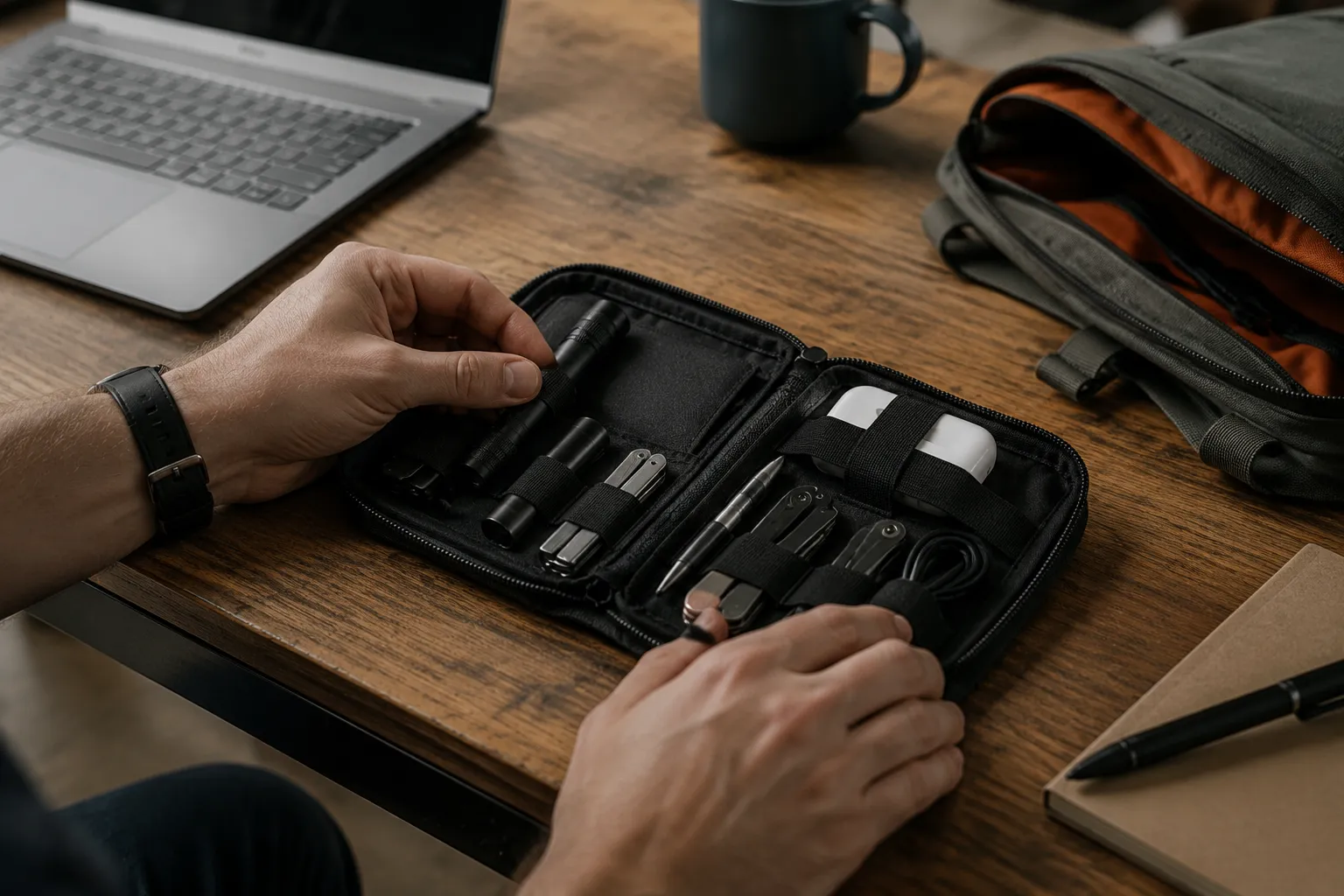
This method starts with a hard constraint that solves most of the problem before it begins: everything must fit inside a single flat pouch roughly the size of a paperback book. Nothing taller than a lip balm tube. Nothing heavier than a phone. The pouch itself should be soft-sided, because a hard case eats pocket space and catches on jacket linings. A canvas or nylon zip pouch about 18 by 12 centimeters works. It should have no internal organization at all, the kind with one big cavity, because organization built into the pouch forces a layout that will not fit every day.
Why the desk version always fails
The desk drawer kit fails for one reason: it is anchored to a location. A person keeps spare glasses, a charger, and painkillers in the office drawer, then needs those items at a coffee shop, a client site, or a train. The drawer version also breeds duplication. The office has a charger. The home desk has a charger. The work bag has a third charger, which is the one that actually gets used, and it lives at the bottom of the bag under a laptop and a water bottle.
Duplication is the enemy. Every duplicate item is a decision made twice a day: remember to carry it, remember to bring it back. The desk-to-pocket method eliminates the decision by refusing to have a home version at all. The kit has one location, and that location travels. It moves from the jacket pocket to the car console to the conference table without ceremony. The only rule is that it leaves the house every morning with the person who owns it.
That rule sounds simple, but it requires a different kind of commitment. A kit that stays in a work bag only works if the same bag goes everywhere. The more reliable anchor is the person. A jacket with a secure interior pocket works in three seasons. A small crossbody bag works in summer. The kit itself is the constant, not the container around it.
The core six items that earn their space
After years of testing, six items justify their place in the pouch. These are not aspirational purchases. They are daily tools that get used at least once a week, and each one solves a problem that a phone cannot solve alone.
The first is a folding knife with a blade under 8 centimeters. This is not a weapon; it is a package opener, a fruit peeler, a string cutter, and a splinter remover. The blade should lock, and the handle should be grippy even with wet hands. A person who carries one uses it several times a day without thinking. The second is a small flashlight. The phone flashlight works for finding a dropped earring, but it fails when both hands are needed, when the beam needs to point sideways, or when the phone is flat. A keychain light with a pocket clip, around 200 lumens, shines into laptop ports, under car seats, and behind furniture.
The third item is a pen that writes on anything. Not a fancy fountain pen. A pressurized ballpoint that writes on glossy receipts, damp paper, and the back of a hand in a pinch. The Fisher Space Pen or a similar pressurized cartridge pen fits this role. The fourth is a small pill organizer, not for prescriptions but for the daily realities: one ibuprofen, one antihistamine, one antacid. A flat aluminum case about the size of a business card holds a three-day supply of each.
The fifth is a microfibre cloth folded into a tight square. It cleans glasses, phone screens, and the lens of a camera. It also serves as an emergency napkin and a way to dry wet hands. The sixth is a roll of washi tape or a few strips of gaffer tape wrapped around a card. This sounds like the odd one out until a person needs to label a cable, mark a hotel room door, patch a torn notebook page, or secure a loose hem. Tape solves a surprising number of small emergencies.
What gets left out and why
The omissions matter as much as the inclusions. No multi-tool. The leatherman-style folder is heavy, bulky, and mostly unused; the pliers get used once a month, and the screwdriver bits never fit the screw that needs turning. The knife alone covers ninety percent of cutting tasks. No hand sanitizer. It leaks, it dries out, and most buildings have it mounted on the wall. No spare cash folded into a hidden compartment. Cash gets spent, forgotten, or becomes a reason to keep the pouch when it should be emptied and restocked.
The omission that gets the most pushback is the charger. A phone charger cable and a wall plug add bulk, weight, and a tangle problem that ruins the whole pouch. The compromise is a short cable, around 15 centimeters, folded tightly and held with a velcro strap. This fits only when the pouch is not already full. The honest answer is that most people can find a charger at the destination. The kit handles the moments between destinations, not the destination itself.
Another omission: anything sentimental. A lucky coin, a family photo, a keepsake. These items turn a functional pouch into a treasure box, and a treasure box does not get emptied, cleaned, and restocked. The kit needs to be replaceable in five minutes. If a person would hesitate to throw the whole pouch in a bin and start fresh, the kit has become clutter.
The weekly reset that keeps it honest
A pouch like this drifts. Pens accumulate. Receipts slide in. A stray battery appears. The drift is gradual, and within a month the pouch has doubled in weight and lost its flat profile. The fix is a weekly reset, done in under two minutes, usually on Sunday night or Monday morning.
The reset is simple: empty the entire pouch onto a table. Throw away every piece of paper. Return every pen that is not the designated one. Wipe down the cloth. Check the pill organizer and refill any empty compartments. Confirm the knife blade is clean and the flashlight turns on. Then put the six items back in the same order. The order matters because a consistent layout means a person can find the flashlight in the dark without looking.
The reset also catches wear. A knife that has developed play in the pivot. A flashlight that flickers when tapped. A pen that has started skipping. These small failures are easy to ignore during the week, but the weekly reset forces a decision: fix it or replace it. A kit with a broken tool is worse than no kit, because it trains the owner to stop relying on the pouch.
Adapting the list for actual work
The core six are a starting point, not a final answer. A person who works in film production swaps the pen for a sharpie and adds a small leatherman-style multitool because screws and equipment are a daily reality. A nurse adds a small pair of bandage scissors and a spare stethoscope earpiece. A photographer drops the knife and adds a lens cloth and a cable release. The method stays the same: one pouch, one location, weekly reset, no duplication.
The professional adaptation has its own discipline. The trap is adding tools for the job that happens once a quarter. A network engineer does not need an ethernet crimper in the daily pouch; that lives in a separate field kit that goes only to site visits. The daily pouch serves the daily reality. The rare task gets its own bag, packed the night before.
Seasonal swaps also keep the kit honest. Winter adds a small tube of hand cream and removes the microfiber cloth if gloves are already in the coat. Summer removes the hand cream and adds a tiny sunscreen stick. These swaps happen at the equinox, not randomly, and the reset makes them natural moments to rotate the contents.
The pocket test at the end of the day
The true test of this method happens at the end of the day, not the beginning. When a person empties the jacket or bag at night, the pouch should be there. If the pouch stayed on the desk all day because the jacket was not worn, the system failed. If the pouch is in the bag but the bag never left the car, the system failed. The kit only works when it travels with the body, not with the infrastructure around the body.
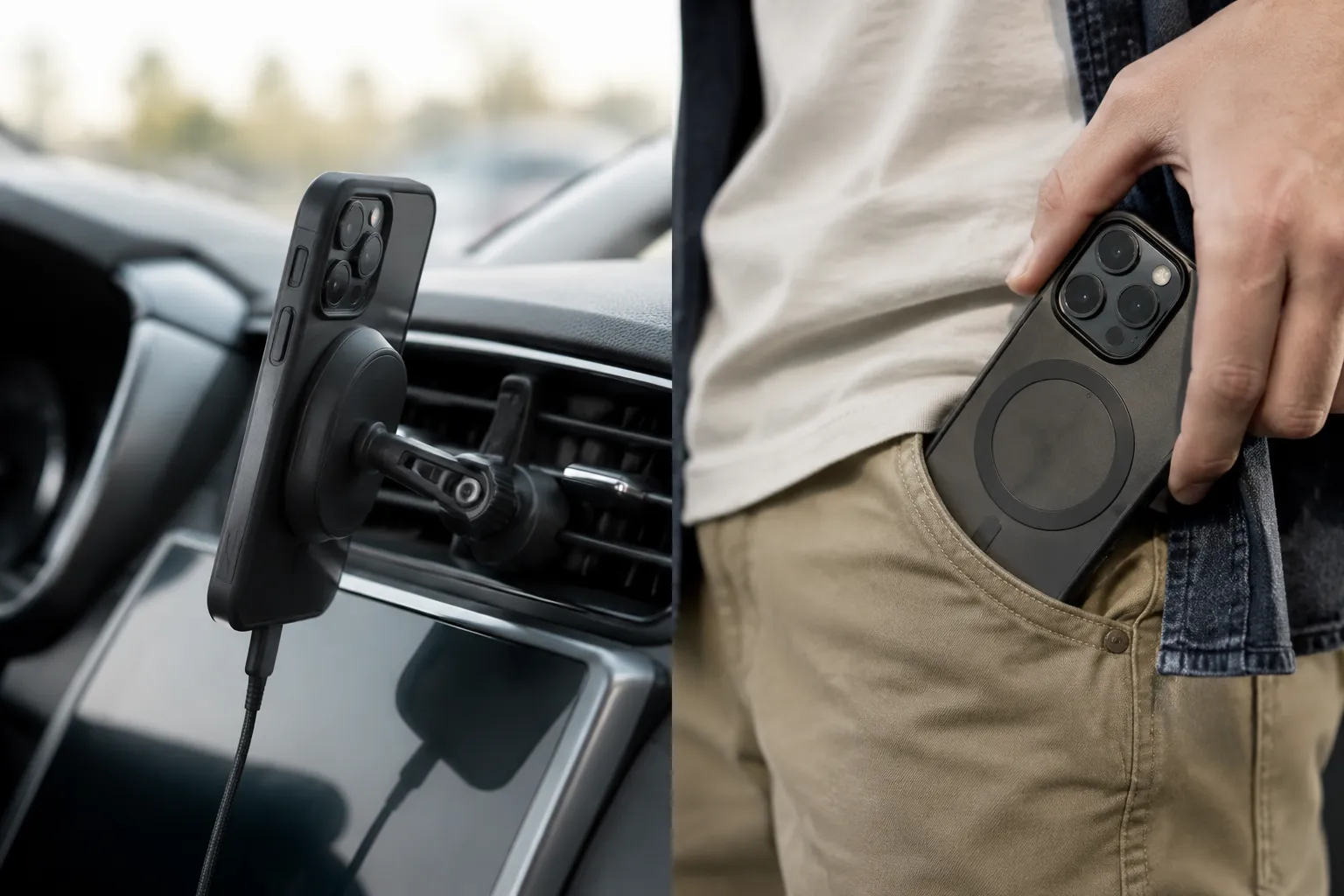
This is why the pouch itself must be small enough to live in a jacket pocket or a bag's dedicated phone pocket. When it has a designated home in the primary carry item, it becomes part of the daily dressing routine, like keys and a wallet. When it has to be remembered and transferred, it gets left behind on the first busy morning, and a busy morning is exactly when a person needs ibuprofen and a pen that works.
A final habit seals the method: the one-thing-out rule. Every time something new goes into the pouch, something old comes out. This single rule prevents the slow creep that kills every well-designed kit. The pouch stays flat, light, and useful for years. The desk drawer stays empty. The kit goes everywhere, because it was built to move, not to sit.