Magnetic cases were supposed to be the easiest decision in phone accessories. Apple built the ring into the iPhone, case makers slapped a magnet ring on the back of a slab of plastic, and buyers picked a color. Then everyone discovered the dirty secret: many MagSafe cases grip the charger far better than they grip a hand. The phone slides out of a palm, off a lap, out of a car mount on the first sharp turn. A case with a strong magnet but a slippery shell solves one problem and creates another, more expensive one.
Drop protection matters more than ever because the glass sandwich design of modern flagships turns a waist-high drop into a lottery. The case market has responded with two distinct approaches: chunky armored bricks that feel like holding a cinder block, and slim shells that offer about as much shock absorption as a paper envelope. The best MagSafe cases sit in the narrow space between those extremes. They have strong magnets, textured or grippy surfaces, and enough structure to survive a stumble without adding a pound of bulk.
This is not a ranking of every case on Amazon. This is a breakdown of the specific material and design choices that make a case both drop-proof and magnetic, with the models that actually deliver on both counts.
Why Most MagSafe Cases Slip Out of Hands
The root cause is a materials conflict. The same soft, shock-absorbing silicone that saves a phone on impact also creates friction against a pocket, making it annoying to slide the phone in and out. So manufacturers coat cases with smooth polycarbonate or hard TPU to restore that slide. The result is a case that feels nice in a pocket and terrible in a hand, especially in dry winter air or after a commute when natural hand oils have worn off.
There is also the matter of how MagSafe cases are built. A case with a floating magnet plate, where the ring sits slightly proud of the back surface, creates a bump that can catch on things but also gives the fingers something to feel. A flush magnet, by contrast, offers no tactile anchor. Neither approach inherently solves grip. The surface texture of the shell determines whether a person can hold the phone securely while reaching for a coffee cup or navigating a crowded sidewalk.
Grip itself is a subjective quality. A person with dry hands needs more texture than someone with naturally clammy palms. A case that feels secure in an air-conditioned office might feel like a bar of soap on a humid summer day. That variability explains why the same case gets rave reviews for grip from one buyer and complaints from another. The best designs use materials that perform consistently across conditions rather than relying on a single surface treatment.
The Grip Test: What Actually Works in Daily Use
Textured side rails make the biggest difference. A case can have a slick glass back and still feel secure if the edges have aggressive ridges or a soft-touch coating. The sides are where the fingers wrap, and that contact zone carries most of the gripping burden. Cases that ignore the sides and focus all texture on the back miss the point entirely.
Soft-touch coatings, the velvety matte finish found on many premium cases, provide excellent dry grip but degrade over time. After six months of pocket exposure, the coating can wear down to a shiny, slick surface. This is a known failure mode that manufacturers rarely disclose. Anyone who buys a soft-touch case should expect to replace it after a year, not because the case breaks but because the grip disappears.
Rubberized or silicone side rails avoid that degradation. They collect lint and dust, but they keep their grippy character far longer. The tradeoff is a case that resists sliding into pockets and sometimes reverses direction, turning a quick phone grab into a frustrating tug of war with denim.
Magnetic Strength: Not All Rings Are Equal
Apple's own cases use a ring of 18 magnets arranged in a circle, and third-party makers have copied that layout with varying success. Cheap cases often embed a single flat magnetic strip that aligns poorly with accessories, causing wobble during wireless charging and weak attachment to car mounts.
The magnet array needs to be positioned precisely at the case's center, which sounds obvious until a person tries several budget cases that are off by a millimeter or two. That misalignment shows up as a phone that charges but slides around on a MagSafe puck, or a car mount that holds the phone at a slight angle. Stronger magnets cannot compensate for poor positioning.
A useful test involves attaching the case to a MagSafe charger and holding the assembly upside down. A properly aligned case with adequate magnets will hold the phone suspended. A weak or misaligned array will let the phone fall. This test also reveals cases that have strong magnets but a slick back surface, where the phone stays attached but the case slides off the charger, leaving the phone crashing down.
Drop Protection on a Slippery Slope
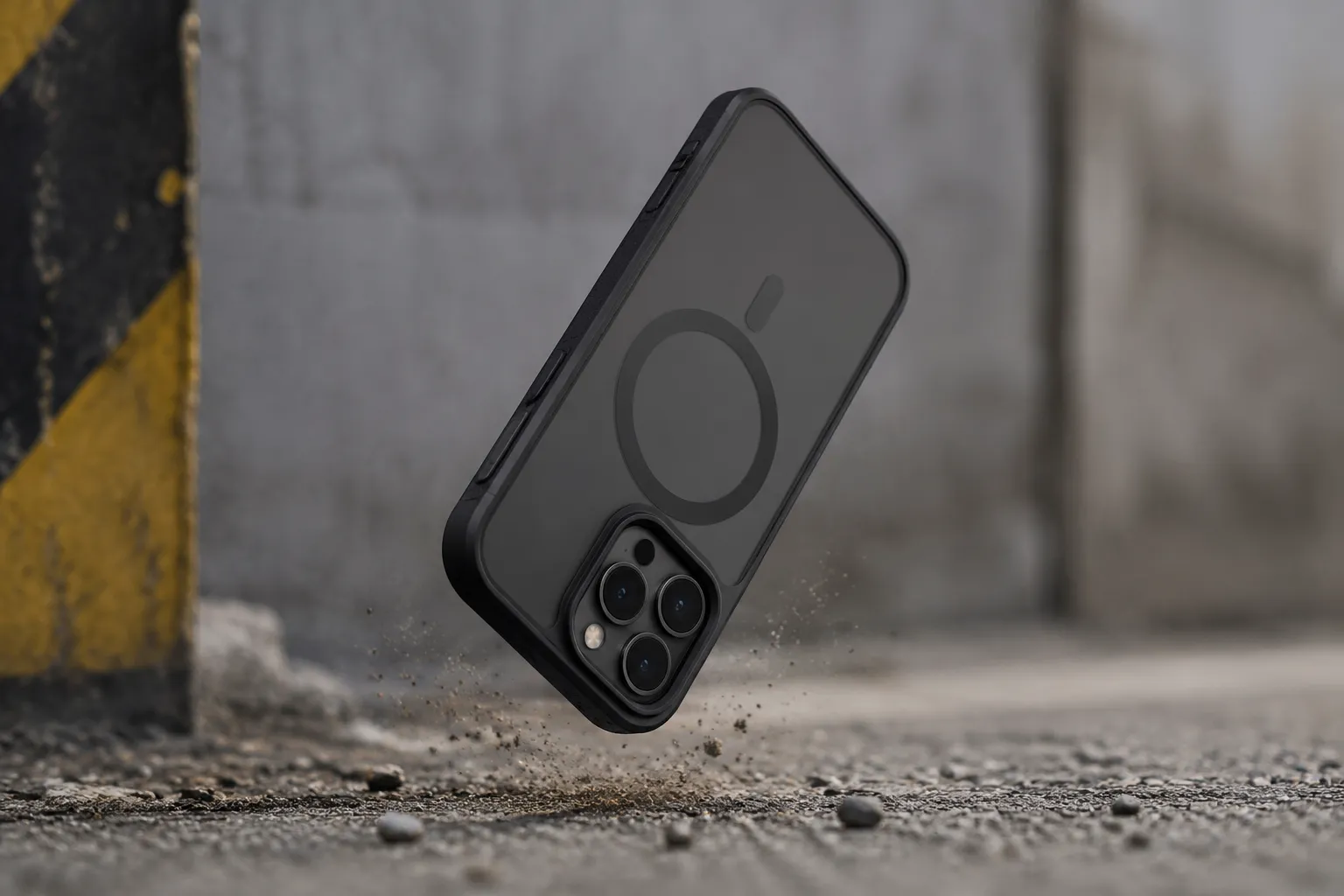
Corner protection is the most critical element of drop resistance. A phone that hits a hard surface at an angle almost always impacts a corner first, and that impact transmits force directly to the display or rear glass. Cases with air cushions or raised corner bumpers redirect that force away from the glass. Cases with uniform flat edges offer no such protection.
Raised lips around the camera module and the screen are equally important. A case that sits flush with the camera glass offers no protection when the phone lands face-down on a rough surface. The lip needs to extend at least a millimeter beyond the glass to keep it from contacting the ground. On the front, a taller lip interferes with edge swipes and gesture navigation, so manufacturers walk a tightrope between protection and usability.
Military-grade drop test ratings have become a marketing battleground, but the standards are less meaningful than the numbers suggest. A case that survives a drop from four feet onto concrete in a lab test might fail when dropped from a pocket height onto a curb with an uneven surface. The real-world test involves drops on gravel, stone, and the edge of a stair, surfaces that concentrate force on a tiny contact point.
The Slim Cases That Do the Job
Pitaka's MagEZ cases use aramid fiber, a material that feels almost like a woven fabric and provides surprising grip for a case that adds less than a millimeter of thickness. The fiber's natural texture stays grippy when dry and improves slightly when hands are even a little damp. The tradeoff is minimal drop protection, since the case offers little structure beyond the fiber shell itself. This is a case for someone who values hand feel and slim profile over serious drop survival.
Apple's own Silicone Case with MagSafe deserves a mention for its soft-touch exterior, which provides excellent dry grip and a pleasant hand feel. The case's weakness is its durability: the silicone coating peels and wears at the corners within months of normal use, leaving a sticky, degraded surface. The magnet array is strong and precisely aligned, but the case's short lifespan makes it a poor value at its premium price point.
Spigen's Thin Fit MagSafe takes a different approach with a hard polycarbonate back and textured side grips. The texture is subtle, a fine dot pattern that provides just enough friction to feel secure without becoming a lint magnet. Drop protection is modest, sufficient for the occasional fumble but not for repeated high-impact drops. This case works for someone who wants MagSafe compatibility and reasonable grip without adding bulk.
The Rugged Cases Worth the Bulk
OtterBox's Defender Series with MagSafe remains the reference standard for drop protection, with a multi-layer design that includes a polycarbonate shell, synthetic rubber slipcover, and a belt clip that doubles as a kickstand. The rubber exterior provides outstanding grip, even with sweaty hands. The bulk is substantial, adding roughly three times the thickness of a slim case, but the protection is correspondingly serious. The MagSafe implementation works reliably, though the case's size can interfere with some magnetic car mounts designed for slimmer profiles.
UAG's Monarch Pro takes a different path with a featherlight composite core wrapped in leather and alloy metal. The materials provide a secure grip, with the leather sections offering natural tackiness that improves with use. The case feels premium in the hand and survives drops that shatter less substantial cases. The raised bezels around the screen and camera are aggressive, which protects the glass but makes the phone less comfortable to hold during long reading sessions.
Casetify's Ultra Bounce case splits the difference with an impact-absorbing bumper around the edges and a clear back that shows off the phone's color. The bumper has a ribbed texture that provides genuine grip, though the clear back panel becomes fingerprint-prone and slightly slippery. The case's corner bumpers are among the most effective available, channeling impact forces away from the glass with a honeycomb structure that Casetify has refined over several generations.
When the Case Back Becomes a Mount
MagSafe cases create an interesting opportunity that few manufacturers exploit well: the back of the case can hold accessories beyond chargers. PopSockets, finger loops, and magnetic wallet attachments all use the same ring. The case's grip characteristics change dramatically when any of these accessories are attached. A MagSafe wallet adds thickness and can make the phone feel unbalanced. A PopSocket adds a dedicated grip point that eliminates the need for a textured case surface entirely.
The most underappreciated accessory is the magnetic finger loop, a simple strap that attaches across the back of the case. It provides a secure anchor that works regardless of the case's surface texture. A person who uses one can get away with a slicker case because the strap, not the case material, handles the grip burden. This pragmatic solution often proves more effective than hunting for the perfect textured case.
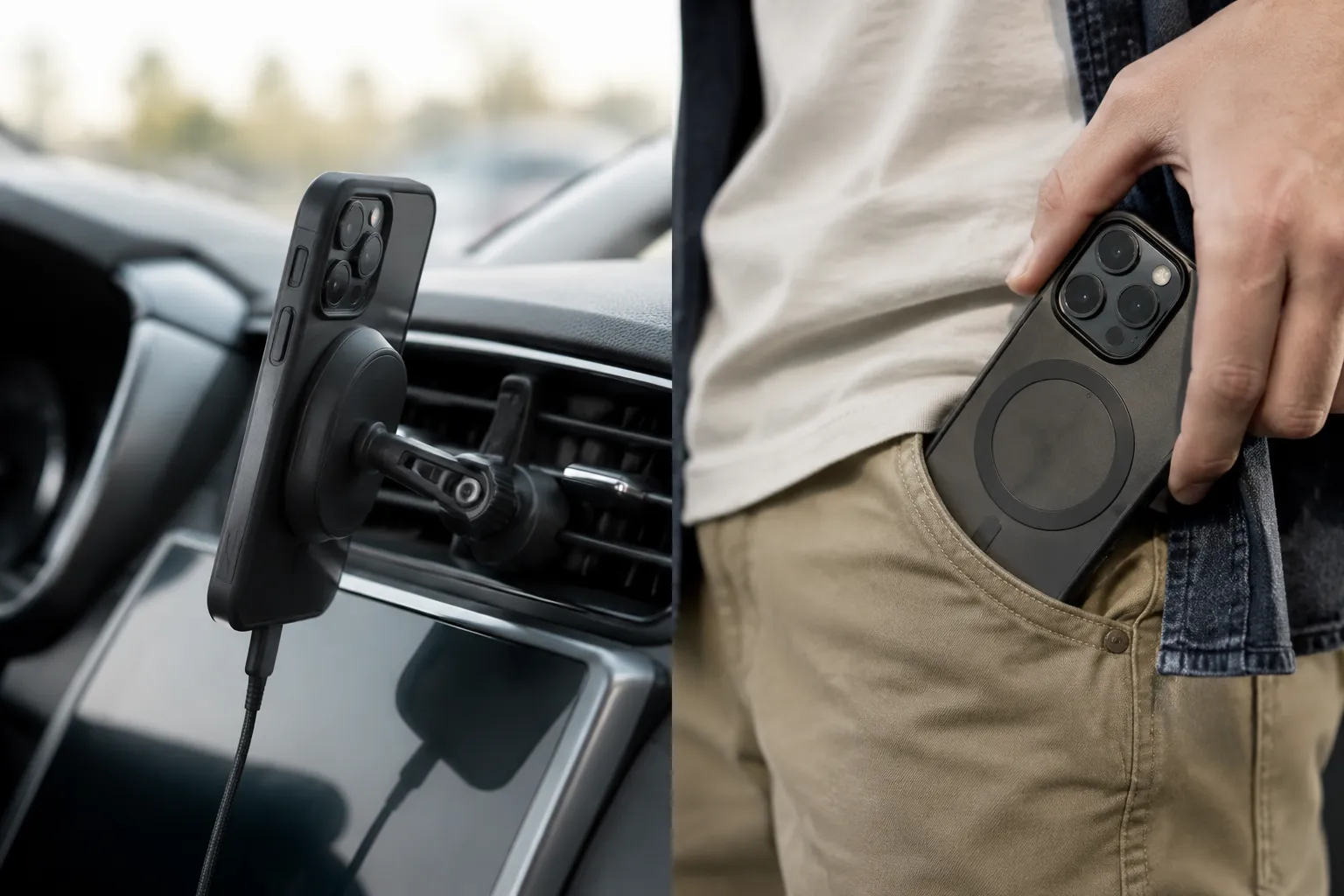
Car mounts deserve specific attention. A magnetic car mount holds the phone with magnets in the mount itself, and the case's magnet ring assists but is not strictly necessary. The mount's own magnets do the heavy lifting. The case's surface texture becomes irrelevant once the phone is locked into the mount. The relevant factor is whether the case adds enough thickness to interfere with the magnetic connection, which some rugged cases do.
The Material That Nobody Discusses
Thermoplastic polyurethane, or TPU, forms the backbone of most case construction, but not all TPU is created equal. The grade, hardness, and additive package determine whether a case stays flexible and grippy or becomes stiff and slick over time. Cheap cases use a higher-durometer TPU that feels hard and slippery from day one. Better cases use a softer formulation that grips well but can yellow within months, especially when exposed to UV light.
Some manufacturers blend TPU with liquid silicone to create a hybrid material that maintains grip without the lint attraction of pure silicone. These hybrids represent the current frontier in case materials, offering the best of both worlds. The downside is cost, since these formulations require more sophisticated manufacturing processes than simple injection molding.
Polycarbonate cases, the hard plastic shells popular for their slim profile and clear finishes, offer the worst grip of any material. The hard surface has minimal friction, and even pronounced texture patterns provide limited traction against dry hands. A person who prefers clear cases to show off the phone's design must accept either poor grip or the permanent addition of a finger loop or PopSocket.
Finding the Actual Right Case
The correct purchase depends on an honest self-assessment of how the phone is held and dropped. A person who keeps a phone in a bag and uses it primarily at a desk needs less grip than someone who walks with a phone in hand through city streets. A person who has dropped the last three phones needs more drop protection than someone who has gone five years without cracking a screen.
Rugged cases with textured bumpers make sense for construction workers, cyclists, and parents chasing small children. Slim cases with aramid fiber or textured backs work for office workers and anyone who prioritizes hand feel. The middle ground, cases with moderate drop protection and decent grip, covers the majority of people who want peace of mind without the bulk.
The right way to evaluate any candidate case is to handle it in person before buying. Retail stores still stock cases from major brands, and the tactile difference between materials becomes obvious within seconds of holding a case. The online review ecosystem, built on affiliate links and sponsored placements, cannot communicate the subjective experience of grip. A case that feels secure in one person's hand may feel inadequate in another's.
The acid test remains the one-handed reach. A case that allows a person to stretch for a door handle or grab a falling object while keeping the phone secure in the same hand has passed. A case that requires a death grip or constant readjustment has failed, regardless of its drop test ratings or magnetic strength. The best MagSafe case is the one that disappears from awareness during daily use, holding the phone securely without demanding attention.
Magnetic charging without a case works fine. Drop protection without MagSafe works fine. The cases that earn their place combine both without compromises that make either feature useless. Those cases exist, but finding them requires ignoring marketing language and paying attention to the actual materials and construction. The surface texture of the case, the alignment of the magnet ring, and the geometry of the corner protection tell the real story. Everything else is packaging.