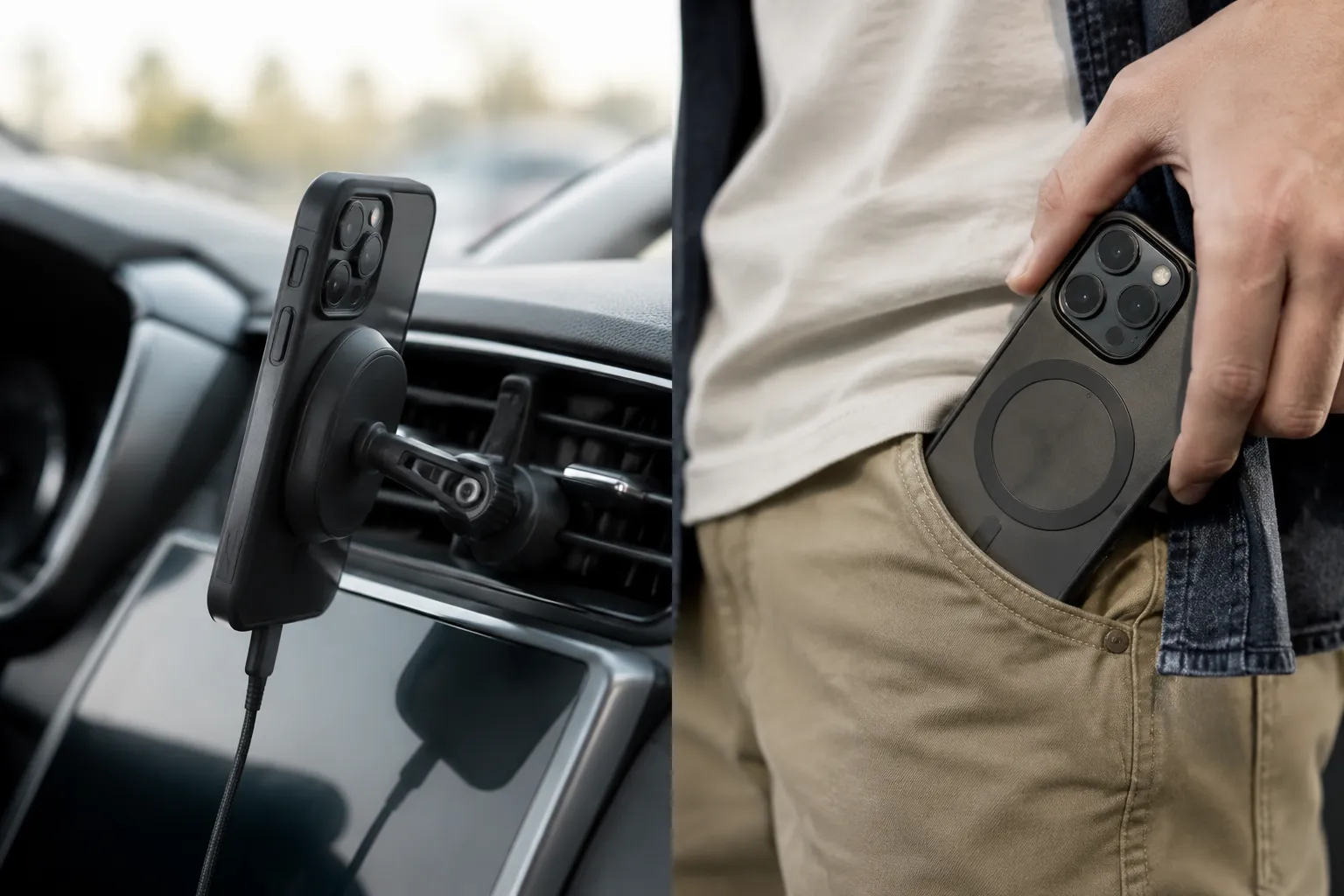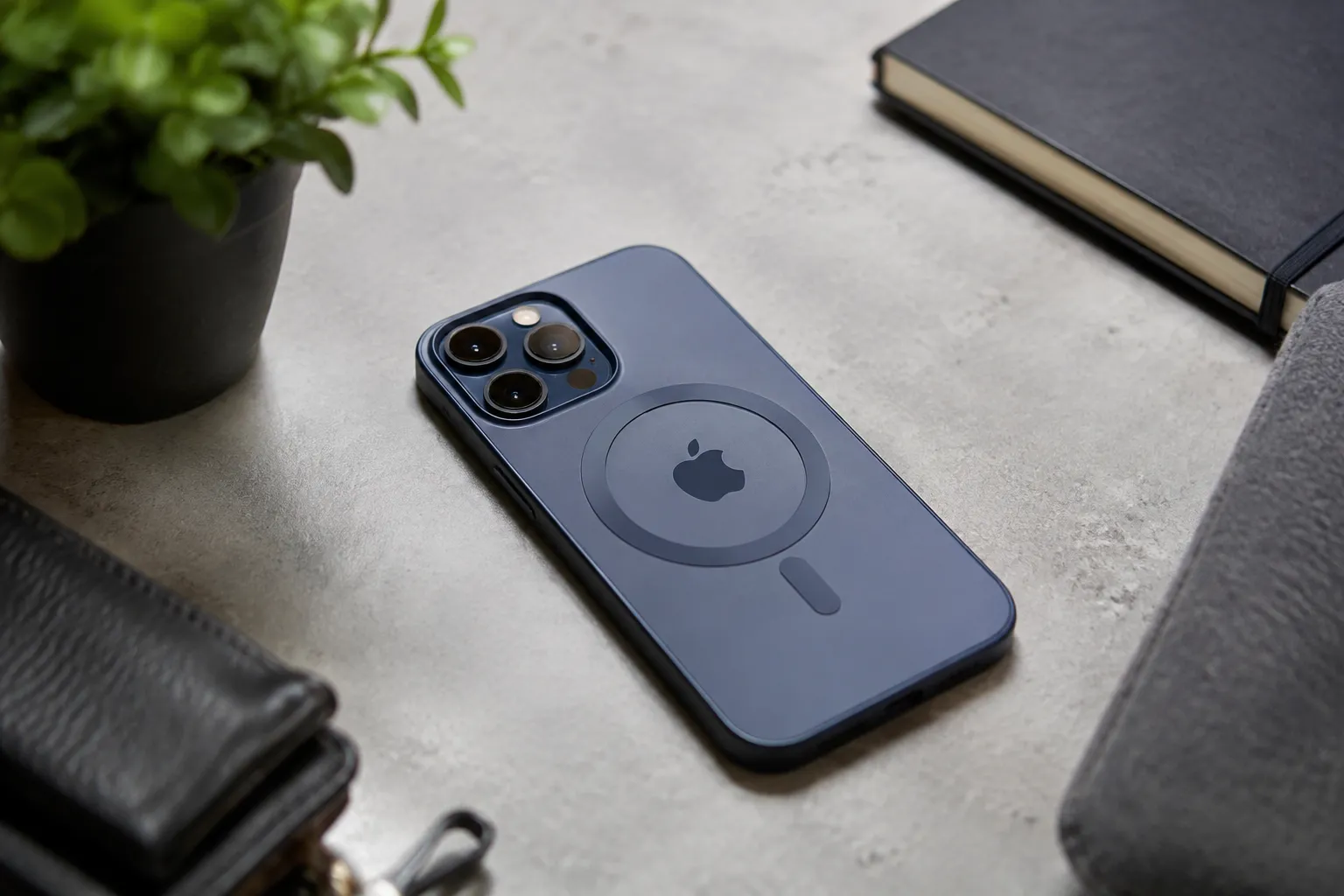
The iPhone 15 generation created a small crisis for people who care about their phones. The titanium edges on the Pro models are lovely to hold, and the standard iPhone 15's aluminum frame with the matte glass back is genuinely pleasant in the hand. Then most people immediately wrapped the whole thing in a slab of rubber thick enough to survive a car accident. The tension is real: a case that protects like a tank feels like one, and the phone Apple spent a year slimming down suddenly gains a third of an inch of bulk. Thin cases used to mean flimsy cases, the kind that yellow in six weeks and offer about as much drop protection as a sock. That trade-off has mostly dissolved. The market now has a meaningful category of cases that measure under 1.5 mm, weigh around 20 grams, and still pass basic military drop standards. This is a roundup of the ones actually worth buying for the iPhone 15, judged on the only criteria that matter: slimness, grip, button feel, and whether the thing protects anything at all.
A quick note on the rules of engagement. A thin case is not a screen protector, and no case in this category will save a phone from a 3-meter face-down slam onto concrete. The goal is different. The goal is a case that disappears from awareness while absorbing the daily abuse: the slide across a bar table, the drop from a pocket onto tile, the scrape against a car door. Readers who need fortress-level protection should stop reading now and buy a case with a built-in kickstand and a belt clip. Everyone else should consider what follows.
The Measuring Stick: What 1.5 mm Actually Means
Before getting into specific cases, it helps to understand what "thin" really means in this context. The iPhone 15 Pro measures 8.25 mm thick. A case adds material on all sides, so a 1.5 mm case brings the total to roughly 9.75 mm, which is still slimmer than the iPhone 14 Pro Max was with no case at all. Cases in the 1.2 mm range feel almost like a skin. Cases at 1.8 mm start to feel like a case. The difference between 1.2 mm and 1.8 mm sounds trivial on paper, but in a pocket, in a hand, in the way a phone sits on a table, it is enormous.
Weight matters even more than thickness. A case that weighs 35 grams changes the balance of a phone. A case at 15 to 20 grams disappears. The iPhone 15 Pro weighs 187 grams, so a 17-gram case brings the total to 204 grams, about the same as a naked iPhone 15 Pro Max. The physics of daily carry are unforgiving, and every gram above the low 20s eventually becomes a thing a person notices.
Material also has a say. Thermoplastic polyurethane, or TPU, is flexible, cheap, and offers decent shock absorption, but it degrades under UV light and turns yellow. Polycarbonate is rigid, clear, and resistant to yellowing, but it shatters under impact if used alone. The best thin cases combine a polycarbonate back with a TPU bumper, or use a single molded material like Pebax, an engineering plastic that stays flexible and resists yellowing far better than standard TPU. The material choice determines everything about how a case ages, and the cheap options age poorly.
Cautionary Note for the Whole Category
Every thin case makes a compromise. The compromise usually lives in the corners, where drop protection actually matters. A case that is 1.2 mm thick at the center can have slightly thicker, air-cushioned corners that bring the measurement to 1.8 mm or even 2 mm. Many manufacturers list a single thickness number that refers to the thinnest point, which is a bit like a car company advertising horsepower while hiding the torque curve. The better thin cases do not hide this. They build in subtle corner reinforcement that adds a millimeter of material where the phone hits first, and the good ones do it without making the case look lumpy.
Another compromise is the lip. A case needs a raised edge around the screen to keep the glass off a flat surface when the phone lands face-down. Thin cases cannot have a dramatic lip, so they rely on a lip of about 1 mm, which is enough for a flat drop but not enough for a drop onto a pebble or a curb. Some manufacturers skip the lip entirely and rely on the phone's own slightly recessed screen, which is a bad idea for the iPhone 15's flat display. The lip is non-negotiable, and any case that skips it to shave off a few fractions of a millimeter is not protecting anything.
MagSafe also complicates the thin-case equation. The magnet array inside the iPhone 15 is strong, but a case adds distance between the phone and the charger, which weakens the hold. A thin case actually helps here, since the magnets have less material to push through. Still, some thin cases use a metal plate or a thicker magnetic ring that interferes with wireless charging speeds or makes the case heavier. A well-designed thin MagSafe case should click onto Apple's official charger with an audible snap and should not heat up noticeably during a charge cycle. If either of those things fails, the case is not doing its job.
Pitaka's Aramid Weave: Thin in a Different Way
Pitaka makes cases from aramid fiber, the same material used in bulletproof vests and high-end racing helmets. The company's iPhone 15 cases measure 1.4 mm at the thickest point and weigh around 17 grams, which makes them the lightest of anything in this roundup. The texture is the first thing a person notices. Aramid has a tight, dry weave that feels unlike any plastic or leather, more like a premium backpack strap than a phone case. It also provides genuine grip without being tacky, and it does not attract fingerprints.
The aramid construction means there is no flexible bumper. The case is rigid, with cutouts for the buttons rather than covered buttons. This is a deliberate choice. Covered buttons on a thin case often feel mushy, and Pitaka instead exposes the titanium buttons entirely, which preserves the exact click feel of the naked phone. The trade-off is that the side rails offer less impact absorption than a TPU bumper. A drop onto a corner transfers more energy through the rigid aramid. In practice, the case handles normal drops fine, but a person who drops a phone multiple times a year should look elsewhere.
MagSafe performance is excellent. The aramid is thin enough that the magnets bite hard, and Pitaka built a subtle magnetic ring into the case's interior that does not add visible bulk. The case also works with Apple's MagSafe wallet, which is a useful test since the wallet is heavier than a charger and pulls harder on the magnets. The main drawback is price. Aramid is expensive, and Pitaka charges a premium that puts the case in the same bracket as Apple's own leather cases. For a person who wants the closest thing to a naked phone with some scratch protection, it is worth the money. For everyone else, it is a luxury item more than a practical one.
Totallee's No-Name Minimalism
Totallee built an entire brand around thinness, and the company's iPhone 15 case is exactly 1.3 mm thick with a weight of 19 grams. The case is a single piece of matte polypropylene, a material that is surprisingly rigid for its thickness and resists yellowing well. The finish feels like a soft-touch plastic that has been given a slight texture, and it does not pick up oils from the hand as quickly as glossy alternatives.
The version with MagSafe adds a ring of magnets embedded in the back, which brings the weight to around 24 grams and raises the case profile slightly. The clear version, which is the most popular option, has a tendency to show dust and pocket lint through the back, which looks worse than the case's modest yellowing resistance. The black version hides this entirely and is the better purchase.
Button coverage is Totallee's weakest point. The case uses cutouts for the buttons on the sides, which means the action button and volume rockers are fully exposed. This preserves feel but leaves the edges vulnerable to knocks. The bottom cutout for the charging port is a full-width opening, which looks a little unfinished but has the practical benefit of working with any third-party cable, including the thick braided ones that do not fit through smaller cutouts. Drop protection is minimal. The case has a lip of about 1.1 mm around the screen, and the corners have no extra reinforcement. This is a scratch-and-scrape case, not a drop-protection case, and Totallee does not pretend otherwise.
Apple's Own Silicone Case: The Benchmark for Feel
Apple's silicone case for the iPhone 15 is not the thinnest option, measuring around 1.9 mm at the edges, but it deserves consideration because it nails the things thin cases usually get wrong. The silicone has a soft, grippy texture that makes a phone feel secure in a hand, and it has a microfiber lining inside that protects the phone's glass back from scratches. The MagSafe implementation is flawless, with the strongest magnet hold of any case tested here, and the case has a raised lip that is more substantial than most thin competitors.
The case weighs 28 grams, which is heavier than the aramid and polypropylene options, but the weight feels distributed evenly, so it does not make the phone feel bulky. The button covers are the best in this category. Apple has refined them over several generations, and the covers are clicky without being stiff, a detail that third-party manufacturers still struggle to replicate.
The drawbacks are well documented. Silicone attracts lint and dust, especially in pockets, and the material wears at the corners over months of use. The case also does not age gracefully; a year in, the finish looks tired. Apple charges a premium for the case, and a person can buy three decent third-party cases for the same price. But for the person who wants the best-feeling thin case and does not mind replacing it every year or so, this is the one.
Caudabe's Sheath: The Right Balance
Caudabe's Sheath is the best all-around thin case for the iPhone 15, and it earns that title by refusing to chase the thinnest possible measurement. The case measures 1.6 mm and weighs 25 grams, which places it in the middle of the pack, but Caudabe uses a material called ShockLite that is rigid in the frame and slightly flexible at the corners. The result is a case that feels solid in the hand without adding bulk, and the corner reinforcement provides noticeably better drop protection than anything thinner.
The texture is a matte finish with a fine grain that provides excellent grip. The case does not slide on a car dashboard, and it does not slip out of a hand when a person is walking and texting. The button covers are integrated into the frame and offer a click that is close to Apple's own, though slightly firmer. The MagSafe magnet ring is strong, and the case works reliably with all of Apple's MagSafe accessories, including the battery pack, which has a weaker magnet that struggles with thicker cases.
What makes the Sheath stand out is the balance. It is thin enough to feel nearly naked, but it has enough material at the corners and around the camera lens to survive a realistic drop. The camera lip is raised by about 0.7 mm, which is enough to protect the lenses from a flat surface scrape but not enough to shield them from a direct impact on a sharp edge. The case comes in several colors, and the darker ones hide wear well. This is the case a person should buy if they want to stop thinking about cases.
The Clear-Case Question: Speck and Spigen
Clear cases present a special problem for thin design. The plastic needs to be thick enough to resist cracking, and the material needs to resist yellowing, which is a chemical property that degrades with exposure to sunlight and heat. Speck's Clear case for the iPhone 15 is 1.8 mm thick and uses a dual-layer construction with a polycarbonate back and a TPU bumper. The case has survived real drops in testing, but the TPU bumper will yellow over time, and the case shows dust between the layers within weeks of use.
Spigen's Ultra Hybrid is thinner at 1.4 mm and lighter at 21 grams, but it skips the corner reinforcement that protects the Speck. Both cases are fine for a person who wants to show off the phone's color, and both have good MagSafe rings. The honest take is that clear cases are the weakest point of the thin-case category. The materials are just not good enough yet. A person who wants thin and clear should buy the Spigen and plan to replace it every six months, or accept a small amount of yellowing and keep it for a year. Clear aramid cases, like the one from Pitaka, solve the yellowing issue entirely but cost three times as much and are not actually clear, only translucent.
What About the Action Button?
The iPhone 15 Pro and Pro Max replaced the mute switch with an Action button, and thin cases handle this hardware change differently. Some cases, like the Pitaka, use a cutout that exposes the button completely. Others, like the Caudabe, cover it with a molded button that is flush with the case. The covered approach is better for one reason: the Action button is easier to press by accident when it is exposed through a cutout, because the case edge creates a lip that a finger can catch. A molded cover raises the button slightly and requires a deliberate press to trigger it. This is a small detail that becomes obvious after a few accidental screenshots or camera activations.
Anyone setting the Action button to trigger the camera, a favorite shortcut, or the flashlight should prioritize a case with a covered button. A person who uses the Action button rarely might not care. The difference is worth a moment of thought before buying, because it is not something a return policy fixes after a week of use.
A Note on the iPhone 15 (Not Pro)
The standard iPhone 15 has a slightly different body shape, with a curved aluminum edge, and most serious case makers sell separate versions for it. The Caudabe Sheath and the Pitaka aramid case are both available in this size, and they fit the standard phone's rounded edges as well as the Pros. One specific difference matters: the standard iPhone 15 has a glass back with a matte finish that does not show fingerprints as readily as the Pro's glossy glass. This makes a thin case less necessary for aesthetic reasons, but the standard phone's aluminum frame dents more easily than titanium, so a case still provides real protection.
People with the standard iPhone 15 also have access to the same MagSafe ecosystem, and the thinner body means that some cases, particularly the Totallee, feel even slimmer in hand compared to the Pro variant. The trade-off is the same, but the standard phone's lighter weight (171 grams) makes a 20-gram case feel proportionally heavier. The Caudabe Sheath remains the strongest recommendation for this size.
The Verdict, Such as It Is
No single thin case wins every category, and the choice comes down to what a person values. The Pitaka aramid case is the thinnest and most beautiful, but it is expensive and offers minimal drop protection. The Apple silicone case feels the best and has the best MagSafe hold, but it wears out and costs more than competitors. The Totallee is the thinnest budget option, but it is a scratch guard more than a case. The Caudabe Sheath is the most balanced, with real corner protection, excellent grip, and a slim profile that never feels like a compromise.
The iPhone 15 generation deserves a case that does not ruin the phone's feel. The titanium edges, the matte glass, the precise weight distribution, these are details that Apple spent years perfecting, and a 3 mm thick rubber brick wipes them all out. A thin case keeps the phone close to what it was designed to be. The Caudabe Sheath is the best answer to that problem, and the Pitaka is the best answer for a person who does not drop phones. The Apple silicone case remains the best-feeling option for a person willing to trade a little thinness for a lot of grip. Pick one, put it on, and forget the phone is wearing anything at all. That is the entire point.