The accessory industry has a genius for taking a practical object and turning it into a decision that demands a spreadsheet. Phone straps, those loops of fabric, silicone, and beads that dangle from corners of smartphones, started as a simple answer to a simple problem: people drop expensive devices. Somewhere along the way, the market flooded with options that range from the genuinely useful to the purely decorative, and the choices became more complicated than the problem they solved. Most people pick wrong because they treat the strap like jewelry. The better approach treats it like a piece of safety equipment that happens to look good.
The first mistake is buying for the case instead of the hand. A strap attaches to a phone, but it lives against a palm, a wrist, or a neck. The person who shops for a strap while staring at the phone case catalog is already lost. The physical reality of how the device gets carried dictates everything: whether the phone rides in a back pocket, a crossbody bag, a coat pocket, or a bare hand. A wrist strap that works for a person who carries the phone in a jacket pocket becomes a nuisance for someone who stuffs the device into tight jeans. The strap must match the carrying habit, and most people have never once thought about their carrying habit until the moment they are standing in an aisle or scrolling a product page.
The Magnet and the Connector Are the Whole Game
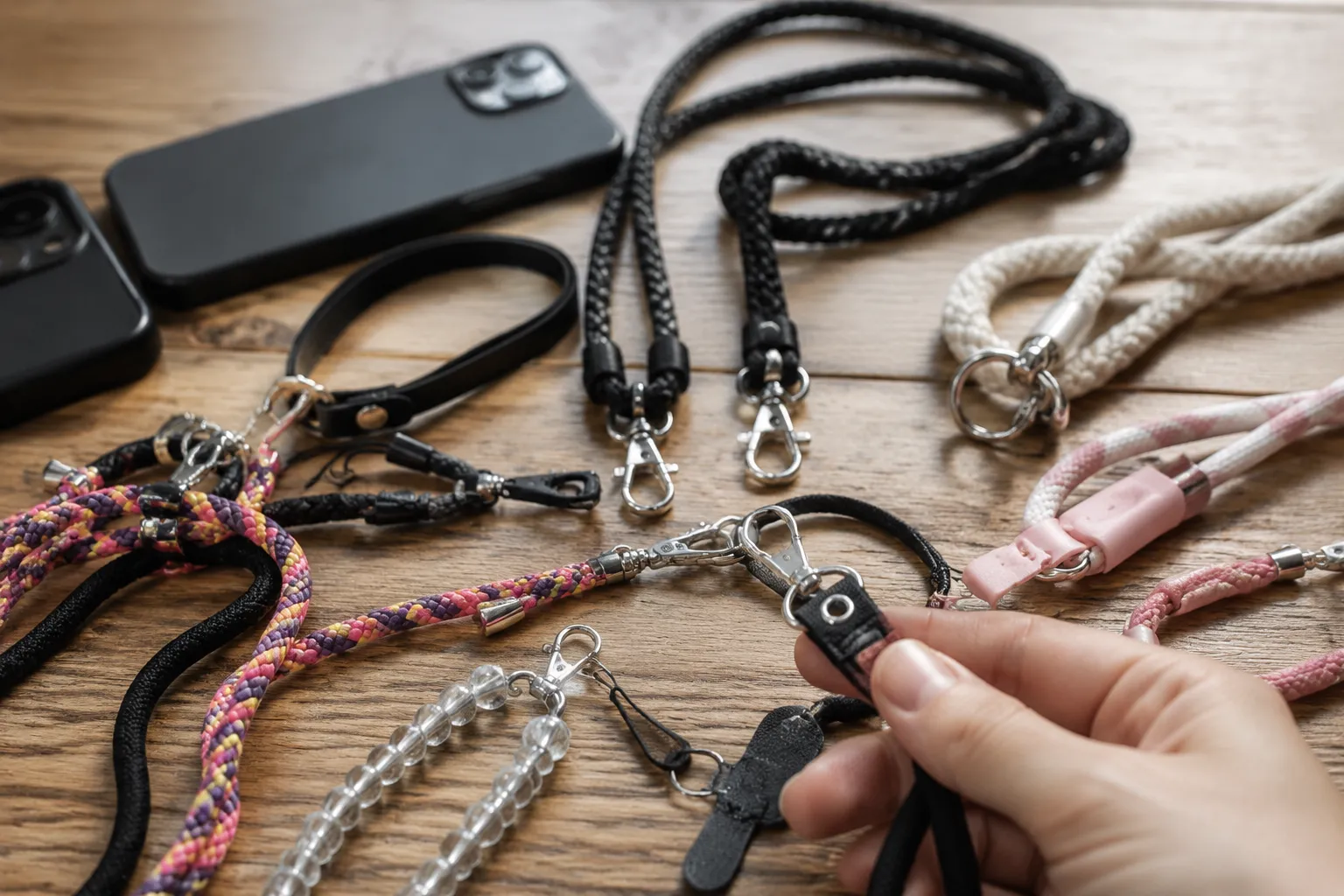
Every strap on the market hangs from one of three attachment systems: a thin fabric loop that wedges between the case and the phone, a metal ring that screws into a mounting plate adhered to the back, or a magnetic disc that snaps onto a compatible case. The fabric loop method is the oldest and the cheapest, and it fails the most often. The loop slides out over weeks of use, the case lip wears down, and the phone ends up on the floor anyway. The person who buys a five dollar strap with a flimsy woven loop has not solved a problem; they have delayed it.
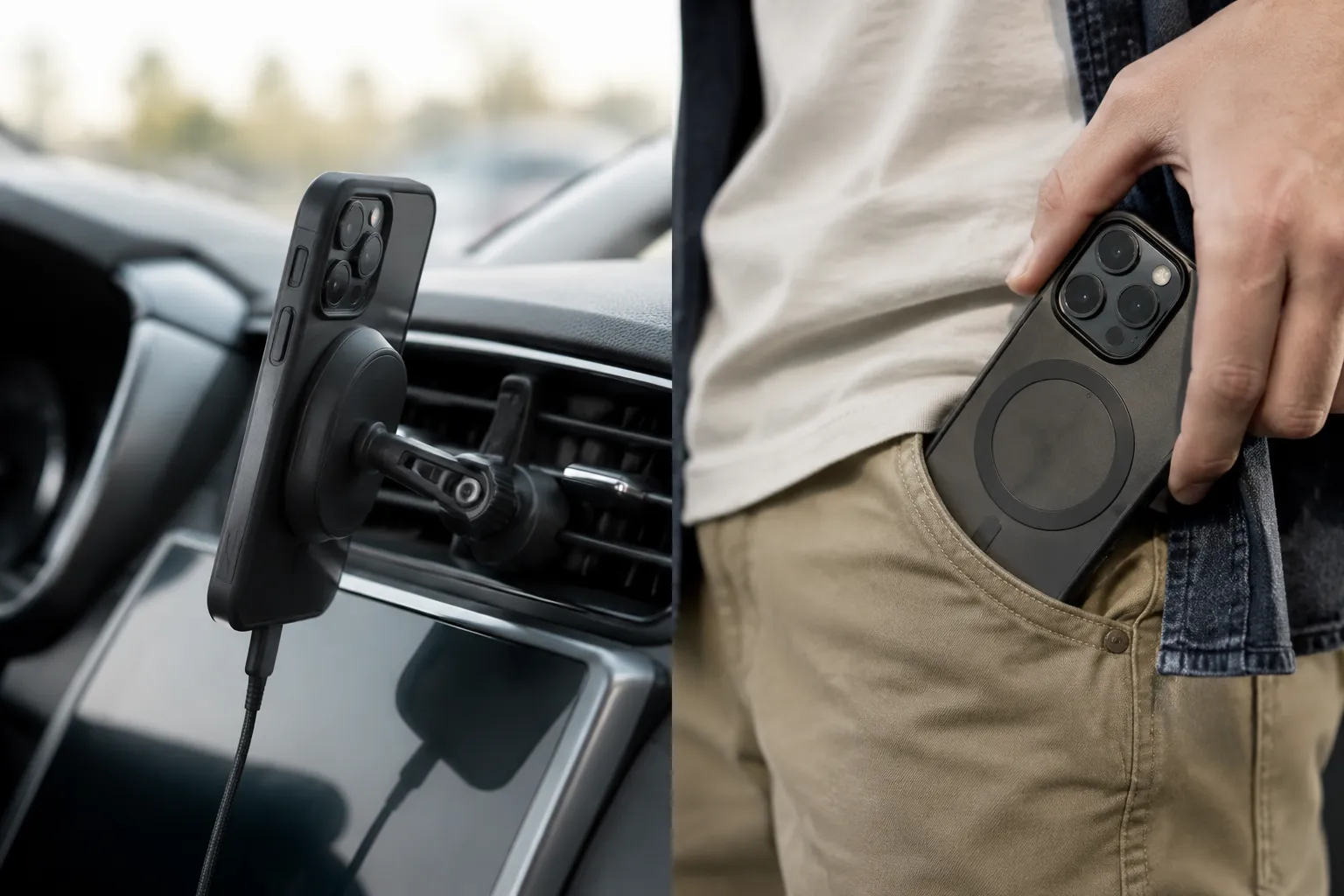
The mounting plate approach, where a flat metal disc sticks to the back of the phone or case with strong adhesive, offers more stability. The plate sits flush, the strap attaches with a quarter turn, and the whole system feels solid. The catch is the adhesive. Heat breaks it down. A phone left on a car dashboard in summer, or held close to a body for hours on end, warms the glue until the plate lifts. One day the wearer reaches for the strap and the whole assembly peels away, phone still in hand but the security gone. The magnetic systems solve this by embedding the connection inside a purpose built case, but that means the case now dictates the phone choice, which is its own trap.
The real question is not which strap looks best. The question is which connector the wearer will actually maintain. A person who switches cases seasonally needs a strap system that transfers easily. A person who keeps one case for two years can afford the integrated magnetic option. Ignoring this single variable causes more wasted money than any other mistake on this list.
Length Is a Personality Test Nobody Takes
Strap lengths fall into broad camps, and the camps attract different types of use. A short wrist loop, roughly 15 to 20 centimeters around, keeps the phone tethered to one hand. This is the minimalist option, good for quick photo grabs and for people who text while walking. The medium length, around 25 to 35 centimeters, allows the phone to hang from the wrist while the fingers stay free. This is the sweet spot for most people, but it is also the length that gets skipped in favor of extremes.
The long strap, anywhere from 60 to 120 centimeters, turns the phone into a necklace or a crossbody sling. This length solves the problem of pockets entirely. The phone hangs at chest level, always visible, always reachable. It also swings. It bumps into doorframes, dips into plates of food at standing tables, and announces its presence with a rhythmic clack against belt buckles. People buy the long strap for the convenience and then discover they cannot stand the motion. The strap ends up coiled in a drawer while the phone goes back to the pocket.
The honest assessment requires a person to admit how the phone actually gets used, not how they wish it got used. The person who takes the phone out every few minutes needs a short strap that stays out of the way. The person who uses the phone as a camera on hikes needs the crossbody length to keep both hands free. The person who just wants to stop dropping the phone needs a wrist loop and nothing else. Buying the longest, most dramatic option because it looks fashionable is how straps become abandoned accessories.
Material Choices Reveal Priorities
Nylon webbing is the workhorse. It handles rain, sweat, and the rough friction of daily use without fraying. Paracord, the braided nylon rope originally designed for parachute suspension lines, adds a rugged texture and a slight give that feels pleasant against the skin. Leather looks refined and ages beautifully, but it requires care. It absorbs moisture, stains from denim, and stretches over time. The person who buys a light colored leather strap for daily commuting has signed up for maintenance they will not perform.
Silicone and rubber straps feel soft and grippy, and they clean easily with a wipe. They also collect lint and dust like a magnet, and they turn tacky after a year of exposure to body oils. The bead chains, those delicate metal ball chains that look elegant, tangle in pockets and snap under the weight of a modern phone. A phone with a thick case and a screen protector can weigh over 250 grams; a decorative chain rated for a keyring will fail.
The material decision should follow the environment. A person who works outdoors needs nylon or paracord. A person who attends meetings and dinners might accept the maintenance of leather. A person who exercises with the phone needs a strap that can be washed. The mistake is choosing the material for how it photographs rather than how it performs.
Forgotten Hardware: The Swivel and the Anchor Point
Everybody looks at the strap fabric. Almost nobody looks at the metal ring that connects the strap to the phone. That ring, often a split ring like a keychain or a small carabiner, is the first point of failure. Cheap split rings bend open under repeated stress. A carabiner with a spring gate can snag on clothing and release accidentally. The better designs use a solid D ring or a locking mechanism that requires deliberate pressure to open.
The anchor point location matters just as much. Straps that attach at the bottom corner of the phone change the way the device rests in the hand. The weight pulls downward, and the natural grip shifts. Some people find the bottom corner attachment makes the phone feel like it wants to rotate out of the grip. Top corner attachments keep the phone more stable but make the strap visible in photos taken in portrait mode. The person who uses the phone primarily for photography should test where the strap sits relative to the camera lenses and the grip.
A swivel, the small rotating joint where the strap meets the connector, seems like a luxury feature. It is not. Without a swivel, the strap twists and kinks. The wearer constantly untwists the fabric, a small annoyance that compounds into real frustration. A strap with a smooth swivel lies flat every time, and that simple mechanical detail separates a well designed product from a cheap one.
The Weight of the Phone Changes Everything
Modern phones are heavy. The flagship models with large screens and big batteries routinely push past 220 grams, and adding a protective case brings the total past 250 grams. A strap that felt fine on a lighter phone becomes a different product on a heavier one. The wrist loop that dangled comfortably now digs into the skin. The thin fabric strap now sags and stretches. The magnetic connection that held firm now detaches with a sharp swing.
The person upgrading to a larger phone should not assume the old strap carries over. The physics have changed. The strap that worked on a 170 gram device will not behave the same on a 240 gram device. This is why so many straps break shortly after a phone upgrade; the connector was never rated for the new mass. The smart move is to check the weight rating on the strap before buying, and to be suspicious of any strap that does not publish one.
Ignoring the Way a Strap Feels During a Drop
A phone strap is a reactive device. It does nothing during normal use except hang there. Its entire purpose activates the moment the phone slips. The way a strap behaves in that split second determines whether it saves the phone or makes the situation worse. A strap that is too long allows the phone to swing and hit the ground anyway. A strap that is too short transmits the full force of the drop to the wrist, which is better than a shattered screen but still a jarring experience.
The material matters here too. A stiff strap offers no shock absorption. A strap with some elasticity, or a braided construction that can flex, absorbs some of the kinetic energy. The person who tests a strap by hanging the phone and giving it a gentle tug is not testing the real scenario. The real scenario involves a sudden, unexpected release, and the strap needs to catch the phone without snapping or pulling the wearer off balance.
This is also where the attachment method proves itself. A magnetic connector that separates cleanly under extreme force can actually save the phone, because it breaks the connection before the strap itself fails. Some manufacturers design their magnetic mounts to release at a specific threshold. This sounds counterintuitive, a strap that lets go, but it protects the phone from being whipped into a wall by a taut strap. The person who demands the strongest possible connection at all times may be creating a new failure point elsewhere.
The Aesthetic Trap of Matching the Case
Strap makers know that most people buy with their eyes. The marketing photos show a perfect pairing of case and strap in coordinated colors, styled on a clean desk with soft lighting. The reality of daily use involves scratches, fading, and the gradual grime of living. A pastel strap that matched the phone case beautifully on day one looks dingy by week three. A white strap shows every smudge of hand cream and every speck of pocket lint.
The better purchase considers how the strap will look in six months, not how it looks in the product photo. Darker colors and textured materials hide wear. Metal components develop a patina that either looks charming or looks dirty, depending on the finish. The person who buys a strap solely to match a limited edition case color has bought a disposable accessory, because the case will change and the strap will remain, now clashing with everything.
A strap is not an extension of the case. It is an extension of the person. The strap that gets used daily is the one that works with multiple outfits, multiple moods, and multiple environments. The strap that matches exactly one aesthetic ends up in the drawer with the long swinging strap that bumped into doorframes.
The Last Mistake Is Buying Without a Use Case in Mind
The people who love their phone straps, the ones who replace them when they wear out, all share one trait. They bought the strap for a specific activity. The hiker who needs the phone accessible while gripping trekking poles. The new parent who carries a baby and needs the phone free from a pocket. The commuter who stands on a crowded train and texts one handed. These people did not buy a strap because it looked nice. They bought a strap because a specific moment in their day kept going wrong, and the strap fixed it.
The person who buys a strap without a use case buys a decoration. The strap gets worn for a week, gets in the way, and gets removed. The person who buys a strap for a specific problem will forgive its quirks, because it solves something real. The strap that catches a falling phone during a fumble on the subway platform earns its place permanently in the daily carry. The strap that just hangs there, pretty and unused, gets tossed.
Phone straps are not complicated objects. They are loops of material with a connector at one end. The complication comes from the buyer who treats the purchase as a fashion decision instead of a functional one. The strap that gets used is the strap that was chosen for a job. Everything else is just an accessory in the drawer.