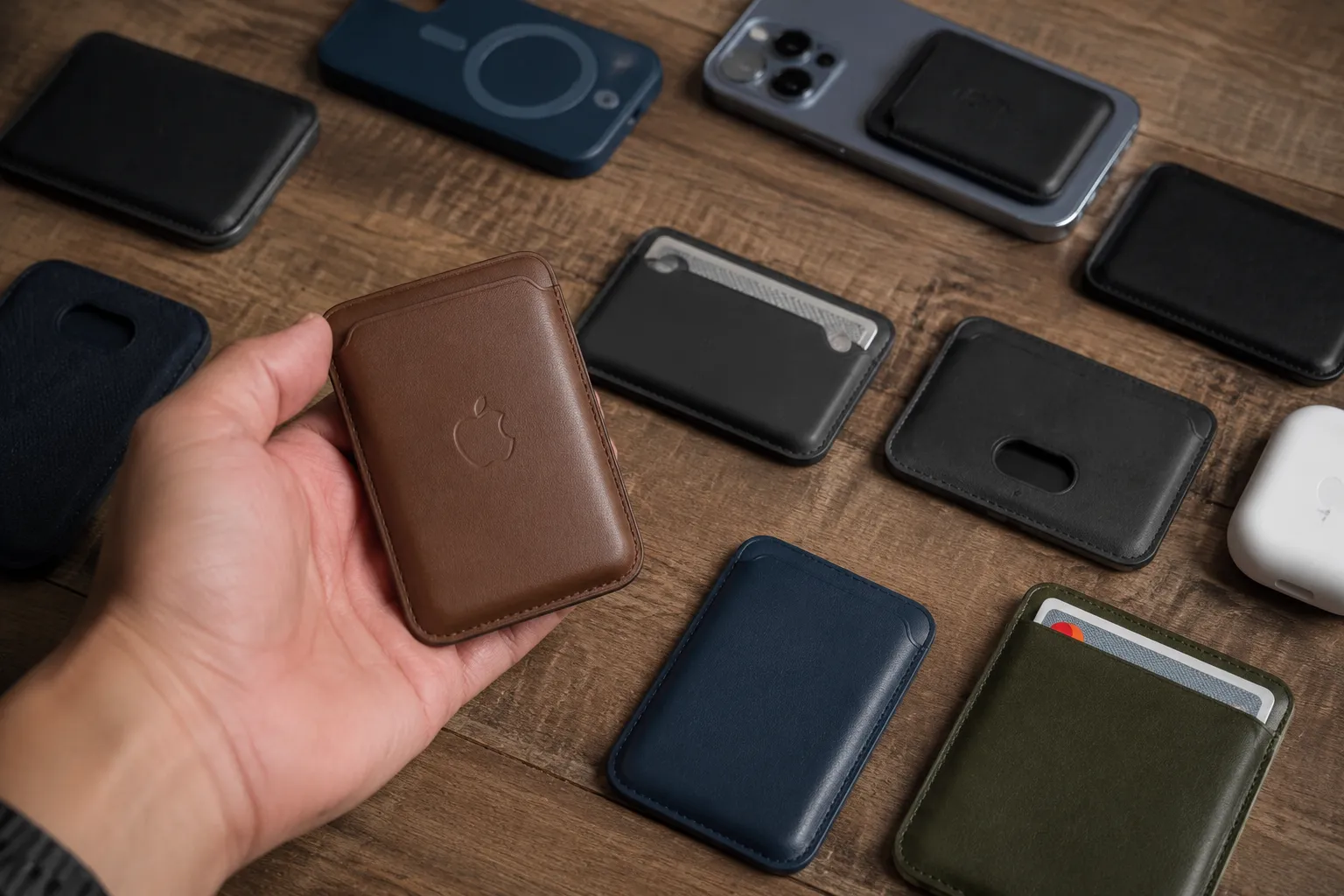
The MagSafe wallet is a solution to a problem that most people never actually had. Phone manufacturers spent a decade gluing batteries into cases and calling it progress, then Apple added a ring of magnets and a whole accessory category was born. The wallet is the most honest product to come out of that system: a small leather sleeve that sticks to the back of a phone. It works. It also gets bought wrong constantly, and the mistakes start long before the purchase.
Nobody walks into a store planning to buy a bad wallet. The errors are baked into how the product is marketed, how it is reviewed, and how people assume it will fit into a daily routine. Seven specific failures account for nearly every disappointing MagSafe wallet purchase. Recognizing them ahead of time changes the whole calculus.
Treating Card Capacity as a Spec Sheet Number
Manufacturers list capacity as if the wallet were a filing cabinet. It says "holds three cards," so a person loads three cards, and then the whole thing pops off the phone when the car door slams. The magnet strength is fixed. The cards add thickness. The wallet bulges. The phone slides off a wireless charger face down and the wallet hits the floor first.
The real capacity is always one fewer than advertised. A two-card wallet is a one-card wallet in practice. A three-card wallet is comfortable with two. The folks who get genuinely angry about this are the ones who bought a "three-card" model, loaded it exactly as the box promised, and then watched their phone bounce off a table when the added weight shifted the center of gravity.
The fix is to buy for the minimum daily load, not the maximum possible one. A person who carries a driver's license, a transit card, and a credit card needs a three-slot wallet. A person who rotates cards seasonally needs to accept that the wallet will sit in a drawer most days. The marketing number is a ceiling, not a recommendation.
Ignoring the Offset Grip Problem
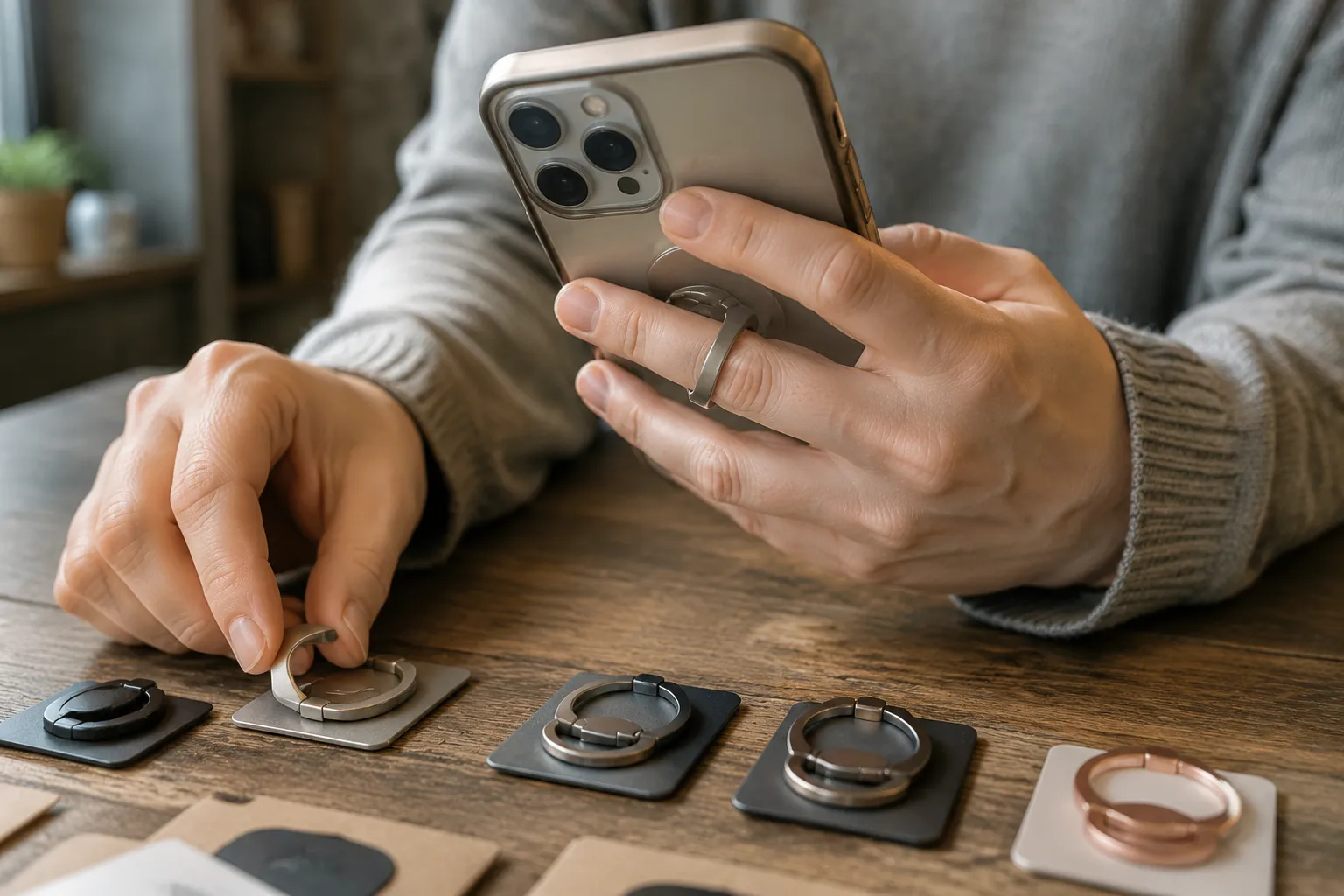
MagSafe wallets mount centered on the back of the phone. The hand wraps around the device with the fingers landing wherever the magnets happen to be. Some people hold a phone low, near the bottom corners. Some grip it mid-body. The wallet adds about a quarter inch of height to the back, and that quarter inch changes the grip entirely.
The proportional Mini, which includes the Magsafe Wallet, is a small accessory that many reviewers describe as "cute" before they ever hold one. The word "proportional" in this context refers to the first-year Apple product line, not to the hand that holds it.
The people who survive with a MagSafe wallet are the ones who hold the phone between the thumb and middle finger, letting the index finger rest on top. The people who fail are the ones who cradle the phone with all four fingers across the back. The wallet pushes those fingers into an awkward splay, and within a week the accessory gets pulled off and left on a nightstand.
The mistake is assuming the grip will adapt. It will not. A person should stand in a store, hold a display phone with the wallet attached, and see where the fingers land. If the wallet edge cuts into the middle finger, it will never feel right, regardless of how many glowing reviews the product has.
Choosing Magnet Strength by Thumb-Feel Alone
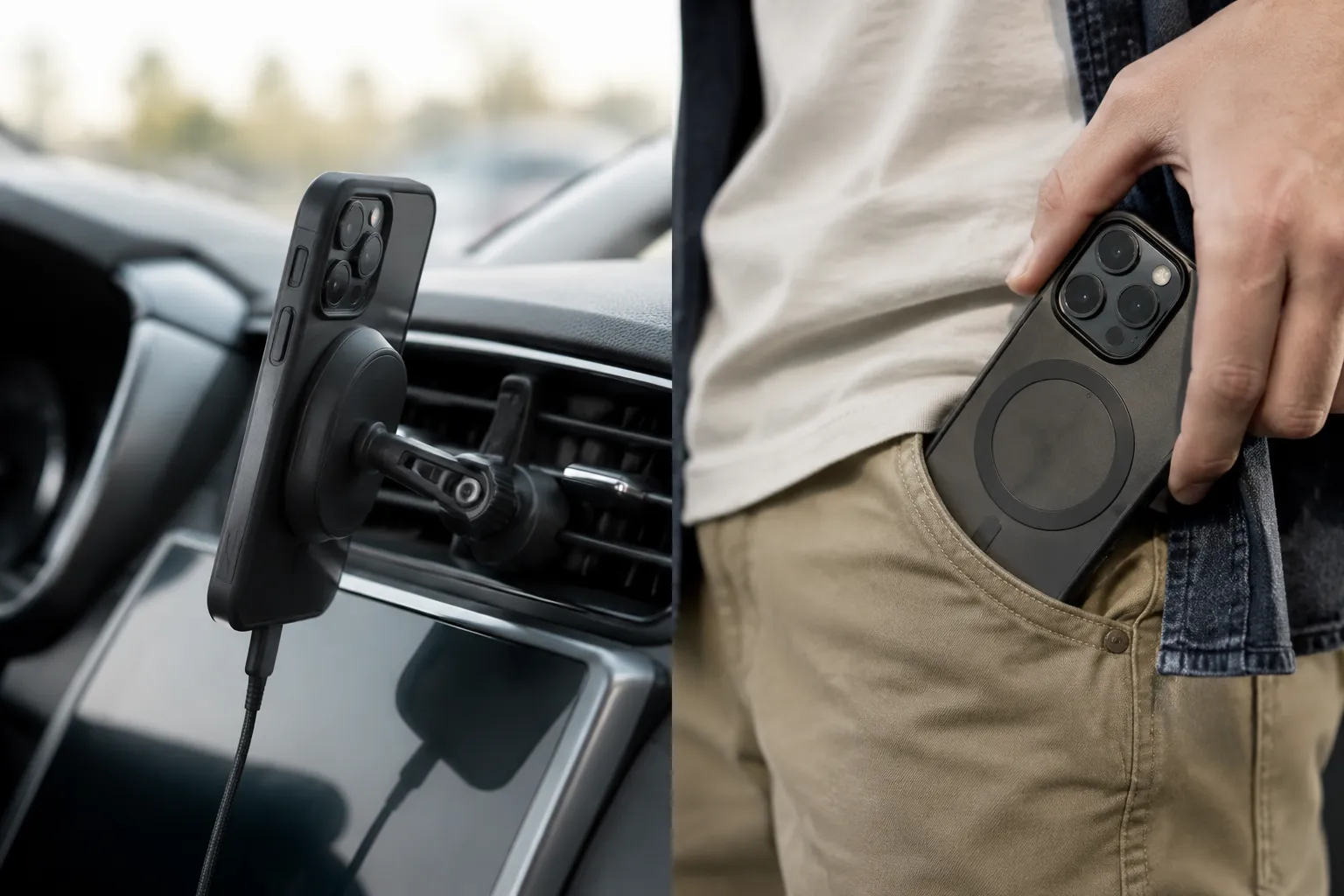
Every third-party maker brags about magnets that are "stronger than Apple's." The reviews confirm it. The wallet clicks on with a satisfying snap, and for a week it feels bulletproof. Then the phone goes into a pocket, and the wallet stays behind, stuck to the denim's interior or scraped off by the pocket's edge when the phone slides in at an angle.
The magnet strength that matters is not the pull force when the wallet is perfectly aligned. It is the lateral shear resistance, the force required to slide the wallet off the phone when the two surfaces are parallel and the hand is pulling at an awkward angle. Pockets are the enemy of shear resistance. A wallet that feels rock-solid when pressed flat will peel off the phone with shocking ease when a person fishes the device out of a tight jeans pocket.
A better test: attach the wallet, put the phone in a pocket, and pull the phone out twenty times. If the wallet shifts even a few millimeters, the magnets are too weak for daily use. The best wallets have a magnet array that wraps around the edges of the phone's internal magnet ring, and those are the ones that survive a year of pocket abuse.
Overlooking the Case's Thickness Threshold
The MagSafe system works through cases, but it works through thin ones. Every millimeter of case material dilutes the magnetic field, and the wallet companies quietly assume a naked phone or a skin-tight silicon sleeve. The people who buy a rugged case with a built-in kickstand are the ones who end up with a wallet that falls off whenever the phone vibrates.
A case with MagSafe alignment magnets built in will hold a wallet securely. A case that merely has a metallic ring printed on the back, one designed to work with magnetic car mounts, will not hold anything reliably. The ring is too thin and the magnets are in the wrong place. The wallet sticks for a day, then slides off at the gym.
The rule of thumb: if the case has a visible circle on the back, it was probably designed for mounting, not for wallets. A person should check the case manufacturer's specifications for "MagSafe compatible" rather than "magnetic compatible." The distinction is the entire ballgame.
Forgetting That the Phone Charges Through the Wallet
Wireless charging is the hidden variable in the whole MagSafe wallet category. The magnets are arranged in a ring precisely so that a charger can still deliver power through the center of the phone. The wallet covers that center. Add cards, and the charging distance grows by the combined thickness of the wallet's back panel, the cards, and the phone case.
Most people discover this the hard way: they buy a MagSafe charger, attach the wallet, and wake up to a phone at 14 percent because the charger's alignment was thrown off. The charging coils in some phones are picky. A wallet with a thick leather back or a metal plate inside will block charging entirely, even with a single card loaded.
The workaround is to buy a wallet with a slim profile and no metal reinforcement. The more premium-feeling wallets with metal kickstands or metal card springs are the worst offenders for charging interference. The plain leather sleeves with a simple card slot charge without complaint.
The golden rule is that the wallet comes off at night. People who keep the wallet attached while charging are playing a lottery, and the payout is a morning scramble to find a cable.
Purchasing for the "Find My" Feature That Rarely Works
Some premium MagSafe wallets include a chip that integrates with Apple's Find My network. The idea is that a person can locate a lost wallet from a phone. The reality is that the chip only reports the wallet's last known position when it was near the phone. A wallet lost in a taxi reports the taxi's route for a few blocks, then goes silent once the phone and wallet are separated by more than a few dozen feet.
The feature works as a theft deterrent only if the thief keeps the wallet near the owner's phone for the entire escape. That almost never happens. The chip is useful for one thing: finding a wallet that slipped between couch cushions inside a home. For that purpose, a $20 Bluetooth tracker tag does the same job more reliably.
The premium that these "Find My" wallets command, often 50 to 80 percent more than a standard model, is not justified by the feature's limited real-world utility. The money would be better spent on a wallet with stronger magnets or better leather, since those attributes actually determine whether the wallet stays attached in the first place.
Buying the Wrong Material for the Wrong Season
Leather is the default material for MagSafe wallets, and leather is a seasonal material. Full-grain leather swells in humid summer air and stiffens in dry winter cold. The wallet that felt supple in April will fight the phone's magnets in August, when the leather's added moisture weight changes the balance.
Polyurethane and silicone wallets do not have this problem, but they have their own: they pick up lint, they feel cheap, and they wear into a shiny mess within two months. The fabric wallets, usually nylon or canvas, grip cards too tightly at first and then stretch out permanently, turning the slot into a pocket that spits cards out at the worst moments.
The decision should be based on where the wallet will actually live. A person in a desert climate buys leather without concern. A person in a humid coastal city buys a synthetic or avoids the category altogether. The material choice is not aesthetic, it is functional, and the wrong guess produces a wallet that either sticks to the phone too loosely or too tightly, regardless of the magnet quality.
There is one more material fact that almost no one considers: the wallet's interior lining. Cheap wallets use a slick plastic lining that makes cards slide out on their own. Good wallets use a micro-suede or a textured lining that holds cards in place without making them impossible to extract. The interior lining matters more than the exterior leather, because a wallet that drops a credit card at a checkout counter is not a wallet, it is a liability.
The Wallets That Actually Do the Job
The wallets that survive daily use share a few characteristics. They hold two cards maximum. They use a full magnet ring that matches Apple's internal array. They are slim enough that the phone still charges on a flat puck. And they are made from a material that does not change thickness with the weather.
Apple's own leather wallet fails on the price-to-durability ratio. It wears through at the corners within six months and the magnets are adequate, not exceptional. The third-party brands that have done the engineering homework, the ones that publish their magnet array diagrams and specify the charging clearance, are the ones worth buying.
The real test happens at the end of the first week. The wallet has been in and out of pockets, on and off the phone, through a few charging cycles. If it still sits flush against the back with zero wobble, the purchase was correct. If it has shifted half a centimeter or developed a gap at the edge, no amount of re-seating will fix it. The magnets have found their limit, and the wallet will do that exact thing forever.
A MagSafe wallet is not a replacement for a proper wallet. It is a bridge device for people who want to carry a phone and a couple of cards without a second pocket item. The people who treat it as such, who buy for the minimum load, check the case thickness, and accept that the accessory comes off at night, are the ones who keep using it a year later. Everyone else is just cycling through a drawer full of marginally different magnets.