Phone reviewers spend thousands of words on camera sensors, battery life, and screen refresh rates, then dismiss the case as an afterthought. A slab of TPU with a hole cut out, they imply, is a slab of TPU. Anyone who has lived with a poorly designed case knows this is wrong. The difference between a case that feels like a natural extension of the phone and one that fights the thumb on every press is not cosmetic. It is the difference between a tool and an obstacle.
The button is the most frequent physical interaction a person has with their phone. Unlocking, adjusting volume, summoning the camera, confirming a payment. Each action requires a deliberate press. When a case mutes that press into a mushy, indistinct thud, it degrades every single one of those interactions, hundreds of times a day. The phone's own buttons, engineered with precise travel and a crisp tactile snap, are effectively ruined by a layer of rubber that absorbs the feedback.
Testing cases for button feel is a strange, obsessive pursuit. It requires ignoring the aesthetics, the drop protection, and the price tag, and focusing entirely on a two-millimeter movement.
The Anatomy of a Press
A good button press has three distinct phases. The first is the initial contact, where the fingertip meets the case material. The second is the travel, the distance the material depresses before the underlying switch engages. The third is the actuation point, the moment the switch clicks and registers the input. A great case preserves all three. A bad case blurs them into a single, indeterminate squeeze.
The material does most of the work. Hard polycarbonate, the rigid plastic found on the back of many hybrid cases, transfers force efficiently. When a case maker cuts precise openings in that hard shell and leaves the buttons exposed, the result is often excellent. The finger presses directly on the phone's own button, and the case simply frames it. This approach, common on minimalist cases from brands like Caudabe and Peel, is the gold standard. No interference, no added mush.
The problem emerges when the button is covered. Most rugged cases and silicone options mold a raised nub into the case body, positioned directly over the phone's button. The intention is to make the button easier to find by touch. The execution often fails.
These nubs are usually too wide, spreading the force of a press across a larger area of the underlying switch. A button that requires a focused, direct press on the bare phone now needs a broader, less precise push. The switch still engages, but the feel is heavier and less defined. The crisp click becomes a dull clack.
Worse is the nub that sits too high. A gap forms between the case's button and the phone's actual button. The finger presses down, travels several millimeters through empty space, and only then meets resistance. The resulting delay, measured in fractions of a second, is perceptible. It makes the phone feel cheap, as if the button is loose or broken.
The Silicone Problem
Apple's own silicone cases are the most prominent example of this issue. They feel wonderful in the hand. The soft-touch coating is pleasant, the fit is precise, and the MagSafe magnet is strong. The buttons, however, are a compromise. They are covered, not cut out. Apple molds a smooth, slightly raised section over the volume and power switches. Pressing them requires more force than pressing the bare buttons, and the feedback is muted.
It is a deliberate trade-off. A cutout in a silicone case would expose the phone's sharp metal edges and create a dust-collecting seam. A covered button maintains the case's seamless, monolithic look. The cost is a loss of tactility. Many users never notice, because they have nothing to compare it to. For those who switch back to a bare phone or a case with exposed buttons, the difference is immediately obvious. The bare phone feels alive. The silicone case feels like pressing a marshmallow.
Third-party silicone cases often fare worse. The nubs are larger, the material is softer, and the fit is less precise. A common failure mode is a button that requires the user to search for the exact sweet spot. Press too high or too low, and the nub flexes without engaging the switch. This creates a frustrating game of hunting for the actuation point while trying to take a photo or silence an alarm.
Mechanical Approaches
Some case makers have attempted to solve the covered-button problem with mechanical solutions. These designs use a small, rigid piece of plastic or metal embedded inside the case's soft outer layer. The rigid insert transfers the force of the press directly to the phone's button, mimicking the feel of an exposed button while maintaining the case's sealed exterior.
The approach is sound in theory. In practice, results vary. The insert must be perfectly aligned with the phone's button. A fraction of a millimeter off, and the press becomes angled, requiring more force on one side than the other. The insert must also have enough travel to feel responsive. If it is fixed too rigidly, it feels like pressing a brick wall.
OtterBox's Symmetry series uses a variation of this idea. A thin, rigid ridge runs along the button area, providing a firm surface under the flexible outer coating. The result is better than a pure silicone nub. The button requires less force and offers a more defined actuation point. It still lacks the crispness of an exposed button, but it is a competent middle ground.
Another approach comes from case makers like Rhinoshield, which use a two-piece construction. A rigid inner frame holds the phone securely, and a flexible outer bumper absorbs shocks. The buttons are part of the rigid inner frame, which means they are directly connected to the phone's switches. The outer bumper leaves them exposed or covers them with a thin, flexible membrane. The result is a button that feels nearly as good as the bare phone.
The Case Material Matters
The case's overall material composition affects button feel in unexpected ways. A flexible TPU case, the kind that is easy to install and remove, tends to flex during a button press. The force from the finger compresses the button, but it also deforms the surrounding material. This absorbs energy that should be directed at the switch. The press feels soft and imprecise.
A rigid case, by contrast, transfers force efficiently. The pressing finger works against the button alone, not the entire structure. This is why many users prefer the button feel on a hard polycarbonate or aramid fiber case. The case does not flex, so the press is direct. The trade-off is that rigid cases are harder to install and offer less shock absorption.
The design of the button itself matters too. A button that is flush with the case surface requires the user to find it by feel. A button that is raised slightly above the surface is easier to locate. But a button that is raised too much can be pressed accidentally, especially when the phone is in a pocket or bag.
The best designs use a raised button with a concave or textured surface. The texture provides grip, ensuring the fingertip does not slip during the press. The concavity, a subtle inward curve, helps center the fingertip over the switch. These details are invisible in product photos, but they are the difference between a case that feels premium and one that feels generic.
The Action Button Test
Apple's iPhone 15 Pro lineup introduced the Action button, a configurable switch that replaced the traditional mute toggle. This button presented a new challenge for case makers. It is not just a simple switch. It is a capacitive sensor that responds to press and hold gestures. It can distinguish between a short press and a long press. It can even respond to different pressure levels.
A case that mutes the Action button's feedback is more than an annoyance. It can cause missed inputs. If the case's nub requires too much force, the user may inadvertently trigger a long press when they intended a short press. The button might activate the wrong function, launching the camera instead of muting the phone. This is a genuine usability failure, not just a matter of feel.
Case makers have responded with a variety of designs. Some use a covered button with a mechanical insert, similar to the volume buttons. Others have opted for a cutout, leaving the Action button fully exposed. The cutout approach is less aesthetically pleasing, but it guarantees perfect functionality. The covered approach requires careful engineering to ensure the nub does not interfere with the button's sensitivity.
Testing the Action button on a case requires more than a single press. It requires testing short presses, long presses, and rapid double presses. It requires testing the button with a dry finger and a sweaty finger. It requires pressing from different angles. Many cases pass the single-press test but fail the long-press test, because the nub's resistance changes the way the user holds the press.
The Camera Control Conundrum
The iPhone 16 lineup added another complication: the Camera Control button. This is a capacitive touch surface with a mechanical press. It supports a light tap to focus, a full press to capture, and a swipe gesture to zoom. It is the most complex button ever included on an iPhone.
Case makers have struggled to accommodate it. The button requires a delicate balance. The case must protect the phone's side, which means it must cover the Camera Control area. But it must also allow the capacitive surface to function. A thick layer of silicone between the finger and the sensor will block the signal. A thin layer may not provide enough protection.
Apple's own cases use a sapphire crystal cap with a conductive layer that transfers the finger's touch to the phone's sensor. This is an elegant solution. The cap is hard, so it does not deform during a press. It is also smooth, allowing the swipe gesture to work fluidly. The mechanical press underneath provides a satisfying click.
Third-party cases have taken a different approach. Many use an exposed cutout, leaving the Camera Control button fully accessible. This is the safest approach for functionality, but it leaves the phone's side vulnerable to drops. Others have attempted to cover the button with a thin layer of material that is conductive enough to pass the touch signal. These covers often feel mushy, because the material is too thin to provide a solid surface for the mechanical press.
The result is a split in the market. Users who prioritize camera functionality will choose a case with a cutout. Users who prioritize protection will choose a case with a covered button and accept a degraded experience. No case has yet managed to provide both full protection and a flawless Camera Control experience.
The Tool Test
A useful test for evaluating button feel is the tool test. A person tries to use the phone one-handed, with the thumb operating the volume buttons while the phone rests in the palm. This is the most common way people adjust volume during a call or while watching a video. A case with poor button feel will require the user to shift the phone's position or use the other hand. A case with good button feel allows the thumb to find the button and press it without looking.
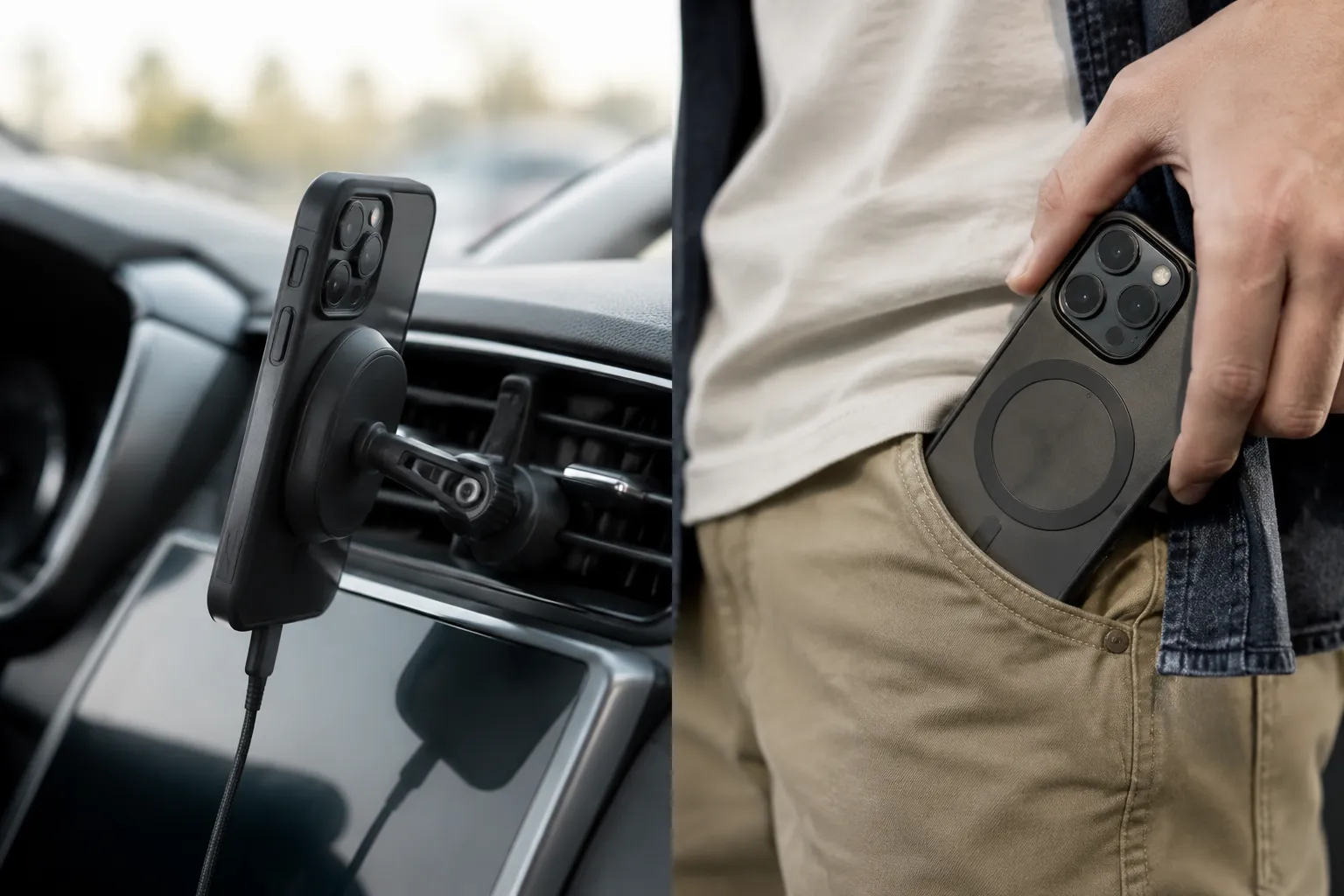
Another test is the pocket test. A person slides the phone into a tight jean pocket, then pulls it out and immediately presses a button. Buttons that are too raised or too easily pressed will trigger accidentally during the slide. Buttons that are too recessed will be hard to find when the phone first emerges. The best cases strike a balance, with buttons that are raised enough to find but not so raised that they catch on fabric.
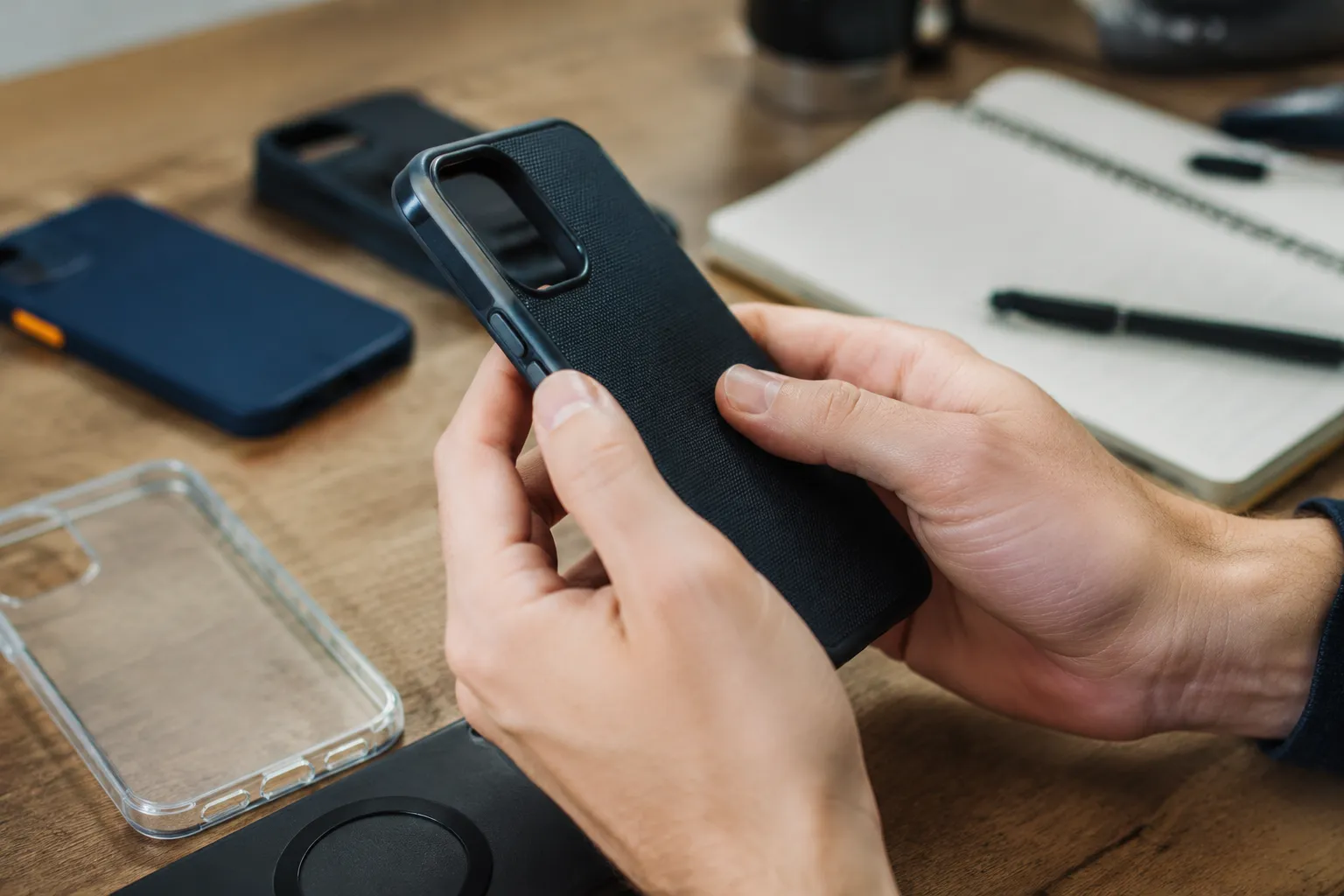
A third test is the comparison test. A person holds a bare phone in one hand and the same phone with a case in the other. They press the buttons on both, alternating hands. The difference is immediately apparent. The bare phone's buttons are crisp and responsive. The case's buttons are soft and muffled. The challenge for case makers is to minimize this gap.
The gap can never be zero. A case adds material, and material adds distance. But the best cases get close. They use rigid inserts, precise cutouts, or a combination of both. They respect the phone's original button design rather than trying to reinvent it.
A Standard Worth Setting
The market has no standardized metric for button feel. Reviews mention it in passing, often with a vague phrase like "buttons are clicky" or "buttons are a bit stiff." There is no way to compare the feel of a button on one case to the feel on another. There is no lab test, no measurement device, no objective scale.
This is a gap. Button feel is a measurable property, at least qualitatively. A person can rate a button's travel distance on a scale from shallow to deep. A person can rate a button's resistance on a scale from soft to firm. A person can rate the actuation point on a scale from vague to crisp. These ratings, collected across multiple cases, would provide a useful reference.
Until that happens, the only testing tool is the thumb. The only standard is personal preference. Some users prefer a heavy, deliberate press, because it prevents accidental inputs. Others prefer a light, sensitive touch, because it allows rapid adjustments. There is no right answer.
There is, however, a wrong answer. The wrong answer is a case that makes the user think about the button at all. A good case is invisible. It protects the phone without drawing attention to itself. When a button press requires conscious effort, when the thumb has to search for the sweet spot, when the press feels indeterminate, the case has failed at its primary job.
Case makers who understand this will find a loyal customer base. Those who treat buttons as an afterthought, a mere hole to punch or a nub to mold, will continue to produce cases that are technically protective but fundamentally unsatisfying. The user will keep the case, because dropping the phone is worse than a mushy button. But they will notice the difference every single time they press. And eventually, they will go looking for a case that gets it right.