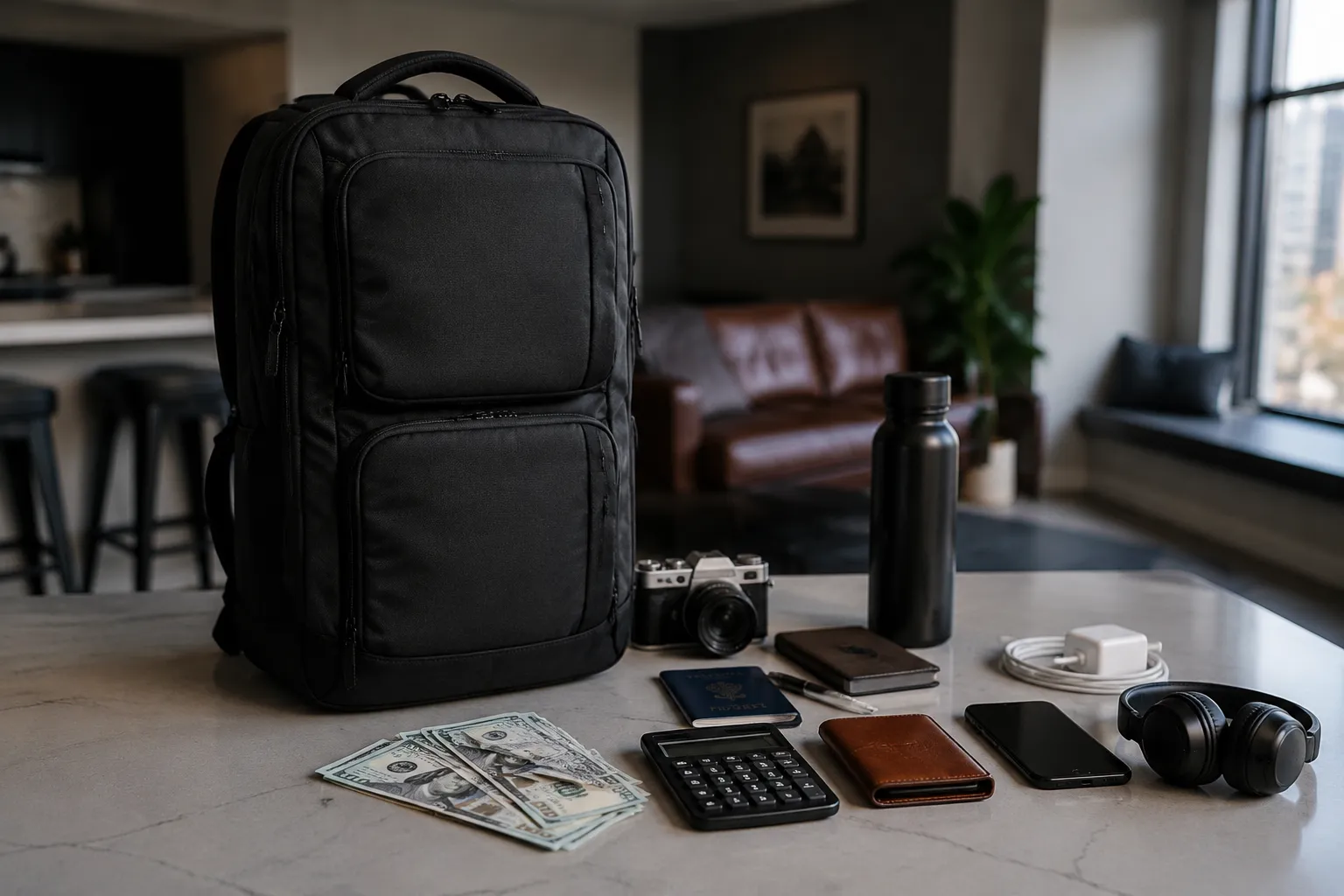
The premium everyday carry backpack market has a dirty secret hiding behind all that waxed canvas and YKK Aquaguard zipper hardware: the price of admission is almost never the price of the bag. A person can drop $300 on a sleek urban pack and still walk away needing another $150 in organizers, pouches, and straps before the thing actually works for daily carry. The retail price tag is just the cover charge. The real cost lives in the ecosystem of accessories and compromises that follow a person home.
A quick scan of the current landscape shows the baseline has crept upward. The standard-bearers like the Evergoods Civic Panel Loader sit around $280, the Aer City Pack hovers near $240, and the boutique makers in the custom leather and canvas world routinely ask $400 to $600 for a bag that looks like it belongs in a 1940s newsroom. Those numbers scare off a lot of practical buyers, and rightfully so. But the interesting math happens after the initial purchase, when the real cost of carrying premium gear reveals itself in incremental, annoying charges.
The first hidden cost is organization, and it hits the hardest. A premium bag at the $300 mark typically comes with one large main compartment, a padded laptop sleeve, and maybe a quick-access pocket on the top. That sounds fine until a person actually loads it with the daily rotation: a 13-inch laptop, a tablet, a charging brick, a cable organizer, a pen case, a sunglasses case, a water bottle, a rain shell, and a snack. Without internal structure, all of that becomes a single dark pit where everything sinks to the bottom. The solution is a set of pouches, and good pouches cost real money.
The pouch ecosystem is a racket in the best possible way. A well-made tech organizer from a brand like Bellroy or Aer runs $40 to $60. A dedicated pen case is another $20. A toiletry kit for the gym clothes adds $40. A water bottle pocket that actually attaches to the inside webbing costs $25. By the time the main compartment is properly zoned, the owner has spent another $150 on top of the bag itself. The total outlay for a "premium" setup floats north of $450, and that is before anyone addresses the question of whether the bag's internal organization was worth the base price in the first place.
The Material Math That Nobody Walks Through
The material selection explains part of the sticker shock, and it is the one area where the price makes genuine sense. The standard premium bag uses a 1680D ballistic nylon or a 500D Cordura, both of which resist abrasion and water far better than the cheap 600D polyester found on a $50 Amazon special. The difference is tactile: the premium fabric has a tight, dry hand feel, while the budget stuff feels slick and plasticky. The zippers tell the same story. A YKK #8 Aquaguard zipper costs several times more than the standard #5 coil zipper, and it shows in the smoothness of the pull and the way the teeth mesh.
The foam in the back panel and straps also separates the tiers. A $300 bag uses a molded EVA foam that holds its shape and distributes weight across the hips and shoulders. A budget bag uses a flat sheet of cheap foam that folds and digs in after a month of use. The difference becomes obvious on a 20-minute walking commute with a 15-pound load. The premium bag feels like it disappears. The budget bag feels like a sack of potatoes strapped to the spine. That ergonomic difference alone can justify a significant portion of the price gap, at least for anyone who carries a bag more than twice a week.
But the materials argument only goes so far. A brand can spend $80 on fabric and hardware and still charge $300 because of the name on the label. The markup on premium bags runs steep, and the brands know that the buyer is purchasing an identity as much as a carrying tool. The waxed canvas heritage brands charge a heritage premium. The tech-forward brands charge a design premium. Neither is entirely illegitimate, but a buyer should know which one they are paying for.
The Laptop Protection Premium and Its Strange Logic
Laptop protection deserves its own line item because it carries the most hidden cost of all. Many premium bags advertise a "dedicated laptop compartment" that turns out to be a padded sleeve with no false bottom. The sleeve suspends the laptop a half-inch above the bag's base, which sounds protective until the owner sets the bag down hard on a concrete floor. The half-inch of foam compresses fully, and the impact travels straight into the laptop's corner. A true protective design uses a raised false bottom with rigid structure, which adds weight and manufacturing cost. Few bags under $250 actually include it.
The buyer who wants genuine laptop protection often ends up adding a separate hard-shell sleeve, which adds another $40 to $60 and consumes precious internal volume. That purchase effectively negates the convenience of the bag's built-in compartment, turning a supposed feature into a redundant layer. The smarter approach is to buy a bag that treats the laptop sleeve as a real structural element, not a marketing checkbox. That means reading the specs carefully and looking for terms like "false bottom" and "raised suspension" rather than trusting the product photos.
Warranty coverage is the second laptop-related cost that rarely gets discussed. Most premium brands offer a limited lifetime warranty, but the coverage often excludes damage from drops, spills, and general daily abuse. A person who drops a bag with a laptop inside may find that the bag's warranty covers a broken zipper but not a cracked screen. The repair cost falls entirely on the owner. That reality pushes some buyers toward budget bags with cheap replacement costs, a logic that makes sense for anyone who treats a backpack as a consumable item rather than a long-term investment.
The Custom and Heritage Tier Charges for Scarcity
Moving up the price scale, the $500 to $800 tier introduces a different cost structure. These bags come from small workshops or heritage brands that produce in limited batches. The buyer pays for hand-stitching, full-grain leather accents, and a production run that might number in the hundreds rather than the tens of thousands. The materials cost more, certainly, but the scarcity markup is the real driver. A $650 heritage backpack from a brand like Filson or Frost River is not five times better than a $280 Evergoods bag. It is simply rarer and more traditional, and the buyer pays for that exclusivity.
The depreciation curve on this tier is actually kinder than the mid-range. A well-maintained heritage canvas bag can resell for 60 to 70 percent of its original price after a few years, whereas a mass-produced nylon bag might fetch 40 percent. The leather develops a patina that adds character, and the canvas breaks in rather than wearing out. For a buyer who values longevity and resale value, the higher upfront cost partially returns at the point of sale. The math still favors the cheaper bag for pure utility, but the total cost of ownership narrows.
The real danger in this tier is the accessories spiral. A heritage bag often comes with a minimalist interior and old-school flap closures, which means the owner needs to buy leather organizers, brass buckles, and possibly a separate padded laptop sleeve to make it work for modern carry. The accessory costs can push the total past $800, and the bag ends up heavier and less convenient than a purpose-built modern design. The aesthetic appeal is real, but it has a practical price.
The Weight Tax That Never Appears on the Receipt
Weight is a cost that never appears on the receipt, but it compounds daily. A premium bag with heavy ballistic nylon, thick foam padding, and metal hardware can tip the scales at four to five pounds empty. Add a 15-pound daily load, and the owner is carrying nearly 20 pounds on the shoulders. The extra pound or two of bag weight might seem negligible, but over a year of daily commutes, it translates to thousands of extra pounds lifted and carried. The fatigue is subtle and cumulative, and it eventually pushes some owners to buy a second, lighter bag for shorter trips.
The lightweight premium tier exists precisely to serve this frustration. Brands like Matador and HMG use ultralight fabrics like Dyneema and Robic nylon to produce bags that weigh under two pounds while still commanding $200 to $300 price tags. These bags sacrifice some durability and structure, but they solve the weight problem elegantly. A person who owns both a heavy heritage bag and a lightweight technical bag has effectively paid twice for the same core function. That duplication is the most common way premium buyers overspend, and it happens because no single bag can satisfy both the aesthetic and the ergonomic requirements.
The honest assessment is that a premium bag makes financial sense only when the buyer knows exactly what they need and resists the urge to buy a second bag for the other 20 percent of use cases. The person who needs a bag for a laptop commute and a weekend gym kit should buy one bag that does both, even if it costs more upfront. The person who needs a bag for daily office carry and occasional wilderness trips should probably buy two, but they should budget for both from the start rather than discovering the gap later.
The Break-In Period and Its Silent Toll
Every premium bag comes with a break-in period, and that period has a hidden cost in frustration. A new waxed canvas bag is stiff and boxy. The straps do not flex naturally around the shoulders for the first two weeks. The zippers resist slightly at the corners. The owner spends that initial period adjusting the straps, softening the fabric, and learning the bag's quirks. Some buyers mistake these normal characteristics for defects and abandon the bag, eating the cost of the purchase and buying something else. The return policy window closes, and the bag sits in a closet until it gets donated.
The break-in process is real, but it is also an experience cost that the premium brands do not advertise. A $60 budget bag has no break-in period because it has no structure worth breaking in. It is floppy from day one, which means it never becomes comfortable in the way a properly broken-in premium bag does after a month of use. The trade-off is between immediate comfort and long-term quality, and a buyer who does not have the patience for the break-in period should probably stay in the budget tier.
The resale market actually rewards those who persevere. A broken-in premium bag with visible patina and softened leather sells faster and for more money than a pristine one, because buyers know the bag has already done the uncomfortable work. The first owner absorbs the break-in cost, and the second owner reaps the comfort. That dynamic makes the used market the smartest entry point for anyone who wants premium quality without the premium break-in experience.
The Real Price of the Perfect Fit
Finding the right bag is ultimately a process of elimination, and that process costs money. The serious buyer goes through at least two or three bags before landing on the one that sticks. Each failed attempt carries a restocking fee or a shipping cost, and the buyer who keeps the second or third bag has effectively paid a 10 to 15 percent premium over the sticker price. The industry counts on this churn. The review culture encourages it. A person who reads five detailed reviews and still buys the wrong bag has not failed at research; they have failed at understanding their own daily habits.
The best way to avoid that churn is to borrow the bag before buying it. Some brands offer trial periods, and the used market allows a buyer to resell a bag for close to the purchase price if they buy wisely. A person who buys a used premium bag, tests it for two weeks, and resells it for a $30 loss has paid $30 for a real-world trial. That is the cheapest education available in the premium backpack world, and it beats the $80 restocking fee on a new bag that did not work out.
The true cost of a premium EDC travel backpack is never a single number on a price tag. It is the sum of the organization accessories, the laptop protection add-ons, the weight trade-offs, the break-in patience, and the trial-and-error churn that a buyer must absorb before the bag becomes a permanent part of their daily rotation. A $300 bag can cost $500 in the first year. A $200 bag with the right pouches and a clear understanding of its limits can cost $250 and serve just as well. The premium tier is not a scam, but it is not a shortcut either. It is a commitment to a system, and the system always collects its full toll.