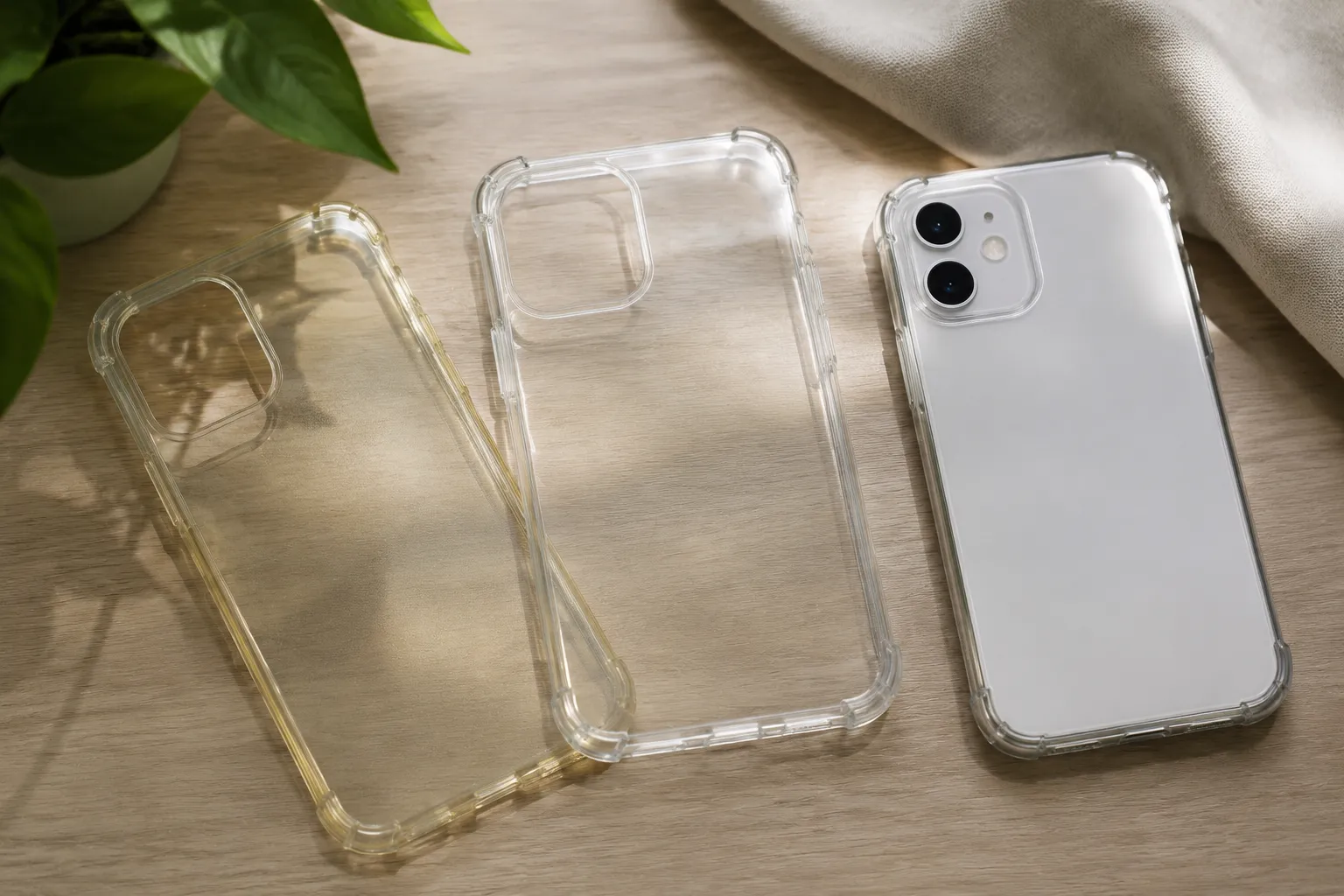
Clear phone cases have a dirty secret that every owner eventually discovers. That crystal-clear shell that looked so good on day one turns a sickly amber, sometimes in a matter of weeks. The culprit is a chemical reaction between the polycarbonate or TPU material and ultraviolet light, heat, and the oils from a person's own hand. For budget buyers in the Philippines, where the sun is brutal and humidity sits at nose level for most of the year, yellowing is not a matter of if, it is a matter of when.
The frustrating part is that the market is flooded with cases priced under ₱1,000 that promise clarity and deliver jaundice. Most of them are made from thermoplastic polyurethane, or TPU, which is cheap, flexible, and prone to discoloration. A buyer can spend ₱150 on a case from a street stall, watch it turn brownish-yellow in three weeks, and assume that all clear cases are a scam. That assumption is wrong, but it takes some digging to find the exceptions.
This guide focuses on cases that resist the yellowing process for a meaningful amount of time, not forever. Physics and chemistry will eventually win. The goal is to find something under ₱1,000 that stays reasonably clear for six months or more, which is a realistic and achievable target for a handful of manufacturers who bothered to use better materials.
Why Some Cases Turn Yellow Faster Than Others
The material science behind clear cases is straightforward once a person understands the two main players. TPU is soft, shock-absorbent, and easy to mold, which makes it the default for most budget cases. It also contains chemical bonds that break down when exposed to UV light. The breakdown produces chromophores, which are molecular structures that absorb light and reflect yellow. This is not a surface stain. The discoloration runs through the entire thickness of the material.
Polycarbonate, or PC, is harder and more rigid. It resists yellowing much better than TPU, but it is also brittle. A case made entirely of polycarbonate will crack on the first decent drop. That is why most quality clear cases use a hybrid structure: a hard polycarbonate back fused to a soft TPU bumper. The back stays clear because it is PC. The bumper yellows, but that is a thin border around the edges, and it is far less noticeable than a fully yellowed back panel.
There is a third option that has become popular in the last few years: optical-grade TPU. This is a specially formulated version of TPU that includes anti-yellowing additives, usually a type of hindered amine light stabilizer. It costs more to produce, which is why cases using it sit at the higher end of the budget spectrum. These cases still yellow eventually, but the process takes three to four times longer than standard TPU.
The practical takeaway is simple. A person shopping under ₱1,000 should look for cases that advertise hybrid construction or anti-yellowing TPU. A case that costs ₱150 and does not mention its material composition is almost certainly standard TPU, and it will discolor fast. The price alone is not a guarantee either, but it is a useful filter.
The MagSafe Twist and Its Impact on Clarity
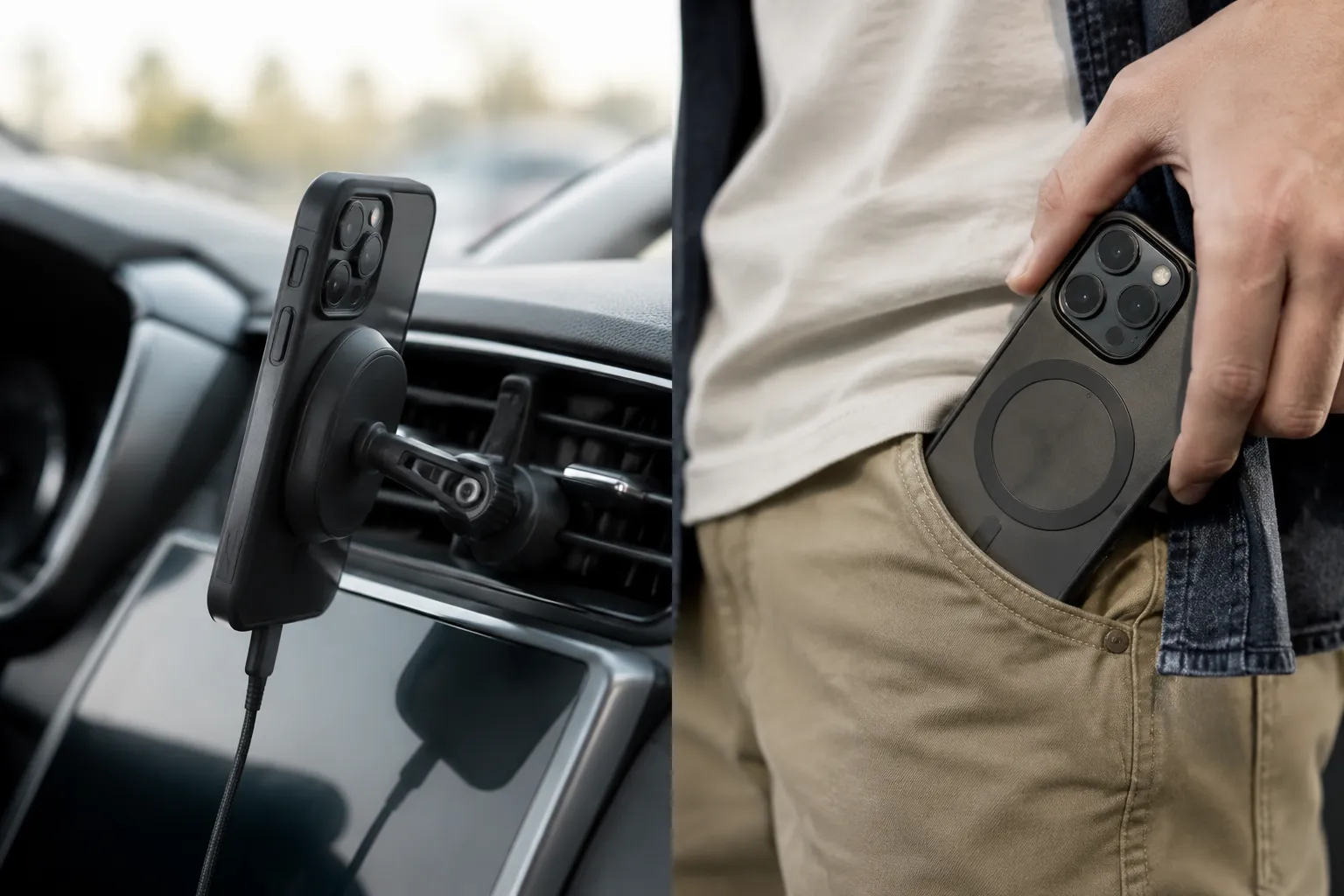
Apple introduced MagSafe with the iPhone 12, and it changed the clear case game in a way that few budget shoppers anticipate. The magnet ring built into the back of the phone means a case can have a visible circular outline if the manufacturer embeds a separate magnetic ring behind the case material. On dark phones, this is invisible. On clear cases, it is a faint grey ring that sits right in the middle of the back panel.
Some manufacturers avoid this by using a clear magnetic film instead of a solid metal ring. Others simply skip the magnets entirely and sell a plain clear case that works with a pop socket or a finger strap but cannot attach to a MagSafe charger. For a budget buyer who does not use magnetic accessories, a case without MagSafe is often the better choice. It has fewer layers between the phone and the case back, which means fewer opportunities for trapped dust and less material for light to pass through and distort.
For those who do want MagSafe compatibility, the budget options are more limited. A case with an embedded magnetic ring under ₱1,000 usually has to cut corners somewhere else, often on the anti-yellowing treatment. The ring itself also creates a slight bump on the back, which can bother people who like a perfectly flat surface. It is a trade-off that each person has to weigh, but clarity suffers slightly when magnets are involved.
Spigen's Budget Line Still Leads the Pack
Spigen is a South Korean brand that has been in the case business for over a decade. Their Liquid Crystal series has become the default recommendation for budget clear cases, and for good reason. The Liquid Crystal Air, which typically retails between ₱500 and ₱700 in local online stores, uses a TPU material that includes anti-yellowing agents.
The case is thin, flexible, and has a slightly frosted back that hides fingerprints better than a fully transparent panel. That frosted finish also does something useful: it makes early-stage yellowing much harder to spot. A case that is slightly yellow is easy to ignore when the back is not perfectly clear to begin with. This is a design choice that works in the user's favor, even if it sacrifices some of the "show off the phone's color" appeal.
Spigen also makes the Ultra Hybrid, which is their hybrid construction case with a clear polycarbonate back. The Ultra Hybrid is usually priced just above ₱1,000 at full retail, but it frequently goes on sale for around ₱800 to ₱900 in Shopee and Lazada flash deals. It comes with a clear back that resists yellowing significantly better than the Liquid Crystal line, though the TPU bumper around the edges will still change color over time.
The Ultra Hybrid is the better long-term bet for someone who wants maximum clarity retention. The Liquid Crystal Air is the better bet for someone who wants to spend less and does not mind a subtle frosted look. Both are far ahead of generic unbranded options at similar price points.
Ringke's Anti-Yellowing Coating Does Real Work
Ringke is another South Korean brand that often flies under the radar in Philippine budget discussions. Their Fusion series, particularly the Fusion-X and the Fusion Clear, uses a hybrid structure with a polycarbonate back and a TPU bumper. The Fusion Clear typically sits at ₱600 to ₱800 online, which puts it squarely in the budget category.
Ringke applies a factory coating to the back panel that they call an anti-yellowing treatment. In practice, it does what it claims. Users who have run the Fusion Clear for six months or more report that the back panel remains transparent, while the bumper gradually takes on a warm tint. The bumper is dark enough or thin enough that the yellowing is not distracting.
The Fusion-X variant adds a rugged bumper with raised corners and a built-in lanyard hole. It is a bulkier case, but the added protection is welcome for people who drop their phones often. The trade-off is that the bumper is thicker, which means there is more TPU surface area that can yellow. It is still a better choice than a full TPU case, but a person should not expect the Fusion-X to look pristine forever.
Ringke cases also come with a useful feature that many competitors skip at this price: precise cutouts that line up perfectly with the phone's buttons. Cheap cases often have mushy button covers that require a hard press. Ringke's button covers are responsive, which adds to the feeling that this is a case that was designed rather than stamped out.
What to Look For in Local and Unbranded Options
Not every good clear case under ₱1,000 comes from a famous brand. Local manufacturers in the Philippines have started producing hybrid cases that work well, but the quality varies wildly between sellers. The trick is learning to read a product listing like a seasoned shopper.
First, look for the material description. A listing that says "PC back + TPU frame" is a hybrid case. A listing that just says "soft case" or "liquid silicone" is likely full TPU. Second, check the review photos, especially the ones taken after months of use. Filipino buyers are diligent about posting long-term reviews, and those photos are gold. A case that still looks clear in a three-month-old review photo has passed the practical test.
Third, check if the case has a built-in camera ring protector. This is a raised lip around the camera module that prevents the lens from scratching when the phone is laid flat on a table. Many budget cases skip this, and it is a dealbreaker for people who care about their phone's camera. A case without this lip will leave the camera lens resting directly on any surface, which collects micro-scratches over time.
Finally, be wary of cases that advertise "military grade drop protection" at a price point below ₱250. Real drop protection requires shock-absorbing structures like air cushions or textured corner reinforcements, which cost money to design and mold. A case that claims military grade but costs ₱150 is almost certainly marketing fluff.
The Ugly Truth About UV Light Exposure
Even the best anti-yellowing treatment has a finite lifespan, and the Philippines makes that lifespan shorter than in cooler climates. UV light is relentless. A person who works outdoors, commutes on a motorcycle, or leaves a phone on the dashboard while driving will see yellowing happen twice as fast as someone who spends most of their time in an air-conditioned office.
Heat accelerates the chemical breakdown too. A phone sitting in a pocket against a warm body, or left on a desk under direct sunlight through a window, is essentially baking the case. This is not a defect in the case. It is an unavoidable consequence of the environment. A person who wants their case to stay clear should treat heat and direct sunlight as enemies.
There is also the matter of hand oils. The natural oils on a person's skin contain compounds that interact with TPU and hasten yellowing. A person who uses hand lotion, sunscreen, or mosquito repellent on a regular basis will see their case yellow faster. These products are common in the Philippines for good reason, but they take a toll on clear cases.
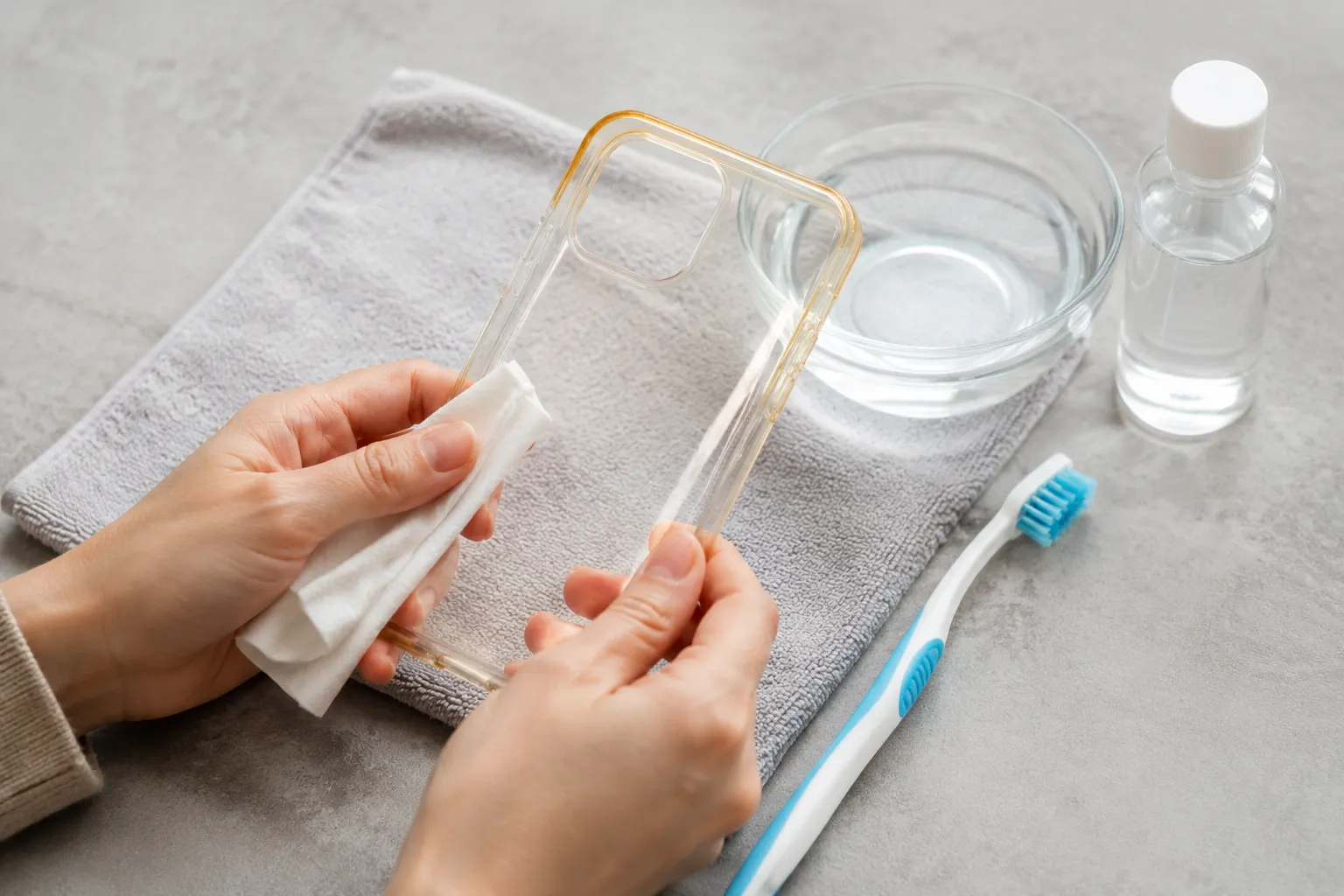
Wiping the case down with a microfiber cloth every few days can slow the process. Soap and water works better, but users should avoid alcohol-based cleaners, which strip away the anti-yellowing coating on some cases. Mild dish soap diluted in water is the safest option.
Cases That Claim Impossible Things
Online marketplaces in the Philippines are full of clear cases that claim to be "100% anti-yellowing" or "never yellow." These claims are false. There is no clear case material that resists yellowing indefinitely under real-world conditions. Even industrial-grade UV-stabilized plastics eventually discolor. A case that claims otherwise is either lying or using a coating so thin that it wears off within weeks.
Another red flag is the phrase "liquid glass" or "nano coating" without any explanation of what that means. These are buzzwords. A legitimate case manufacturer will specify whether they use polycarbonate, TPU, or a hybrid structure. Vague descriptions are a sign that the seller does not know what they are selling, which usually means the product is cheap bulk stock from a factory that cuts every corner available.
Buyers should also avoid cases that arrive with a strong chemical smell. That smell is off-gassing from low-grade plastic that contains residual solvents. It fades after a few days, but it is an indicator that the manufacturer skipped quality control steps that more reputable brands follow.
Spending a Little More Saves Money in the Long Run
A ₱150 case that lasts three weeks before turning yellow costs the buyer ₱50 per week of usable clarity. A ₱700 case that lasts six months costs about ₱29 per week. A ₱900 hybrid case that lasts a year costs roughly ₱17 per week. The math favors spending more upfront, provided the more expensive case actually uses better materials.
That is why the recommendation for most people is to target the ₱600 to ₱900 range and buy a known brand on sale. Spigen and Ringke both run frequent promotions on Philippine e-commerce platforms, and their standard retail prices are already within the budget. The extra ₱400 to ₱500 compared to a generic case buys months of additional clarity and better drop protection.
Buyers who absolutely must stay under ₱300 should lower their expectations. A case at that price will not stay clear for long. The best strategy is to buy two or three cheap cases in advance and rotate them, accepting that each one will need replacing after a month or two. This approach costs about the same as buying one mid-range case over a six-month period, but it requires more effort and produces more plastic waste.
The One Case That Handles the Bumper Problem Well
Tech21's Evo Clear series deserves a mention because it tackles the yellowing problem from an unusual angle. Instead of trying to prevent the TPU bumper from yellowing, Tech21 makes the entire case from a single piece of flexible material that they claim resists discoloration through a proprietary additive package. The Evo Clear typically retails between ₱800 and ₱1,000 in local stores, which puts it at the top of the budget range.
The case is not cheap-looking. It has a smooth, glossy back that shows off the phone's color vividly. Drop protection is genuinely good, with reinforced corners that absorb impact. The material stays clearer longer than standard TPU, though it is not as resistant as a PC-backed hybrid case.
Users who have tested it for six months report that it develops a faint warm tint rather than a deep yellow. That is an acceptable outcome for a case in this price bracket. The bigger selling point is that the entire case yellows evenly, so there is no ugly contrast between a clear back and a brown bumper. It just looks like an older piece of plastic rather than a neglected one.
For people who hate the look of a two-tone hybrid case, the Tech21 offers a unified appearance that ages more gracefully. It is not the best value on paper, but it solves a specific aesthetic complaint that other budget cases cannot address.
A Simple Test to Check a Case Before Buying
Shoppers near physical stores like Greenhills or Divisoria can do a quick test to estimate a case's yellowing resistance. Bend the case gently. If it flexes easily and feels rubbery, it is likely soft TPU. If it resists bending and feels rigid, it is likely polycarbonate or a hard composite. Hybrid cases will have a rigid back and a flexible edge.
Another test is to look at the clarity of the material itself. Hold the case up against a white piece of paper. A case that looks slightly grey or hazy is often a sign of UV stabilizers mixed into the material. A case that is perfectly crystal clear might actually be worse, because it may lack any stabilizing additives. The hazy ones often last longer.
Smell the case. A sharp plastic odor indicates lower-grade material. A faint or neutral smell suggests better manufacturing. This is not a scientific test, but it correlates with quality in practice.
Online shoppers cannot do these tests, which is why the review photo section is the most important part of any listing. A product with dozens of reviews but no photos of the case after several weeks of use is a gamble. A product with a handful of reviews but clear photos showing the case's condition after a month or two is a safer bet.
The clear case market has improved significantly in the last few years. Anti-yellowing additives are more effective, hybrid designs are more common, and even budget brands have started incorporating better materials. The days of every clear case turning brown within a month are fading. But the buyer still has to do some homework, because the shelves are also full of old-stock TPU cases that yellow just as fast as they ever did. Spending a little more and focusing on the right materials will keep a phone looking new for months longer than any generic case ever could.