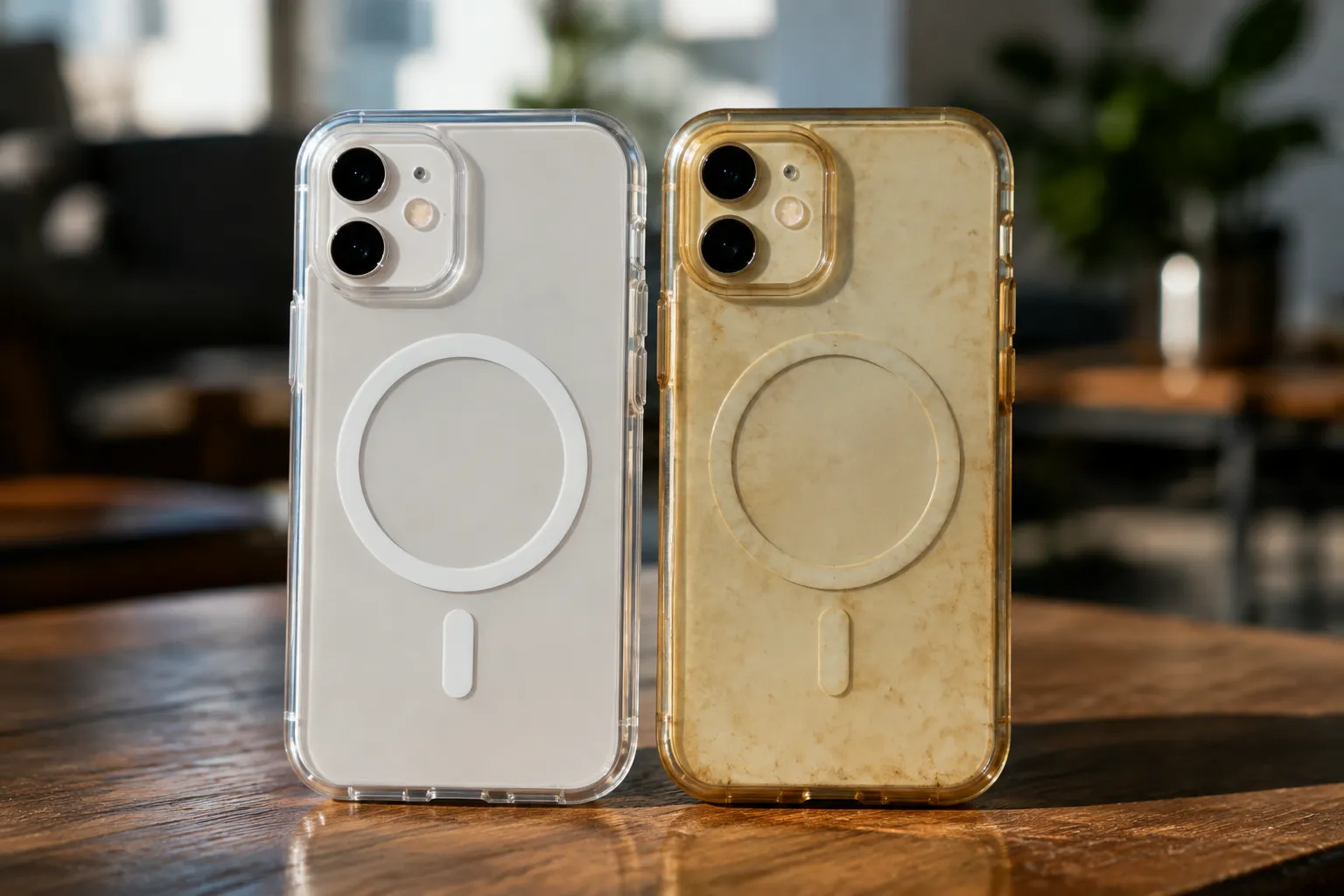
The phone case market runs on a lie that nobody says out loud: that the choice between clear and colored plastic is a style decision. It is not. It is a decision about how much ugliness a person is willing to tolerate, and when. Clear cases advertise a relationship with the device itself, the naked aluminum or glass back, the logo, the exact shade of blue the manufacturer chose. Colored cases advertise something else entirely: a relationship with a color, a texture, a surface that has nothing to do with what the phone company shipped. After a year of pockets, drops, desk slides, and the slow grind of daily use, those two promises age very differently.
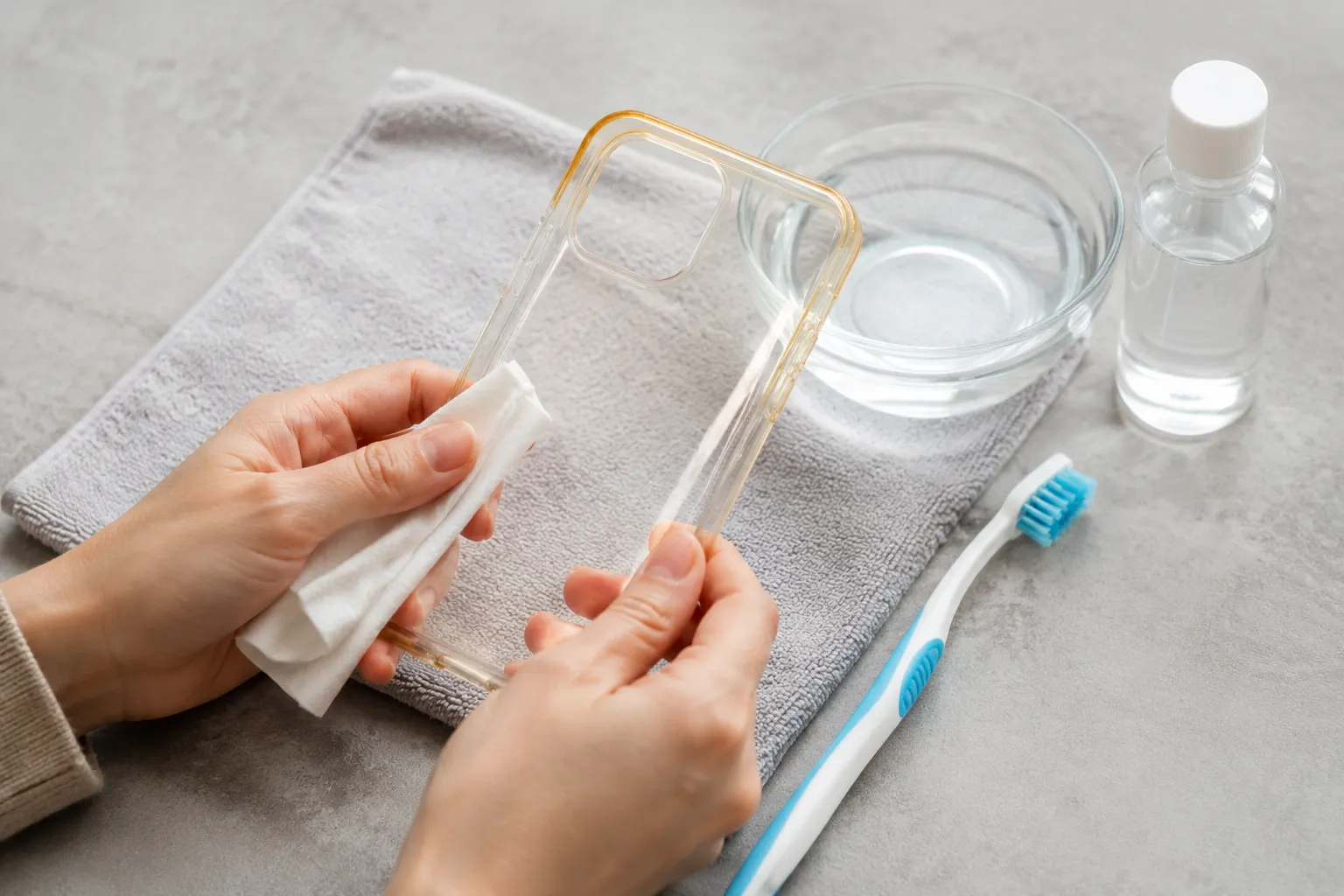
Most people buy a clear case expecting it to stay clear. That expectation survives roughly six weeks of contact with denim, keys, and the natural oils of a human hand. The physics are unforgiving. The plastic itself is usually fine, the structural part of the case holds up well enough, but the transparent material yellows in a way that no amount of cleaning fixes. It is not dirt. Dirt wipes off. The yellowing is a chemical reaction between the polymers and ultraviolet light, accelerated by heat and by the very sweat that a phone pressed against a palm produces all day. What started as a window becomes a nicotine-stained curtain.
The Two Kinds of Yellow
There is a meaningful difference between a case that yellows and a case that merely gets dirty, and the industry has spent years blurring it. A dirty case can be washed. Mild soap, warm water, a soft cloth, and the grime lifts off the surface, returning the case to something close to its original state. A yellowed case cannot be washed back to clear, because the discoloration lives inside the material itself. The polymer chain has changed. Soap does not repair broken molecular bonds.
Manufacturers have tried to fight this with additives, UV inhibitors, and coatings that resist the worst of the damage. Some of these work better than others. The expensive cases, the ones that cost 40 or 50 dollars, often hold their clarity for a respectable stretch, sometimes six months or more. The cheap ones, the 10 dollar Amazon specials, turn amber by the end of the second month. But even the best clear case on the market is fighting a losing battle. The additives slow the reaction. They do not stop it.
Colored cases do not have this problem, because they never claimed to show anything. A navy blue case stays navy blue. A forest green case stays forest green. The plastic may fade slightly in direct sunlight, and the edges may wear down to reveal a lighter core, but the case does not betray its owner the way a clear case does. It does not put its degradation on display. The wear is honest, a scuff here, a scratched corner there, but the case never looks like it has a disease.
What the Back of the Phone Actually Looks Like
The deeper issue with clear cases is that they force a confrontation with the phone itself, and the phone does not stay new either. The whole appeal of a clear case is that it preserves the look of the device, the factory finish, the pristine back glass. But a phone in a clear case still collects dust at the edges, still gets micro-scratches on the camera lens, still shows the faint circular imprint of a MagSafe charger. The case protects against drops and major impacts, but it does not protect against the slow accumulation of tiny imperfections.
And those imperfections are visible, because the case is clear. A person who buys a colored case never sees the back of the phone again. The scratches, the smudges, the slight wear around the charging port, all of it is hidden behind a layer of opaque plastic. That is a real psychological benefit. The phone stays pristine in the mind because it stays pristine in the eye.
The clear case owner, by contrast, is stuck in a relationship with every flaw. The case yellows, so the phone looks older than it is. The case also traps a thin layer of dust against the back glass, dust that shifts and settles and creates a faint gray film that no amount of case removal and wiping can fully eliminate. The clear case was supposed to display the phone. Instead, it displays the phone's decline in real time.
Grip, Slip, and the Physics of Holding On
Material science matters more than color psychology when the phone is actually in a hand. Clear cases have historically been made from polycarbonate or TPU, thermoplastic polyurethane, and the two materials behave very differently. A hard polycarbonate clear case feels rigid and slick. It slides out of a loose grip, it skates across a car dashboard, and it offers almost no shock absorption when it hits the ground. A TPU case, the soft, flexible kind, grips better and absorbs impacts more effectively, but it is also the material most prone to yellowing.
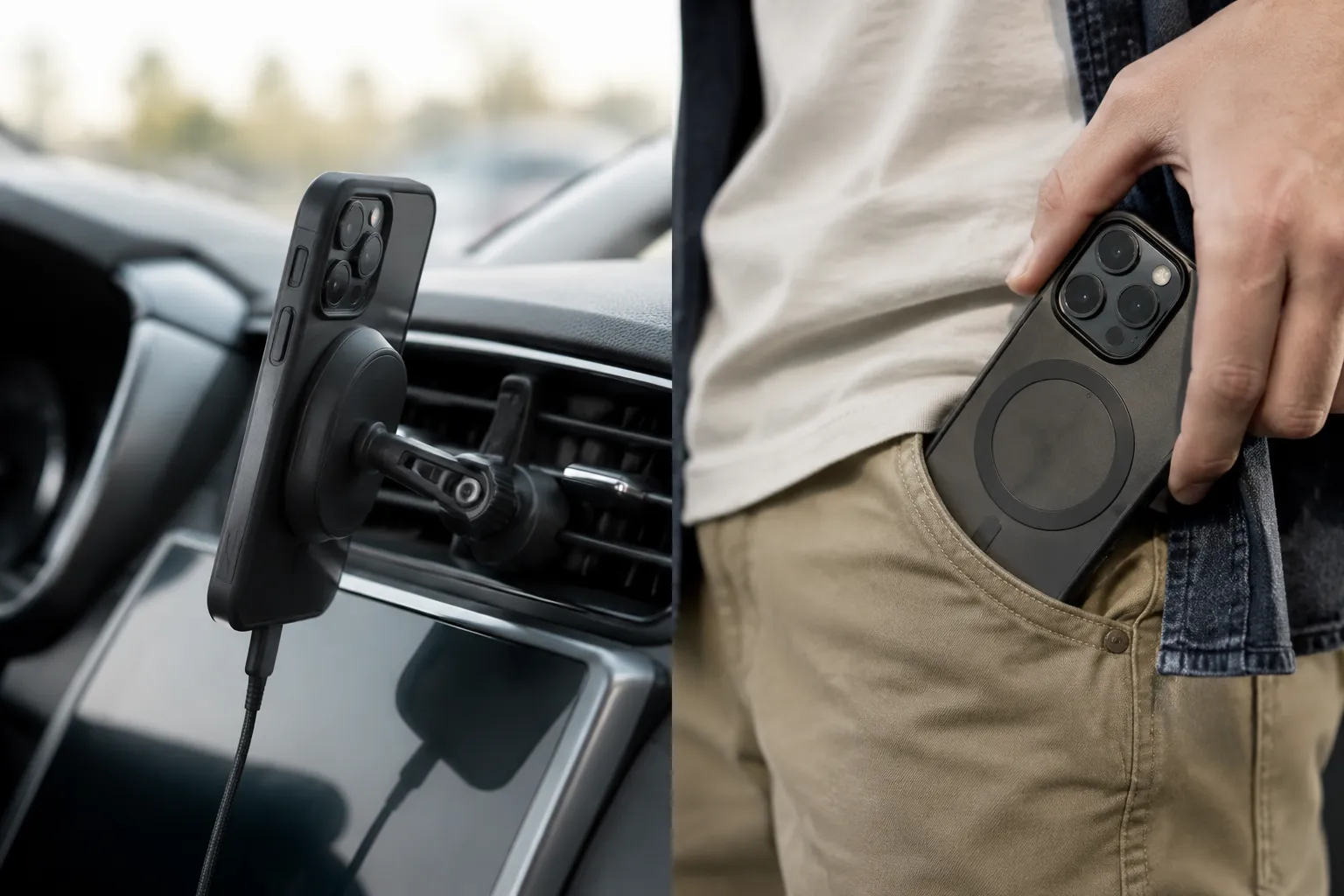
Colored cases have a wider material range. The same brand that makes a clear polycarbonate shell also makes a colored version with a soft-touch coating, a matte finish that feels almost like rubber. That coating changes the entire experience of holding the phone. It adds friction. It resists fingerprints. It does not slide off an armrest or out of a coat pocket. And because the color is integrated into the material or applied as an opaque layer, the coating does not need to be transparent, which means it can be thicker, more durable, and more textured.
The difference becomes obvious in a car. A phone with a slick clear case placed on a passenger seat will migrate to the floor on the first hard corner. A phone with a matte colored case stays where it was put. A phone with a clear case balanced on a gym bench will slide off the moment the bench vibrates. The colored case grips the surface. This is not about aesthetics at all. It is about whether the phone survives the mundane physics of being set down.
The Drop Test Nobody Runs Properly
Every phone case review on the internet includes a drop test, and almost all of them are useless. The reviewer drops the phone from waist height onto concrete, and then declares the case a success if the screen does not shatter. But real drops are not that clean. Real drops happen on the edge of a curb, onto a rough asphalt surface, at an angle that catches the corner of the case and transmits the full force of the impact to the frame of the phone.
In that kind of drop, the material of the case matters more than its color. A thick, flexible TPU case, clear or colored, will absorb more energy than a thin, rigid polycarbonate shell. The colored case has an advantage here only because manufacturers tend to make colored cases thicker. There is a perception that a colored case can look chunky without looking ugly, whereas a clear case needs to be slim to preserve the illusion of the naked phone. So the colored case gets more material, more cushioning, and better corner protection, while the clear case gets shaved down to a thin film that offers minimal protection.
The result is that a person who buys a clear case for aesthetic reasons often gets less protection than they think. The case looks like it should absorb a fall, but the thin walls flex, the corners compress, and the impact travels through to the glass. The colored case, with its extra millimeters of material, actually does the job.
The Replacement Cycle
A year of real use reveals the true cost difference. A colored case bought for 20 dollars will typically last the full year. The edges may scuff, the finish may wear at the corners, but the case remains structurally sound and visually acceptable. A clear case bought for 20 dollars will look unacceptable by month four. The yellowing, the trapped dust, the visible scratches, all of it combines into a case that makes a new phone look old.
So the clear case owner buys another one. And another one. At 20 dollars per replacement, three or four purchases over the life of the phone cost more than the single colored case that would have lasted the entire time. This is not an accident. The clear case market runs on repeat purchases. The product is designed to fail visibly, not structurally, but visibly, so that the owner feels a constant, low-grade dissatisfaction that can only be resolved by buying a new one.
The colored case owner does not have that problem, because a colored case that is slightly scratched still looks like a colored case. The wear does not signal failure. It just looks like a case that has been used, which is exactly what it is.
The One Good Reason for Clear
There is a legitimate argument for a clear case, and it has nothing to do with showing off the phone. It has to do with finding the phone. A white phone in a clear case is easy to spot on a dark sofa. A phone with a brightly colored case is even easier. But a phone in a black case disappears into a car seat, a backpack, or a pile of laundry. For people who lose their phones in their own homes on a weekly basis, the visibility of a clear case, combined with the visibility of the phone's own color, can be genuinely useful.
That utility is real, but it is narrow. And it does not last, because the case yellows and the phone becomes less visible anyway. A bright colored case, an orange or a lime green or a cobalt blue, solves the visibility problem permanently. It does not fade into the furniture. It does not pretend to be invisible. It announces itself.
What a Year of Pocket Use Actually Looks Like
Consider the life of a phone case over twelve months. It goes into a pocket thousands of times, and denim is abrasive. It gets set down on restaurant tables, bar counters, granite kitchen islands, and the occasional public bathroom ledge. It rides in a bag with keys and pens and loose change. It gets picked up with greasy hands after cooking. It gets dropped, not often, but enough, onto tile, onto concrete, onto the gravel of a parking lot.
A clear case accumulates evidence of every one of these encounters. The scratches on the back are visible every time the phone is picked up. The yellowing is visible every time the phone is looked at. The case becomes a record of every mistake, every careless moment, every bit of grit that touched the surface.
A colored case accumulates the same evidence, but it does not display it. The scratches are invisible against the colored plastic. The wear at the corners is hidden by the texture of the material. The case looks the same in month twelve as it did in month one, because the color provides a kind of camouflage for the damage.
That is the real difference between the two. It is not about which one looks better on day one. On day one, the clear case wins, because nothing looks as good as a pristine phone in a pristine transparent shell. The question is which one looks better on day 300. The answer is almost always the colored case, because it still looks like itself. The clear case looks like a memory of what it used to be.
The Final Decision Comes Down to Honesty
A person who buys a clear case is making a bet that they will replace it before it gets ugly. Some people do that. They buy a clear case with the expectation that they will swap it out every few months, treating the case as a consumable item rather than a permanent accessory. For those people, the clear case works. They always have a fresh, transparent shell, and the phone always looks new.
But most people do not replace their case on a schedule. They buy one, they put it on, and they forget about it until it falls apart or becomes too disgusting to look at. Those people should buy a colored case. They should pick a color they like, a color that will not embarrass them in a year, and they should accept that the phone itself is going to be hidden. The trade is simple: give up the illusion of the naked phone in exchange for a case that does not rot in the hand.
The clear case is a product for people who pay attention, who notice the yellowing at week eight and order a replacement by week nine. The colored case is for everyone else. It is for the person who wants to put a case on a phone and never think about it again. And after a year of real use, that person will have a phone that still looks like a phone, and not a lemon slice left in a glass of tea.