Most people treat a slippery phone case as a minor inconvenience, a thing to be tolerated until the next upgrade. The device slides out of a pants pocket and lands on a sidewalk. It drifts across the center console of a car during a sharp turn and wedges itself between the seat and the door. The case is supposedly there to protect the phone, but its polished polycarbonate back or slick thermoplastic polyurethane sides create a whole separate category of accidents. The irony is that the fix is often simpler and cheaper than the case itself, and it rarely involves buying a brand-new product.
The market response to a slippery case is usually a new case. Rugged brands push textured carbon fiber patterns. Minimalist brands sell frosted or matte finishes. But swapping the whole case because of a grip issue feels wasteful, and many of the supposedly grippy options on the shelf still fail the most basic real-world test: a case should not require active concentration to hold onto while walking with a coffee in the other hand. A few hours of work with common materials can transform a slick shell into something that feels deliberate and secure, and the best part is that the process teaches a person a bit about how their own hands interact with surfaces.
Why Cases Get Slippery in the First Place
Surface friction is a negotiation between two materials, not a property that lives inside one thing. A glossy case feels fine when the hands are dry and clean. The same case becomes treacherous when a person is carrying groceries in a summer rain, when hands are freshly lotioned, or when the case has picked up a faint film of skin oil from a day of use. That oily film is the real culprit. It turns what was a decent grip into a polished, glassy surface.
Some materials are naturally more forgiving. Soft-touch elastomer coatings, like the ones found on certain rugged cases, resist the film building the way a hard shell does. But these coatings wear away over months of pocket friction and leave patches that are actually slicker than the original surface. Hard polycarbonate is durable but has little inherent grip. Thermoplastic polyurethane, or TPU, offers more friction but often has a waxy smoothness right out of the box. Understanding which surface a person is working with matters because the texture fix that works on a matte TPU case may not stick well to a glossy hard shell.
The practical question is not whether a case is theoretically grippy but whether it stays grippy through a normal week of use. A texture fix that only survives until the first hand-wash is not a fix. It is a decoration. The solutions below are ordered roughly by how drastic the change is, from temporary and removable to permanent structural alteration.
The Skin Layer Approach: Self-Adhesive Grip Tape
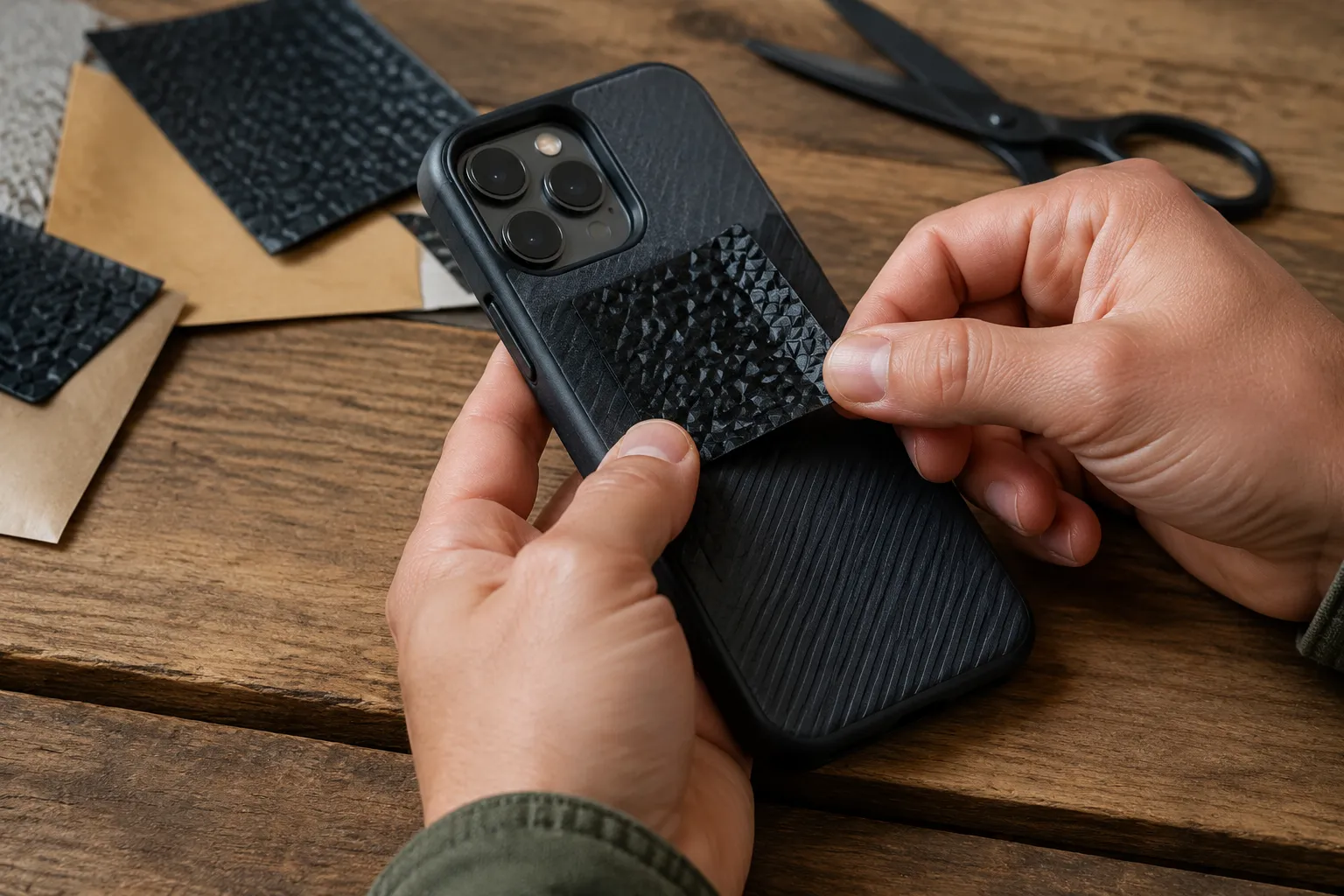
Adhesive grip tape is the fastest intervention and the easiest to reverse. Skateboard grip tape is too aggressive, like sandpaper with adhesive backing. But the sticky-backed sheets sold for drawer liners, toolbox shelves, and even some medical equipment use a pebbled or matte surface that adds substantial friction without feeling abrasive against a palm. These come in thin rolls and can be cut to shape with regular scissors.
The detailed part is cutting the tape to fit the curved edges of a phone case. A straight edge and a sharp blade work better than scissors for tight curves. The person should place the case on the tape, trace the outline with a fine marker, then cut slightly inside the line. Attaching the tape to a flat portion of the case back, like the area below the camera module or the center of the spine, gives the hand something to purchase without adding bulk that would prevent the phone from sliding into a tight pocket.
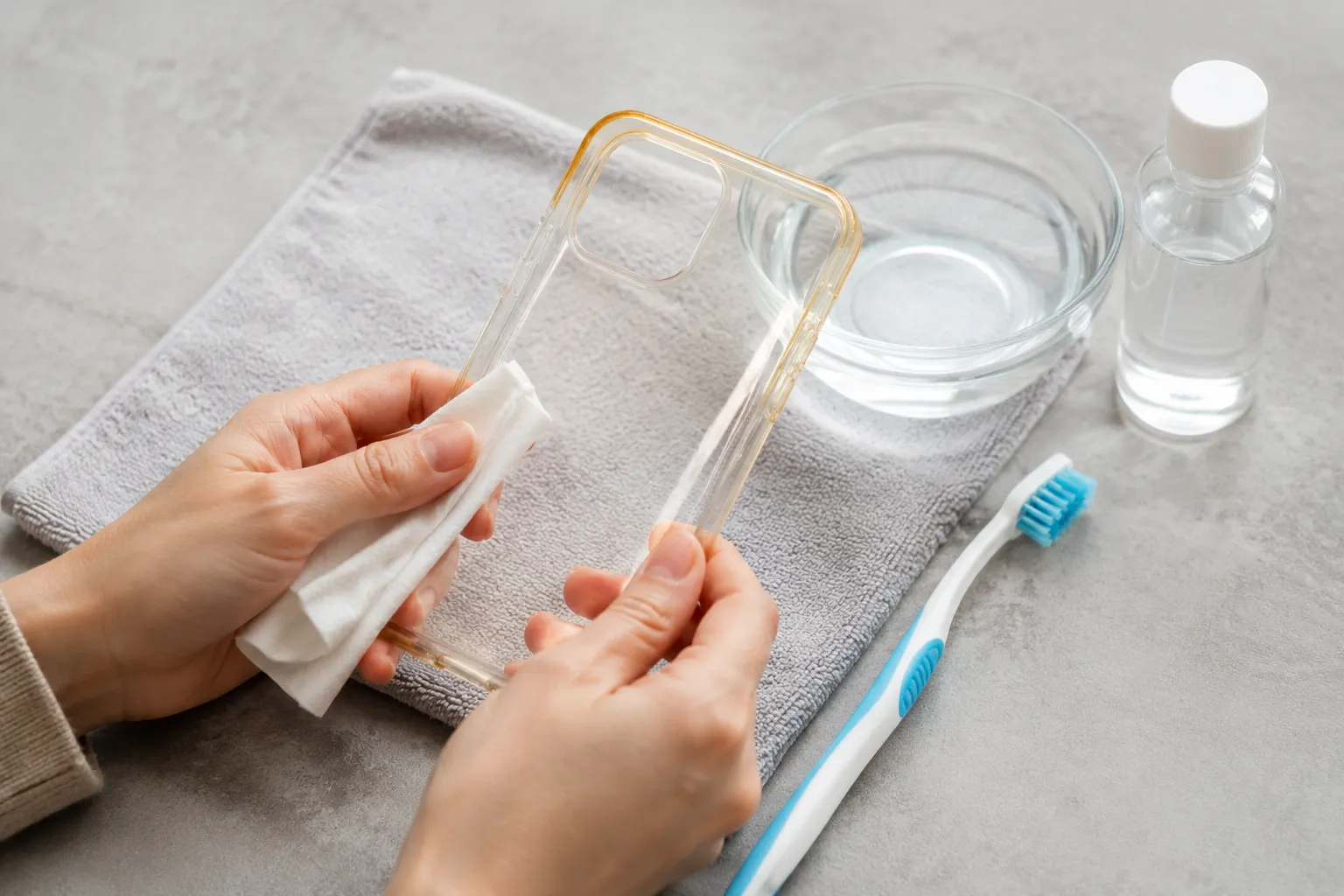
This fix has a real weakness. The adhesive on most grip tapes is not engineered for the heat and constant pressure of a phone pocket, and edges can peel after a few weeks. Cleaning the case surface with isopropyl alcohol before applying the tape helps. Picking a tape with a strong acrylic adhesive rather than a rubber-based one extends the life considerably. Acrylic adhesive holds better against the warmth of a human leg.
Some people dislike tape because it looks like tape, a patchwork of visible seams and corners. A cleaner execution involves cutting the tape to fit only the side rails of the case, the two long edges where the thumb and fingers naturally rest during one-handed use. That placement hides the patch lines far better and addresses the actual grip problem directly, since most drops happen when the fingers are curled around the sides, not when the palm is pressed flat against the back.
Liquid Latex and Plasti-Dip: A Coating with Real Grip
Dip coatings, sold in hardware stores as tool handle coatings, offer a more integrated fix than tape. The product is a thick liquid rubber that dries to a flexible, matte surface. The process is straightforward but requires patience. The case needs to be clean and dry. Then the liquid can be brushed on in thin coats, or the whole case can be dipped if the owner wants full coverage.
The benefit of this approach is that the coating conforms to every contour of the case, including the curved edges and the cutouts for buttons and ports. A brush dipped in the liquid can reach into corners that tape cannot cover. Thin coats are essential. A single thick application dries unevenly, traps air bubbles, and stays tacky on the surface, which creates a sticky mess that collects lint and dust from every pocket.
A real issue with dip coatings is that they soften the feel of the buttons. The power button and volume rockers often sit slightly recessed within the case mold. A few layers of rubber coating over those areas can add enough thickness to make the buttons feel mushy or require firmer presses. Masking the buttons with a small piece of washi tape before coating preserves the tactile click.
This fix shines for people who want an all-over texture change rather than a targeted patch. The finished surface is similar in feel to the matte soft-touch coating on premium rugged cases, though it is thinner and less durable. The coating can tear at the corners after several weeks of sliding in and out of a pocket. Reapplication is simple enough, but the owner should accept that this is a maintenance project, not a one-time permanent transformation.
Mechanical Grip: Screws, Inserts, and Physical Texture
For cases made of hard polycarbonate or metal frames, an entirely different route exists. Instead of adding a sticky layer, a person can add physical texture through small mechanical anchors. This is a more permanent intervention and not for the faint of heart, because it involves drilling small holes or creating shallow recesses in the case surface.
Small aluminum inserts, like the heat-set threaded inserts used in 3D printing projects, can be pressed into a drilled hole flush with the case surface. The resulting ring of metal has a different coefficient of friction than the surrounding plastic, giving the finger a subtle tactile anchor. A row of three or four such inserts along the side of the case acts like grip tape but with a mechanical permanence that adhesive can never match.
Simpler still is the use of small rubber grommets, the kind used to protect wires from sharp edges in electronics enclosures. A hole punched through the case back and a grommet pressed in from the outside creates a raised rubber ring, roughly a millimeter high, that provides a positive grip point for a fingertip. This is a crude solution, but it is effective, and it allows a person to place grip points exactly where their own fingers rest.
The risk here is structural. Drilling through the case weakens its integrity, and a crack can propagate from the hole during a drop, turning a minor scratch into a split case. The safest location for any hole is away from the corners and away from the edges, where impact stress concentrates. A hole in the center of the case back is far less likely to cause a catastrophic failure than one near a corner.
This approach belongs to a specific kind of person who treats a phone case as a tool rather than an accessory. The visible screws and grommets have a utilitarian look that appeals to the same aesthetic as a well-worn knife handle or a custom flashlight body.
Heating and Texturing the Surface Itself
A curious middle ground exists between coating and mechanical anchoring. Certain thermoplastics, TPU in particular, can be altered directly with heat. A soldering iron with a blunt tip can be used to create small dimples or crosshatch patterns on a TPU case surface. The heat melts a small depression, and the displaced plastic forms a slightly raised rim around it. The pattern of dimples acts like the texture on a golf ball, giving the fingers thousands of tiny micro-edges to catch onto.
The technique requires practice on a scrap piece first. The iron tip should be at a low temperature, just hot enough to soften the plastic without burning or discoloring it. The tip should touch the surface briefly and lift away cleanly. Pressing too long leaves a charred brown spot that looks like a burn mark and weakens the plastic. A consistent grid pattern, with dimples spaced roughly three to five millimeters apart, provides excellent grip without looking like a tire tread.
This method alters the structure of the case itself, so there is no layer to peel off and no coating to wear away. The dimples are permanent, as long as the case does not get hot enough to soften them again. Leaving the case in a closed car on a summer afternoon will not reach the temperatures needed, typically over 150 degrees Fahrenheit, so the texture holds up to weather.
The downside is the irreversible nature. Tape can be peeled off. Dip coating can sometimes be stripped. A dimpled case cannot be returned to its original flat surface. A person should be confident in the placement before committing, since mistakes are permanent.
The Knurled Pattern Approach
The most elegant permanent method borrows directly from the machining world, where hand tools feature knurled surfaces to provide a secure grip even with oily gloves. A knurling tool, or a rotary tool with a small diamond burr, can engrave a crisscross diamond pattern into a polycarbonate case. A rotary tool at low speed with a fine abrasive bit cuts a shallow groove without melting the plastic. Cutting a series of parallel lines, then rotating the case 45 degrees and cutting another series, produces the classic diamond knurl.
This provides a professional finish that looks like a factory option rather than a homemade modification. The channel depth does not need to be great, around half a millimeter is sufficient to change the tactile feel. The flat diamond plateaus between the grooves still contact the palm, while the grooves channel away the thin film of skin oil that makes cases slippery.
Cutting plastic with a rotary tool produces fine dust, so this work should happen over a trash bin or in a well-ventilated area. A dust mask is a reasonable precaution. Polycarbonate is forgiving to machine, but it can chip if the bit spins too fast. A steady hand and several light passes create a cleaner result than one aggressive pass that skips and leaves gouges.
This method works only on hard plastic cases, not on flexible TPU ones. A TPU case flexes when the phone is inserted and removed, and a knurled groove on a flexible surface will crack and split over time. Hard polycarbonate cases, and the rare aluminum or stainless steel cases, hold the pattern well because they do not flex under normal use.
Matching the Fix to the Actual Grip Problem
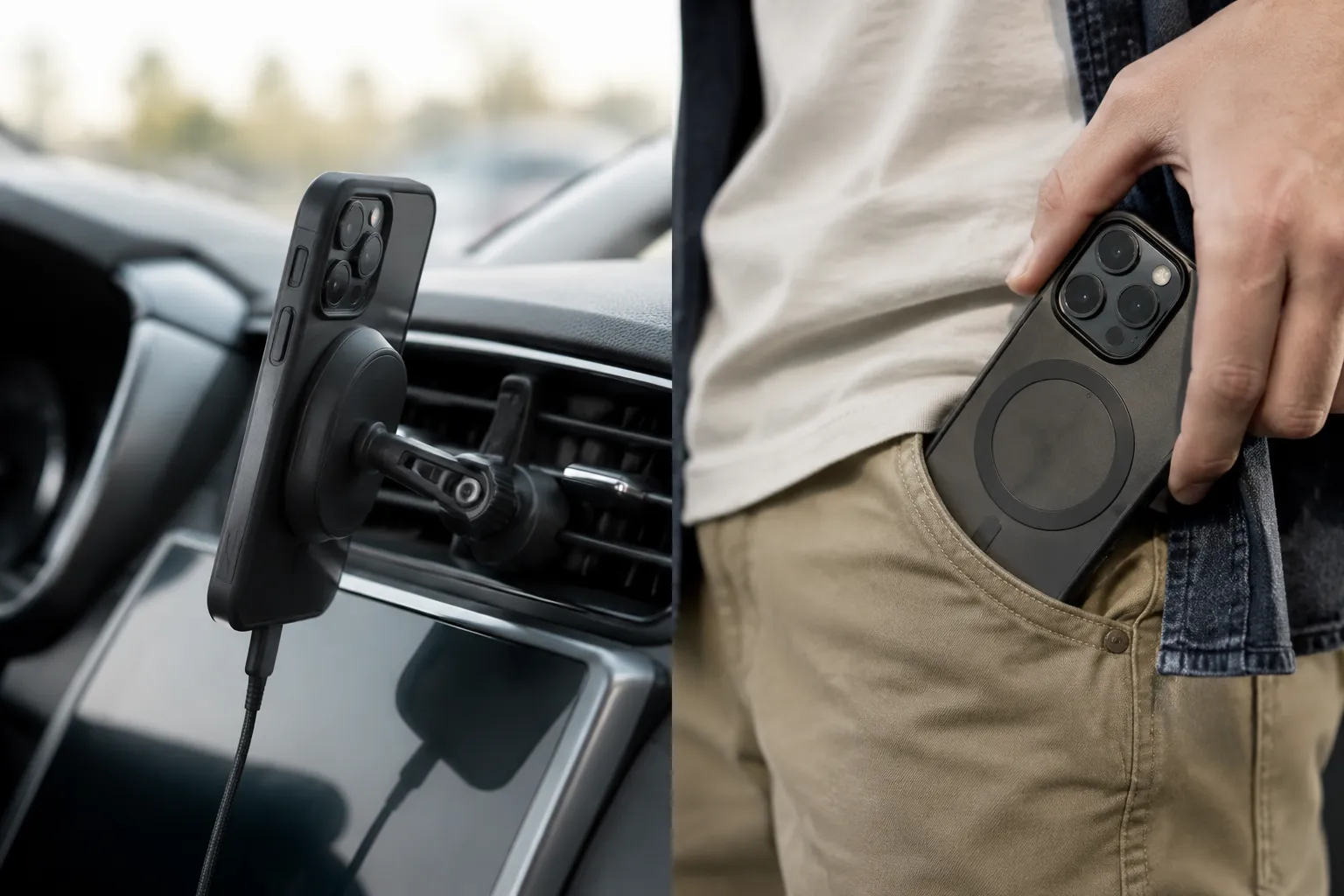
The choice of texture fix should follow an honest assessment of where the grip fails. A case that slips out of a jacket pocket has a different problem than a case that slides within the hand during one-handed texting. Pocket slips usually stem from the case being too smooth against the fabric lining of the pocket, while in-hand slips involve the finger contact surfaces.
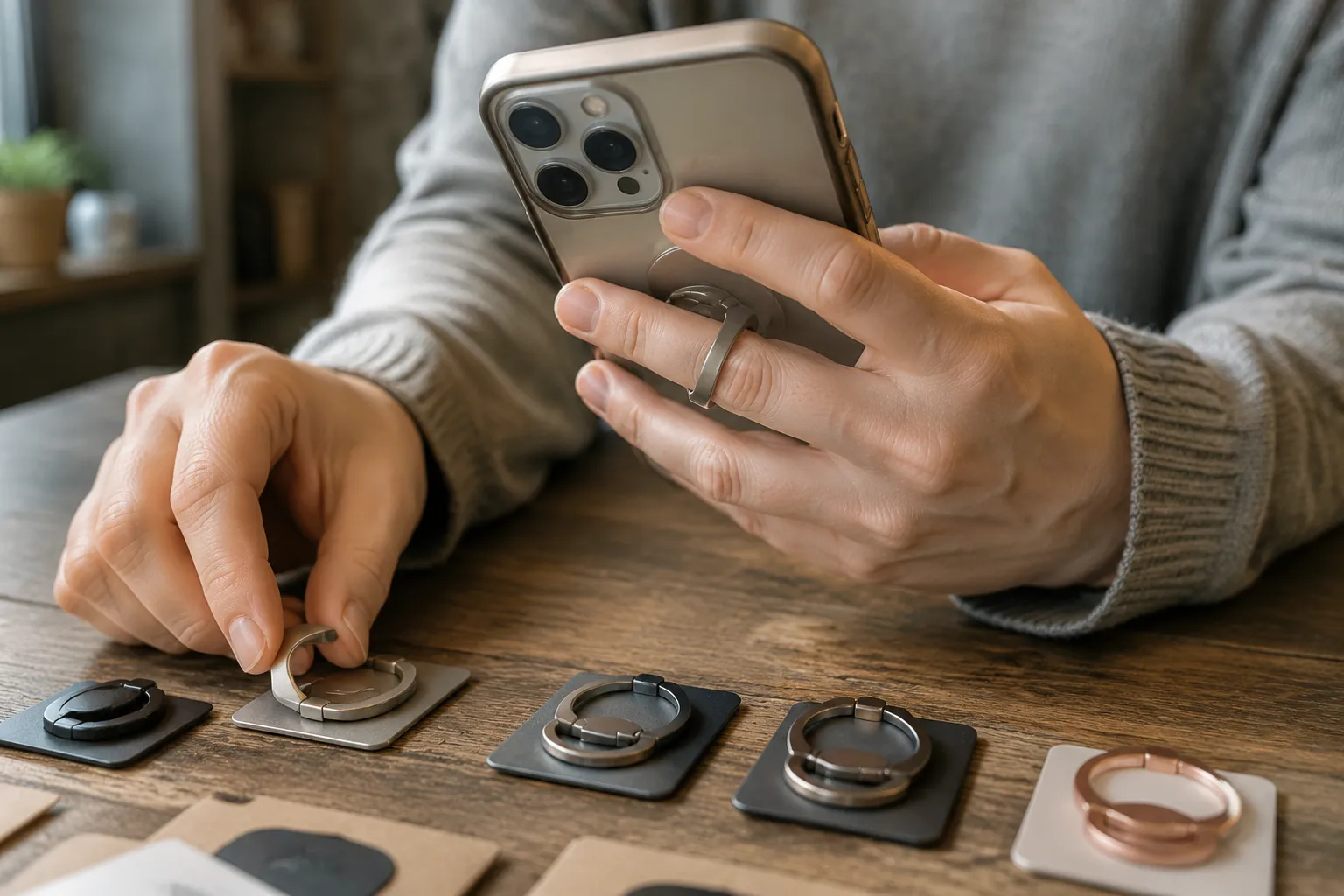
A thin, flat phone in a tight jeans pocket needs texture on the case edges to catch the pocket seam. A wide phone that requires a firm palm grip benefits from texture on the back panel, giving the palm a surface that resists lateral sliding. A case with an integrated kickstand or finger loop already provides some purchase, and the texture fix should supplement those features rather than fight them for space.
Another overlooked factor is hand temperature. Cold hands have much lower friction against smooth surfaces than warm hands. Someone who lives in a climate with cold winters, or who takes frequent walks in the fall, will benefit from a more aggressive texture than a person in a warm climate who rarely wears gloves. The same case that feels securely grippy in a 70-degree room can feel dangerously slick when the ambient temperature drops to freezing.
Texture also affects how the phone feels in a pocket during retrieval. A case that is excessively grippy on the back will pull the pocket lining inside out when a person tries to grab the phone quickly. The texture needs to be directional in a sense, providing slip in one direction and grip in another. The knurled pattern and the dimpled approach both achieve this naturally, while the stick-on grip tape often creates grip in all directions, which can make pocket retrieval annoying.
Temporary Textures for Short-Term Needs
Not every slippery case problem deserves a permanent fix. A person who knows a case is temporary, say the loaner case from a friend or a cheap replacement while the good case ships, should not spend an hour cutting knurls into plastic. For these situations, the humble rubber band offers a surprisingly effective stopgap. Two thick rubber bands, one near the top and one near the bottom of the case, provide enough additional friction to stop most pocket slips. They also add a splash of color, which some people appreciate.
Sugru and similar moldable silicone adhesives offer a middle path. A few small dots of the silicone, pressed onto the case side rails and allowed to cure, form soft rubber bumps that grip the hand. These silicone dots are removable later by peeling them off, though they leave a slight residue that acetone can clean away. The dots look intentional if applied in a symmetric pattern, like two on each side rail at the natural finger positions.
The transparent skin sold as a vinyl wrap or screen protector material can also add grip. A matte anti-glare screen protector, cut to fit the back of the case, provides a subtle frosted texture that is much less slippery than the original glossy surface. This is a low-effort fix that uses materials most people already have lying around from previous phone projects.
The Finish That Fits the Hand
Texture fixes do not need to turn a phone into a sandpaper brick. The goal is a surface that requires no thought to hold. The best test happens before the case goes back on the phone. With the bare case in hand, a person should hold it as they would in normal use, not in a death grip but casually, and shake it gently. If the case does not shift or slide against the palm, the fix has succeeded.
A second test involves sliding the case across a flat wooden table, face down and back panel up. A case with adequate grip should resist a gentle push with one finger, catching slightly against the table surface. A case that still glides freely needs more aggressive texture, either deeper grooves or a stickier coating.
The texture that works for one person may fail for another, since hand chemistry and skin moisture vary widely. Some hands are naturally dry, almost papery, and slide across surfaces that feel perfectly grippy to a person with typical skin oil. For those dry hands, any smooth case is a losing proposition, and the only durable answer is a coating that adds a micro-roughness, more like a fine sandpaper than a rubber surface.
Given the number of options, a person could reasonably start with the least invasive fix, the adhesive tape or the silicone dots, and escalate to the permanent dimple or knurl patterns only if the temporary solutions fail. The progression makes sense because the damage increases with each step. Tape leaves no trace. A coating can be stripped. A drilled hole is forever.
The final measure of any texture fix is whether the phone stops appearing on the floor. A person who has dropped a phone twice in a week knows the specific sound, that sharp crack of glass or the dull thud of plastic, and the silence that follows while the phone is checked for damage. The fix that prevents the next drop is worth the hour of work, regardless of whether it looks like a factory job or a garage project.