The new button on the side of the iPhone 16 Pro Max is a small engineering miracle and a large design headache. Apple calls it the Camera Control, a flush capacitive surface that sits below the power button and responds to clicks, light presses, and swipes. It changes how a person holds the phone, how a case grips the frame, and how the entire accessory industry has to rethink a slab of aluminum and glass that was already hard to protect properly. The first wave of cases for this device reveals a lot about who actually uses the Camera Control and who just wants it to disappear.
There is a real tension at the heart of every iPhone case design. The case exists to absorb impact and add grip, but it also has to preserve the feel of the device underneath. The iPhone 16 Pro Max is a big phone, roughly 6.4 inches tall and just over 8 ounces, and it demands a case that does not turn it into a brick. The Camera Control complicates this further because it sits exactly where a thumb or forefinger naturally rests during a landscape shot. A case that covers that button with a thick layer of TPU ruins the capacitive sensitivity. A case that leaves it fully exposed leaves the phone vulnerable at its most awkward corner.
The first thing to understand is that the Camera Control is not a button in the traditional sense. It does not depress. It senses force and movement through a solid surface, which means the material between a finger and the sensor has to be thin, precise, and consistent. Apple's own case uses a sapphire crystal piece over the control, fused into the case body with a flush finish. Third-party makers have had to solve this with either a cutout, a raised lip, or a dedicated button cap made of a conductive material that transfers the touch through the case.
Most of the early reviews of the iPhone 16 Pro Max celebrated the Camera Control as a genuinely new way to shoot photos. A light press locks focus and exposure. A full press snaps the shot. A swipe adjusts zoom. It feels natural when the phone is bare, but the moment a case goes on, that natural feel often evaporates. The question is not whether a case protects the device. The question is whether a person can still take a photograph without fighting their own accessory.
The Cutout Compromise
The simplest solution, and the one many budget and mid-range case makers chose, is to leave the Camera Control exposed through a precise cutout in the frame. This preserves full sensitivity because nothing sits between the finger and the sensor. It also means the side of the phone around that cutout is completely unprotected. A drop that lands on that corner transfers the full force of the impact directly to the titanium frame and the glass behind it.
Cutout cases also collect pocket lint and dust in the gap. The Camera Control's capacitive surface needs a clean contact point, and a layer of fine fabric fibers can interfere with reliable swiping. Cleaning it requires a soft cloth and a steady hand, which is more maintenance than most people expect from a phone case. The cutout approach works, but it treats the Camera Control as a vulnerability to be worked around rather than a feature to be used.
There is another problem with cutouts that has nothing to do with protection. The Camera Control is positioned low enough on the frame that a person holding the phone in landscape naturally wraps their fingers around the bottom edge. With a cutout case, that grip puts a fingertip directly in the cutout groove, which feels like running a nail along a chalkboard. The edge of the cutout can catch on skin, and the inconsistent surface makes the phone feel less solid in the hand. It is a minor annoyance during normal use, but it becomes a real distraction during a long photo session.
The Capacitive Bridge
Several case makers, including Spigen and OtterBox in their premium lines, have tried a different approach. They build a dedicated cap over the Camera Control, made from a conductive material that transfers the finger's touch through the case to the sensor underneath. This keeps the side of the phone fully covered and preserves the flush profile of the frame. The cap is usually integrated into the case's button structure, so the whole assembly moves as one piece.
The engineering here is genuinely clever. The cap has to be thin enough to allow the capacitive sensor to register a touch, but rigid enough to handle the pressure of a full click. It also has to maintain a consistent air gap or direct contact with the actual Camera Control on the phone. Too much space and the sensor loses sensitivity. Too little and the cap scrapes against the phone's surface, creating wear marks over time.
When it works, a capacitive bridge case feels almost identical to a bare phone. The light press and full press register reliably, and swiping across the cap adjusts zoom smoothly. The best versions use a metal or metal-infused cap that matches the finish of the case frame, so the phone still looks unified from the side. The worst versions use a thin plastic piece that flexes under pressure and requires a harder press to register any input at all.
The tradeoff with a bridge case is thickness. To house the conductive cap and the mechanism that holds it in place, the case frame has to be slightly bulkier around the Camera Control area. On a phone this large, even a few extra millimeters on one side can throw off the balance. Some users report that the phone no longer sits flat on a table because the cap area protrudes slightly. Others find that the cap collects fingerprints and smudges at a faster rate than the surrounding case material.
The Raised Lip School of Thought
A third approach, favored by rugged case makers like UAG and Case-Mate, treats the Camera Control as a physical button that needs protection. These cases use a raised, rubberized lip that surrounds the control on three sides, leaving the top open for swiping gestures. The lip provides a tactile guide for finding the control without looking, and it adds a layer of shock absorption around the most exposed part of the frame.
This design works well for people who use the Camera Control mainly for full-press shutter activation. The raised lip gives the thumb a clear target, and the rubberized texture prevents slipping during a quick shot. But the lip interferes with the light-press and swipe gestures that make the control so useful. A swipe across the lip surface is interrupted by the rubber edge, and the light press requires a more deliberate finger placement than the bare phone demands.
The raised lip also changes the ergonomics of the phone in a subtle way. The iPhone 16 Pro Max is already a wide device, and adding a rubber ridge on the lower right side makes it feel even wider in the hand. People with smaller hands may find that their thumb cannot comfortably reach across the screen while maintaining a grip that keeps the Camera Control accessible. The phone becomes less of a one-handed tool and more of a two-handed instrument.
For photographers who shoot mostly in landscape, the raised lip is actually a benefit. It provides a natural rest for the forefinger, which reduces hand fatigue during long sessions. The lip acts as a miniature grip, and the rubberized texture keeps the phone from sliding even when hands get sweaty. This is a case designed for active use rather than pocket carry, and it shows in every detail.
MagSafe and the Camera Control Tug of War
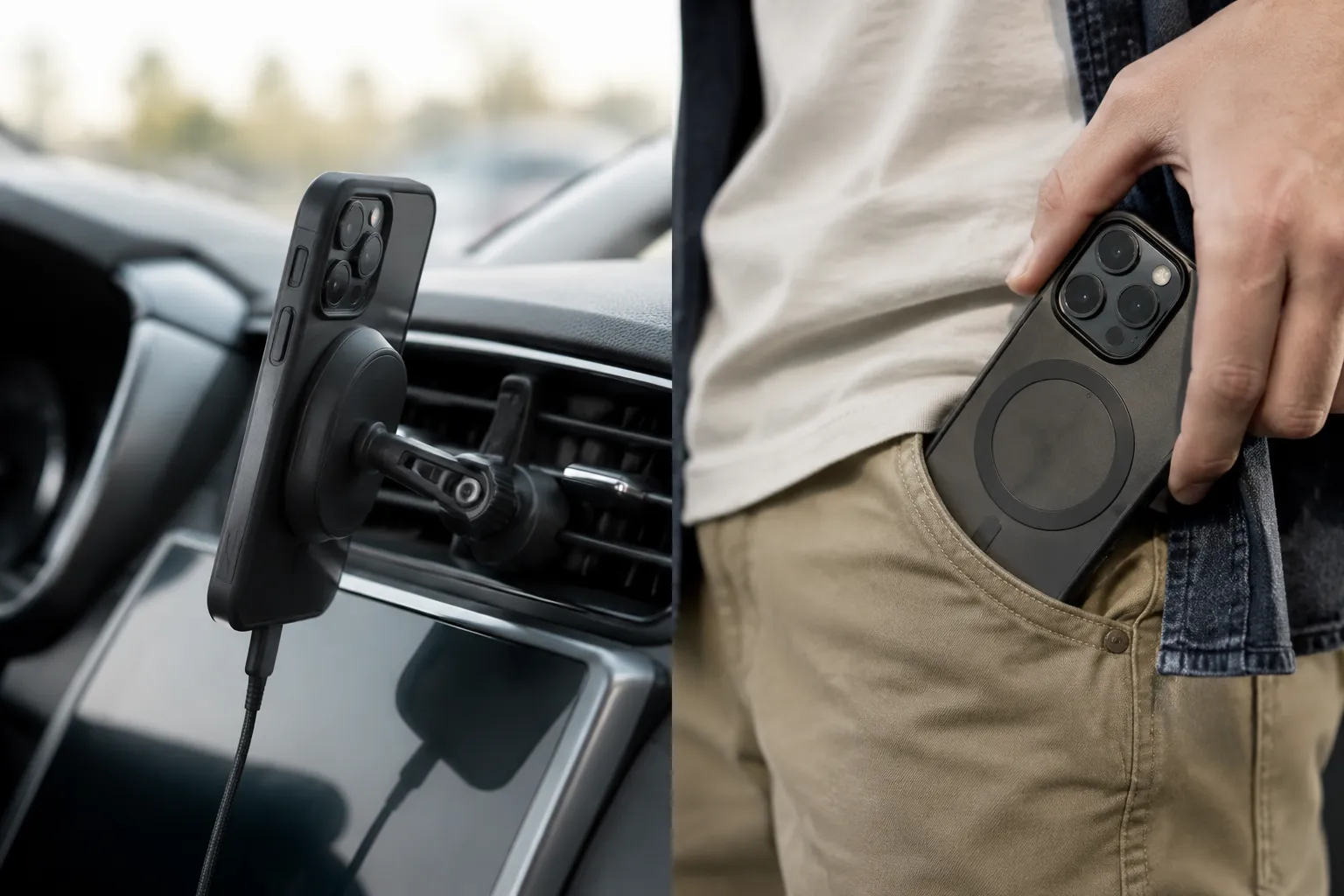
Every case for the iPhone 16 Pro Max also has to accommodate MagSafe, Apple's magnetic charging and accessory system. The magnet array on the back of the phone is strong, but a thick case can weaken the connection enough to make wireless charging unreliable. Case makers have responded with thinner back panels and precisely placed magnet rings, but the Camera Control adds a new wrinkle to this balancing act.
The Camera Control is positioned on the right side of the phone, while the MagSafe magnets occupy a ring in the center of the back. A case that reinforces the MagSafe connection with additional magnets on the right edge can interfere with the Camera Control's capacitive sensing. The magnetic field creates a slight interference that manifests as inconsistent swipe detection or a delayed response to light presses.
Some case makers have solved this by moving the Camera Control cap slightly outward from the phone's surface, creating a small air gap that isolates the capacitive sensor from the magnetic field. This works, but it adds thickness to the case and creates the same protrusion issue that plagues the bridge designs. Others have simply accepted the interference, and their cases work fine for charging but feel slightly laggy when using the Camera Control.
The practical takeaway is that a person who relies heavily on MagSafe accessories and also wants full Camera Control functionality should look for a case that explicitly mentions magnetic shielding around the control area. This is a niche specification, but it is becoming more common as makers refine their designs. The first generation of these cases had noticeable issues with both functions competing for the same space. The second generation is much better, and it shows in the reviews.
Material Matters for the Control Surface
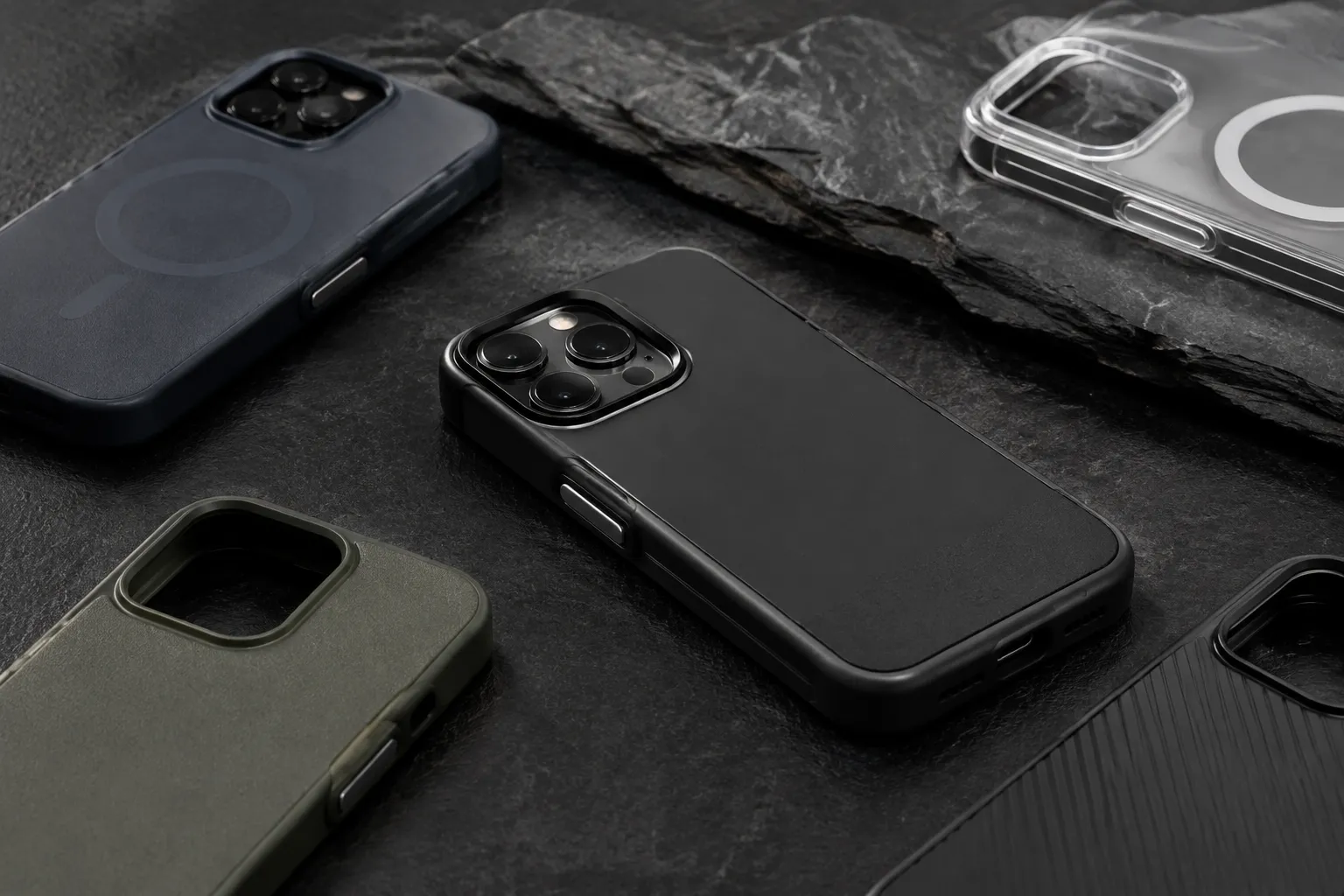
The material of the case itself plays a larger role in Camera Control performance than most people expect. Polycarbonate cases, which are rigid and thin, transmit capacitive touches well because they do not absorb or scatter the electrical signal. TPU cases, which are flexible and impact-absorbent, tend to dampen the signal, especially if the material is thicker than about two millimeters around the control area.
Leather cases present a special challenge. The natural grain of leather is non-conductive, and a leather layer thick enough to feel premium will block the Camera Control entirely unless it includes a conductive insert or a cutout. Apple's own leather replacement, the FineWoven material, has the same issue. The company solved it with a separate capacitive element embedded in the case, but third-party leather makers have been slower to figure this out.
Silicone cases, which are popular for their grip and softness, are the most problematic. Silicone is an excellent insulator, and a silicone case with a covered Camera Control will not register a light press at all. Most silicone case makers have defaulted to the cutout approach for this reason, which means silicone fans have to accept the exposed corner and the lint collection that comes with it.
The texture of the case surface also affects the swipe gesture. A smooth, glossy finish allows a finger to glide across the control area easily. A textured or matte finish creates friction, which makes precision swiping more difficult but also prevents accidental swipes. Apple's own case uses a soft-touch coating that strikes a balance, but third-party makers often lean too far in one direction. A glossy case makes zoom adjustments feel too sensitive. A matte case makes them feel sticky and imprecise.
For a person who plans to use the Camera Control for every shot, the case material is not an aesthetic choice. It is a functional decision that determines whether the feature works at all. Reading the fine print on a case listing to see whether the Camera Control area is covered or exposed, and what material covers it, saves a lot of frustration after the purchase.
The Grip Factor on a Large Phone
There is a reason case makers obsess over grip, and it is not just about preventing drops. The iPhone 16 Pro Max is physically large enough that a person's hand has to stretch to reach the Camera Control while also supporting the weight of the device. A slippery case makes this stretch feel precarious. A grippy case makes it feel natural.
Textured side rails are becoming a common feature on higher-end cases for this exact reason. The texture provides a tactile anchor point that lets the thumb find the Camera Control without visual confirmation. Some cases even add a slight contour or depression where the thumb naturally rests, turning the side of the phone into a shaped grip that guides the finger to the right spot.
This is a subtle design detail that makes a large difference in real-world use. A person shooting one-handed at a concert or a family gathering does not have time to look down and locate the control. The case either guides the thumb there instinctively or it does not. The best cases of this generation treat the Camera Control as an extension of the grip, molding the frame so that the thumb lands on the control as part of the natural holding position.
Case makers who ignore this reality produce cases that are technically protective but practically frustrating. The phone slides in the hand, the Camera Control is hard to find without looking, and the whole experience feels like using a device that was not designed for human hands. The iPhone 16 Pro Max deserves better, and the accessory market is slowly catching up to that expectation.
A Note on Drop Protection Claims
Every case maker claims a drop rating, and most of these claims are meaningless in real-world conditions. A laboratory drop test onto a flat concrete slab does not replicate the chaos of a phone tumbling down stairs or bouncing off a curb. What matters more than the claimed rating is whether the case has raised edges around the screen and camera, and whether the corners have adequate shock absorption.
The Camera Control introduces a new vulnerability that most drop ratings do not account for. A case with a cutout leaves that section of the frame exposed, and a direct impact to that area can transfer force to the phone's internal mounting points. The titanium frame is strong, but it is not indestructible, and a sharp impact at the right angle can dent it. A case with a covered control, whether through a bridge or a raised lip, provides better protection for this specific point of impact.
For people who drop their phones regularly, a case with a covered Camera Control is the safer choice, even if the cover compromises some functionality. For people who are careful with their devices, a cutout case offers the best user experience with an acceptable level of risk. The decision comes down to how a person actually lives with their phone, not how a marketing page describes a drop test.
The Case That Makes the Control Invisible
There is a school of thought that says the best case for the iPhone 16 Pro Max is the one that makes the Camera Control feel like it was never there. These cases use a full cover over the control with a conductive bridge that is flush with the surrounding frame. The user cannot tell where the case ends and the control begins, and the phone operates as if it were bare.
This design philosophy prioritizes seamlessness over accessibility. The Camera Control becomes a hidden feature that works when a finger happens to find it, rather than a tactile element that invites interaction. The result is a case that feels great in the hand but does nothing to encourage photography. For people who rarely use the Camera Control, this is the ideal solution. For people who bought the Pro Max specifically for its camera capabilities, it is a missed opportunity.
The alternative philosophy treats the Camera Control as a reason to buy the phone in the first place. Cases built around this idea make the control prominent, with a distinct cap or a sculpted grip that draws the thumb toward it. These cases are less subtle, but they turn the Camera Control into a muscle-memory shortcut that becomes second nature after a few days of use.
Neither approach is objectively correct. The right choice depends on whether the Camera Control is a primary feature or an occasional convenience. A person who takes hundreds of photos a week will want the control to be obvious and responsive. A person who uses the phone for work, messaging, and the occasional snapshot will barely notice the difference.
What matters is that the decision is made deliberately, with an understanding of how the chosen case affects the overall experience. A case is not just a protective shell. It is the interface between the human hand and a sophisticated piece of hardware. The iPhone 16 Pro Max has a camera control that deserves thoughtful integration into that interface. The cases that honor it are the ones worth buying.