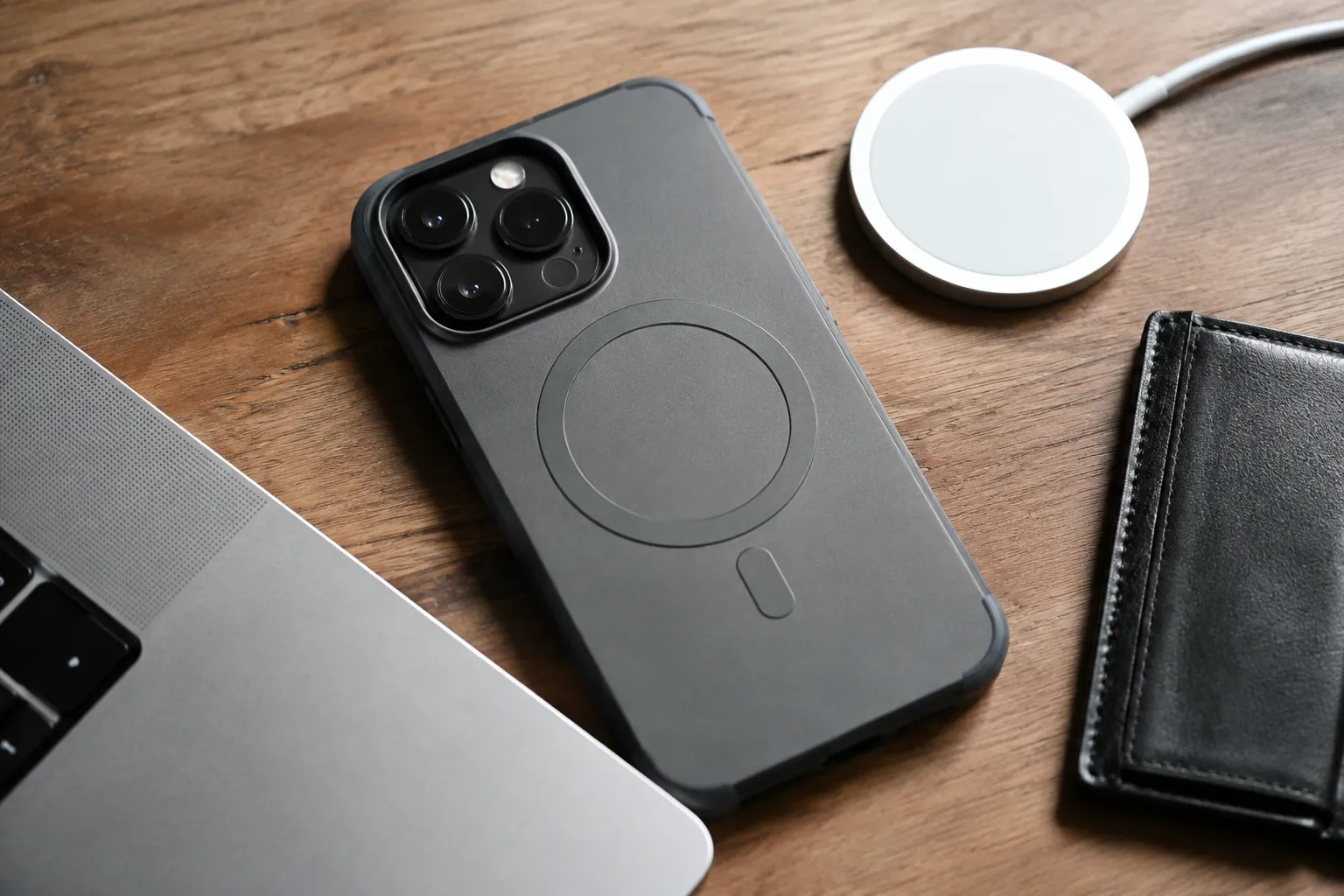
The $99 question has become a $60 question, then a $30 question, and sometimes a $15 question on Amazon. The market for MagSafe cases for the iPhone 15 Pro Max is so flooded that the real challenge is not finding a case, but figuring out which specifications are worth paying for. A person could spend an entire evening reading product listings and still come away unsure whether "military grade" means anything, or whether the difference between a 9.5 foot drop rating and a 10 foot rating actually matters. The honest answer is that most of the specifications are meaningless marketing language, but a handful of them genuinely change the way the case performs. Knowing which ones matter turns the shopping process from a guessing game into a straightforward exercise in matching the case to the way the phone actually gets used.
This is a checklist for that exercise. Not a list of every feature a person might want, but the specific details worth scrutinizing before a purchase, based on how the iPhone 15 Pro Max behaves in real conditions. The phone is heavy, the titanium edges are slippery, and the camera bump is enormous. Those three facts drive everything that follows.
The Magnet Strength Is the Entire Point
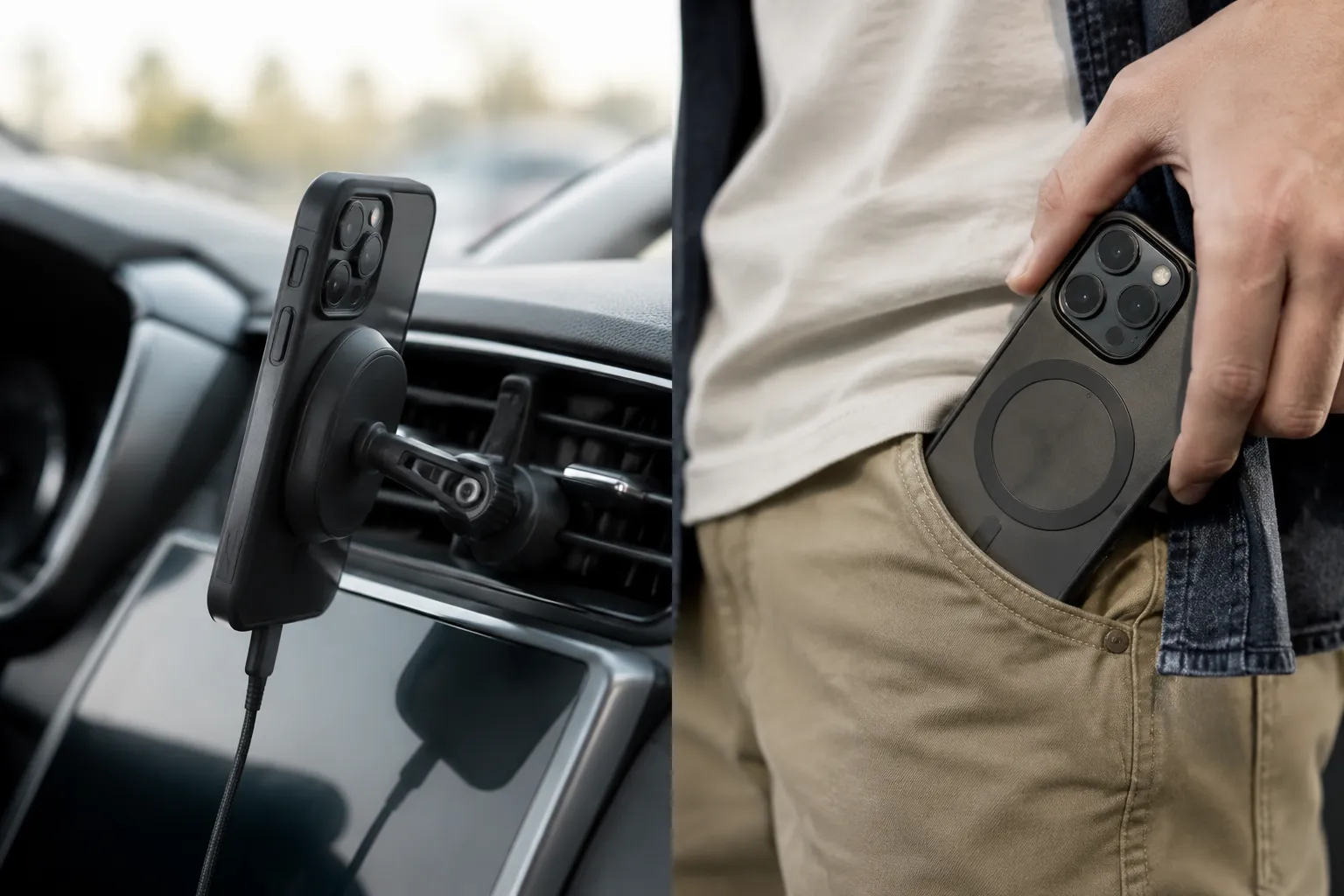
If a case claims MagSafe compatibility but the magnets are weak, the case fails at its primary function. The iPhone 15 Pro Max has a strong internal magnet array, but a thick case adds distance between the phone and whatever accessory a person attaches. That distance weakens the connection. A case with a thin back panel and a properly aligned magnet ring will hold a wallet or a battery pack firmly. A case with a thick back panel and a weak ring will let the accessory slide around or detach entirely.
The physical test is simple. A person should be able to hold the case by an attached MagSafe wallet and shake it moderately without the wallet coming loose. If the wallet slips or shifts, the case has weak magnets. Reading reviews for complaints about accessories sliding is one way to evaluate, but the better approach is to buy from a brand that publishes the number of magnets in the ring. Cases with 18 to 20 magnets in the ring tend to perform noticeably better than those with fewer. The Apple Silicone Case uses 20 magnets, which is a useful reference point for comparison.
There is another subtle magnet issue specific to the 15 Pro Max. The camera control button, which sits on the right side of the phone, can interfere with some magnetic accessories if the case does not have adequate shielding. This is rare, but a person who uses a MagSafe charger nightly should verify that the case does not cause the charging animation to stutter or fail. A weak connection that works fine for a few minutes but drops out overnight is a sign of a poorly designed magnet ring.
Drop Protection Needs a Weight Allowance
The iPhone 15 Pro Max weighs more than 220 grams, which makes it one of the heaviest mainstream phones available. When that weight drops, it hits with force proportional to its mass. A case designed for a lighter phone, or one with a drop rating that sounds impressive but lacks a proper lip above the screen, will not protect the device adequately.
Look for cases that specify a drop test height of at least 2 meters, and that describe the protection in terms of corners and edges. The corners are where the damage happens. A case that raises the corners slightly above the screen and has a cushioning structure around the edges will survive more drops than a case that relies on a single piece of hard plastic. The term "military grade" appears on countless listings and refers to a standard that is not consistently applied. More useful is the specific design detail of air cushions, which are small gaps or ribs in the corner structure that absorb impact.
For people who drop phones frequently, the tradeoff is thickness. Cases with serious drop protection are bulky, often adding 3 to 4 millimeters to the phone's width. That bulk is the price of surviving a fall onto concrete. A slim case with a 10 foot drop rating is either lying about the rating or using materials that feel like rubber bricks. There is no free lunch in drop protection.
The Camera Bump Demands a Raised Rim
The camera module on the 15 Pro Max protrudes noticeably from the back of the phone. When the phone rests on a table, that bump touches the surface. A case that leaves the camera bump exposed to the table surface, or that only wraps around the edge of the module without providing a raised rim, invites scratches on the lens ring and the sapphire glass.
The best cases provide a raised rim that completely encircles the camera module, so when the phone lies flat on a table, the rim takes the contact and the camera glass sits above the surface. This rim needs to be firm, not flexible. A soft rim can still flex enough on a rough surface to let the glass touch. Check the case's product photos to confirm that the rim is a solid ledge rather than a thin strip of rubber.
A related detail is how the case handles the left side of the camera module, where a small lip often appears in photos of the phone. Some cases cut this area away entirely, leaving that section of the camera exposed. A case with a full enclosure around the camera is worth the extra material because the left side of the module is exactly where a person's hand grips the phone, and that area receives repeated micro-scratches from fingers and pocket dust.
The Action Button Needs a Real Button
Apple's Action Button replaced the mute switch, and the change has implications for case design. The mute switch was a small lever that cases accommodated with a cutout. The Action Button is a full button that needs a physical key on the case to press it. Some cases use a cutout that leaves the button exposed, which works but feels awkward when reaching for it. Better cases include a dedicated button that aligns perfectly with the Action Button underneath.
This might sound like a minor detail, but the Action Button is meant to be used blind. A person reaches for the side of the phone without looking and presses. If the case has a cutout, the finger has to find the small button surface inside a hole, which requires attention. A case with a covered button, one that sits flush with the case surface, allows the thumb to find it instantly. The difference matters for anyone who uses the Action Button for the camera shutter or a shortcut.
The tactile quality of the button matters too. Some cases use a hard plastic button that clicks loudly. Others use a slightly softer material that provides a gentler press. The best cases provide a firm, short travel distance with an audible and tactile click that mirrors the feel of the phone's native buttons. A mushy button makes the Action Button unreliable to press quickly.
Button Alignment and the Phantom Press Problem
The volume buttons and the side button on the 15 Pro Max sit close to the edge of the phone. Cases vary in how precisely they align their button covers with the buttons underneath. Slight misalignment is common and generally harmless, but severe misalignment causes a problem called ghosting, where the case's button cover pushes against the phone's button even when no one is pressing it.
Ghosting manifests as screenshots taken at random moments or volume changes that happen without input. The case's button cover is slightly too thick or positioned too aggressively, so it rests against the side button and triggers it. This is a known complaint in reviews for certain budget cases. The fix is to read reviews specifically for this issue before buying. A case from a reputable brand rarely has this problem, but the budget options with appealing photos sometimes do.
The workaround, if a person ends up with a case that ghosts, is to remove the case and trim the inside of the button cover with a razor blade. This voids the case warranty and risks damaging the case, so it is not a satisfying solution. The better path is to buy from brands that have established quality control, even if those cases cost slightly more.
Material Durability Depends on the Grip Environment
The material of the case determines how it wears over time, and the 15 Pro Max's weight accelerates that wear. Hard polycarbonate cases scratch and crack when dropped on rough surfaces. Soft silicone cases attract dust and lint in pockets, turning a clean black case into a mottled gray one within days. The middle ground is thermoplastic polyurethane, which offers some impact resistance and a moderately grippy surface, but it degrades under sunlight and heat, becoming sticky or brittle after a year.
Leather cases, including the ones Apple sells, develop a patina that some people appreciate and others find dirty. The quality of the leather varies widely. A full-grain leather case from a dedicated maker ages well, darkening and smoothing with use. A bonded leather case, which is often labeled simply as "leather," flakes and peels within months.
Grip is a separate consideration from durability. Textured sides, often achieved with a patterned surface or a raised rib pattern, significantly reduce the chance of dropping the phone in the first place. The 15 Pro Max is slippery in its bare form, and a smooth plastic case does not improve that. A case with a matte finish on the sides or a subtle grip texture along the edges is the safest choice for people who hold their phones while walking.
Wireless Charging Speed and the Alignment Question
MagSafe charging on the 15 Pro Max supports up to 25 watts with a compatible charger, but a case can reduce that speed. Thick cases or cases with metal elements in their construction can interfere with the magnetic alignment or heat dissipation. Heat is the main enemy of fast wireless charging. A case that traps heat against the back of the phone causes the charging speed to drop as the phone throttles to protect its battery.
The practical test is simple. Place the phone in the case on a MagSafe charger and feel the back of the case after 15 minutes. If it is noticeably hot, the case is restricting airflow. Some cases advertise heat dissipation features, like internal copper elements or a graphite layer, but these claims are hard to verify and often amount to a thin layer that does little practical work.
A more common issue is that the case shifts or slides on the charger because its magnet ring does not align perfectly with the phone's internal magnets. This causes the charging coil to misalign, reducing speed or stopping charging entirely. A case with weak magnets can make a phone feel like it is not sitting properly on a charger, even when the phone is centered. The magnet strength test described earlier is the best way to avoid this problem.
The Camera Control Cutout Needs Precision
The iPhone 15 Pro Max has a capacitive Camera Control button on the right side, near the bottom. This button is not a physical switch; it detects finger gestures and pressure through a surface that matches the phone's edge. Cases handle this button in one of two ways. Some cases provide a full cutout that exposes the button entirely, allowing direct finger contact. Others cover the button with a thin material that is supposed to transmit the touch signals.
Cutout cases are generally more reliable for capacitive buttons because they allow direct contact. Covered cases work, but only if the covering material is thin enough and conductive enough to register the finger's gestures. Swipe gestures, like sliding a finger along the button to zoom, can become finicky through a thick cover. The case's design should also ensure that the cutout or cover is positioned so that a person's hand does not accidentally press the button when holding the phone in landscape mode.
Reviews are useful here. Some cases, particularly early production runs, had cutouts that were slightly off-center, making the button awkward to reach. This has been fixed in later batches for most brands, but a person buying from an obscure seller should check the review photos to confirm the cutout looks aligned with the button's position on the phone.
Slippery Backs Are a Personal Choice With Consequences
The finish on the back of the case affects how the phone behaves when resting on sloped surfaces. A glossy finish slides easily. A matte finish grips slightly and stays put on a car dashboard or an armrest. This is a small detail that becomes significant in daily use, especially for people who set their phones down on non-flat surfaces.
MagSafe accessories also interact with the back finish. A wallet attached to a glossy case will stick firmly because the magnets hold it, but the wallet may rotate slightly if the glossy surface provides low friction. A textured or matte back prevents rotation and keeps the accessory in place. For people who use a MagSafe wallet daily, the back finish is a meaningful part of the case's performance.
A clear case with a frosted finish offers a middle ground, reducing fingerprints while maintaining a glimpse of the phone's titanium frame. But frosted finishes scratch more easily than glossy ones. The scratches collect dirt and become visible over time. A clear case with a glossy finish resists scratches better but shows every fingerprint immediately. There is no perfect option, only a tradeoff between the two.
The Price Range Where Quality Actually Starts
Quality cases for the 15 Pro Max start around $40 and climb to $80 for premium options. Below $30, the compromises become visible in magnet strength, button feel, and material durability. That does not mean every expensive case is good, but the odds shift in favor of the higher price. A person who plans to keep this phone for two years and use it without a screen protector can justify spending $60 on a case that protects well. A person who upgrades phones every year and handles them carefully can buy the $20 case and accept the tradeoffs.
The brand reputation matters less than the specific model. Many well-known brands release multiple cases for the same phone, ranging from ultra-slim to rugged. The rugged version from a mid-tier brand often outperforms the slim version from a premium brand. Read the specifications, check the drop rating, and look at the magnet layout. The case's job is to sit between the phone and the world, and the quality of that material sandwich is what determines whether the phone survives the two years of pocket drops, table slides, and accidental tosses onto couches.