The back of an iPhone 16 Pro is a flat expanse of glass that wants to be propped up. Every case maker knows this, which is why the kickstand case has become its own crowded category. The problem is that most of them treat the kickstand as an afterthought, a plastic flap that clicks out when needed and gets in the way when it is not. A good one should disappear into the case's silhouette and still hold the phone at a useful angle on a wobbly train tray table. That is a higher bar than it sounds.
The iPhone 16 Pro presents a specific challenge for this accessory. The new Camera Control button on the right edge forces case designers to leave a cutout or add a capacitive layer, and the titanium frame changes how a case grips the device. A kickstand case has to work around these constraints while adding bulk that does not ruin the pocket feel. The ones that succeed do not just bolt a stand onto a generic shell. They rethink the whole chassis.
The Magnet Problem Nobody Mentions
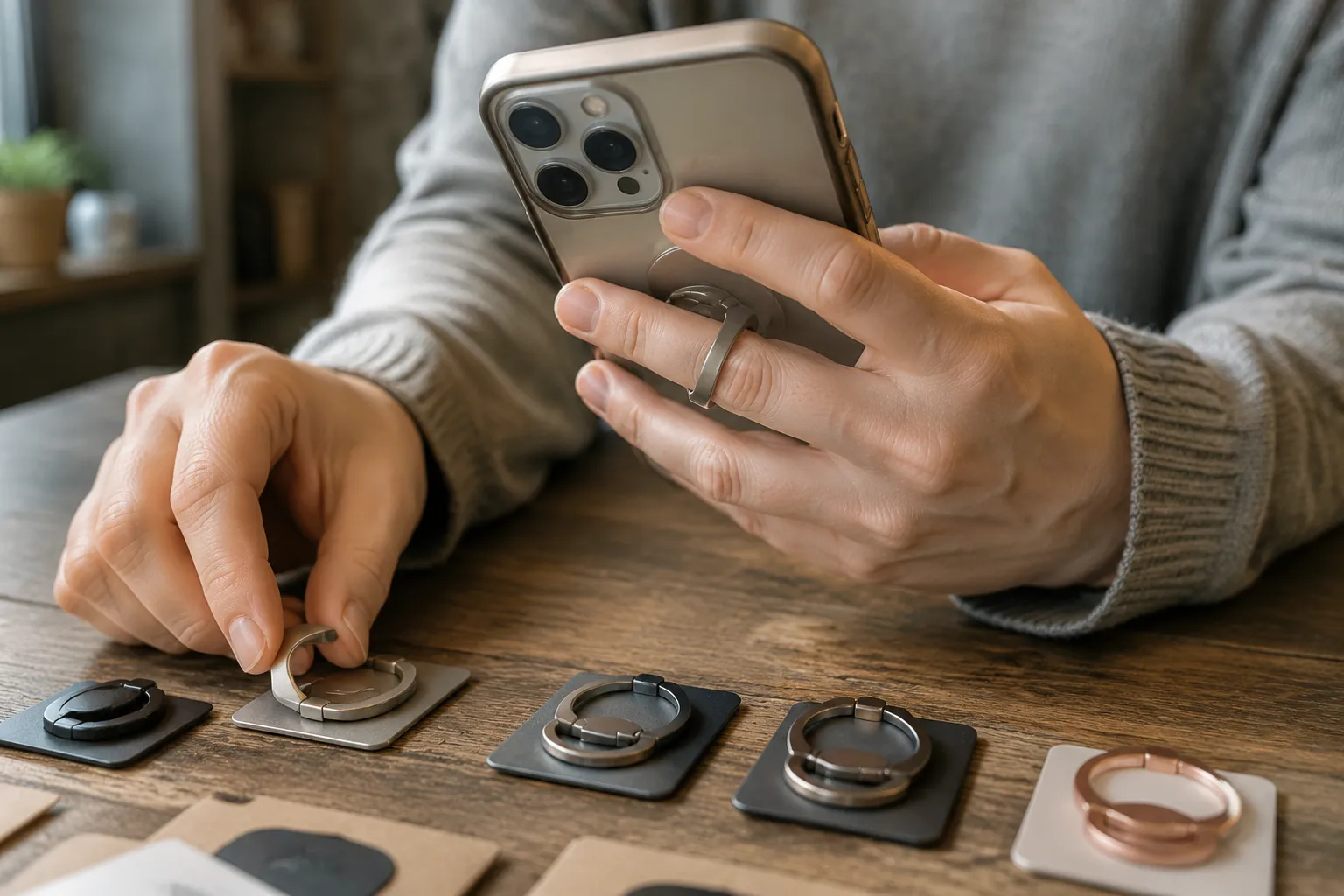
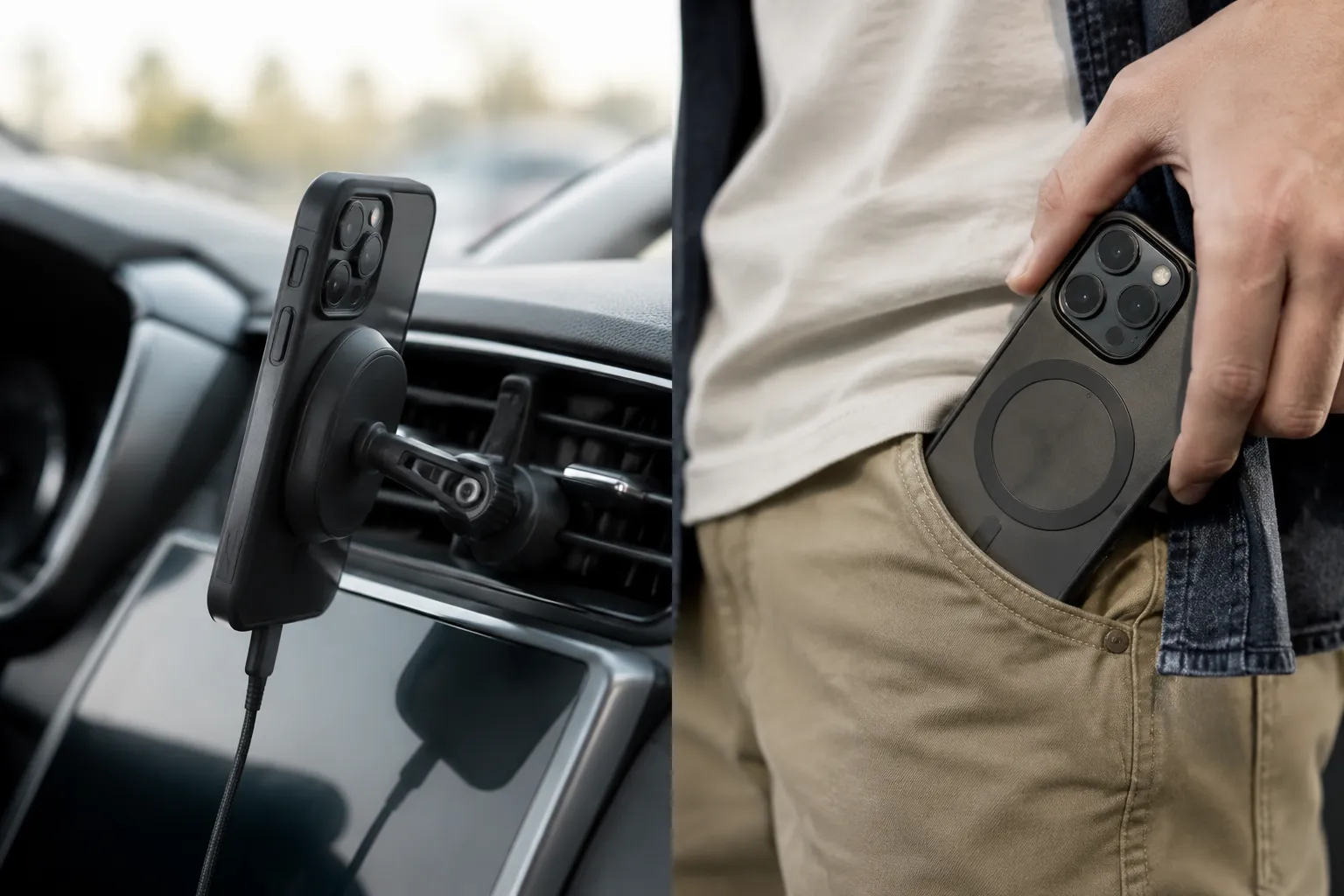
MagSafe changed kickstand design more than any other single factor. The magnet ring sits in the center of the back, which is exactly where a traditional folding stand wants to live. Put a steel hinge there and the case gets thick. Put a thin metal plate there and the stand has nothing to bite into. The workaround most brands use is a ring-style stand that folds flush and sits outside the magnet circle, or a hinge that mounts lower on the back panel.
The ring style has become the default for a reason. It spreads the load across a wide diameter, so the phone stays stable when a finger taps the screen. The folding flap style, the kind that looks like a credit card slot when closed, tends to rock forward when touched near the top. That rocking is the tell of a poorly executed hinge. The ring avoids it entirely because the support points are farther apart.
But rings have their own failure mode. The cheap ones use a thin aluminum loop with a single pivot point, and after a few months of daily opening, the pivot loosens. The ring starts to flop, and a floppy kickstand is worse than none because it rattles. The better designs use a dual-hinge mechanism with a detent, a small notch that the ring clicks into at the open position. That detent is what keeps the phone stable when it sits on a bumpy surface like a car dashboard.
What the Camera Control Cutout Does to the Grip
The iPhone 16 Pro moved the side buttons around, and the new Camera Control is a flush capacitive surface that needs direct finger contact. Case makers have responded with two approaches. Some cut a full opening around the button, which leaves the titanium edge exposed and makes the case feel broken. Others cover it with a sapphire-coupled layer that passes the touch through, which keeps the case sealed but adds a learning curve for the finger.
Kickstand cases tend to use the full cutout because it is cheaper to manufacture. That cutout sits right where the right thumb wraps around the phone in landscape mode, and it creates a sharp lip against the palm. For a case that is supposed to enable hands-free viewing, the irony is thick. Holding the device sideways for a video call becomes uncomfortable after ten minutes because the cutout edge digs in.
The better solution, seen in a few premium cases, is a raised bezel around the cutout that smooths the transition. It does not fix the exposed edge, but it softens the contact point. Anyone who plans to use the kickstand mostly in landscape should check this specific spot before buying. The case could be perfect in every other way and still fail on this single ergonomic detail.
The Two-Angle Trap
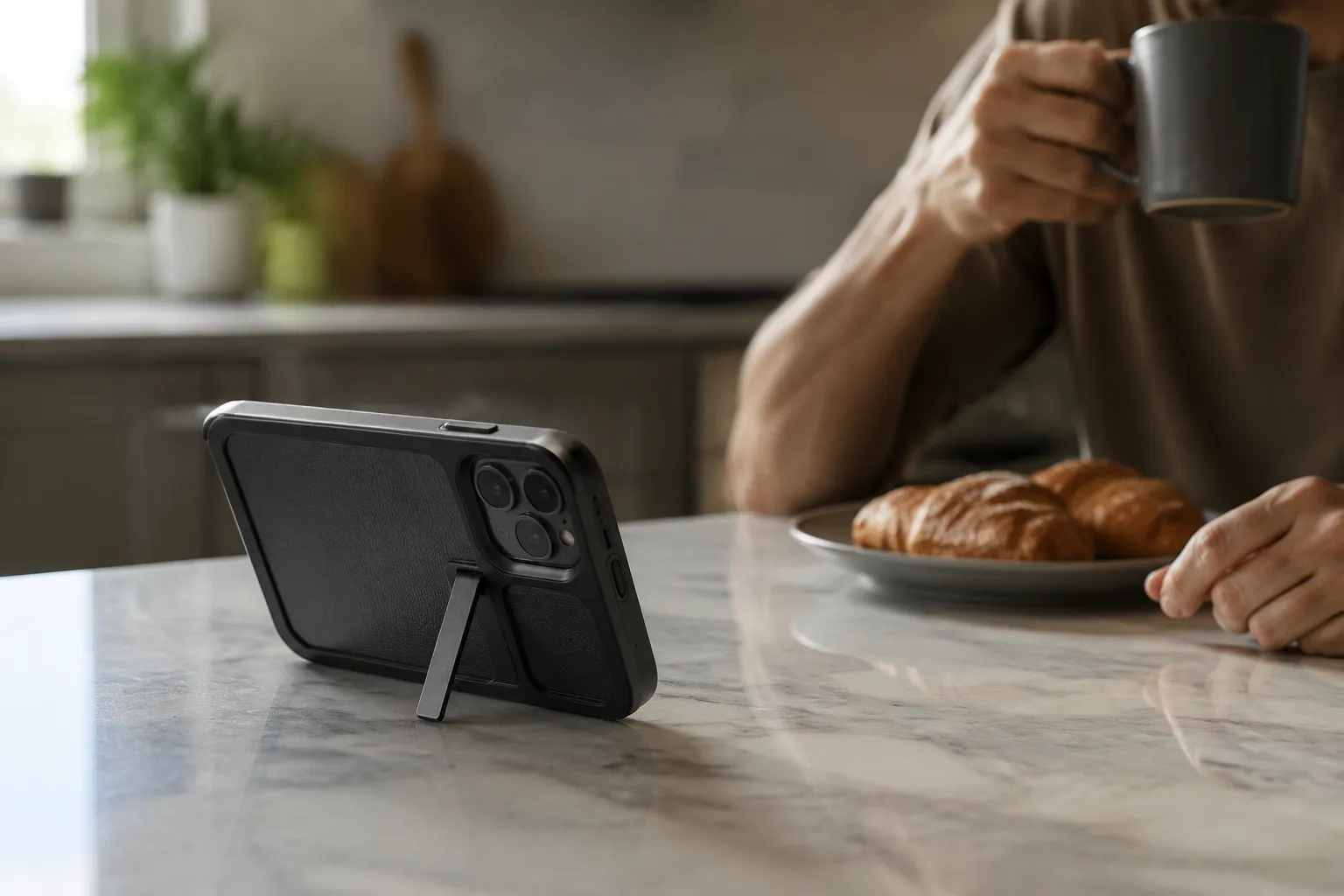
Most kickstand cases advertise two viewing angles. In practice, one of those angles is useless. The lower angle, usually around 40 degrees, works on a table. The higher angle, around 60 degrees, is meant for a desk where the phone sits below eye level. But the difference between 40 and 60 degrees is small enough that neither position is right for a nightstand, where the phone needs to be nearly upright to be seen from a pillow.
A case that offers only fixed angles forces a compromise. The user ends up wedging the phone against a coffee mug or a stack of books to get the right tilt. That workaround defeats the purpose of a built-in stand. The designs that handle this best use a ratcheting hinge, which allows continuous adjustment between roughly 30 and 70 degrees. Ratchets add moving parts and weight, so they are rare, but for bedside viewing they are the only real answer.
The other angle issue is orientation. A kickstand that works in landscape often fails in portrait. Portrait is the natural position for scrolling social feeds while eating, and for video calls where the face should be centered. The ring-style stands handle portrait fine because they rotate. The flap-style stands usually do not, locking the phone into landscape only. That single limitation rules out flap designs for a large share of real-world use.
Material Choice Is a Quiet Decision
Polycarbonate backs feel stiff and cheap but hold a kickstand hinge better than softer materials. Thermoplastic polyurethane, the rubbery stuff, feels great in the hand but flexes, which loosens a hinge over time. The best cases combine both, a rigid polycarbonate frame around the hinge area and a softer TPU bumper on the edges. This hybrid construction is more expensive, and the difference shows up in the price tag.
Aramid fiber cases, the ones that cost over sixty dollars, take a different approach. They are thin and strong, but the material is so rigid that a kickstand hinge has to be glued or screwed into the back panel. That attachment point becomes a stress concentration. Drop the phone and the impact travels straight to the hinge, potentially cracking the fiber. These cases are lovely to hold, but they are not the best home for a kickstand.
The surface texture matters too. A glossy back with a kickstand gets slippery when held in landscape, and the stand has to work harder to keep the phone in place. A matte finish, or one with subtle texture, lets the fingers grip naturally. This is a detail that online product photos never reveal. The case can look identical in renders and feel completely different in the hand.
Weight is another hidden factor. The iPhone 16 Pro is already dense, and a good kickstand case adds between 40 and 60 grams. That pushes the total toward a quarter of a kilogram. In a pocket, that heft is noticeable. Some users will accept it for the convenience; others will feel it every time they sit down. The lightest kickstand cases use a magnesium alloy hinge, which cuts weight without sacrificing strength, but they cost more.
The Flat Surface Fallacy
Every product photo shows a kickstand case on a perfectly flat wooden desk. Real life is rarely that cooperative. The phone gets propped on a couch cushion, a folded blanket, a picnic table with a slope, a car seat. A kickstand with a narrow footprint tips over on any of these. The ring style has a wider effective footprint than a single flap, which makes it more forgiving on uneven surfaces. But even a ring struggles on soft surfaces where the phone's weight presses the stand into the material.
A grippy pad on the bottom edge of the case helps. Some designs add a small rubber strip along the base so the phone does not slide forward when the stand is deployed. Without that strip, the phone creeps forward over a few minutes of viewing, gradually reducing the angle until the screen is nearly flat. It is a small annoyance that slowly drives a person mad during a long video.
On a bed, the situation is worse. A phone propped on a pillow needs a stand that opens wide, nearly 90 degrees, and even then the soft surface lets the whole assembly sink. The cases that handle beds best are the ones with a ring that can be rotated to act as a finger loop in portrait, allowing the user to hold the phone without gripping its edges. That dual function, stand and loop, is the most underrated feature in this category.
What the Price Tiers Actually Buy
At the twenty dollar mark, the buyer gets a TPU case with a molded plastic stand that clicks into one of two detents. The stand works for about a month. Then the detent wears down, the hinge develops play, and the phone starts to wobble. These cases are disposable, and treating them as such is the honest approach. They protect the phone from drops, but the kickstand feature is a temporary bonus, not a lasting function.
The forty to sixty dollar range is where the category gets interesting. These cases use metal hinges, hybrid materials, and better engineering. The stand feels solid when deployed, and the case does not add excessive bulk. This is the sweet spot for most buyers. The extra money goes into the hinge mechanism and the drop protection, both of which are worth paying for on a device this expensive.
Above eighty dollars, the law of diminishing returns kicks in hard. The buyer pays for brand names, aramid fiber, or designer collaborations. The kickstand mechanism itself is often identical to what a forty dollar case offers. For someone who wants the thinnest possible profile and accepts the tradeoffs, the premium tier makes sense. For everyone else, the mid range delivers the same function at half the price.
The Case That Does Not Know What It Wants to Be
The worst kickstand cases are the ones that try to be everything. They add a card slot, a magnetic mount plate, a finger loop, and a stand, all in one chassis. The result is a brick that weighs nearly as much as the phone itself and does none of these jobs well. The card slot makes the case bulge in a pocket. The finger loop catches on fabric. The kickstand is an afterthought squeezed into whatever space remains.
Focus matters. A case that does one thing, hold the phone at a stable angle, and does it with a quality hinge, will serve a person better than a Swiss Army knife of accessories. The best kickstand cases on the market right now are the ones with a clear design philosophy. They are slim enough to forget, with a stand that deploys smoothly and locks firmly. They do not try to replace a wallet or a tripod.
For the iPhone 16 Pro specifically, the current standout designs are the ring-style cases from brands that have been iterating on this mechanism for several generations. They have solved the hinge wear problem and the surface stability problem, and they have done it without compromising the MagSafe connection. The proof is in the daily use: the phone props up on a kitchen counter during a recipe, holds steady on a nightstand through an alarm, and still slides into a jacket pocket without a fight.