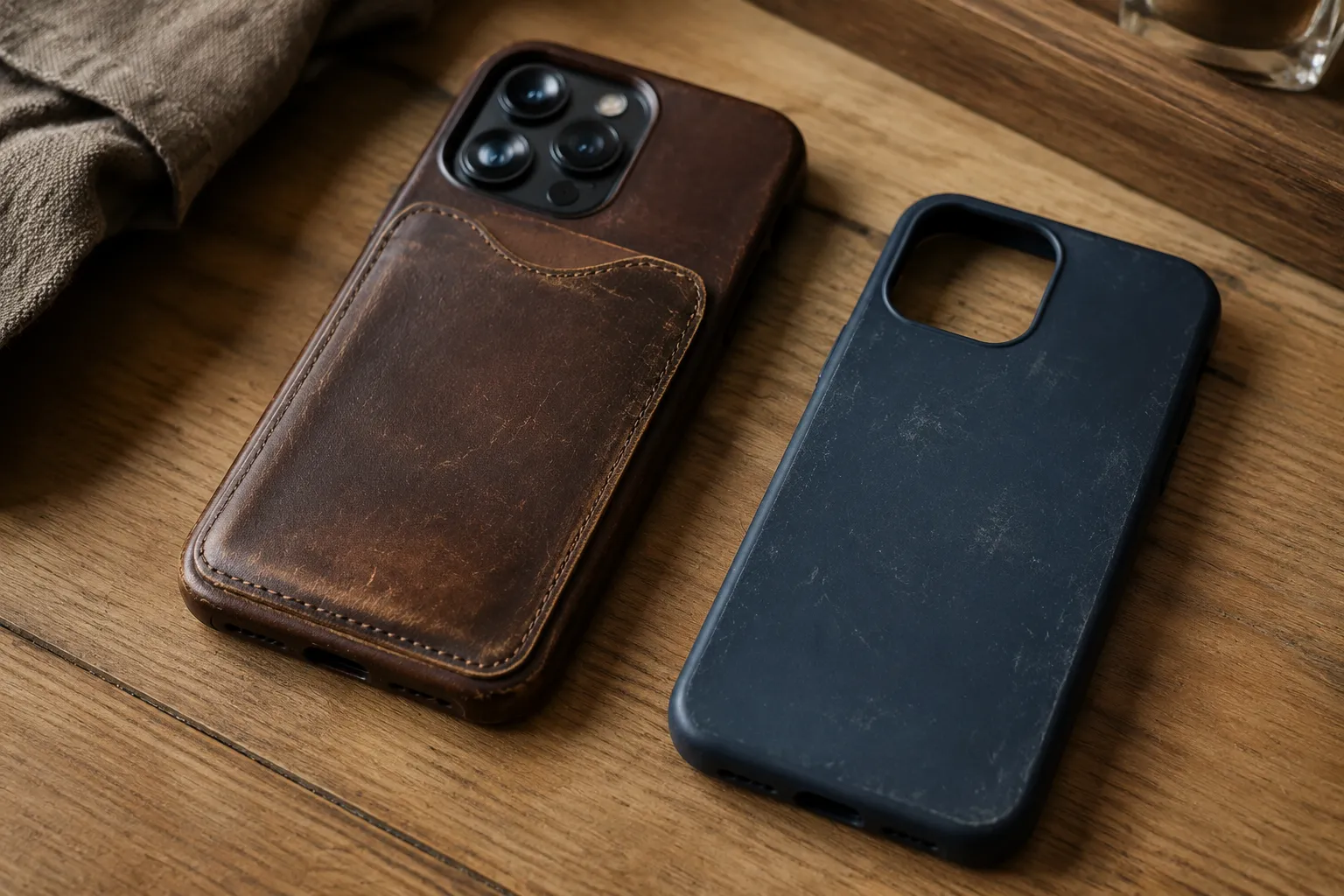
There is a moment, about eleven months into owning a phone case, when the material starts to tell the truth about itself. A leather case from a decent maker has developed a deep, burnished patina along the edges where the palm rests, the color shifting from a uniform saddle brown to something with actual history in it. A silicone case from the same month of purchase has gone tacky. It has absorbed a faint gray discoloration from denim pockets, and the once-crisp edges around the camera cutout have started to peel like sunburned skin. Both were purchased with the same intention: protect a $1,000 device. Only one of them looks better for having done the job.
The phone case market has spent the last five years pretending these two materials are interchangeable options on a spec sheet, like choosing between a charger with a longer cable or a shorter one. They are not. They occupy opposite ends of a philosophical divide about what an object is supposed to do over time. Leather accepts the aging process as a feature. Silicone fights it, loses, and then sits in a drawer looking defeated until it gets thrown away out of spite.
This is not a review roundup. This is an argument about what people actually want from a thing they touch hundreds of times per day, and why the material choice says more about a person's relationship to their possessions than any other accessory decision they will make this year.
The Patina Question
Leather people talk about patina the way wine people talk about terroir. It is the slow accumulation of oils, scratches, sunlight, and friction that turns a flat, uniform surface into something with depth. A new leather case is actually the least interesting version of itself. The grain is there, the smell is there, but it is still a blank canvas waiting for the owner's specific habits to write on it.
After three weeks of pocket use, the first changes appear. The corners soften. The back develops a subtle sheen where the fingers grip during one-handed texting. A careless drop on concrete leaves a scuff that, on any other material, would be a permanent eyesore. On leather, it reads as character, a visible record of the time the phone slipped out of a hand while getting out of a car. People who hate this look call it dirty. People who love it call it earned.
The key variable is the tanning process. Full-grain and top-grain leathers, which retain the natural surface of the hide, develop the most attractive aging. They darken, they smooth out, they develop that antique glow that makes a two-year-old case look like it has been in the family for decades. Bonded leather, which is essentially leather dust glued together with polyurethane, does not age. It flakes. It peels. It is the leather equivalent of a laminated floor claiming to be hardwood.
A person who buys a full-grain leather case is making a long-term commitment. The case will look mediocre for the first two weeks, promising in the first month, and genuinely handsome by the sixth. The material rewards patience. It also punishes neglect. Leather left in a hot car will dry out and crack. Leather soaked in rain and then shoved into a pocket without drying will develop water stains that no amount of conditioner will fully erase. This is not a maintenance-free material. It is a relationship.
Silicone's Rapid Descent Into Tackiness
Silicone cases arrive perfect. That is their entire trick. The day the case comes out of the box, it is smooth, matte, grippy, and uniformly colored. The texture feels pleasant in the hand, like a high-quality kitchen spatula or a medical-grade baby bottle. The fit is snug. The buttons are responsive. For the first thirty days, a silicone case is arguably the most comfortable thing to hold that the phone accessory industry has ever produced.
Then the degradation begins. It is not dramatic. It is a slow, relentless decline that starts with the surface losing its initial dry-matte finish. The case begins to attract lint and pocket dust like a static balloon. The color starts to shift, not into a richer shade, but into a duller, flatter version of itself. White cases turn gray-yellow. Black cases develop a faint purple sheen. Bright colors fade unevenly, leaving the edges darker than the center.
By month six, the structural issues appear. The lip around the screen starts to soften and lose its shape. The volume buttons, once crisp and tactile, become mushy. The case itself begins to stretch slightly, developing a subtle looseness that allows dust and grit to work its way between the case and the phone's back glass. Every time that happens, the tiny abrasive particles get pressed against the phone's surface, and the case starts to do the one thing it was supposed to prevent: scratch the device.
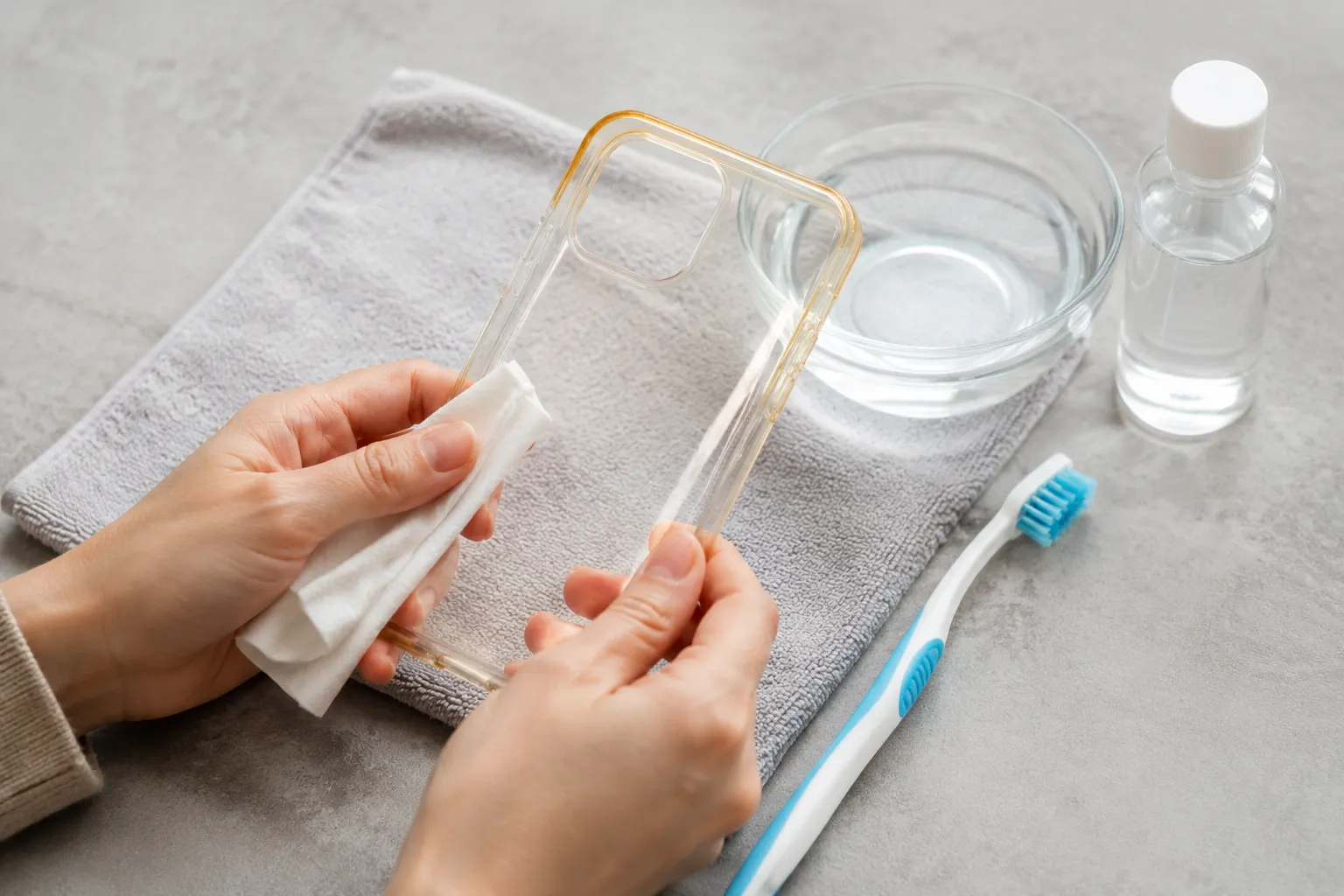
The most damning failure is the tackiness. After a year of use, particularly if the case has been exposed to heat or UV light, the silicone surface breaks down chemically. It becomes sticky, not in a grippy, pleasant way, but in a gross, "this needs to be washed and will never get clean" way. This is the point of no return. No amount of soap and water fixes it. The case has become a sponge for grime, and it will never go back.
The Physics of Grip Versus the Reality of Pockets
The marketing case for silicone rests almost entirely on grip. Silicone cases do not slide off a couch cushion. They do not slip out of a hand during a one-handed reach across a table. The coefficient of friction on a clean, dry silicone surface is genuinely excellent, which is why so many people choose it over smooth plastic or slick polycarbonate options.
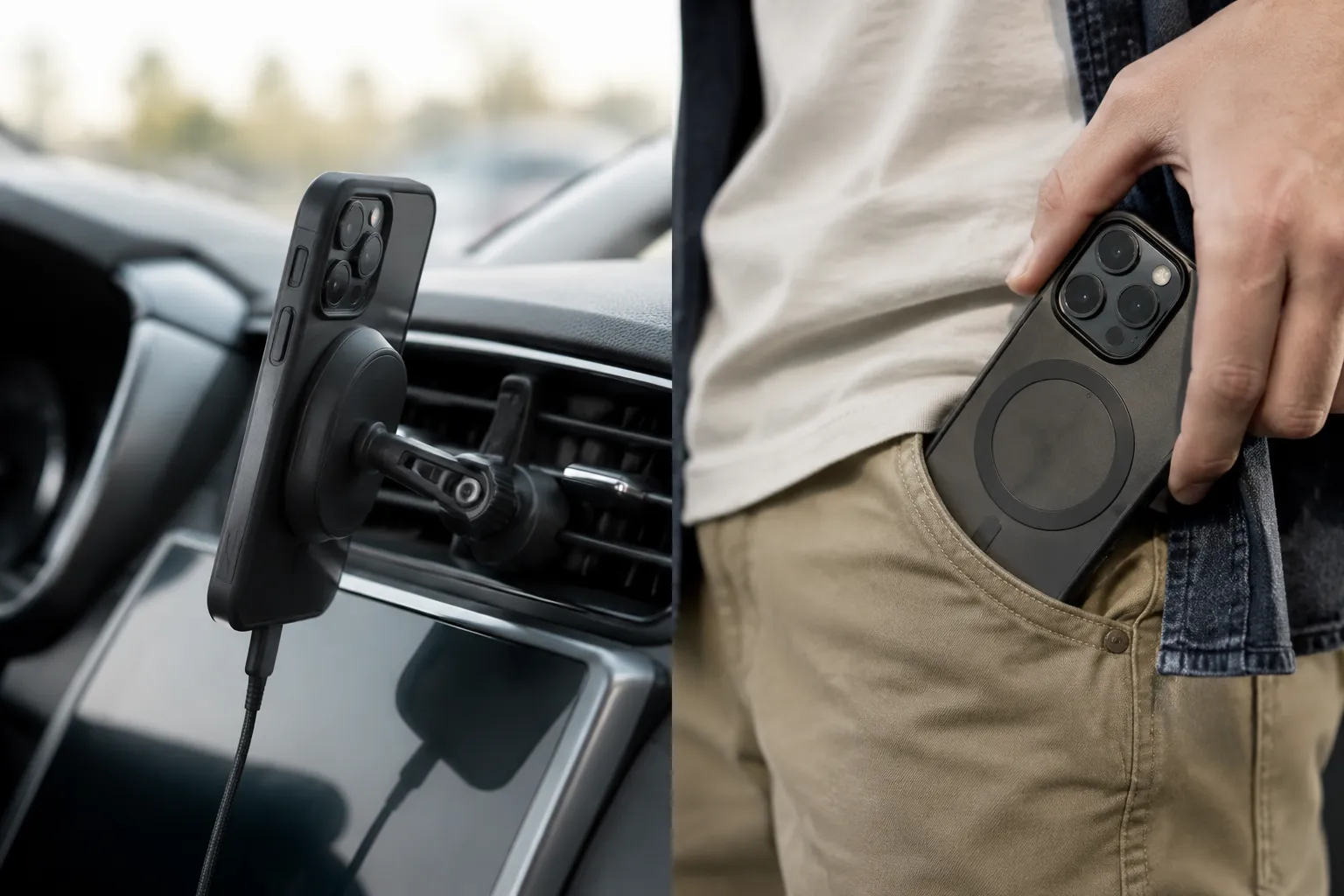
But pockets are not clean, dry laboratory surfaces. Pockets contain lint, pocket change, the corner of a credit card, and the general detritus of daily life. Silicone's grippy surface acts like velcro for all of it. A person pulls the phone out of a pocket and finds the case covered in fuzzy gray lint that has to be brushed off. The act of sliding a silicone-clad phone into a tight jeans pocket is a workout. The resistance is real, and it gets worse as the surface degrades and becomes stickier.
Leather, once broken in, develops a completely different relationship with fabric. A well-worn leather case slides into a pocket with a smooth, satisfying glide. The surface has polished itself through use, and the friction coefficient drops dramatically. The case stops fighting the pocket and starts cooperating with it. This is the quiet luxury of leather that never makes it into the marketing materials: it gets easier to live with over time, while silicone gets harder.
The Drop Test Reality
For all its aesthetic charms, leather has a genuine weakness in impact protection. A leather case is essentially a hide stretched over a thin plastic or polycarbonate frame. The leather itself provides minimal shock absorption. It protects against scratches and scuffs, but a hard drop onto concrete transfers most of the impact energy directly to the phone's frame and glass.
Silicone, by contrast, is a legitimate shock absorber. The material is elastic, which means it compresses on impact and dissipates energy across a wider surface area. A silicone case with adequate corner protection, particularly one with air-cushion corners or a raised lip, can genuinely save a phone from a cracked screen in a way that a thin leather case cannot. In pure drop protection, silicone wins, and it is not close.
But the comparison is not that simple. Leather cases typically offer better scratch protection for the phone's back because the leather surface is harder than silicone. A key dragged across a leather case leaves a mark that can often be buffed out or rubbed away. The same key dragged across a silicone case leaves a permanent gash in the soft material. The gash then collects dirt, and the dirt makes the gash more visible.
The honest framing is that silicone protects against drops better, and leather protects against scratches and everyday wear better. A person who drops phones constantly should buy silicone. A person who keeps phones for two or three years, handles them carefully, and wants the case to look better at the end than at the beginning should buy leather. The market refuses to make this distinction clear because both materials get sold as "premium protection."
The Hygiene Angle Nobody Mentions
Silicone is marketed as a hygienic material. It is non-porous, easy to wipe clean, and resistant to bacterial growth. All of this is true for a fresh, intact silicone surface. The problem is that silicone cases do not stay intact. Once the surface starts to degrade, and particularly once it becomes tacky, it becomes a trap for dead skin cells, hand oils, and the microscopic debris that every phone accumulates throughout a day of use.
The degradation is accelerated by hand sanitizer. The alcohol in sanitizer, which became a fixture of daily life in a way that nobody anticipated, breaks down silicone's surface chemistry. A person who sanitizes their hands and then picks up the phone is slowly damaging the case with every application. Within months, the case that was marketed as cleanable and hygienic becomes the dirtiest surface the person owns.
Leather has the opposite problem and the opposite advantage. Leather is porous, which means it absorbs oils and moisture. A leather case will absorb hand oils and darken in the process, which is exactly what creates the patina. But leather also harbors bacteria more readily than intact silicone. The counterargument is that leather can be conditioned, treated, and maintained. A person can wipe a leather case with a dedicated cleaner, apply a conditioner, and restore it. A degraded silicone case cannot be restored. It can only be replaced.
What the Second Year Looks Like
The real test of a phone case is not the first month. It is the thirteenth month, when the novelty has worn off and the case is just part of the daily routine. A well-made leather case at thirteen months has settled into its identity. The color has deepened. The edges have softened. The fit is still snug because leather, unlike silicone, does not stretch out over time. The case has become an extension of the hand, familiar and comfortable.
A silicone case at thirteen months is a candidate for the trash bin. The color has faded. The surface has become tacky or, worse, has started to peel. The buttons are mushy. The case has stretched enough that it wobbles slightly on the phone, allowing dust to accumulate underneath. The owner is actively looking for a replacement, and the replacement will most likely be a different material entirely.
This lifespan gap is rarely discussed in the purchasing decision. The price difference between a decent leather case and a decent silicone case is significant, often $30 to $50. But spread over the actual usable life of each product, the math flips. A $50 leather case that lasts three years costs about $1.40 per month. A $25 silicone case that needs replacement every nine months costs about $2.80 per month. The cheaper material is twice as expensive to own.
Fashion cycles complicate the comparison. A person who changes cases every season, treating the case as an accessory rather than a protective shell, will never see the benefits of leather's aging. They will get bored with the look long before the material has a chance to develop character. For those people, silicone's bright colors and low upfront cost make perfect sense. They are renting a look, not owning an object.
The Repair Divide
One overlooked distinction is repairability. A leather case can be revived. Scuffs can be buffed. Dryness can be treated with conditioner. Stains can sometimes be lifted with a dedicated leather cleaner. The material is designed to be worked on, which is why saddles and boots and wallets have survived for centuries as leather objects. The care routine is established, documented, and effective.
Silicone has no repair pathway. There is no silicone conditioner. There is no way to restore a degraded surface. There is no method for tightening a stretched case. When silicone fails, it fails terminally. The only option is replacement. This is the fundamental difference between a material that is meant to be maintained and a material that is meant to be consumed.
The environmental argument follows directly. A leather case, if the user cares for it, can last as long as the phone itself and sometimes beyond, migrating to a new device if the cutouts align. A silicone case has a built-in expiration date. Every silicone case that gets thrown away contributes to the growing pile of petroleum-based products that never fully decompose. The person who buys a new silicone case every year is generating waste in a way that the leather owner simply is not.
The Verdict That Actually Matters
The conclusion is not that leather is universally better. It is that the two materials serve different masters, and the industry's refusal to acknowledge this leads to endless buyer's remorse. A person who prioritizes drop protection and likes swapping colors frequently should buy silicone and should accept that the case is a consumable item, like a toothbrush or a razor blade. Buy the cheaper ones, replace them without guilt, and never expect the material to look good after six months.
A person who wants a case that becomes more personal with age, who treats the phone as a long-term companion rather than a disposable gadget, who does not mind a little maintenance in exchange for a lot of character, should buy full-grain leather. They should accept that the first scratch will sting. They should resist the urge to replace the case when it gets its first mark. They should wait until the twelve-month mark, pull the case off the phone, hold it next to a brand-new example of the same model, and see the difference.
The new one will look flat. The old one will look alive. That is the entire argument in a single comparison, and it is the reason leather cases keep selling despite being more expensive, less protective against drops, and more demanding of their owners. People want objects that carry their history. Silicone cannot hold a memory. Leather cannot help it.