Drop tests on YouTube have ruined the way people shop for phone cases. A reviewer straps a MagSafe-ready protector onto an iPhone, hoists it to shoulder height, and lets it smack against concrete. The case survives, the video gets millions of views, and thousands of buyers conclude that their new case will handle whatever their Tuesday commute throws at it. Then the actual Tuesday arrives. The phone slips out of a hand while getting out of a car, lands on the edge of a door sill, and the back glass cracks anyway.
The gap between a controlled drop test and a real-world drop is the whole story of case design, and it explains why so many MagSafe-ready cases fail at the one job they were bought to do.
The Magnet Ring Changes the Geometry of Impact
MagSafe compatibility is not a passive feature. Adding a ring of magnets to the back of a case changes how that case absorbs a blow, and most manufacturers treat it as an afterthought. They mold the ring into the back panel, call the case MagSafe-ready, and move on. The problem is that the ring sits directly over the center of the phone's back glass, which is the largest uninterrupted glass surface on the device.
Drop a phone flat on its back and the impact force travels through the case material, through the magnet ring, and into the glass. The magnets themselves are rigid. They do not flex, crush, or redistribute energy. They act like a small, hard plate pressed against the back of the phone, and when the case bottom outs, that plate transfers force straight to the glass. A case without magnets has a better chance of flexing inward slightly before the glass takes the full load. A MagSafe case, by design, has a rigid disk in the way.
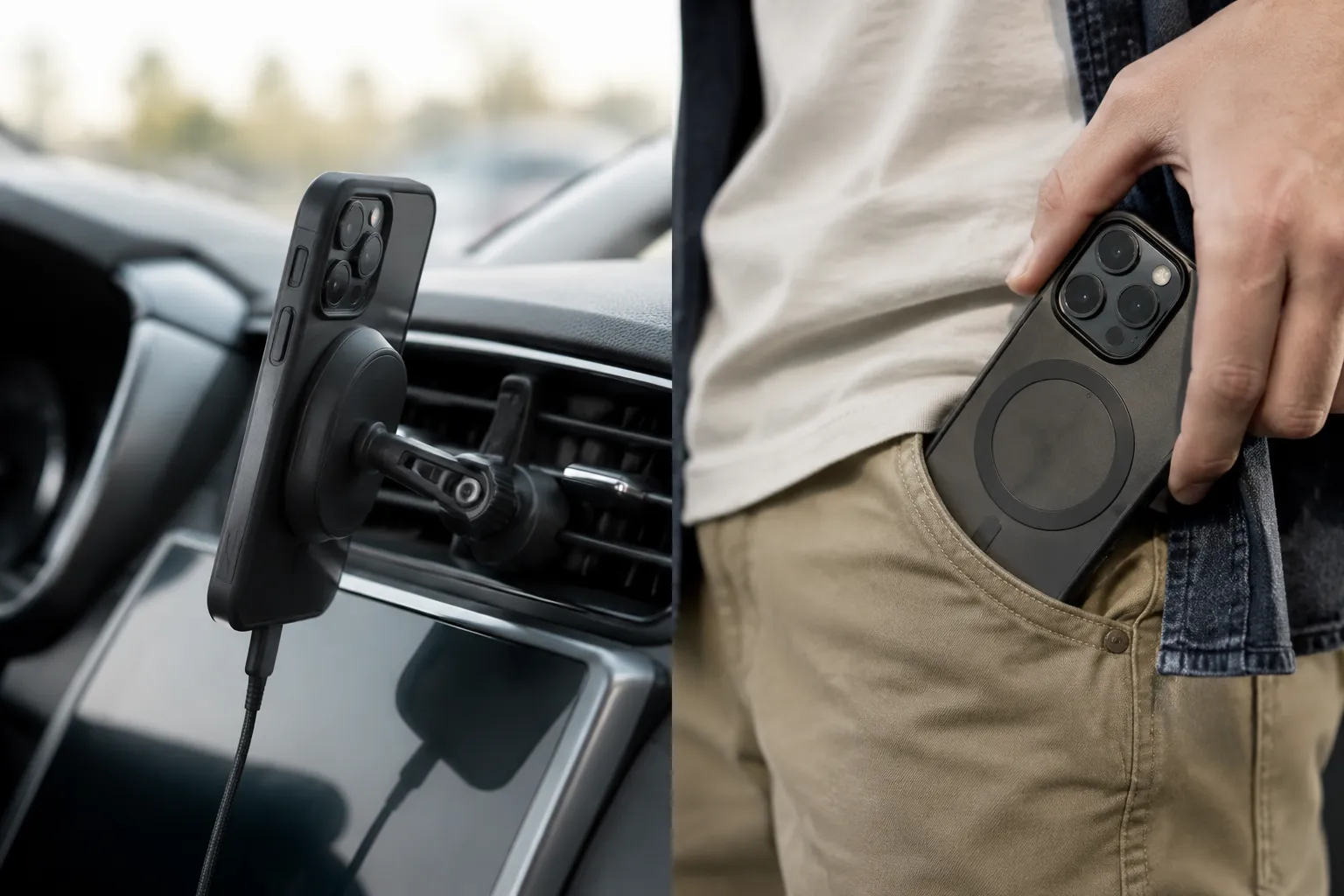
This is the core tension that most shoppers never hear about. The magnet ring adds convenience for wallets, chargers, and car mounts, but it also creates a hard spot in exactly the place a phone needs the most give. The cases that survive real drops are the ones whose designers understood this and engineered around it, not around the marketing bullet points.
Air Cushions That Actually Sit Where the Phone Hits
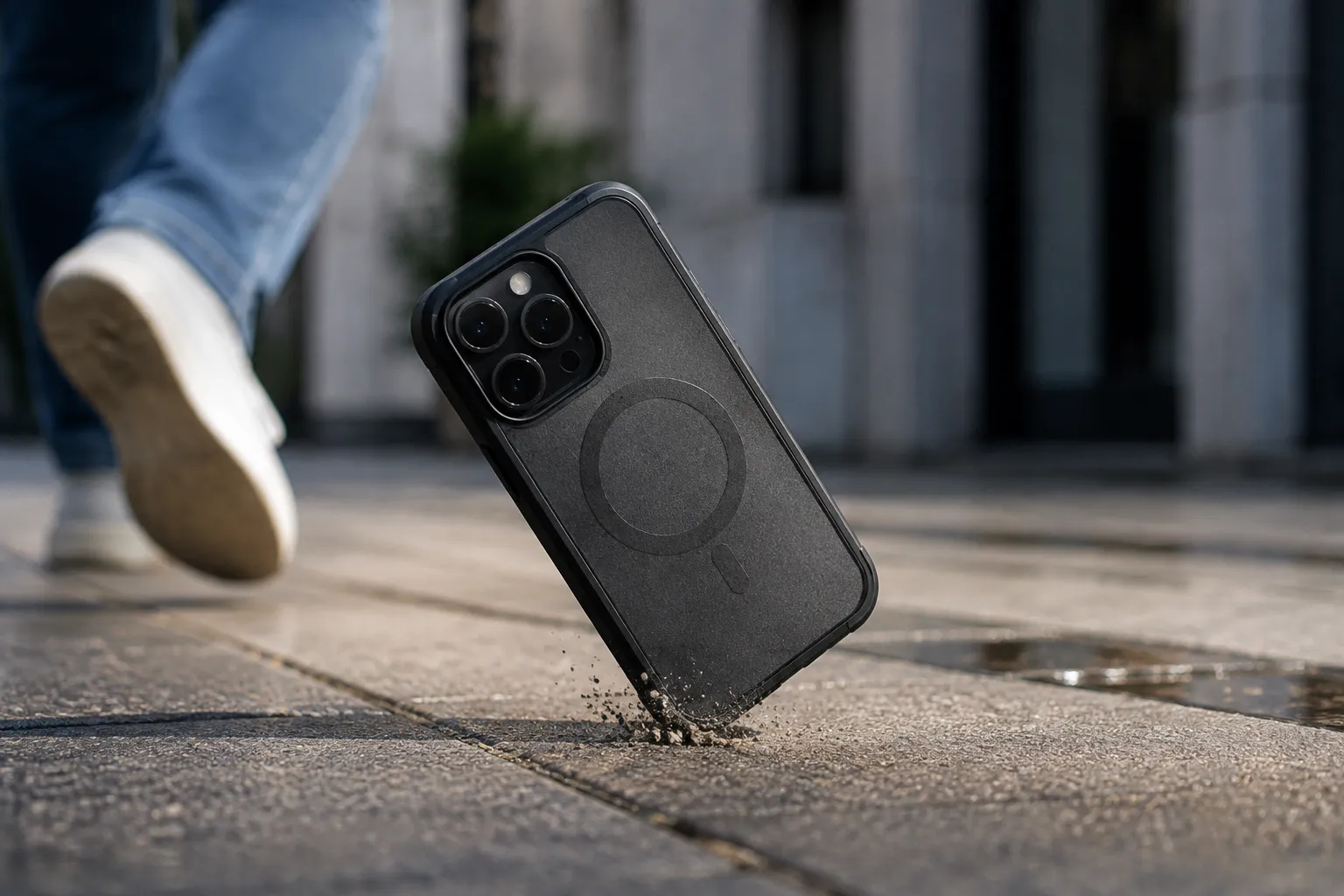
Corner protection gets all the attention in case marketing, and for good reason. A phone that lands on its corner concentrates the entire impact into a tiny area. But corner drops are not the only way phones die. The back panel takes a surprising amount of abuse from drops that happen at waist height or lower, where the phone tilts and lands slightly off-flat, catching the back edge or the camera bump.
The best MagSafe-ready cases use raised corner air cushions that extend beyond the screen lip. The practical test is simple: lay the case face-down on a flat table and look at whether the corner cushions actually touch the surface. Many cases claim corner protection but leave a millimeter of gap that means the screen takes the hit. The better cases have corner bumps that visibly lift the whole front of the phone off the table.
But corners alone do not save a phone from a back-first landing. A case needs a textured or raised back edge, a lip of material that surrounds the camera module, and enough thickness in the back panel that the glass never contacts the ground even when the case compresses. This is where the cheap cases get caught. They measure 1.2 millimeters thick on paper, but the back panel flexes so easily that a hard drop compresses it fully and transfers the shock.
Rigidity matters as much as thickness. A case that twists when a person grips the sides hard will also flex on impact. A well-designed case has a stiff frame, often a harder plastic or polycarbonate core, wrapped in a softer shock-absorbing outer layer. The two-layer construction is not a gimmick. The hard inner shell spreads the force across a wider area while the soft outer layer absorbs the initial impact. A single-material case, whether all-silicone or all-polycarbonate, compromises on one of those two jobs.
MagSafe Wallets Change How a Phone Falls
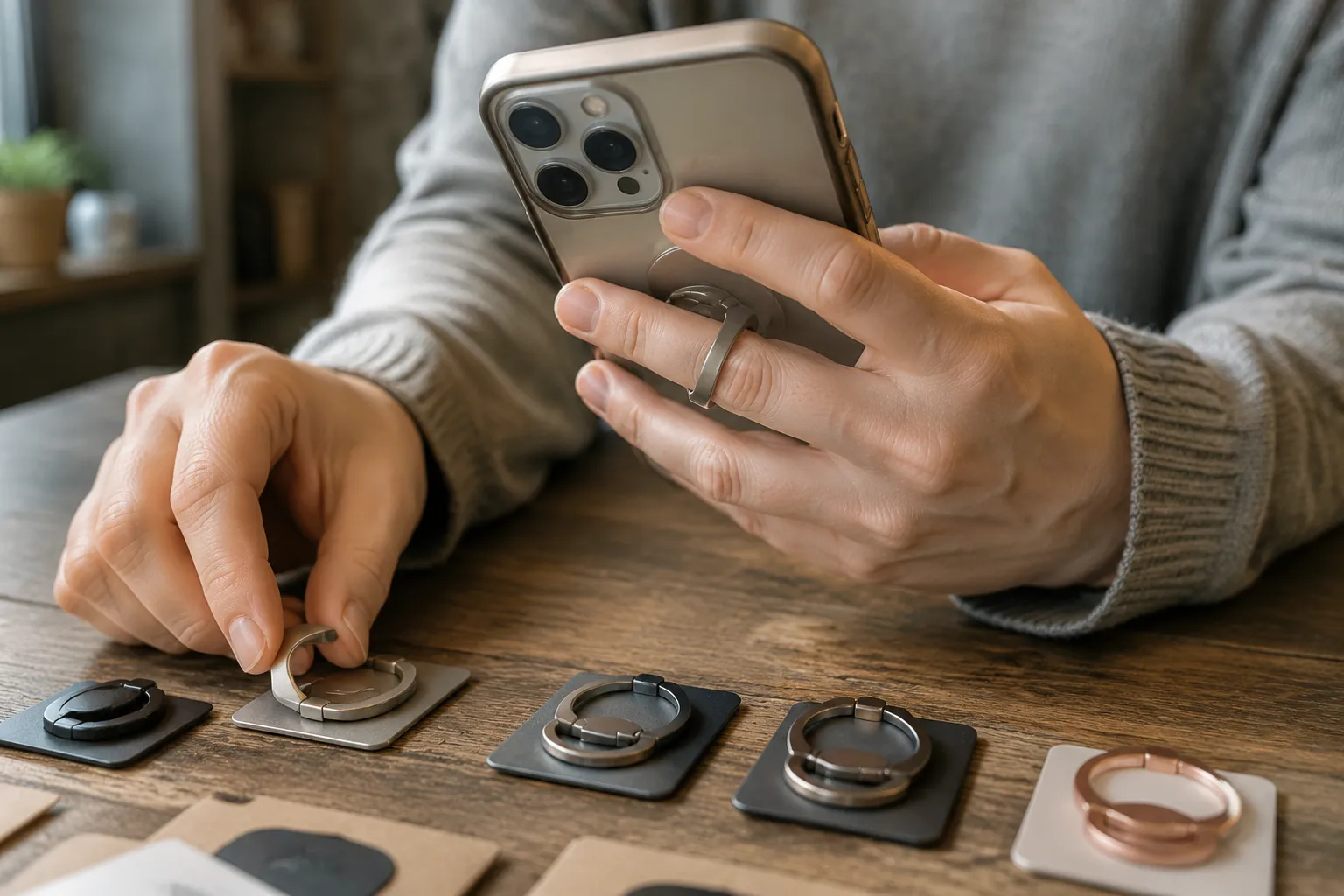
A person who buys a MagSafe-ready case probably owns a MagSafe wallet or plans to buy one. That adds a second consideration that rarely appears in case reviews. A wallet attached to the back of the phone changes the phone's center of gravity and makes it top-heavy. When a wallet-laden phone slips, it tends to rotate and land on the top edge or the top corner, which means the top of the case needs the same protection as the bottom.
Some cases handle this asymmetry better than others. The best ones add extra material or a slightly thicker bumper along the top edge, a detail visible only when comparing cases side by side. On a case without this consideration, the top edge is often the thinnest point because manufacturers assume a phone falls screen-down or back-down, not top-first.
The magnet strength itself also plays a role in drop survival. A weak magnet ring, often found in cheaper cases that use smaller or fewer magnets, allows the wallet to slide off during a drop. That sounds like a minor inconvenience, but a detached wallet falling toward the ground can catch the phone's edge on the way, deflecting the phone mid-air and turning a predictable back-first drop into a corner strike. The Apple-certified magnet spec exists for a reason, and cases that advertise "compatible with MagSafe" without the actual magnet count and arrangement are the ones to treat with suspicion.
The Camera Bump Is the Real Threat
Modern iPhones have camera modules that protrude several millimeters from the back. That protrusion means the camera lens ring is often the first point of contact when a phone lands on its back. The camera glass is tough, but the surrounding frame can bend or crack, and the camera module itself can shift out of alignment after a hard hit. A case that protects the back glass but leaves the camera ring flush with the case surface is not protecting the camera at all.
The right design uses a raised lip around the entire camera module, a lip tall enough that the camera never touches a flat surface when the case is placed face-up. On many cases this lip is purely cosmetic, barely rising above the glass. The difference between a cosmetic lip and a functional one is about two millimeters, and it is the difference between a camera that survives a drop onto a curb and one that comes away with a spiderweb crack across the lens.
There is also the question of how the camera lip interacts with the magnet ring. On some cases, the camera lip is molded as part of the same rigid back plate that holds the magnets. A hard impact on the camera corner transfers force directly through that rigid plate to the magnet ring and into the back glass. The better designs use a separate, softer camera ring that can absorb and deform slightly, isolating the camera impact from the rest of the case structure.
Materials That Wear Out Before They Break
Drop protection is not a static property. A case's ability to absorb impact degrades with use, and the degradation rate depends heavily on material choice. Silicone cases, the most common budget option, harden and become brittle after a few months of exposure to UV light and temperature swings. A six-month-old silicone case that flexed easily when new can crack on impact instead of absorbing it.
Thermoplastic polyurethane, or TPU, behaves differently. It stays flexible longer but yellows noticeably, especially around the edges where it meets the screen. A yellowed case is not necessarily a failed case, but the discoloration usually signals that the material has begun breaking down. The better cases use a blend or a coating that resists this aging, but a case that promises to stay clear forever is lying. The honest question is whether it yellow at a rate that matters before the case needs replacing anyway.
Liquid silicone, which feels soft and grippy in the hand, has its own problem. It collects lint and dust in pockets, and the surface becomes slick after a few weeks as the outer layer wears down. A person who drops their phone because the case has become slippery has a case that failed at its primary job, not through a single impact but through gradual surface wear.
Grip Is a Safety Feature, Not a Preference
Most drop protection conversations ignore the simplest variable: how often the phone slips out of the hand in the first place. A case with mediocre drop protection that never leaves the hand is safer than a case with excellent drop protection that slides off a car seat, a desk, or a palm. The grippiest cases are not necessarily the softest. Some of the best textured cases use a matte finish with fine ridges along the sides, a surface that provides friction without feeling sticky or collecting pocket lint.
The MagSafe ring affects grip too, indirectly. Cases that use a smooth glass-like back panel to showcase the magnet ring look premium but offer almost no friction against a hand or a surface. A case with a matte or textured back panel does not slide as easily on a sloped car console or a stack of papers. That subtle difference can prevent more drops than any corner cushion.
How to Read a Case Spec Sheet Like a Skeptic
Every case lists a drop height rating. Some claim 8 feet, others claim 10 feet, and the numbers are meaningless across brands because there is no standardized test. A case that survives a 10-foot drop onto plywood might shatter on a 3-foot drop onto a sharp curb edge. The rating tells a buyer almost nothing about real-world performance.
What a spec sheet can tell, if read carefully, is the material composition and construction method. Look for explicit mention of a polycarbonate shell with a TPU bumper, a design that indicates a two-layer build. Look for the magnet count and layout. Apple's official MagSafe spec uses a specific ring arrangement, and cases that do not list the magnet configuration often use fewer magnets to cut cost. Look for corner air-gap cushions, which indicate the manufacturer thought about corner impact geometry.
What matters more than any spec is weight. A case that weighs under 30 grams is probably too thin to offer real protection. The cases that survive repeated drops typically weigh between 40 and 55 grams, a range that reflects the material needed for actual shock absorption. A person who prioritizes a slim profile over that weight is making a deliberate trade, and it is a trade that usually ends with a cracked back glass.
The Drop That Happens at the Edge of the Bed
The drop that kills most phones is not the dramatic sidewalk toss. It is the low-height fumble at the edge of a bed, a couch arm, or a car seat, where the phone falls two feet and lands on a hard edge, often the metal frame of the furniture or the plastic trim of the car door. These drops generate surprising force because the impact area is small and hard. A case that protects against a flat concrete drop does not necessarily protect against a sharp edge impact.
Edge impacts are where the soft outer layer of a two-layer case earns its keep. A thick TPU bumper can deform and spread the force of a sharp edge over a wider area. A thin single-layer case, no matter how well-rated, will transfer that force directly to the phone frame, which then transfers it to the glass front and back. The result is a hairline crack that appears hours after the drop, starting from the edge and spiderwebbing inward. The phone might have looked fine immediately after impact, and then the crack appeared when the phone was picked up or put in a pocket.
This delayed cracking is more common than most people realize. The glass does not break at the moment of impact. It develops a micro-fracture that spreads as the phone flexes during normal use. A case that absorbed the initial blow well enough to prevent that micro-fracture is the difference between a phone that survives and a phone that needs a $300 screen replacement a week later.
The Protector That Gets Replaced After Every Major Drop
No case survives unlimited drops. The people who believe their MagSafe-ready case will protect their phone forever are the ones who end up with cracked phones. A case is a consumable item. It absorbs impacts, and each significant drop degrades its ability to absorb the next one. A visible dent, a cracked corner, or a compressed air cushion means the case has done its job and needs replacement. Keeping a damaged case on the phone is like reusing a motorcycle helmet after a crash, it looks fine from the outside but its structural integrity is gone.
The practical approach is to buy a case priced low enough that replacing it after a hard drop does not sting, but not so low that the build quality is compromised from the start. That range usually lands between $30 and $50 for a MagSafe-ready case with a two-layer build and proper camera protection. The $15 cases save money upfront and cost more in cracked screens. The $60 cases offer marginal gains that most people will never notice.
The next time a phone hits the ground and survives, the owner should inspect the case for damage before celebrating. If the corner cushion is compressed, the back panel is cracked, or the magnet ring has shifted, the case has given its life for the phone. Thank it by throwing it away and buying a new one. The phone that just survived the drop deserves a protector that has not already spent its one good hit.