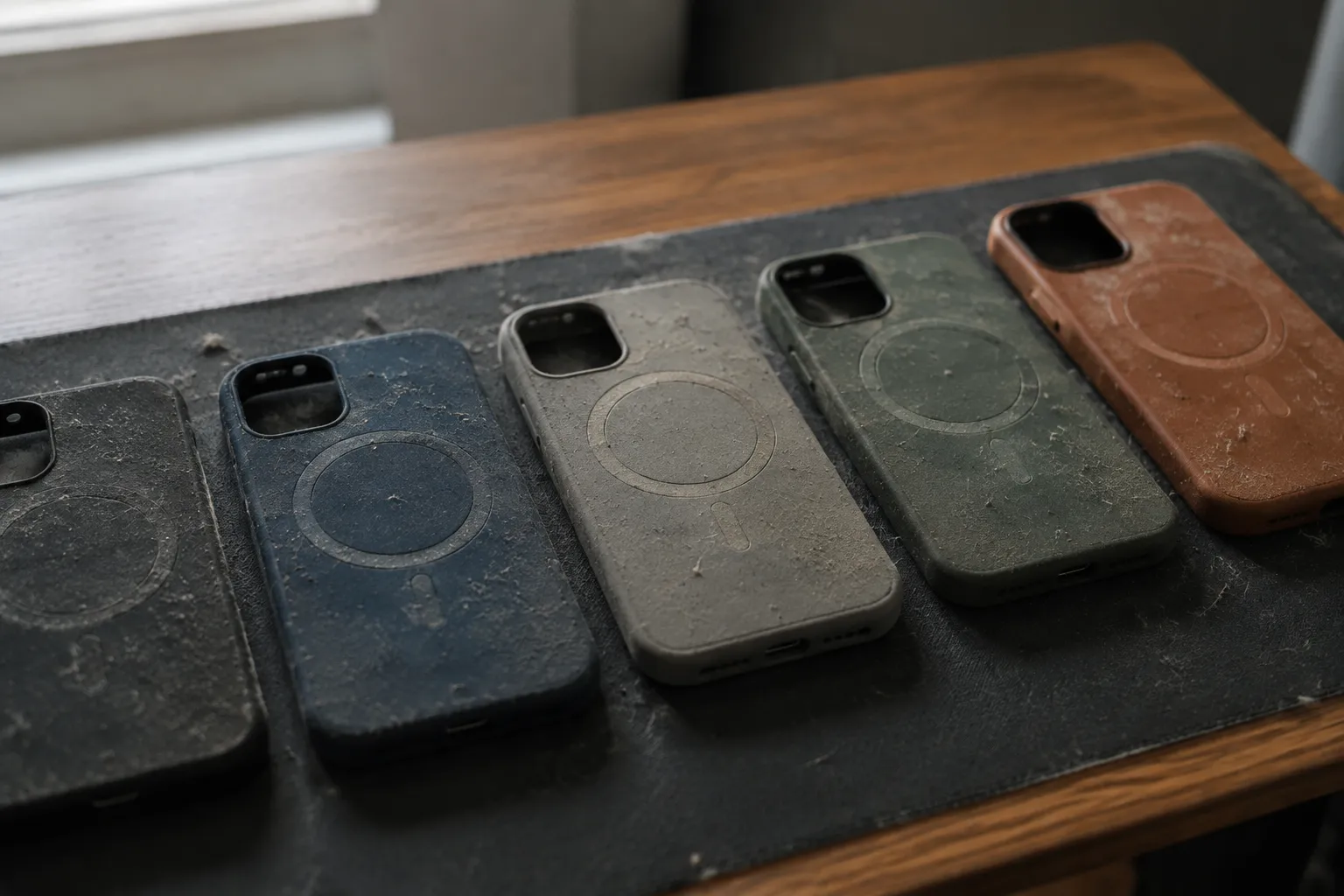
The week started with a brand-new pair of silicone MagSafe cases, one in a muted clay orange and another in a deep navy, and a jacket pocket that had just been through a dryer cycle. The pocket was full of the usual suspects: a few strands of dog hair, some crumbled tobacco from a pouch, a receipt that had gone through the wash and turned into a soft gray pulp, and a fine layer of general pocket dust. The cases went in one at a time, sat there for a full workday, and came out looking like they had been dipped in a bag of flour.
Silicone has a specific relationship with lint that other materials do not share. A hard polycarbonate shell shrugs off pocket debris with a quick wipe. Leather develops a patina and hides the dust in its grain. Silicone, by contrast, acts like a magnet for every loose fiber it touches, and the texture of the material seems to grip the particles rather than repel them. The question is not whether a silicone MagSafe case will pick up lint in a pocket. The question is how much, how fast, and whether any of it actually comes off again.
The Texture Problem Nobody Mentions in Reviews
Most reviews of silicone cases focus on the drop protection, the camera bump height, and the satisfying click of the MagSafe alignment. Very few of them mention the tactile reality of the surface after a week of real use. The fresh silicone feel, that soft-touch matte finish that makes the case pleasant to hold, degrades quickly when it meets the inside of a pocket. The material itself does not change. The surface simply collects a layer of foreign matter that alters the way the case feels against the palm.
After day one, the clay orange case felt less like silicone and more like a piece of chalkboard that had been wiped with a damp rag. The navy case collected less visible debris, but the texture changed in the same way. Both cases developed a slightly grippy, almost tacky layer of microscopic fibers that made them unpleasant to slide into a second pocket. The first insertion of the day became a ritual of brushing the case against a pant leg before putting the phone away.
This matters more than the average buyer expects. The whole appeal of a silicone case is the hand feel, the softness that makes a bare glass phone seem cold and slippery by comparison. Once the surface collects enough lint, the case loses its primary advantage and starts to feel like a piece of low-grade rubber that has been sitting in a drawer for a decade.
The Five-Pocket Gauntlet: What Actually Accumulates
The test used five different pocket environments over the course of seven days. Each pocket was chosen to represent a common real-world scenario for a phone case. The first was the standard front jeans pocket, washed maybe forty times and carrying the usual mix of loose change and pocket sand. The second was a dress trouser pocket, smooth and relatively clean, the kind of pocket that should theoretically be lint-free. The third was a canvas work jacket pocket with a fleece lining, a worst-case scenario for any fabric-adjacent device. The fourth was a winter coat pocket that had been used to carry gloves. The fifth was a plain cotton hoodie pocket, the kind that collects everything from loose threads to the remnants of a snack bar wrapper.
The denim pocket produced the most visible lint on both cases, but the pattern was interesting. The lint was not a uniform coating. It collected in patches along the edges of the case, particularly around the camera module and the bottom speaker cutouts. The flat center of the case stayed relatively clean, likely because the phone sat flush against the thigh and friction wiped the surface clean. The edges, where the case meets the seams of the pocket, accumulated a visible ring of gray-blue fuzz within two hours.
The dress trouser pocket, despite being the cleanest environment, produced a different problem. The smooth lining generated static, and the static pulled a fine layer of dust onto the back of the case. This layer was almost invisible at arm's length but became obvious under direct light. The case looked dusty rather than fuzzy, like a piece of dark furniture that had not been dusted in a week.
The canvas work jacket with the fleece lining was the clear winner in the lint department. A single five-minute walk to the bus stop left the navy case looking like it had been brushed against a sweater. The fleece shed tiny fibers continuously, and the silicone grabbed every single one of them. By the end of the day, the case had a visible nap to it, like the surface of a felt hat.
Where MagSafe Changes the Equation
The MagSafe ring changes the lint dynamic in a way that has nothing to do with the magnets. The ring itself is a slightly raised circular area on the back of the case, and that raised edge creates a small lip where the case thickness changes. Lint loves lips. The ring collected a perfect circular outline of dust within the first day, visible against the clay orange surface as a darker, slightly greenish ring of debris.
Cleaning the ring area required more effort than cleaning the rest of the case. The raised edge trapped lint in the tiny crease where the ring meets the rest of the back panel. A fingernail could scrape it out, but a dry cloth alone could not reach it. This is a design detail that no promotional photo will ever show, but every silicone MagSafe case owner will discover within the first week.
The magnets themselves also attract ferrous dust, which is a separate problem from fabric lint. Passing the case near a workbench or a metal shop floor caused tiny dark specks to collect around the MagSafe ring. These specks were harder to remove than fabric fibers and left small gray smears when wiped with a dry cloth. The effect was minor, but it added another layer of maintenance to a product marketed as low-maintenance.
The Cleaning Test: Water, Tape, and the Magic Eraser
Three common cleaning methods were tested on the lint-covered cases. The first was a simple wipe with a dry microfiber cloth, the standard recommendation for cleaning a phone case. The results were poor. Dry cloth wiped away loose surface dust but left behind the embedded fibers and the ring of debris around the MagSafe area. The cloth also seemed to generate static, which attracted new lint within seconds of cleaning.
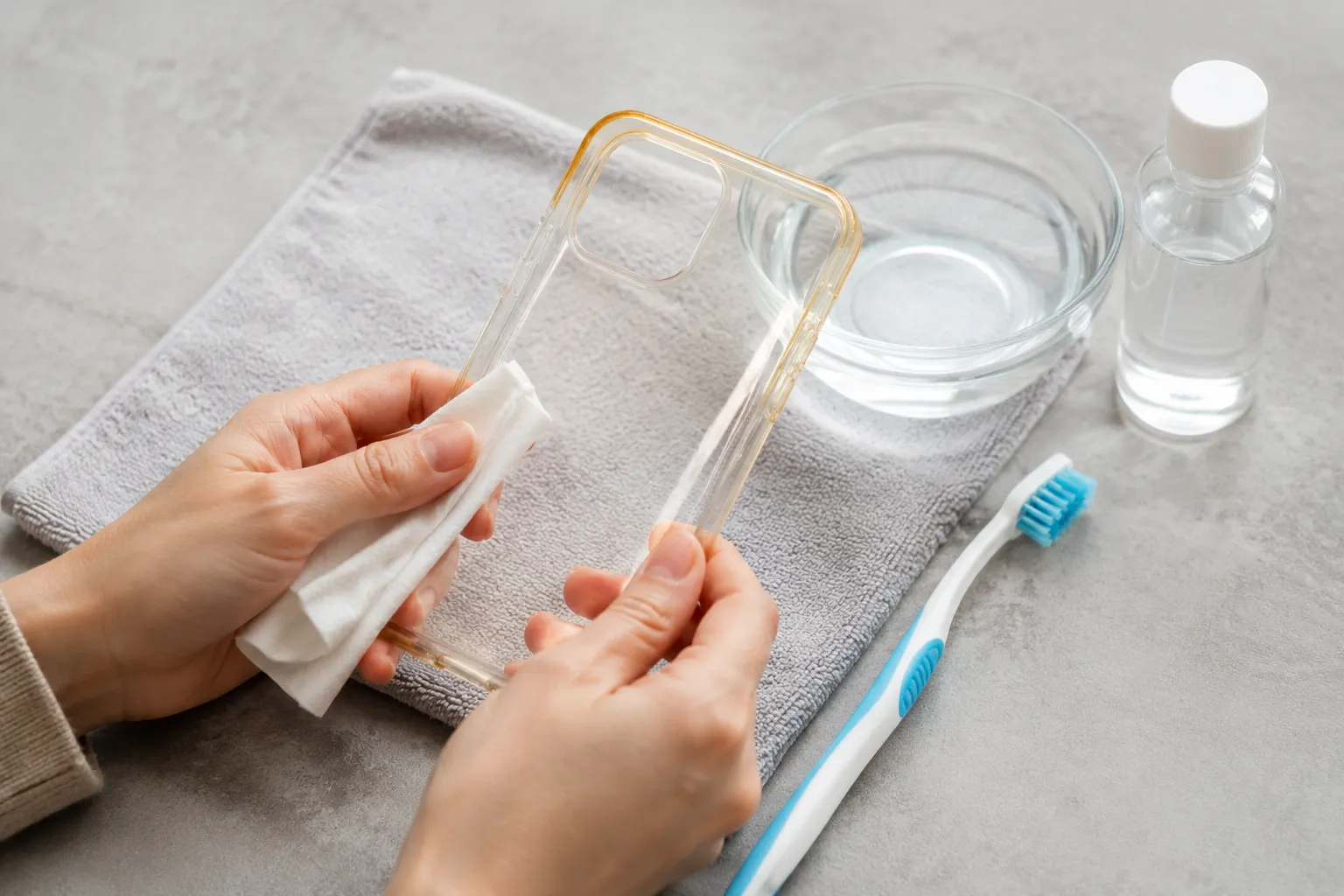
The second method was a damp cloth with plain water. This worked significantly better. The water broke the static charge and allowed the embedded fibers to be wiped away with moderate pressure. The cases looked nearly new after a damp wipe, though the MagSafe ring still required a fingernail or a soft brush to fully clear. The damp cloth also left a thin film of water on the surface, which dried to a slightly streaky finish that attracted dust again within an hour.
The third method was a piece of standard household tape, pressed and lifted repeatedly across the surface. This was the most effective method for embedded lint but the least practical for daily use. Tape removed fibers that the damp cloth missed, particularly around the camera bump and the speaker cutouts. The downside was the time required. Fully tapping the surface of both cases took about four minutes per case, which is not a maintenance routine that most owners will adopt.
A fourth method was tested out of curiosity: a melamine foam eraser, commonly sold as a magic eraser. This worked alarmingly well on the silicone surface. The foam lifted every visible particle and left the case looking factory-new. The concern is whether the abrasive nature of the foam damages the silicone coating over time. After one use, no visible damage appeared, but the long-term effects remain a question.
Color Choice as a Lint-Management Strategy
The two-case test revealed that color is not just an aesthetic decision. The clay orange case showed every particle of lint immediately, turning the entire back panel into a display case for whatever the pocket had been holding. The navy case hid the lint far better, but the tradeoff was that the navy case looked dirtier when it did collect debris. The light-colored lint showed up as pale specks against the dark background, while the dark lint blended into the clay orange surface.
The practical takeaway is that a mid-tone case, something in the gray or sage range, is the best choice for someone who wants to minimize visible lint without switching to a hard-shell case. The clay orange was the worst possible choice for lint visibility, which is unfortunate because it was the more attractive color of the two.
This is a consideration that most case reviews skip entirely. The color of a case is usually discussed in terms of personal preference or matching with accessories. In the real world, color determines how often the case needs to be cleaned and how clean it looks between cleanings. A person who keeps their phone in a pocket all day should choose a case color based on lint tolerance, not just on how it looks in the product photos.
The Daily Lint Cycle and Its Small Annoyances
A pattern emerged over the seven days of testing. Each morning, both cases had accumulated a visible layer of lint from being left on a nightstand overnight. The nightstand was clean, but the cases had attracted dust from the air itself. Silicone has a slight electrostatic charge that pulls particles from the surrounding environment, even without direct contact with a fabric surface.
The morning lint was lighter than the pocket lint, more like a fine powder than a collection of fibers. It wiped off easily with a dry cloth, but it returned within a few hours of carrying the phone. The daily maintenance required was roughly one wipe in the morning and one wipe in the evening, plus a more thorough cleaning every few days.
This level of maintenance is manageable, but it runs against the marketing of silicone cases as a set-and-forget accessory. A hard-shell case can go weeks without visible dust accumulation. A leather case ages gracefully and hides its dirt. A silicone case demands regular attention, and the attention must be constant because the lint returns as soon as the case goes back into a pocket.
Pocket Choice as a Mitigation Tactic
The test demonstrated that pocket choice has a direct impact on lint accumulation. The smooth dress trouser pocket was the best environment for the cases, producing only a light dust layer that wiped away easily. The fleece-lined jacket pocket was the worst, embedding fibers that required the tape method to fully remove.
For people who keep their phone in a dedicated phone pocket or a clean interior coat pocket, the lint problem is largely theoretical. For everyone else, the issue is real and recurring. The difference between a lint-heavy day and a lint-light day comes down to something as simple as whether the person wore a cotton sweatshirt or a wool coat.
This dependency on external factors makes the silicone case a more situational purchase than it appears. In a vacuum, silicone feels great and protects well. In the real world, the case performs best for people who rarely use the same pocket twice and worst for people who always know exactly where their phone is because it lives in the same fleece-lined jacket pocket all winter.
The Verdict Nobody Wants to Hear
After seven days of pocket testing, the conclusion is not that silicone MagSafe cases are bad. They are fine cases with good grip, decent protection, and reliable MagSafe alignment. The conclusion is that they require a level of cosmetic maintenance that the industry does not disclose and that most buyers do not anticipate.
The cases in this test both cleaned up to near-new condition with a damp cloth and a few minutes of attention. Neither suffered any permanent staining or texture damage. The lint was a nuisance, not a defect. But the nuisance was constant, and it colored every interaction with the phone over the entire week.
The last day of the test ended with both cases back in the fleece-lined jacket pocket for one final excursion. Coming out of that pocket, the clay orange case had a distinct ring of gray lint around every edge and a faint fuzz across the back. The navy case had the same problem but less visible. Both were wiped clean and set on the table, and within two hours, a fresh layer of dust had settled on the smooth silicone surfaces.
The next case purchase will be a hard-shell with a textured back. Not because silicone is a bad material, but because a phone case should not need its own cleaning schedule.