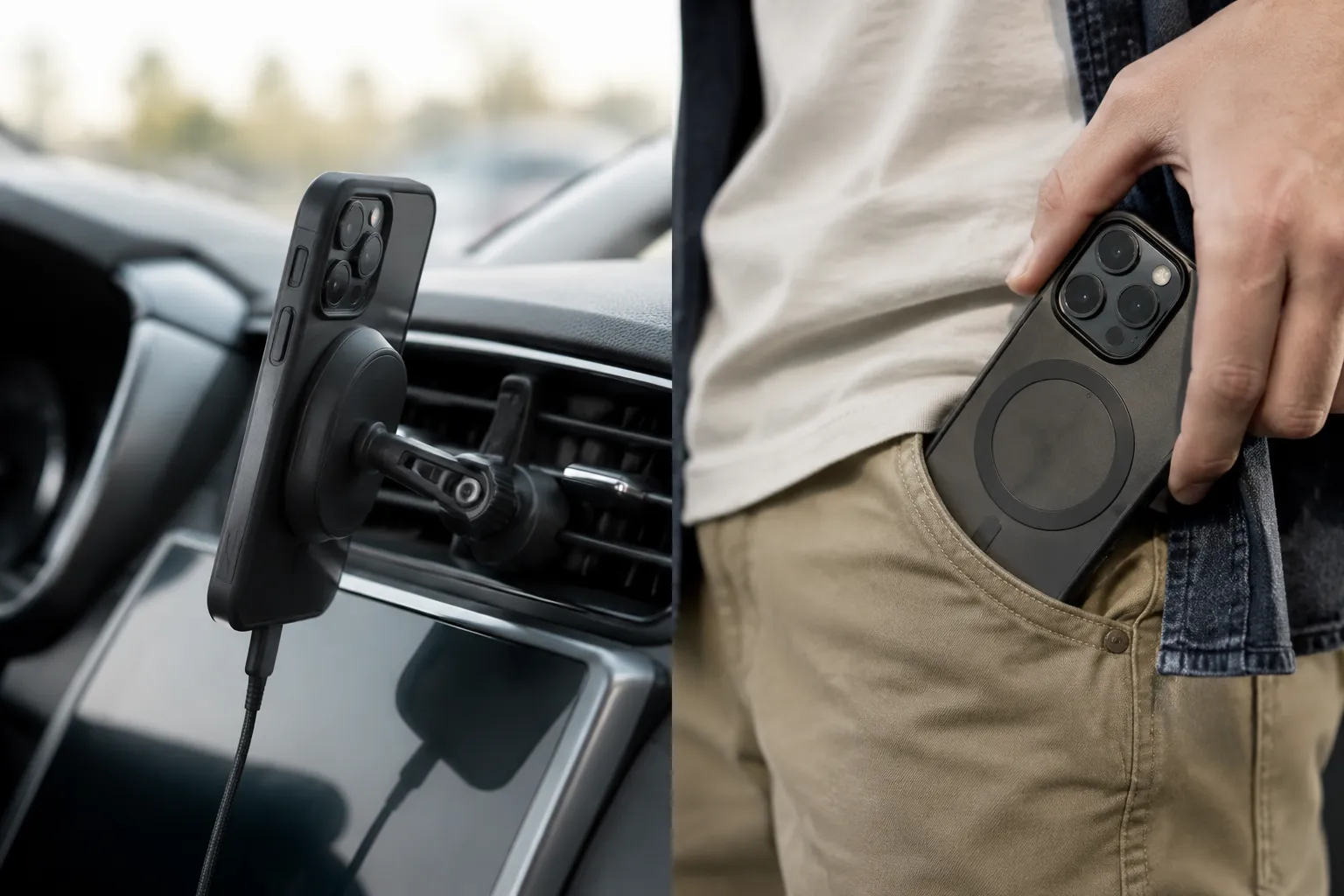
The pitch deck for the modern wallet promise is always the same: strip away the bulk, carry less, and reclaim the front pocket. Leather bifolds died so that aluminum and polycarbonate could live. But there is a point where minimalism meets physics, and for most people, that collision happens when they realize they still need to carry physical cards. A phone by itself is fine until the subway reader demands a transit pass, or the bar requires a driver's license for a drink. The MagSafe wallet exists to solve this friction, and the latest generation solves a second problem that nobody asked for until they lost a card somewhere between a taxi and a concert.
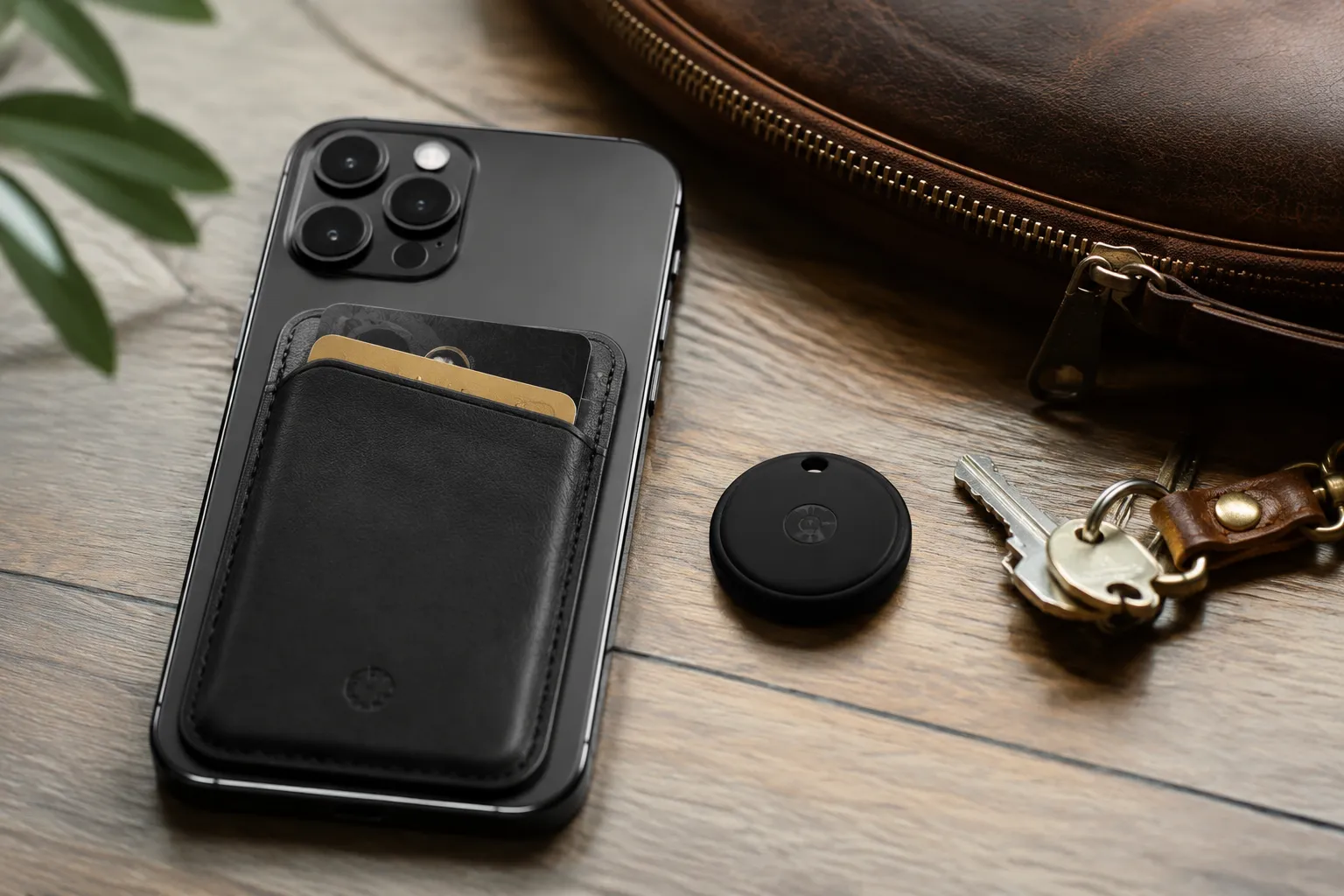
Card tracking in a MagSafe wallet sounds like a gimmick layered on a convenience. The phone already knows where it is. The wallet sticks to the phone. So why would anyone need to find the wallet? The answer is that the wallet does not always stay stuck to the phone. It comes off for wireless charging, it slides into a pocket during a long meeting, it gets handed to a valet, it drops between car seats. Once separated from the iPhone, the wallet is just a slab of cards with an AirTag-shaped hole waiting to be filled.
The market has responded with three distinct approaches to this problem, and each one carries real trade-offs that the spec sheets do not mention. The first approach is the integrated tracker built directly into the wallet's frame. The second is the embedded Apple AirTag module, which requires the user to buy Apple's tracker separately and snap it into a proprietary slot. The third is a shell system, where a standard AirTag sits inside a rigid case that clips onto the phone. None of these is perfect. The best choice depends on how a person actually uses a wallet, which is a more personal question than most reviews admit.
The Built-In Tracker Illusion
The integrated route, found in options like the Orbitkey and certain models from Moft and Spigen, embeds a Chipolo or a similar Bluetooth tag directly into the wallet's body. The design win is obvious: no separate purchase, no fiddly installation, no extra thickness beyond the wallet itself. The wallet arrives ready to track, and the Find My network integration works the same way it does with an AirTag, provided the wallet carries the right certification.
The hidden cost is that a tracker is not replaceable. The battery in these integrated tags eventually dies, usually after a year or two, and the entire wallet becomes a dead husk as far as location services are concerned. Some models, like the Chipolo variants, offer a replaceable battery behind a small door. Others are sealed units. A person should read the fine print before buying, because a wallet with a dead tracker is just a regular wallet that happens to weigh a few grams more.
The other problem with integrated trackers is thickness. Adding a PCB, a battery, and an antenna into a slim form factor is an engineering challenge that most brands solve by making the wallet slightly thicker than the non-tracking equivalent. The difference is often only a few millimeters, but those millimeters matter when the wallet sits against a phone that already struggles with case bulk. Some wallets in this category are 16 to 18 millimeters thick when fully loaded, which feels less like a slim accessory and more like a small brick glued to the back of an iPhone.
The AirTag Module Middle Ground
The module approach, championed by Peak Design and a few others, splits the difference. The wallet has a dedicated cutout that accepts an actual Apple AirTag, which the user buys separately. This is a smarter design for one clear reason: when the AirTag battery dies, the user pops out the tracker, replaces the coin cell, and slides it back in. The wallet itself never becomes obsolete.
Peak Design's Everyday Case wallet with the AirTag module is the reference point here, and it demonstrates both the strengths and the frustrations of the approach. The wallet holds three to four cards plus a bit of cash, it attaches to the phone with a magnetic strength that borders on excessive, and the AirTag sits in a milled pocket on the back. The findability is excellent because the AirTag leverages the full Find My network with ultra-wideband precision, not just Bluetooth proximity.
The cost is a visual lump. An AirTag is not flat, and no amount of design polish hides the circular bump on the back of the wallet. Some people do not care. Others find the bulge unacceptable, especially when the wallet is empty and the phone sits on a desk. There is also a price consideration: the wallet costs its retail price, and the AirTag adds another 30 dollars or so. A person is paying a premium for a system that works exactly as well as a loose AirTag in a pocket would, except now it is attached to the phone.
The module approach also changes the weight distribution. An AirTag weighs about 11 grams, and when it sits off-center on a wallet that already holds cards, the whole assembly develops a noticeable lean. The phone does not lie flat on a table. The wobble is minor, but it is the kind of detail that shows up a week into ownership and never stops being mildly irritating.
The Shell System for Heavy Carriers
The shell route, where a standard AirTag clips or slides into an exterior sleeve on the wallet, is the ugliest and most practical option. Brands like Smartish and Vionentus offer these, and they work the same way as the module system but with less integration. The wallet has a fabric or silicone loop on the back, and the AirTag goes into that loop. The tracking is identical to the module system, the battery is replaceable, and the cost is lower because the manufacturing is simpler.
The design failure is unavoidable. The AirTag sticks out like a hockey puck on a glove, and the wallet becomes noticeably thicker and more awkward to slide into a tight jeans pocket. The whole point of a MagSafe wallet is to avoid the pocket entirely, so for people who keep the wallet attached to the phone at all times, the shell system is fine. For anyone who wants to detach the wallet and carry it separately, the protruding AirTag catches on fabric and makes the wallet feel like a prototype.
There is also a durability question. The elastic loops and silicone sleeves that hold the AirTag stretch out over time, and once the grip loosens, the tracker slides around or falls out. Replacing a wallet because the tracker holder failed is a frustrating purchase cycle, and it is common enough in the reviews of budget brands that a careful buyer should look for reinforced stitching or a hard plastic clip rather than a simple band.
The Card Capacity Reality Check
Every tracking wallet, regardless of which approach it uses, pays a tax in card capacity. The tracker takes up physical space, and that space comes directly out of the card slots. A non-tracking MagSafe wallet like the Apple original holds two cards comfortably and three with a squeeze. The tracking versions mostly drop to two cards, and some integrated models hold only one card plus a folded bill.
This is where the real-world usage pattern decides the purchase. A person who carries a driver's license, a credit card, and a transit pass needs a three-card wallet, and the tracking options thin out quickly. The Peak Design wallet handles three cards and a bit of cash, but the cards must be broken in before they slide easily. The Orbitkey with its integrated tracker holds two cards and gets tight beyond that. Anyone who carries more than three physical cards on a regular basis should look at a different category entirely, because a tracking MagSafe wallet is not going to work.
The magnetic strength also shifts when the wallet is fully loaded. A wallet stuffed to capacity sits slightly further from the phone's magnet array, and the holding force drops by a measurable amount. In practice, this means a loaded tracking wallet is more likely to detach during a rough commute or a fumbled pickup. The added weight of the tracker makes the problem worse. Brands rarely publish these numbers, but a person can feel the difference between an empty wallet and a full one in the same afternoon.
How the Find My Experience Actually Differs
The user-facing tracking experience splits into two tiers, and the difference matters more than the hardware design. Integrated trackers from Chipolo and other third parties work with Apple's Find My network, but they do not support the precision finding feature that AirTags have. The wallet shows up on a map within a general radius, and the built-in speaker plays a chime when prompted. That is the extent of it.
An actual AirTag, whether in a module or a shell, offers ultra-wideband precision tracking on iPhones with the U1 chip. Instead of a radius on a map, the phone displays an arrow and a distance reading that guides a person to the wallet within centimeters. For a wallet lost in a couch or dropped in a parking lot, the difference between a 30-foot radius and a precise location is the difference between a five-minute search and a frantic half-hour. The precision finding is the single best reason to choose an AirTag-compatible wallet over an integrated tracker, and no amount of marketing from the Chipolo camp changes that.
The speaker on the AirTag is also louder than the speakers on most integrated trackers. The chipolo speakers are adequate for a quiet room but get lost in ambient noise. The AirTag chirp cuts through a busy street and is audible from under a car seat. If the primary use case is finding a wallet that fell out of a pocket in a public place, the AirTag route is the only one that consistently works.
What the Reviews Leave Out About Daily Wear
None of the spec comparisons address how these wallets feel after a month of daily use. The tracking components add rigidity to the wallet body, which changes how it flexes when a person sits down with the phone in a back pocket. A non-tracking MagSafe wallet bends slightly with pressure. The tracking versions do not, and that rigidity translates into a hard edge digging into a thigh or a hip. This is not a dealbreaker for most people, but it is a constant reminder that the wallet is carrying electronics, not just cards.
Heat is another unmentioned factor. An AirTag or a Chipolo sitting against a phone that runs warm during navigation or gaming will heat up with it. The trackers are rated for normal operating temperatures, but a wallet left in a car dashboard on a summer day can exceed those ranges. Battery life shortens, and in rare cases, the tracker stops responding until it cools down. The wallet itself provides little insulation, so the electronics bake right along with the cards.
The magnetic interference question comes up less often than it should. A wallet with an integrated tracker places an active radio transmitter a few centimeters from the iPhone's internal antennas. In real testing, the effect is negligible for most calls and data sessions, but wireless charging speed can drop slightly when the wallet is attached during a charge. The induced heat from the charging coil also makes the tracker work harder. Apple's own MagSafe charger pushes the wallet off before charging, but third-party chargers often do not, which means the tracker sits in a warm field for the entire charge cycle.
The Straight Recommendation for Different Carriers
The right purchase depends on card load and tolerance for precision finding. A person who carries exactly two cards and already owns an AirTag should buy the Peak Design wallet and mount the tracker in its module. It is the best-engineered option in the category, the attachment holds through any motion short of a deliberate throw, and the precision finding justifies the premium price.
A person who wants a dedicated wallet with no separate tracker purchase should look at the Chipolo-integrated options from Orbitkey or Moft, but should accept that the findability is approximate. The wallet will be located within a room-sized radius, and the speaker chime is the main tool for homing in. That is enough for someone who loses the wallet at home or in the office, and it is insufficient for someone who drops it on a city street.
A person who carries more than three cards should skip the tracking MagSafe category entirely. No model handles that load without bulging, and the bulk defeats the purpose. A plain MagSafe wallet in a non-tracking design, paired with a separate AirTag in a briefcase or a bag, is the more honest solution for a heavy card carrier.
The last consideration is longevity. The AirTag module systems have a clear advantage because the tracker outlives the wallet. When the leather wears out or the magnets weaken after two years, a person moves the AirTag to the next wallet. The integrated trackers die with their shells, and the whole unit goes to electronics recycling. Over a five-year span, the AirTag route costs less and creates less waste, even though the upfront price is higher.
The tracking MagSafe wallet is a niche product for a specific habit: people who detach their wallet from their phone regularly and want a safety net without carrying a separate tracker. The market has settled into three clear tiers, and the tiers map to real differences in precision, cost, and longevity. The category does not yet have a perfect answer, but the AirTag module designs are the closest thing to a long-term purchase. A wallet with a non-replaceable tracker is a disposable gadget wearing a leather jacket, and that is a hard reality to accept at checkout.