There are two kinds of phone case buyers in this world: those who shop by drop test ratings and those who shop by feel. The first group reads spec sheets and absorbs YouTube torture tests where phones bounce off concrete like basketballs. The second group just wants the thing to stop sliding around on the kitchen counter. Neither approach is wrong, but both miss the actual question that determines whether a case will be loved or abandoned by the second week. That question is not about protection or style. It is about fit, and fit is a much more demanding standard than most people realize.
A case can cost $60 and still fit poorly. A case can cost $12 and fit perfectly. The price tag has almost nothing to do with it, which is why the checklist below matters more than any brand name or marketing promise. This is the standard that separates a case that disappears into daily use from one that gets tossed in a drawer by March.
The first test happens before the case even touches the phone. Hold the case in one hand and press on the back panel with the other. A quality case has a back that resists flexing. If the panel caves inward easily, the case will transmit every accidental squeeze to the phone's internals, and over time it will develop a permanent bend. This is especially true for clear cases, where a weak back panel often starts yellowing and cracking at the point of maximum flex. The back should feel rigid, not springy.
Now check the corners from the inside. Run a fingertip along each interior corner and feel for a raised lip or an extra layer of material. Those corner reinforcements are what actually protect a phone when it lands on an edge, which is how phones mostly land. Flat drops on the screen or back are comparatively rare. The corner is the impact zone, and a case without extra material there is a case that only looks protective.
The Tightness Test Nobody Performs
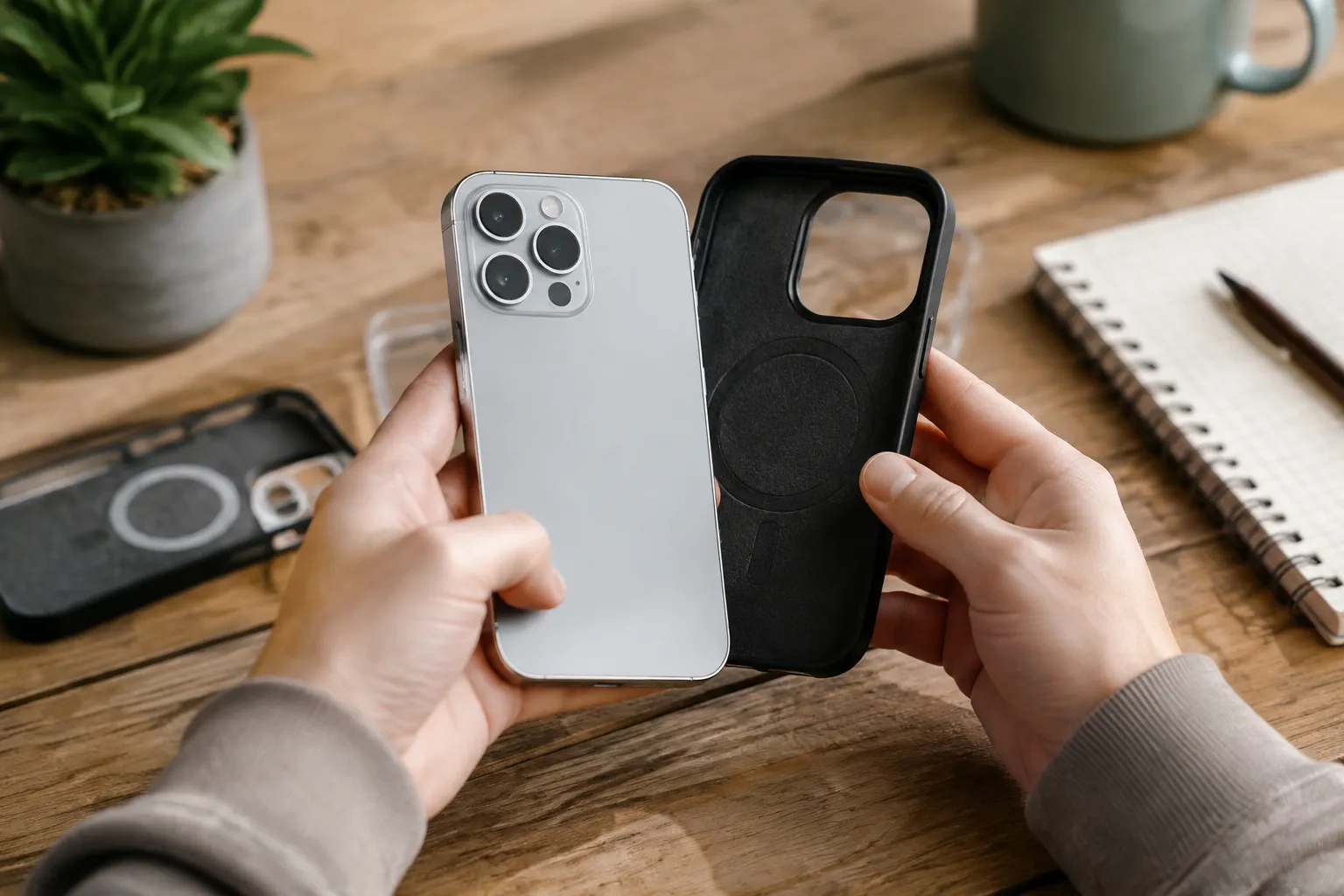
Here is the moment most people skip. Slide the phone into the case partway, maybe a third of the way in, then try to pull it back out. A case with proper fit offers noticeable resistance. The phone does not glide in like a letter into an envelope. It seats with a firm push, and removing it requires a deliberate, slightly awkward prying motion. If the phone drops in with zero resistance, the case is too loose and will only get looser.
Loose cases are the silent killers of phone protection. A case that shifts by even a millimeter creates a gap between the case edge and the screen. That gap is exactly where dust collects, and more importantly, that gap means the case is not holding the phone firmly when it hits the ground. The phone can actually slide inside the case during a fall, which means the impact energy travels through the case, into the phone, and back out again. The case becomes a decorative sleeve rather than a shock absorber.
The opposite problem, a case that fights back, is nearly as annoying. If seating the phone requires so much force that a person worries about bending the frame, the case is too tight. This happens most often with cheap cases molded to slightly wrong dimensions. Over time a too-tight case puts constant pressure on the phone's frame, and that pressure can eventually warp the frame or make the volume buttons mushy. The sweet spot is snug but not violent.
The Button Alignment Check
Press every button through the case before deciding anything. Not once. Several times. The power button, both volume buttons, and any action button or mute switch. Good buttons on a good case click with the same tactile response as the naked phone. They do not require extra pressure. They do not feel hollow. They register at the top of the press, not after the thumb has already sunk halfway through the case material.
A case that muffles the buttons ruins the phone experience more than any scratch ever could. A person taps the volume button expecting a response and gets nothing, then taps again harder, then misses the adjustment entirely and has to look at the screen to confirm. That friction happens dozens of times a day. It is death by a thousand small frustrations, and it is entirely avoidable if the case manufacturer bothered to align the button nubs with the phone's actual buttons.
The alignment issue is easy to spot on cheaper cases. Hold the case up to a light and look at the interior button channels. They should line up cleanly with where the phone's buttons will sit. If the channel is visibly off-center, the button press will feel wrong no matter how the case is designed. Some manufacturers use separate button pieces that snap into the case, which generally works better than molded nubs because each piece can flex independently.
The Camera Bump Clearance Rule
The camera module on modern phones is a small mountain range protruding from the back. Cases handle this protrusion in one of three ways. The worst way is a cutout that leaves the camera bump exposed to the world, which means the lenses sit in a shallow well that collects pocket lint and offers no protection against a drop that lands on the bump itself. The better way is a raised lip around the entire camera module, which creates a protective ring. The best way is a raised lip plus a flat surface around the ring so the phone actually rests on the case material, not on the camera glass.
Here is the subtle part. That raised lip around the camera needs to be tall enough to matter. A lip that rises one millimeter above the camera glass is decorative. A lip that rises two to three millimeters is protective. The difference is visible if the case is set face-down on a flat table. A properly designed case keeps the camera glass from touching the surface entirely. A poorly designed one lets the glass kiss the table, which over time creates micro-scratches that degrade photo quality in bright light.
The same logic applies to the screen side. A case with a front lip that rises above the screen is non-negotiable for anyone who does not use a separate screen protector. That lip is what prevents the screen from contacting a flat surface when the phone lands face-down. But the lip height has a tradeoff. A very tall lip makes swiping gestures from the screen edge feel awkward, because the thumb catches on the lip. The ideal front lip is tall enough to protect and shallow enough to ignore. Most good cases land around one to two millimeters, which clears the screen by a comfortable margin without interfering with touch gestures.
The Material Handshake
Fit is not just about dimensions. It is also about how the case material interacts with the phone and with the hand. A hard plastic case fits tightly but offers zero grip, which means the phone slides out of a hand or off a lap with alarming frequency. A soft silicone case grips well but attracts pocket lint and often fits loosely because silicone stretches over time. The best cases use a dual-layer construction: a hard shell for structure and a softer outer layer for grip.
There is a texture test that reveals a lot. Run a fingernail lightly across the back of the case. If the material has a rubbery, almost tacky feel, it will stay grippy even when the hands are dry. If it feels slick or glossy, it will only get slicker as skin oils accumulate. The matte finishes that many manufacturers use now are not just an aesthetic choice. They are a functional decision that keeps the phone from becoming a bar of wet soap in the hand.
The material also affects how the case ages. A glossy hard case shows every fingerprint and micro-scratch within a week. A matte finish hides them. A clear case starts yellowing within months, not because of UV light alone but because the plasticizers in the material break down from hand heat and oils. This yellowing is not a sign of poor quality. It is the chemistry of transparent plastics. Anyone who wants a clear case that stays clear needs to accept that it will be replaced every six to twelve months, or needs to choose a frosted finish that makes the yellowing less visible.
The Pocket and Grip Reality
A case that fits the phone perfectly might still fail the pocket test. Slide the phone into a jeans pocket and pull it out a few times. A good case should not grip the pocket fabric on the way in or out. It should not create so much friction that the pocket lining gets pulled inside out. This is where excessively textured cases fail. Those aggressive carbon fiber patterns or diamond grips feel great in the hand but snag on fabric like Velcro.
The grip test works best on a sloped surface. Set the phone on a slightly angled surface, like a car dashboard or a stack of papers. If it slides, the case is too slick for comfortable one-handed use. If it stays put, the material has enough friction for real-world conditions. This matters more than any lab test, because real phone use happens on laps, on couches, on armrests, and on the edge of a sink while brushing teeth. A phone that slides off any of those surfaces is a phone that will eventually test the corner protection.
The weight test is also part of fit. A heavy case does not fit poorly in the dimensional sense, but it changes how the phone sits in the hand and in the pocket. A phone that suddenly weighs 30 percent more will feel different during a long call or a walking commute. Some people prefer that heft because it feels substantial. Others find it exhausting. The right answer is personal, but the decision should be conscious rather than accidental.
The Wireless Charging and Accessory Test
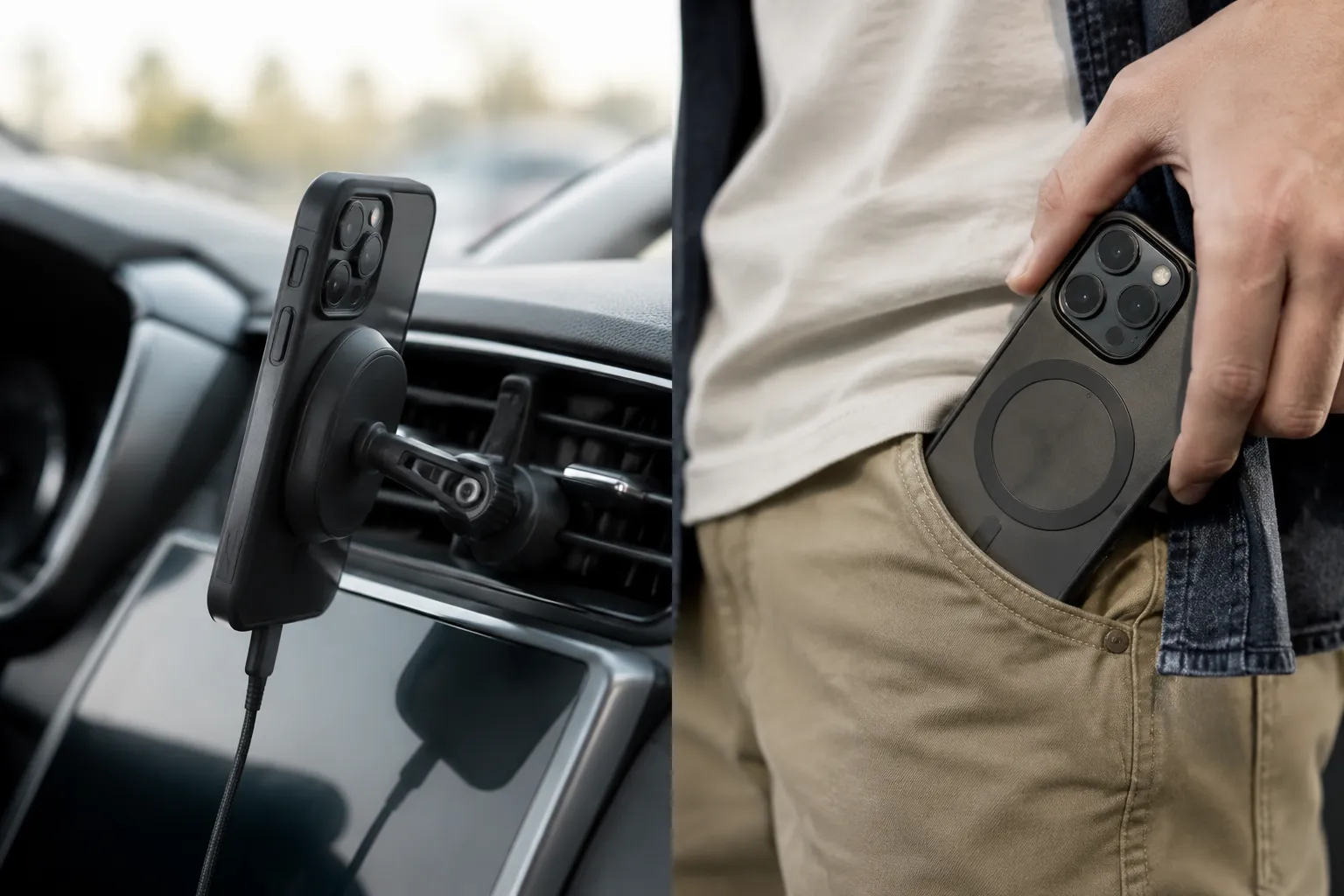
Wireless charging has become a standard feature, and it adds a fit consideration that did not exist a decade ago. A thick case, especially one with metal elements or magnetic mounting hardware, can interfere with the charging coil. The phone will still sit on the charger, but the charging speed might drop or the connection might be intermittent. The test is simple. Place the cased phone on a wireless charger and watch for the charging indicator. If it flickers or fails, the case is too thick or contains material that blocks the magnetic field.
MagSafe and other magnetic accessories add another layer. A case with built-in magnets needs to align perfectly with the phone's internal magnet array. Slight misalignment means the phone wobbles on a magnetic mount or fails to attach at all. The test here is to attach the phone to a magnetic mount and give it a gentle shake. If it holds firm, the magnets are aligned. If it shifts or drops, the case is interfering rather than assisting.
There is also the accessory clearance question. A case with a very tight fit around the charging port might not accommodate thicker third-party cables. Apple's own cables fit fine, but some braided aftermarket cables have connectors that are a millimeter or two wider. The test is to plug in a variety of cables and see if they seat fully. A case that requires a cable to be forced into the port will eventually damage the port's internal connector.
The Thirty-Day Rule
No case reveals its true character in the first week. The first week is a honeymoon period where everything feels new. The real test comes after thirty days of constant use, when the case has been in and out of pockets, dropped a few times, exposed to heat and cold, and pressed against surfaces. After thirty days, a good case shows minimal wear. The buttons still click. The fit is still snug. The material has not stretched or warped.
A bad case shows its flaws by day thirty. The corners have started to separate from the frame. The buttons have become mushy or stuck. The back panel has developed a permanent warp from being squeezed. The case has started to yellow or discolor. These are not cosmetic issues. They are signs that the case was not molded to the right tolerances and will not protect the phone when it actually matters.
The thirty-day test is why buying a case from a brand that offers a return window matters. Most reputable case makers offer thirty to sixty day returns, and that window is not just for customer convenience. It is an acknowledgment that fit is something a person can only evaluate through prolonged use. A case can look perfect in the store and fail completely after a month of real life. The return policy is the only safety net.
One final check happens at the very end of the thirty days. Remove the case and inspect the phone itself. A properly fitting case leaves no marks on the phone's frame. If the phone shows scuffs, scratches, or discoloration along the edges, the case was trapping debris between the case and the phone. That debris acts like sandpaper during every micro-movement, and over months it can permanently damage the frame. A case that protects the phone from drops but scratches it during daily wear has failed the most basic test of all.
The right case is the one that passes all these checks and then disappears. It does not announce itself with squeaks or creaks. It does not require adjustments or re-seating. It simply holds the phone firmly, protects the vulnerable points, and stays out of the way until the moment it is needed. That moment might never come. Most people drop their phones and catch them, or drop them on carpet, or drop them from a height that does not matter. But the one time the phone falls onto concrete from chest height, the case either does its job or it does not. Fit is what makes the difference.