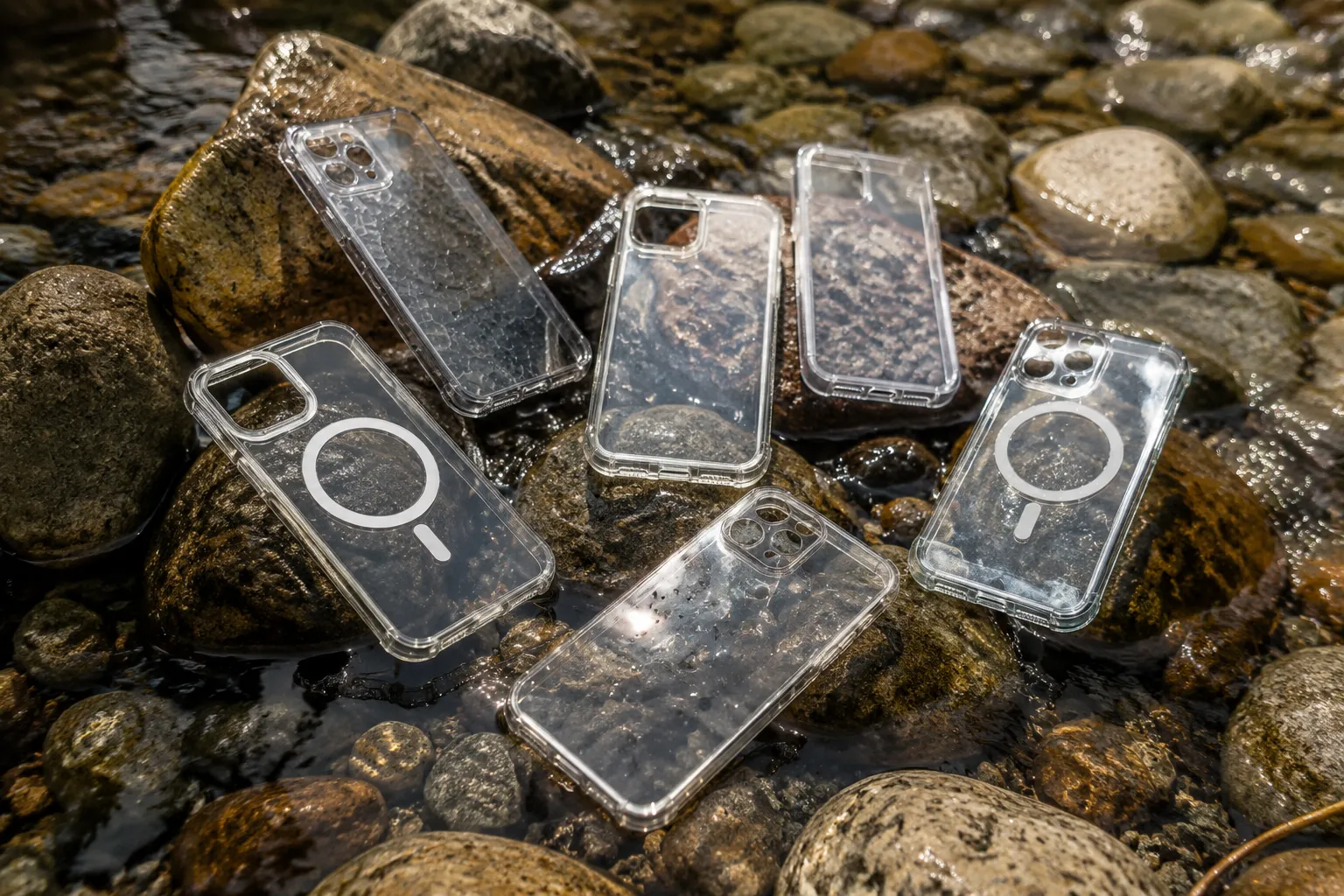
Clarity in a case is a promise the industry constantly breaks. The polycarbonate shell that looks like glass in the product photo yellows within a season. The "crystal clear" TPU bumper turns amber around the edges, trapping lint and looking like a nicotine stain. Six options on the market actually hold their transparency, and they do it through very different engineering choices. Some are glass, some are plastic, and some are a hybrid that barely counts as either. The distinction matters more than the brand name stamped on the box.
The longevity test is simple: leave the case on a phone for six months of daily pocket carry. Sunlight, hand oils, sanitizer wipes, and the friction of a jeans pocket all attack the material. A case that survives that stretch without yellowing or hazing earns its place on this list. A case that looks good on day one but turns cloudy by week eight does not.
Why Most Clear Cases Fail Within Two Months
Thermoplastic polyurethane, TPU for short, is the default material for clear cases because it absorbs shock so well. It bends, it flexes, and it takes a drop without transferring the full impact to the glass back of the phone. But TPU has a fatal flaw: its polymer chains oxidize when exposed to UV light. Oxidation changes the molecular structure, and the material shifts from water-clear to a buttery yellow. Heat accelerates it, which is why a case left on a car dashboard in July turns amber in a matter of days.
Manufacturers fight this with chemical stabilizers. The good ones use a blend of UV absorbers and hindered amine light stabilizers, HALS for short, that slow the oxidation process significantly. The bad ones use a cheap single stabilizer that exhausts itself in a month. There is no way to tell which approach a brand took by looking at the package. The only honest test is time.
Polycarbonate, the other major clear-case material, does not yellow the way TPU does. It is a rigid plastic with excellent optical clarity, but it shatters on impact. A solid polycarbonate case offers about as much drop protection as a coffee mug. The industry solution is a hybrid: a rigid polycarbonate back bonded to a flexible TPU bumper. The back stays clear, the bumper takes the hit. The trouble is, the bumper still yellows, and it pulls attention to the edge of an otherwise transparent back panel.
The Glass Option That Skirts the Problem Entirely
Tempered glass cases avoid the yellowing question altogether because glass does not oxidize. The material is silica, and silica is already oxidized. It cannot yellow further. The clear glass back on a case like the Mous Clarity 2.0 stays exactly as transparent on month six as it was on day one. The frame around the glass, however, is a different story. That frame is TPU, and it will yellow, though the dark color options hide it far better than the transparent ones.
The glass approach has tradeoffs. A glass-backed case is heavier than an equivalent plastic one, typically by 20 to 30 grams. It also adds a hard, unyielding surface to a device people drop. The glass back itself is tempered and sits raised above the camera lens, so it takes scratches instead of the lens glass, but a hard drop on a corner can still spider-web it. The tradeoff is clarity that genuinely lasts, versus a material that cushions better but discolors.
For people who hate cases but refuse to carry a naked phone, the glass style is the strongest compromise. It preserves the look of the phone's own finish better than any plastic, and it does not develop the greasy film that TPU attracts. The fingerprint smudging is actually worse on glass, which is a real annoyance, but a microfiber wipe clears it in one pass.
Rigid Polycarbonate With a Replaceable Bumper
The Smartish clear cases take a different route. Instead of permanently bonding a soft bumper to a rigid back, they make the bumper a separate piece that the user can pop off and replace. The back panel is polycarbonate. It does not yellow. The bumper is TPU, and when it starts to amber at the edges, the owner buys a fresh bumper for a few dollars and snaps it on. The phone case itself never needs full replacement.
This design is honest about material limitations. The company knows TPU yellows. Rather than promise otherwise, it makes the sacrificial part cheap and user-serviceable. The clarity of the back panel remains perfect because the TPU never touches the area that matters most. The bumper is a thin ring around the perimeter, so even when it discolors, the effect is less visually dominant than on a full TPU shell.
The tradeoff is grip. Rigid polycarbonate backs are slippery. The Smartish back has a subtle texture pattern molded in, which helps, but it is still a hard plastic surface. A person who prefers the soft-touch grip of a full TPU case will find this one slides around in the hand more. Drop protection is decent, since the bumper absorbs the initial impact, but the rigid back transfers more shock to the phone than a full soft case would.
TPU That Actually Resists Oxidation
Caudabe's Lucid Clear is the rare full-TPU case that stays genuinely transparent for a full year of daily use. The company does not disclose its exact stabilizer package, but the results speak for themselves. Independent tests and long-term user reports show minimal yellowing even after months of direct sunlight exposure. The material also resists the micro-scratches that turn most clear cases into frosted glass within weeks.
The secret appears to be a combination of a high-grade TPU resin and an unusually robust additive package. Cheap TPU cases use a resin that is already slightly yellow before it even reaches the molding machine. Caudabe uses an optical-grade resin, the same family of material used in medical tubing and high-end water bottles, which starts clearer and maintains its clarity longer.
The Lucid Clear also handles the other clear-case killer: pocket lint. Its back panel is only 0.3 millimeters thick at the edges, which leaves almost no gap between the case and the phone. Lint has nowhere to collect. The buttons are individually covered, which adds a small amount of mushiness compared to cutouts, but it keeps dust out of the switch area.
The MagSafe Problem Most Brands Ignore
Magnetic charging rings introduce a second failure mode that has nothing to do with UV light. The ring itself is metal, and metal conducts heat. When a phone charges wirelessly, the charging coil generates warmth. A clear case with a MagSafe ring traps that heat against the back of the phone. Over months of daily charging, the localized heat accelerates yellowing in the TPU directly around the ring.
The ESR Clear Case with MagSafe handles this better than most because it uses a metal ring that sits flush with the case's interior surface, rather than raised above it. The flush design creates less of an air gap, which means less trapped heat. The case's back panel is also made from a scratch-resistant material that ESR calls "Crystal Clear," a proprietary polycarbonate blend that resists both yellowing and the fine scratches that come from sliding a phone across a table.
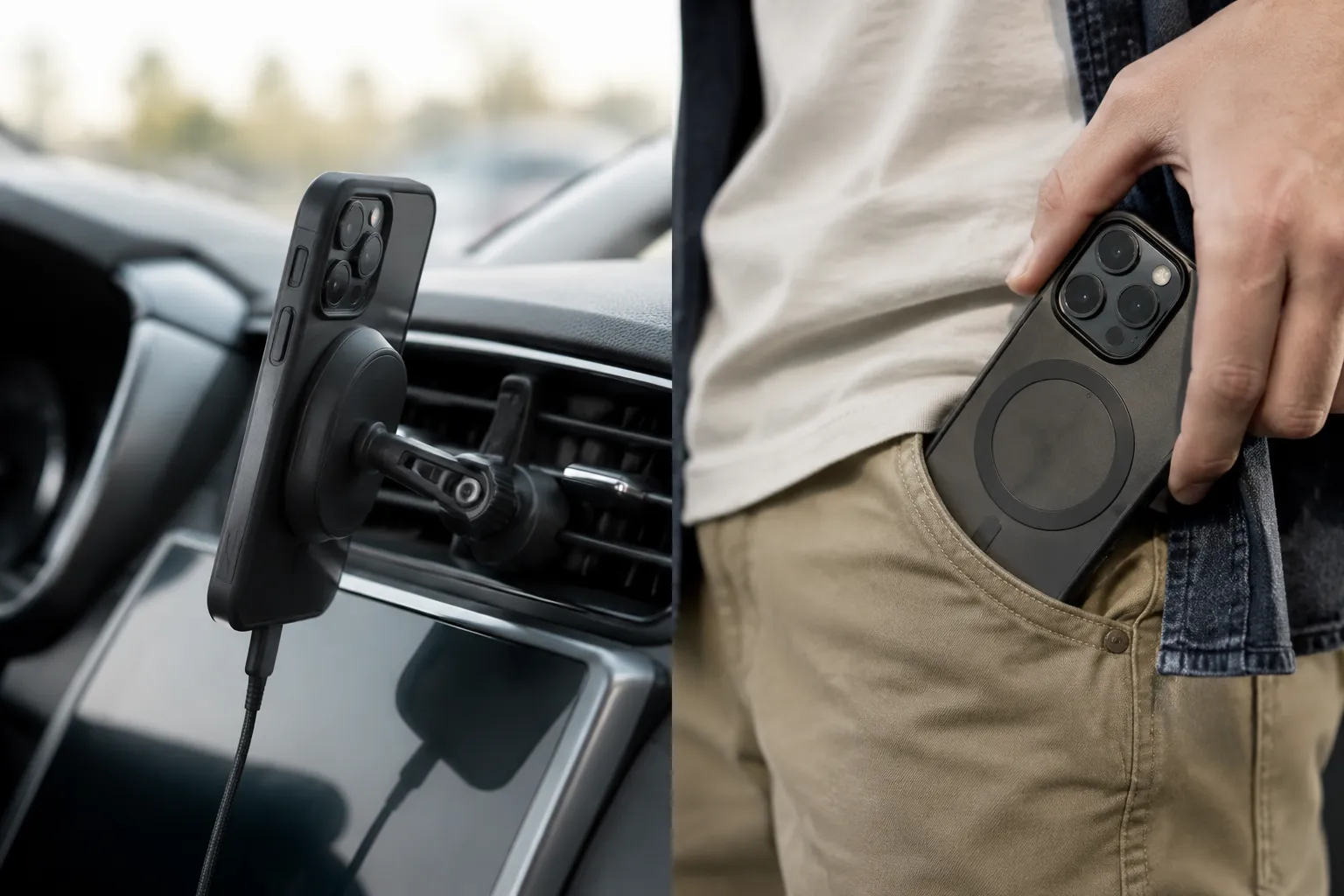
The other MagSafe concern is magnet strength. A case adds distance between the phone's internal magnets and the charger or accessory. Weak cases cause the phone to slide off a MagSafe mount on a bumpy road. ESR uses a ring with 18 magnets, matching the phone's internal array, which keeps the attachment firm. A clear case that cannot hold the phone to a car mount is useless no matter how transparent it stays.
The Budget Pick That Comes Close to Premium
Spigen's Ultra Hybrid has been the default recommendation for budget-conscious clear-case buyers for years, and for good reason. It uses the same polycarbonate back and TPU bumper architecture as cases costing three times as much. The back panel resists yellowing. The bumper eventually discolors, but Spigen's particular TPU blend holds out longer than most, typically staying reasonably clear for five to six months before the edges start to shift.
At its typical street price of $15 or less, the Ultra Hybrid is almost disposable. When the bumper yellows past the point of tolerance, a person can buy a new one without wincing. That calculus matters. A $60 case that stays clear for two years costs more per month than a $15 case replaced twice a year. The Ultra Hybrid wins on pure economics while still delivering respectable clarity over its usable life.
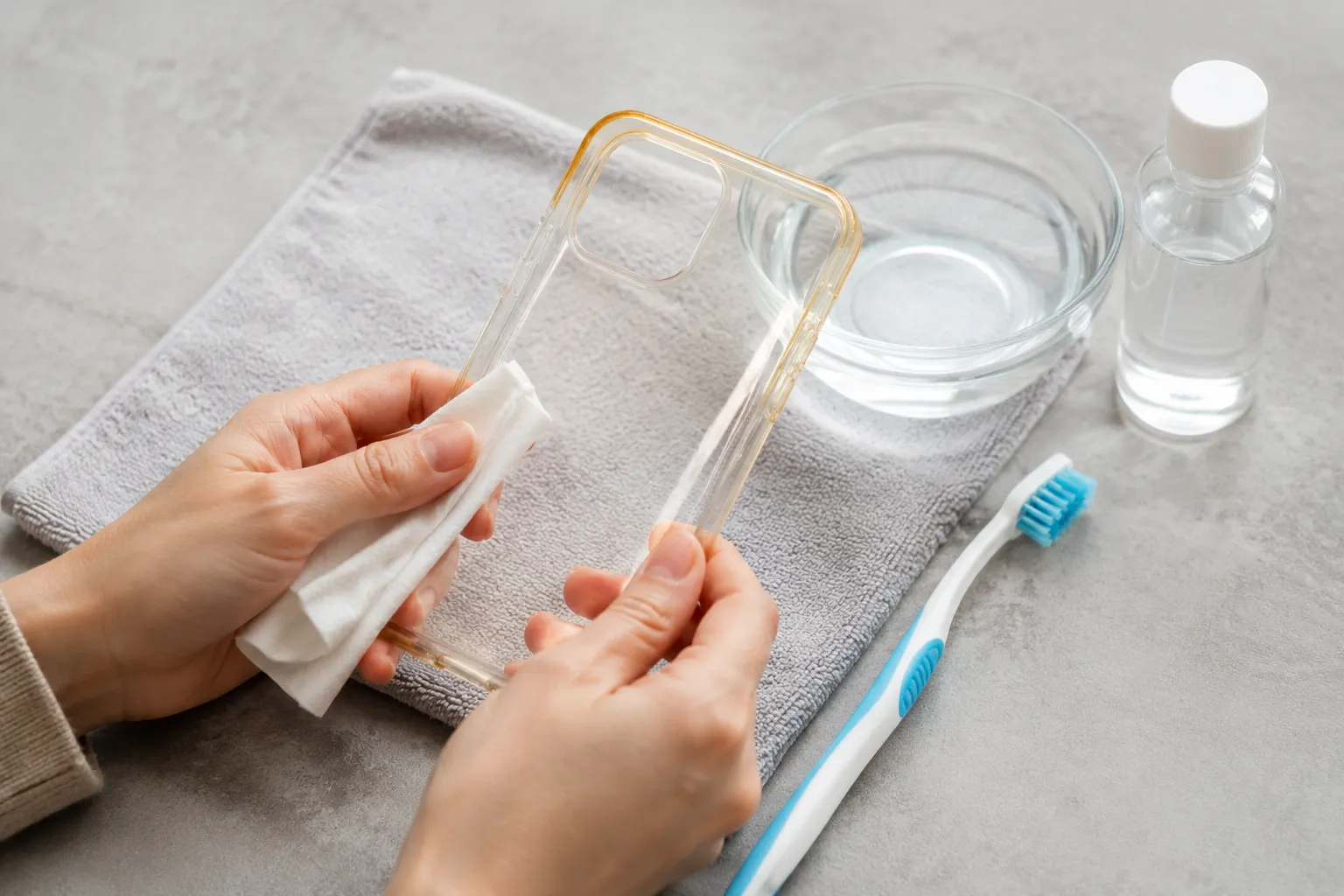
The downsides are real. The back panel scratches easily, and the clear version shows every micro-abrasion. The buttons are stiff out of the box, though they loosen up after a week of use. The case also has a noticeable gap at the bottom where the TPU meets the polycarbonate, and that gap collects pocket lint. It is a case that demands occasional cleaning with a soft brush to keep looking presentable.
A German Answer With a Different Material Math
Nillkin's Frosted Shield Pro uses a material combination that sidesteps the clarity question by redefining it. The back panel is not fully transparent; it is a translucent matte polycarbonate that diffuses light. It will never look like bare glass, but it also will never yellow because the material is not optically clear to begin with. The frosted finish hides fingerprints completely and resists scratches better than glossy surfaces.
This case is for people who want to see the phone's color through the back but do not need crystal clarity. The frosted effect softens the look, giving the phone a satin appearance. The tradeoff is a slight loss of sharpness in the design of the phone itself. The Apple logo and camera module remain visible but look like they are behind a light fog.
The Nillkin case also has the thinnest profile of any option here. At just 0.8 millimeters thick, it adds almost no bulk to the phone. The edge protection is minimal, with only a 1-millimeter lip above the screen. This case protects against scratches and minor bumps, not serious drops. For a person who wants clarity and hates bulk, the frosted compromise is often the right one, especially since it eliminates the yellowing anxiety entirely.
How to Test a Clear Case Before Committing
No amount of online research replaces a simple physical test. When a clear case arrives, hold it up to a bright light source and look through the back panel at a white piece of paper. A good case shows no tint, no haze, and no distortion. A bad case looks slightly warm or milky even when brand new. That initial tint only gets worse with time.
The flex test matters too. Bend the case gently at the corners. A high-quality TPU returns to shape instantly with no white stress marks. A low-grade TPU shows whitening at the bend point, a sign that the polymer chains are fracturing under stress. Those micro-fractures become permanent cloudy spots within weeks of normal use.
The final test takes a month. Put the case on a phone, charge it wirelessly every night, and carry it in a pocket during the day. Check it under bright light at the two-week mark and again at four weeks. A case that shows any yellowing at the one-month point will be deeply amber by month six. A case that remains water-clear at one month has a real chance of staying that way.
The six options above pass those tests with varying degrees of success. The glass case never yellows but adds weight. The hybrid cases keep their backs clear while their bumpers eventually give in. The full-TPU case from Caudabe defies the material's reputation through superior chemistry. The budget Spigen offers replaceable affordability. The frosted Nillkin avoids the problem by refusing to play the transparency game at all. Each one represents a different answer to the same question, and the right answer depends on what a person values more: true crystal clarity, drop protection, or price.