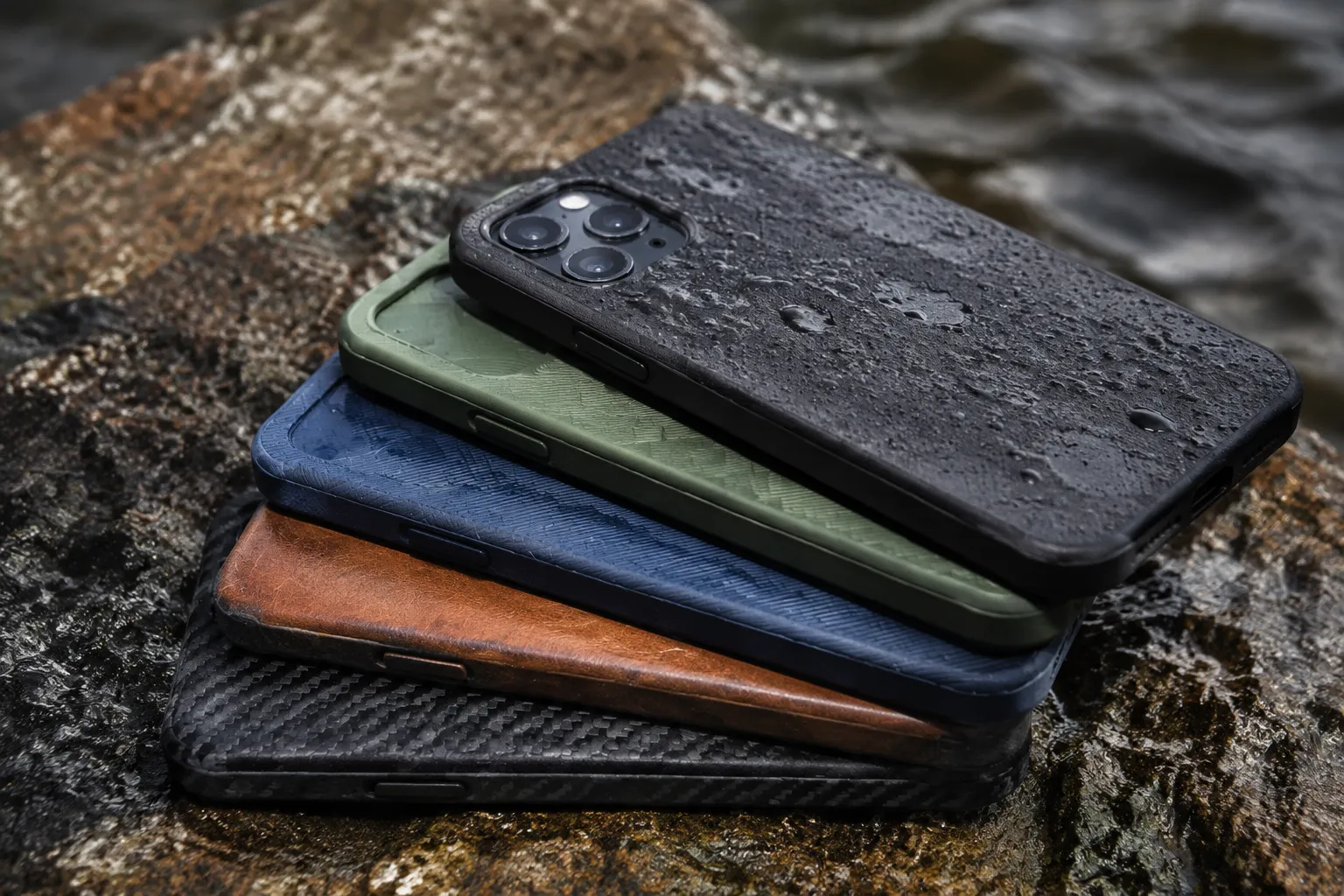
The phone case market has a dirty secret: most of the grip comes from bulk. Walk into any carrier store and the grippy options are the tank-like ones, the ones that add half an inch of rubber and turn a slim phone into a brick that barely fits a front pocket. The slim cases, meanwhile, are usually polished plastic or naked aluminum, beautiful to look at and impossible to hold onto. It has created a false binary. A person either accepts a bulky case for security or a thin case for aesthetics and spends every commute clutching the phone like a bar of wet soap. That trade-off is a design failure, not a law of physics, and a small group of manufacturers have figured out how to cheat it.
The secret is not a new material. It is a change in surface geometry. Texture that actually works under real grip pressure, the kind a person uses when walking up stairs or carrying groceries, is not a coating sprayed on top. Coatings wear off in six weeks. Texture needs to be molded into the material itself, or applied as a separate physical layer that cannot be abraded away by pocket lint and daily friction. The cases below all understand this distinction. They keep the profile under 10 mm, often closer to 7 mm, and still manage to feel secure in a hand that is slightly damp from a rain-soaked umbrella.
A note on measurement before getting into the picks: case thickness is usually quoted at the thickest point, often the camera bump or the reinforced corners. The actual edge profile, the part that meets the palm, is what determines feel. A case can claim 8 mm thickness and still feel chunky because of a sharp transition at the bezel. Conversely, a case can be 9 mm and feel slim if the edges taper inward. Pay attention to how the case meets the screen, not just the number on the spec sheet.
The Ribbed Contender That Started the Category
Pitaka's MagEZ Case Pro series has been the reference point for thin-and-grippy for several years, and for good reason. The case uses aramid fiber, the same material used in ballistic vests, laid up in a twill weave that produces a surface like fine sandpaper. It is not aggressive. It does not feel like grip tape on a skateboard. But it provides enough purchase that a phone resting in an open palm will not slide even when the hand tilts to a 45-degree angle. The weave is the grip. There is no coating to wear off because the texture is the fiber itself.
The thickness lands around 7.5 mm on most models, which is genuinely thin. The case adds almost no visual bulk, and the aramid pattern looks understated in a way that works with formal wear. The trade-off is rigidity. Aramid fiber cases do not flex. Dropping the phone transfers the full force of impact to the corners, and Pitaka's corner protection is minimal. This is a case for a person who drops a phone maybe once a year, not someone who juggles devices on a construction site. It is also expensive, often crossing the 60 dollar mark, which is a lot for a piece of woven fiber with no drop certification.
The newer Pro model adds a raised lip around the camera module and slightly softer edges. The grip remains the same. If the priority is a case that disappears in the hand and never feels slippery after months of use, this remains the benchmark. Just know that the phone is not protected from a serious fall. It is protected from sliding off a café table.
The Soft-Touch Case That Gets the Edges Right
Spigen's Thin Fit series is the budget answer, and it solves the grip problem with a different approach. The back panel is a hard polycarbonate with a matte, soft-touch finish. That finish, on its own, wears off and becomes slippery after about three months. What saves the case is the frame. The edges are made from a separate thermoplastic polyurethane (TPU) rim that has a slightly rubbery, almost tacky feel. A hand gripping the phone makes contact with the frame, not the back panel, and the frame retains its grippiness for well over a year.
The distinction matters because most cheap cases use a single material. A one-piece TPU case is grippy but thick. A one-piece polycarbonate case is thin but slick. Spigen's two-piece construction, with the hard back bonded to the soft rim, gives the best of both. The case measures around 8 mm at the edges and tapers to about 6 mm at the center of the back. It feels noticeably slimmer than it measures because the taper lets the hand wrap around a thinner middle section.
There is no pretense of luxury here. The Thin Fit looks like what it is: a functional piece of plastic that costs about 20 dollars. The buttons are molded into the TPU rim and have decent, if slightly mushy, feedback. The camera cutout is precise. For a person who wants a case that costs less than a dinner out and does not require thought, this is the pick. It will not win compliments, but it will not end up in a drawer after a month either.
The Patterned Grip That Works in Wet Conditions
Latercase, the company founded by a well-known tech reviewer, makes aramid cases that compete directly with Pitaka, but with one important difference in surface treatment. The Latercase Cyber edition uses a geometric pattern of raised lines, almost like a fingerprint pattern scaled up, molded into the aramid fiber during the layup process. This creates channels that give the fingers something to catch on, even when the case is wet or the hand is sweaty.
This matters for a specific scenario: walking in rain with an umbrella in one hand and a phone in the other. The smooth aramid of a Pitaka case, while grippy when dry, gets slick when a few drops of water land on the back. The patterned surface of the Latercase maintains friction because the raised ridges displace the water film. It is a small engineering detail that pays off in real conditions, not just in a controlled demo on a dry desk.
The case is thin, around 7 mm, and the pattern gives it a slightly techy appearance that some will find busy. The company also charges a premium, often over 50 dollars, and the cases sell in limited batches that sell out quickly. A person who wants a specific color or pattern may wait weeks for a restock. The grip is excellent, but the availability game is a genuine annoyance for anyone who just wants a case without treating the purchase like a sneaker drop.
The Silicone Surface That Does Not Shed
Apple's own Silicone Case with MagSafe deserves a mention, not because it is the thinnest option, but because it solves the grip problem in a way that few third-party cases replicate. The silicone material has a natural tack that is immediately reassuring. A phone in a silicone case feels planted in the hand from the first second, with no break-in period. The case adds about 9 mm of thickness, which is slightly over the slim threshold, but the material's grip means a person can hold the phone more loosely, which paradoxically makes it feel less bulky.
The notorious problem with silicone cases is degradation. After six months, the surface becomes shiny and slippery, and in some cases, the silicone starts to peel or shed small black flecks. Apple's version resists this longer than most because the silicone is bonded to a hard inner shell rather than just molded as a single piece. The outer layer is also treated with a coating that adds a few months of life. It is not permanent. After a year of daily use, the case will feel different, but it will still be more grippy than a worn-out plastic case.
The price is hard to justify, often 49 dollars and up, and the color options include pastels that look dirty within a week. But for a person who prioritizes immediate, reliable grip over everything else, the Apple Silicone Case is the safest bet. It is also the only case on this list that integrates MagSafe magnets with a strength that actually holds a wallet attachment without sliding.
The Leather Option That Ages Into Grip
Nomad's Horween Leather Case takes a third path entirely. The grip does not come from the material as manufactured. It comes from how the leather ages. A new Horween leather case is relatively smooth, with a finish that is slightly slick against dry skin. After a few weeks of handling, the natural oils from the hand darken the leather and soften the surface, and the case develops a patina that is measurably more grippy than the factory finish. The leather also develops subtle undulations from the pressure of fingertips, creating a custom grip pattern that fits the owner's hand specifically.
This is the opposite of the silicone and aramid approach. Those materials are grippy on day one and degrade. Leather starts less grippy and improves. The case measures around 8.5 mm, with a polycarbonate frame underneath the leather that provides structure and a microfiber lining inside that protects the phone's back glass. The construction is solid, and Nomad's warranty covers manufacturing defects for two years.
The catch is wet conditions. Leather becomes dangerously slippery when wet, and it soaks up moisture that can stain the material. A person who commutes in a rainy climate will need to wipe the case down frequently, and even then, the grip disappears in a downpour. This is a case for dry environments and deliberate handling. It is also the most expensive option on this list, often exceeding 70 dollars, but the leather will outlast the phone itself and can often be transferred to a new device if the dimensions happen to match.
How to Test Grip Before Buying
Spec sheets and reviews only go so far. The best way to evaluate grip is a simple test that takes five seconds in a store. Hold the case in one hand, with the phone inside, and tilt the hand until the phone is vertical. Then, without tightening the grip, shake the hand gently. If the phone slides even a millimeter, the case will feel insecure in real use. Most cases fail this test, especially the polished plastic ones that dominate retail shelves.
A second test is the twist test. Hold the phone in one hand with a normal grip and try to rotate it using only the fingers of that hand, as if turning a doorknob. A case with good grip resists this twisting motion. A slippery case allows the phone to rotate a few degrees before the grip tightens involuntarily. That involuntary tightening is the source of hand fatigue during long reading sessions or extended navigation use, and it is the reason so many people find thin cases exhausting to hold.
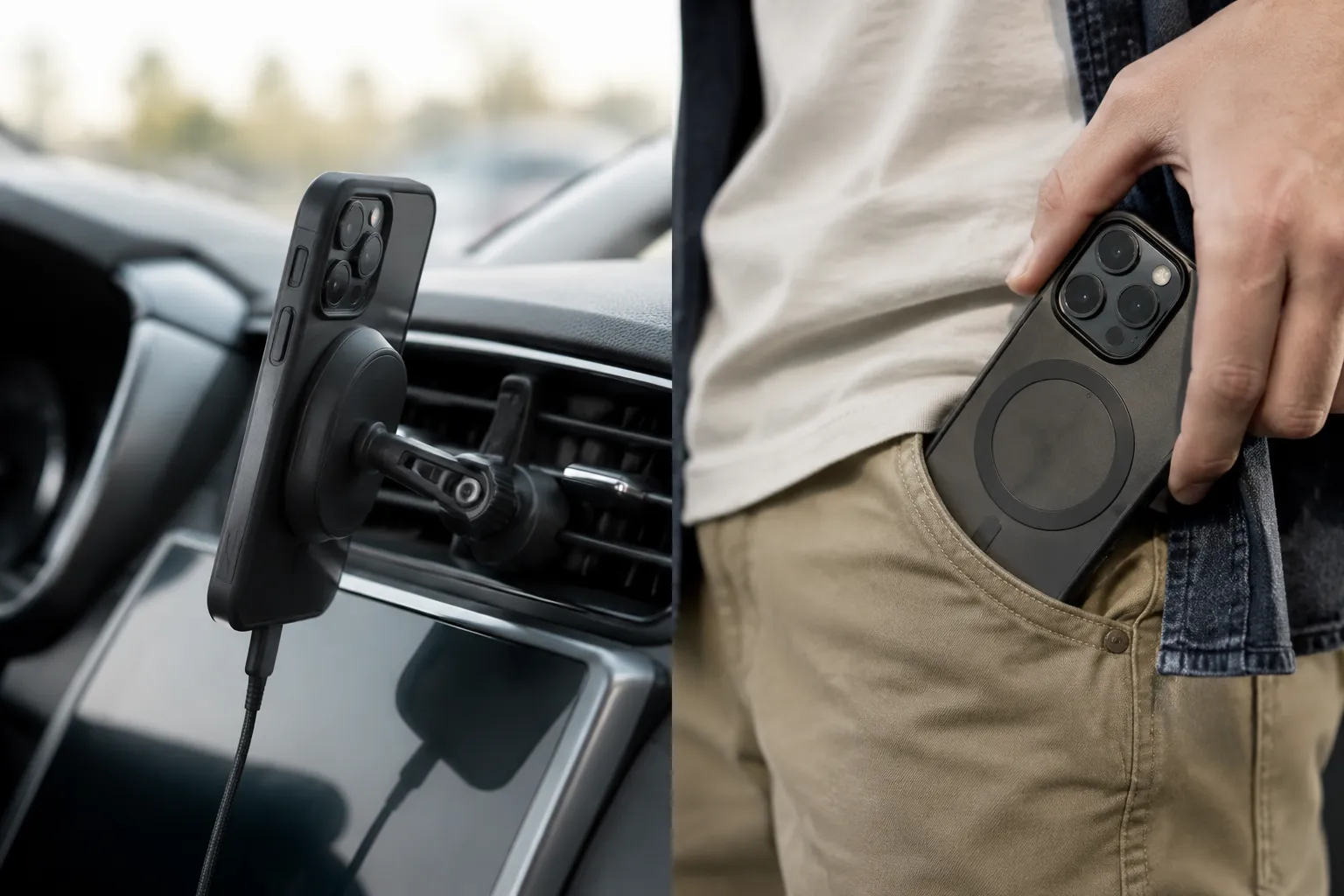
The final consideration is pocket behavior. A case can feel grippy in the hand but drag against the fabric of a pocket, making the phone difficult to extract. The aramid cases and the leather case slide in and out of pockets easily because their surfaces have low friction against cloth. The silicone case and the TPU-rimmed Spigen case catch on fabric slightly, requiring a small tug. Neither is a dealbreaker, but for a person who takes the phone in and out of a pocket dozens of times a day, the difference adds up to a minor daily annoyance that no spec sheet will mention.
Each of these cases makes a different sacrifice. The aramid cases sacrifice drop protection for thinness and dry grip. The Spigen sacrifices aesthetics for durability and value. The silicone case sacrifices longevity for immediate tack. The leather case sacrifices wet-weather performance for a bespoke feel that improves with age. There is no single answer, but there is a correct answer for each person's specific conditions. A person who knows whether they walk in rain, drop phones frequently, or simply hate the feeling of a slippery slab will find the right pick among these five.