Polycarbonate turns yellow. That is not a defect in a particular batch or a sign that the case was cheap. It is the chemistry of the plastic itself, triggered by ultraviolet light and, to a lesser degree, by heat and by the oils that migrate out of human skin. Every clear phone case on the market is fighting this battle, and most of them lose within six months. The yellowing is not a stain on the surface. It is a change in the material, which means the fix is not simply wiping harder. The fix is a routine that slows the change, and when the change has already happened, a routine that partially reverses it.
There is a lot of bad advice floating around about this. Some of it comes from people who believe a clear case can be restored to factory clarity with a single miracle product. Some of it comes from people who have simply given up and now treat yellow cases as a disposable expense, buying a new one every few months. Both positions miss something important. A clear case can be kept presentable for a year or more with the right habits, and even a badly yellowed case can be improved enough to buy another season of use. The trick is understanding which yellowing is surface grime and which yellowing is the plastic itself, because the two problems require completely different responses.
Surface yellowing looks like a film. It tends to be concentrated at the edges where the hand grips the phone, and it often has a slightly greasy quality. This is the buildup of skin oils, lotion residue, pocket lint, and the general particulate matter of daily life. It can be cleaned off, and it should be cleaned off regularly, because leaving it in place accelerates the deeper problem. Oils and acids from the skin do not just sit on the surface of polycarbonate. Over time they work into the microscopic scratches and pores of the plastic, and once they are embedded, they act as a catalyst for the UV degradation that causes true yellowing.
The difference between dirt and damage
The first test a person should run is simple. Wash the case with dish soap and warm water, dry it completely, and look at it in bright, indirect light. If the yellow has faded noticeably, most of the problem was surface film. If the case still looks like a banana, the plastic itself has oxidized. This distinction matters because the treatments are different. Surface film responds to regular washing. True oxidation requires a different approach, and no amount of soap will touch it.
True yellowing happens because polycarbonate contains chemical bonds that absorb UV light. When those bonds absorb enough energy, they break and rearrange into a structure that reflects yellow wavelengths. This is the same process that yellows old computer cases, old appliance plastic, and the clear plastic windows of vintage convertible tops. Once the molecular structure has changed, it cannot be unchanged by any household product. The yellow is baked in, like a sunburn that never fades.
However, and this is the part that surprises most people, the process is not uniform. A case that has oxidized on the outside edges may still have relatively clear plastic in the center, where the phone itself blocked the UV light. This is why some restoration attempts appear to work. When a person scrubs a yellowed case with a particular product and the yellow seems to lift, what has actually happened is that the product has removed the outermost layer of degraded plastic, exposing the less damaged material underneath. This is a real effect, but it has limits.
What actually works on a yellowed case
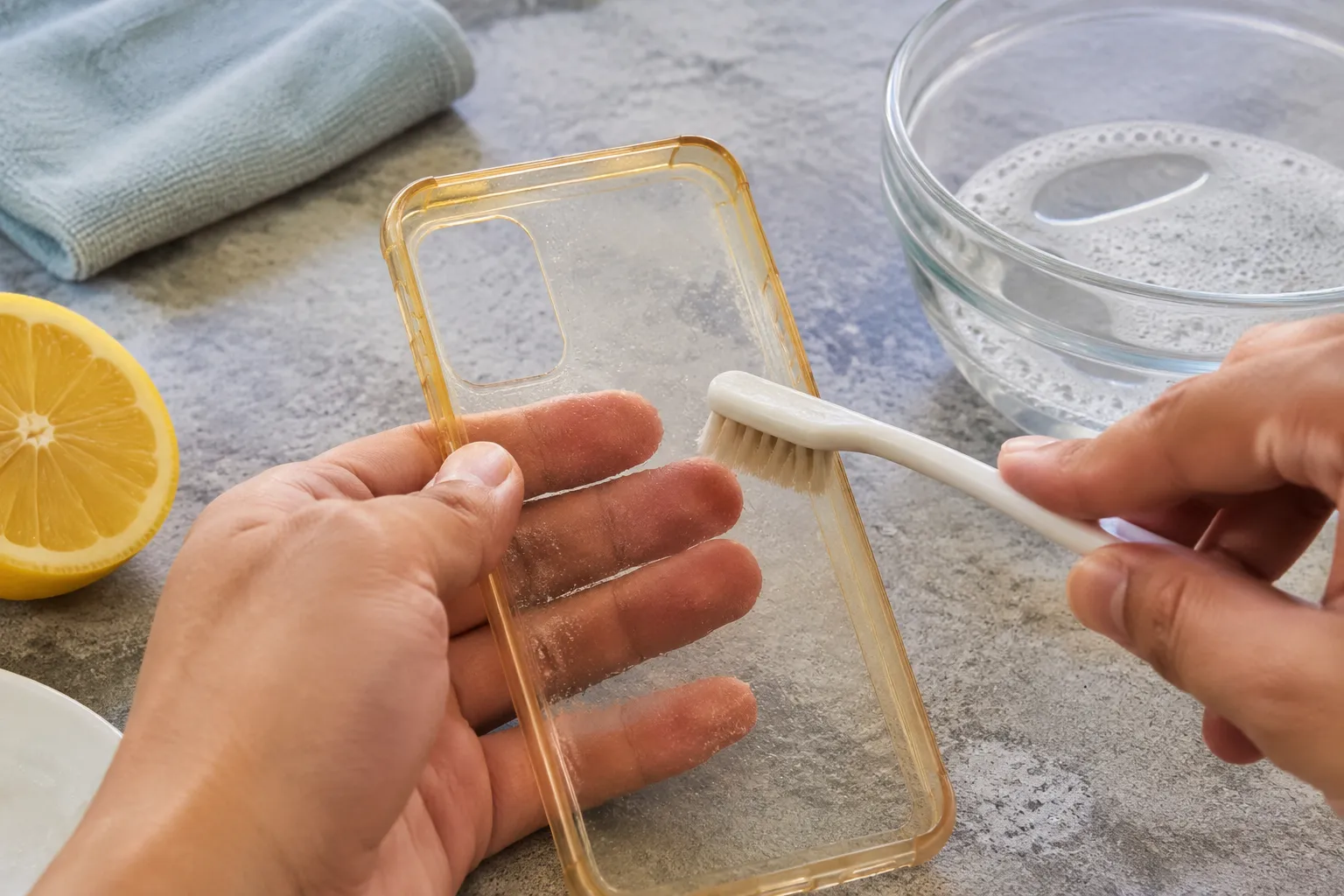
For a case that has already yellowed, the most effective household treatment is a paste of baking soda and water, applied with a soft cloth and worked in with gentle circular pressure. The baking soda is mildly abrasive, fine enough to polish away a thin surface layer of degraded plastic without leaving visible scratches. This is not a dramatic transformation. A badly yellowed case will not become crystal clear. But a case that is only lightly discolored, the sort of faint amber tint that appears after three or four months of use, can often be brought back to a state where the discoloration is only visible when the case is held next to a brand-new one.
There is a stronger option, but it comes with real risk. Hydrogen peroxide, the 3 percent solution sold in brown bottles as a disinfectant, can lighten oxidized plastic when combined with UV light. This is the same principle behind the retro-brighting technique used by vintage computer collectors, who restore yellowed 1980s hardware by coating it in peroxide cream and leaving it in the sun. The process works because peroxide breaks down the specific chemical structures that cause yellowing. It is also capable of damaging plastic if left too long, making the surface brittle or chalky. For a phone case, which is thin and already stressed from daily flexing, the risk of turning a yellow but functional case into a brittle, cracked one is significant.
The safer variation uses sunlight alone. Polycarbonate that has yellowed from UV exposure can sometimes lighten slightly when exposed to bright sunlight over several days, because the same energy that causes the damage can, under the right conditions, break down some of the yellowing compounds. This is inconsistent and slow, and it can just as easily make the yellowing worse. A person who wants to try it should test the case on a windowsill for two days, checking twice a day, and stop at the first sign that the plastic is becoming cloudy rather than clear.
The cleaning routine that prevents yellowing
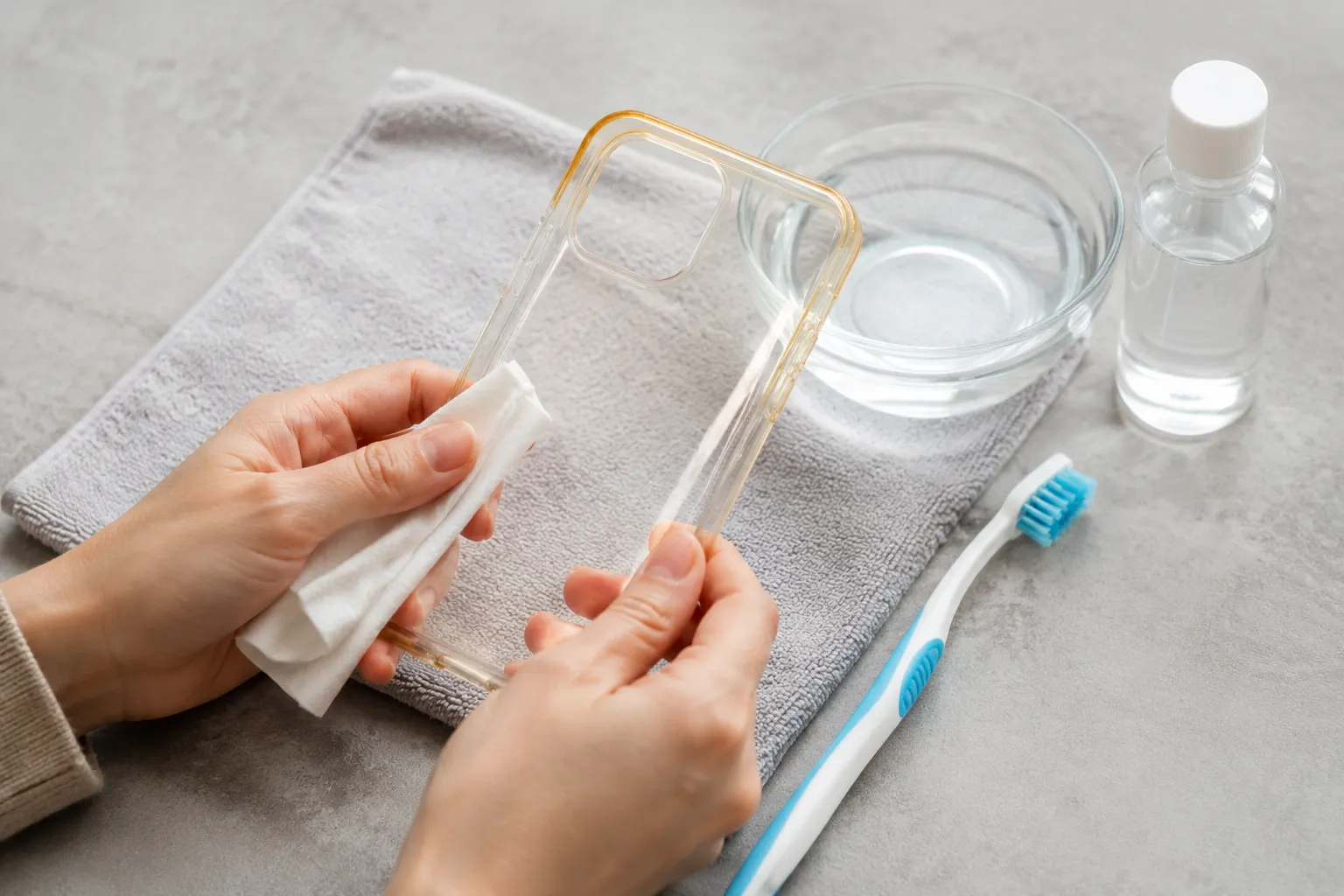
Prevention is where a person gets the most return on effort. The routine is not complicated, but it must be consistent. Once a week, the case should come off the phone and get a proper wash. Warm water and a drop of dish soap are sufficient. The case should be washed on both sides, with attention to the edges and the inside corners where grime collects. A soft toothbrush helps reach the crevices. After washing, the case should be dried with a lint-free cloth and then left to air dry completely before it goes back on the phone. Trapped moisture against the phone is the only real risk in this process.
The drying step matters more than most people realize. A case that goes back on the phone while still damp traps water against the back glass, and that water carries any residual soap or dissolved grime directly into the gap between case and phone. Over time, this creates a film on the back of the phone itself, which is not dangerous but is unsightly and difficult to remove without taking the case off again. Thirty minutes of air drying eliminates the problem entirely.
The second prevention step is about what touches the case, not how it is washed. Hand lotion, sunscreen, and certain cosmetics accelerate polycarbonate degradation. This is not speculation or a marketing claim. The solvents and oils in these products soften the plastic surface, making it more porous and more vulnerable to UV damage. A person who applies lotion in the morning and then handles a phone for an hour is depositing a thin film of lotion onto the case. That film does not just sit there. It soaks in.
The practical answer is not to stop using lotion. It is to be aware that the case needs more frequent washing during periods of heavy product use. Someone who uses sunscreen daily in the summer should wash the case every three or four days instead of weekly. Someone who works with their hands and uses heavy-duty moisturizers should do the same. This is the single most effective habit for extending the clear life of a case, and almost no one does it.
Heat, light, and the places a case should never go
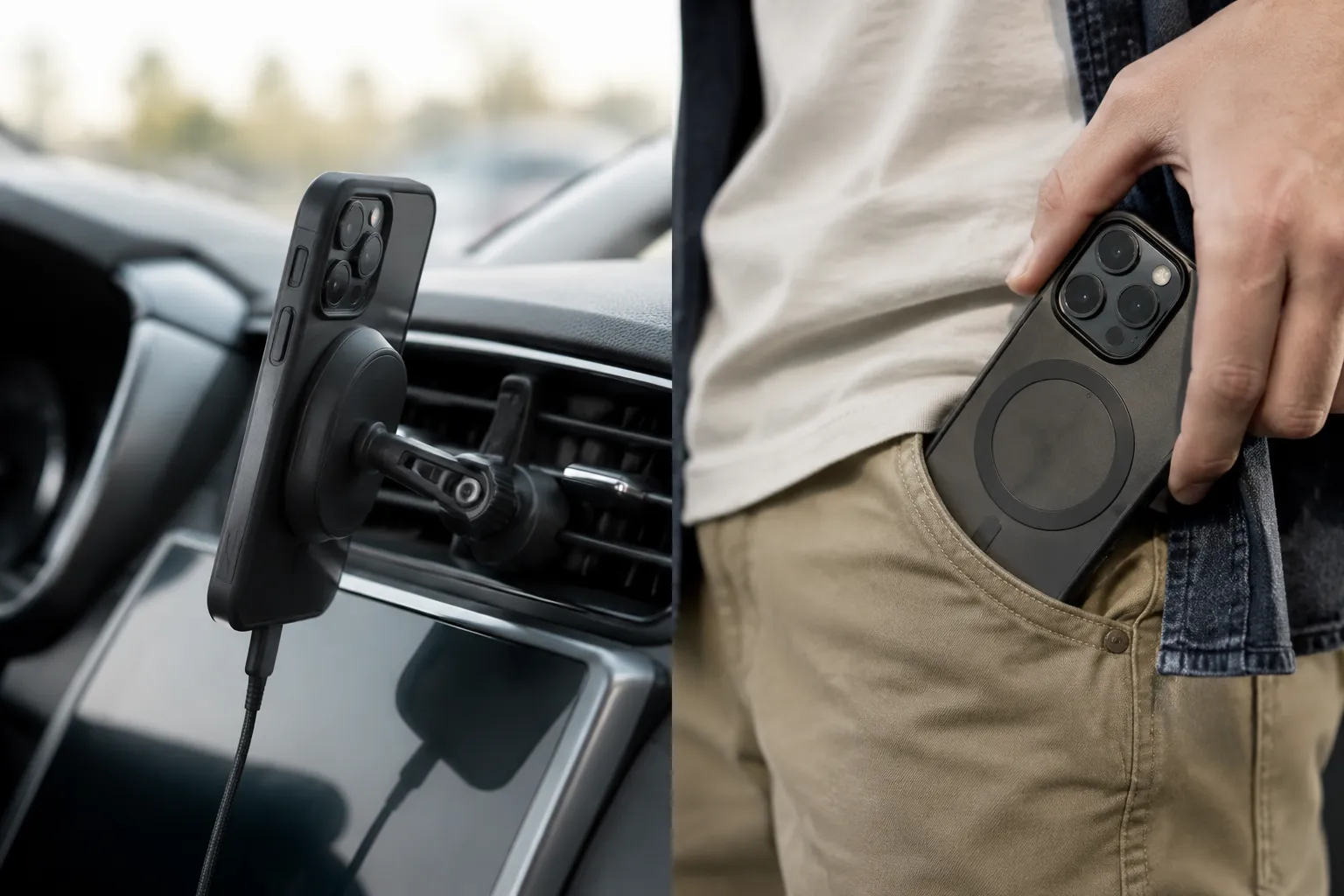
Where a phone lives matters as much as how it is cleaned. A phone kept mostly in a pocket or a bag, coming out only for use, will have a case that yellows slowly. A phone that sits on a car dashboard during a commute, or on a windowsill at work, will have a case that yellows quickly. The dashboard scenario is the worst. The combination of intense UV through the windshield and high interior temperatures can yellow a clear case in a matter of weeks. A person who uses a phone for navigation should mount it in a spot that is not in direct sun, or accept that the case is on a fast track to discoloration.
Indoor lighting is a smaller factor, but not a negligible one. LED bulbs emit very little UV, but some fluorescent fixtures still leak a small amount. A phone that sits under a fluorescent desk lamp for eight hours a day, five days a week, is getting a slow, steady dose of UV. This will not yellow a case as fast as sunlight, but it is not zero. The easy fix is to place the phone face down when it is sitting on a desk, so the back of the case is not directly exposed to the light source.
Heat alone, without light, does not yellow polycarbonate anywhere near as fast as UV, but it does soften the plastic and makes it more reactive to whatever light it does encounter. Leaving a phone in a hot car, even in the glovebox, is a double hit. The heat primes the plastic for damage, and any light that reaches it causes more harm than it would at room temperature. The rule is simple. If the phone is not going to be used for a while, it should not be left somewhere warm and bright.
Why some clear cases yellow faster than others
Not all clear cases are the same, and the differences are visible within the first month of use. The cheapest cases, the ones that sell for a few dollars from online retailers, are often made from a lower grade of polycarbonate that has fewer UV stabilizers mixed into the resin. These cases can start to show a faint yellow tint within two or three weeks of regular use. The slightly more expensive cases, typically from brands that specialize in protective gear, use a higher grade of plastic with better stabilizers. They might stay clear for four to six months before any discoloration becomes noticeable.
The frustrating part is that price is not a reliable indicator. Some premium cases yellow just as fast as budget ones, because the manufacturer prioritized scratch resistance or drop protection over UV stability. Some inexpensive cases hold up well because they come from factories that happen to use good resin. There is no way to tell from the outside. A person who wants a clear case that stays clear should read reviews specifically for mentions of yellowing after several months of use, rather than relying on brand reputation or price point.
There is also a category difference worth noting. TPU cases, the soft and flexible kind, yellow faster than hard polycarbonate cases. This is a known limitation of TPU chemistry. The plasticizers that make TPU soft and grippy are the same compounds that oxidize and discolor under UV light. A person who values the soft feel of a TPU case must accept a shorter clear life, or commit to the weekly washing routine with more discipline. A person who wants maximum clarity for maximum time should choose a hard polycarbonate case, ideally one with a matte back rather than a glossy one, since matte finishes hide the early stages of yellowing better.
The point of no return
Every clear case eventually reaches a point where cleaning stops mattering. The plastic has oxidized too deeply, the yellow is uniform across the whole surface, and no amount of baking soda, peroxide, or sunlight will bring it back. This usually happens somewhere between eight and fourteen months for a case that is cleaned regularly, and much sooner for one that is neglected. When a case reaches this state, the honest move is to replace it.
The temptation is to keep using a yellowed case because it still protects the phone. That is a reasonable position. The case has not failed at its primary job. But a person should be clear about what is happening. The yellowed case is not just ugly. It is also weaker. The same UV degradation that changed its color has made the plastic more brittle. A case that has yellowed significantly is more likely to crack on impact than a fresh case, which means the protection it offers is diminished exactly when it is needed most.
When replacement time comes, the choice of the next case should be informed by the experience of the last one. A person who went through two yellow cases in a single year should consider whether a clear case is the right product at all. A black, grey, or dark blue case eliminates the entire problem. For those who want the clear look, the compromise is to buy a case made from a higher grade of polycarbonate and to commit to the weekly wash without exception. The case will still yellow eventually. Nothing prevents that. But with the right habits, the clear life can be stretched to a year or more, and the replacement cycle becomes an annual event rather than a quarterly annoyance.